

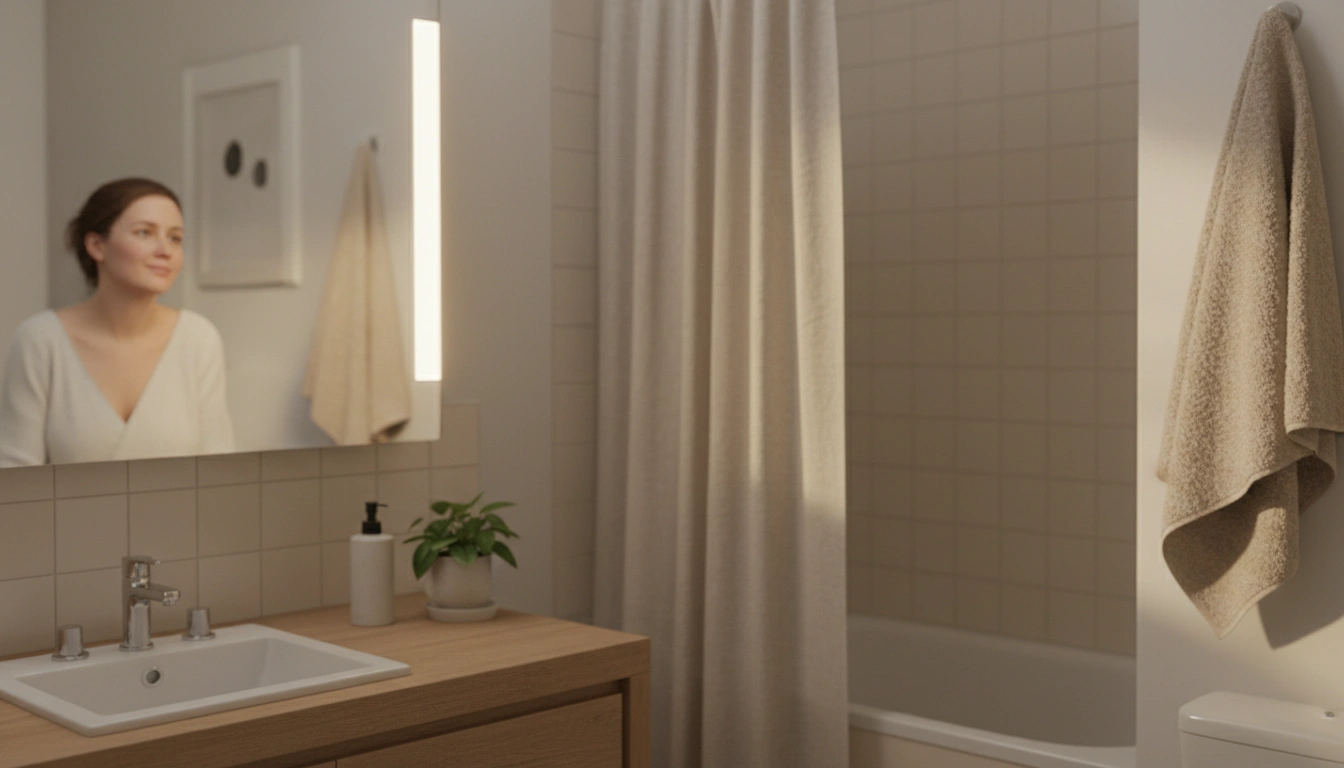
It’s Tuesday morning. The alarm has been snoozed twice, the coffee is brewing, and there’s a quick glance in the bathroom mirror before the day begins. The reflection looks a little softer than usual — eyelids heavier, cheeks fuller, jawline less defined. Not tired exactly, just… puffy. Many women know this feeling intimately, and reach for cold water, a jade roller, or simply hope it fades by the time they leave the house.
This small, repeated moment is exactly where lymphatic drainage face massage enters the conversation. Once considered a spa indulgence or wellness trend, it’s now being studied more seriously by skincare professionals and researchers alike. So the real question becomes: is it a soothing ritual, or is there genuine science behind the glow?
What Lymphatic Drainage Face Massage Actually Does
The lymphatic system is a quiet, hardworking network running just beneath the skin. It moves fluid, filters waste, and supports immune function. Unlike the circulatory system, it has no central pump — it relies on movement, breath, and gentle pressure to keep flowing.
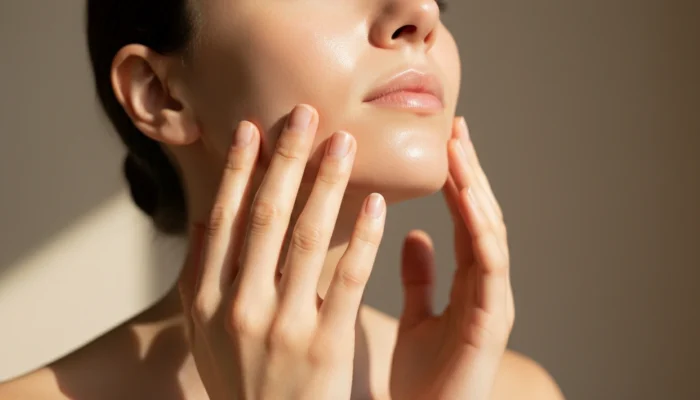
When that flow slows down, fluid lingers in the tissues. That’s when facial puffiness shows up around the eyes, cheeks, and jaw. A lymphatic drainage face massage uses light, rhythmic strokes to encourage that fluid to move along its natural pathways, toward lymph nodes near the ears, neck, and collarbones.
It isn’t about pressing hard or “breaking up” anything. The lymph vessels sit very close to the skin’s surface, so the touch needs to be feather-light. Think of it as inviting the fluid to move, not forcing it.
Signs the Face May Benefit From Lymphatic Work
- Morning puffiness that takes hours to settle
- Dullness or uneven tone despite a solid skincare routine
- Tightness around the jaw, temples, or between the brows
- A “heavy” feeling in the face after long screen time
- Sluggish appearance after travel or poor sleep
Ritual or Real Science? A Closer Look
Manual lymphatic drainage (MLD) was originally developed in the 1930s by Dr. Emil Vodder and is now used in clinical settings for post-surgical swelling and lymphedema. The facial application borrows from those same principles, adapted for cosmetic and wellness purposes.
Studies on manual lymphatic techniques show measurable reductions in tissue fluid, improved microcirculation, and a calming effect on the nervous system. The skin itself often looks brighter afterward — not because of any miracle, but because better circulation means better oxygen and nutrient delivery to skin cells.
So it’s both. The ritual is real, and so is the science. The candle, the slow breathing, the warm hands — those create the conditions for the body to actually respond. A rushed, distracted massage simply doesn’t have the same effect.
Expert Tip & Myth Debunking
Expert tip: Always work from the center of the face outward, and finish at the neck. The neck is where most of the facial lymph eventually drains, so skipping it is like sweeping dust into a closed dustpan.
Common myth: “Harder pressure means better results.” Not true for lymphatic work. Deep pressure compresses the very vessels you’re trying to stimulate. Light, slow, and consistent always wins over forceful.
Gua Sha Benefits and Sculpting Massage Techniques
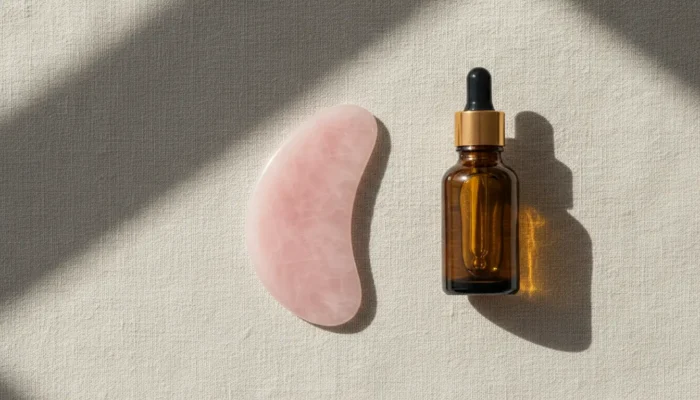
Gua sha, a practice with roots in Traditional Chinese Medicine, has become one of the most loved tools in modern skincare. When used gently on the face, gua sha benefits include softer fine lines, reduced tension, and that desirable lifted look along the cheekbones and jaw.
A sculpting massage with gua sha or a roller pairs beautifully with lymphatic techniques. The two work together — lymphatic strokes clear the fluid, while sculpting movements gently lift and tone the underlying muscles and fascia.
A Simple 5-Minute Sequence
- Neck first: Sweep downward from behind the ears to the collarbones, 5–10 times each side.
- Jawline: Glide the tool from the chin out toward the ear, light pressure only.
- Cheekbones: Move from the side of the nose outward toward the temple.
- Under-eyes: Use the smallest curve of the tool, sweep gently from inner corner outward.
- Forehead: From the center, glide out toward the hairline.
- Finish at the neck again to clear everything you just moved.
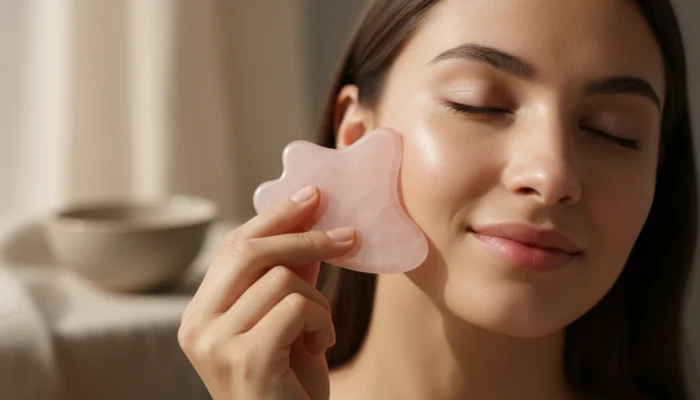
Always use a facial oil or serum so the tool glides instead of dragging. Skin should feel cared for, never irritated.
Scientifically Backed Ingredients That Pair Well
Massage works best when the skin barrier is supported by ingredients that genuinely do something. Pairing a lymphatic drainage face massage with the right formula amplifies the visible results.

Niacinamide
Niacinamide (vitamin B3) helps strengthen the skin barrier, regulates oil production, and reduces redness. Dermatology research shows it improves elasticity and fades uneven pigmentation over time. It’s also incredibly well tolerated — even by sensitive skin types. For a deeper comparison, this guide on niacinamide or vitamin C is worth a read.
Hyaluronic Acid
Hyaluronic acid is a humectant that pulls water into the skin, plumping it from within. After a lymphatic massage, when circulation is improved, hydrating ingredients absorb more efficiently. The skin looks dewy, not just damp.
Peptides
Peptides act as messengers, signaling skin cells to produce more collagen. They support firmness and resilience — a perfect partner to sculpting massage techniques.
Antioxidants (Vitamin C, E, Ferulic Acid)
These protect against oxidative stress from pollution, UV, and blue light. They keep the glow earned through massage from fading too quickly.
Squalane
A lightweight, skin-identical oil that provides perfect slip for any massage tool while reinforcing the lipid barrier. Non-comedogenic and suitable for most skin types.
For anyone building a steady routine around these actives, the minimalist skincare routine guide offers a thoughtful starting point.
The Nervous System Connection
Here’s where things get genuinely interesting. Nervous system relaxation is one of the most underrated effects of facial massage. Slow, intentional touch activates the parasympathetic nervous system — the “rest and digest” mode.
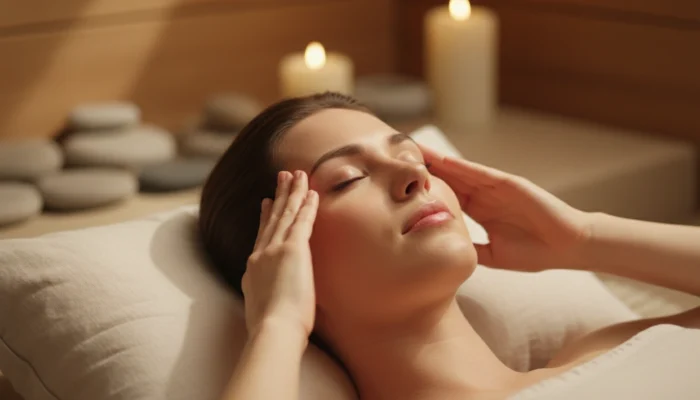
Cortisol, the stress hormone, is known to weaken the skin barrier, increase inflammation, and accelerate visible aging. When stress drops, skin behaves better. Breakouts calm down. Redness softens. Sleep improves, and with it, that mysterious overnight repair process the skin is famous for.
Facial tension tends to collect in three main areas: the jaw, the temples, and the space between the brows. Releasing these spots isn’t only cosmetic — it can ease headaches, improve sleep quality, and even soften the appearance of fine lines that form from chronic clenching.
Quiet Moments to Add Massage Into the Day
- Two minutes after cleansing in the morning
- During the time a sheet mask is on
- Right before bed, paired with a calming serum
- After long hours at a screen, even just on the jaw and temples
Always consult with a healthcare professional before starting new treatments, especially for anyone with active acne, rosacea flares, recent injectables, or any lymphatic condition.
How Often, and What to Expect
Consistency matters more than intensity. A few minutes daily will do far more than an hour-long session once a month. Many notice softer puffiness within the first week, and a more defined facial contour after three to four weeks.
It’s also worth mentioning that lymphatic drainage face massage works best inside a wider skincare context — not as a replacement for hydration, sun protection, or sleep. Pairing it with a thoughtful skincare morning routine tends to give the most visible, lasting results.
Small Lifestyle Habits That Support Lymph Flow
- Drinking enough water throughout the day
- Reducing excess sodium, especially in the evening
- Gentle movement — walking, stretching, yoga
- Deep breathing, which acts as a pump for the lymphatic system
- Quality sleep, ideally on a slightly elevated pillow
So, Ritual or Real Science?
The honest answer is both, and that’s what makes it so worthwhile. The science explains the puffiness fading, the brighter tone, the softer jawline. The ritual explains why women keep coming back to it — because pressing pause for five minutes and offering the face slow, kind attention feels like a small act of care in a world that rarely slows down.
Skin responds to that care. Not just biologically, but in the way it carries itself. Calmer skin reflects a calmer person, and that combination has a glow no product can replicate on its own.
Frequently Asked Questions
1. How often should a lymphatic drainage face massage be done?
Daily is ideal, even if only for two or three minutes. Short, consistent sessions outperform occasional long ones. Mornings help reduce puffiness, while evenings support relaxation and overnight repair.
2. Can lymphatic drainage face massage replace skincare products?
No. It enhances them. Massage improves circulation and absorption, but actives like niacinamide, hyaluronic acid, and antioxidants still do the heavy lifting on barrier and tone. Both work best together.
3. Is gua sha or a roller better for lymphatic drainage?
Both have their place. Rollers feel cooling and are wonderful for daily de-puffing. Gua sha offers more precision for sculpting massage and releasing facial tension. Using them together often gives the most balanced results.