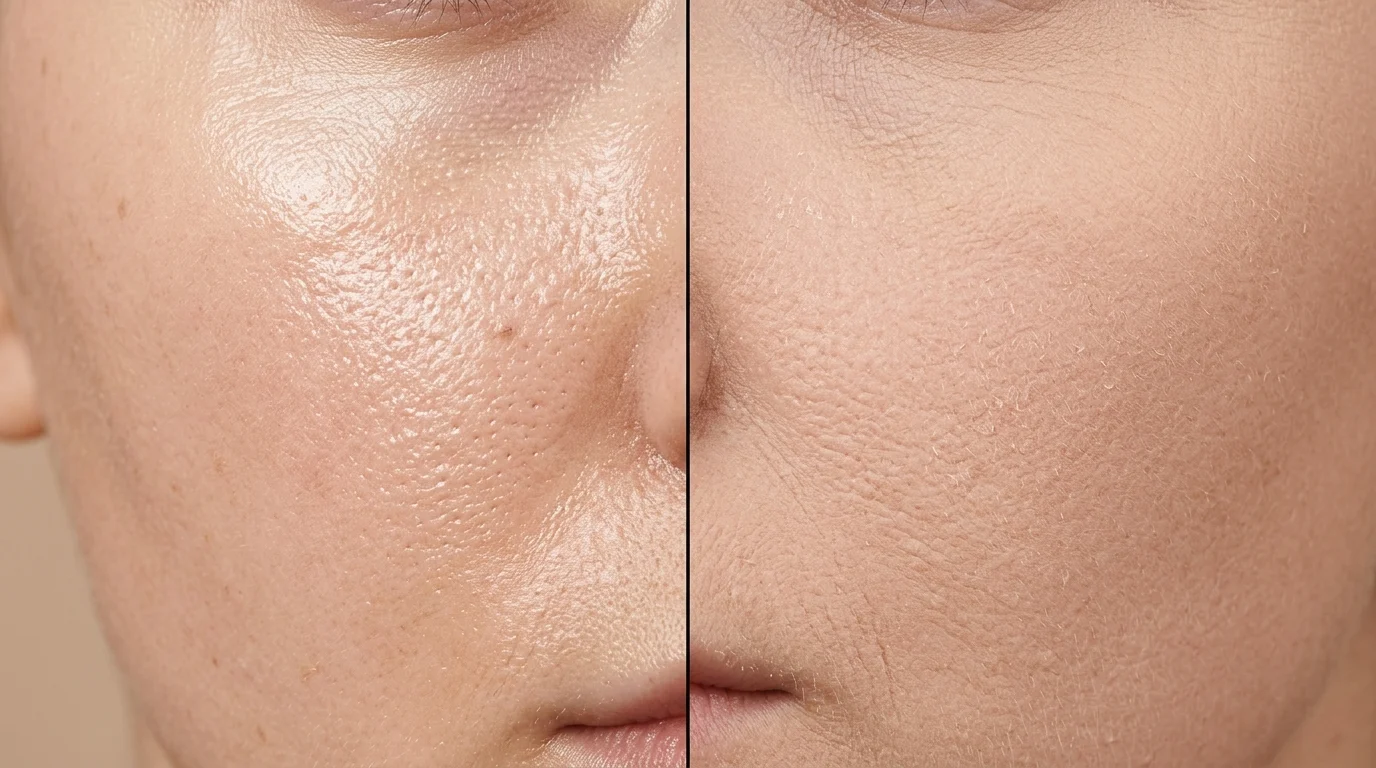

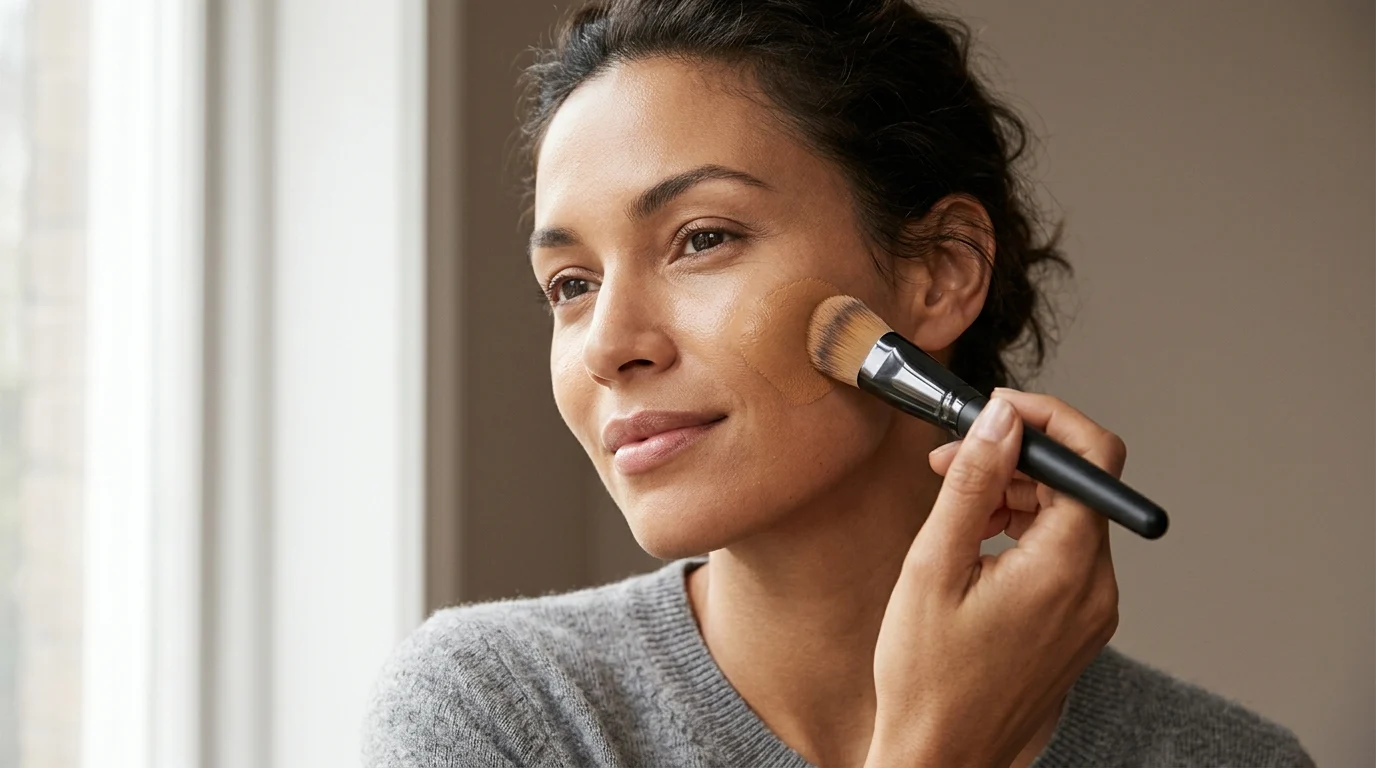
She had done everything right — or so she thought. She’d read the reviews, filtered by “oily skin,” and landed on a water-based foundation with a matte finish. By noon, it had oxidized two shades darker, migrated into every pore, and required a blotting sheet and a touch-up just to get through lunch. Out of mild desperation, she reached for a silicone-based formula she’d been avoiding for years — convinced it would feel thick, suffocating, occlusive. It didn’t. It wore cleanly through the afternoon. No oxidation. No sliding. No noon crisis.
In this case, the difference came down primarily to the foundation’s chemistry rather than application technique or setting spray. The debate around silicone-based vs water-based foundation is framed far too often as a preference issue — a texture thing, a “clean beauty” thing, a personal choice. It isn’t. It is a skin chemistry question with answers that shift depending on skin type, the skincare products layered underneath, and even the climate.
Getting it wrong costs wear time, contributes to pilling, and can make genuinely good foundations perform poorly through no fault of the formula.
What Is a Silicone-Based Foundation — And What Does It Do to Your Skin?
A silicone-based foundation builds its formula architecture around synthetic silicone polymers — most commonly dimethicone and cyclopentasiloxane — rather than water. Think of the result on skin as a thin, flexible layer of cling film laid precisely across the surface: smooth, semi-permeable, resistant to both water and oil penetrating from the outside.
It doesn’t seal the skin completely, but it does create a consistent structural barrier that holds pigment in position. That analogy is not poetic — it reflects the actual film-forming behavior of silicone polymers at the skin surface.
Dimethicone and cyclopentasiloxane do three distinct things in a foundation formula. First, they provide slip — the sensation of the formula gliding during blending, comparable to lubricating a surface before laying something flat on it, which is why silicone-based formulas typically feel effortless to blend even at fuller coverage. Second, they form a cohesive film that holds pigment in a stable, even layer rather than allowing it to migrate with movement or moisture. Third — and critically for oily skin — that silicone film physically resists sebum. Sebum cannot dissolve a silicone matrix the way it disrupts a water-based system, which delays both oxidation and the gradual “sliding” effect that oily skin creates underneath less resistant formulas.
According to research on silicone compounds in cosmetic dermatology, silicones are among the most extensively safety-profiled ingredients in cosmetic formulation. The concern that silicones clog pores is not well supported by clinical evidence at the concentrations used in cosmetics — dimethicone molecules are simply too large to enter the follicular opening. This is a formulation reality that the broader “clean beauty” conversation has routinely obscured.
What Is a Water-Based Foundation — And How Does It Behave Differently?
A water-based foundation lists aqua (water) as its first or second ingredient — meaning water is the primary carrier for pigments, actives, and functional ingredients. What this means in practice: during application, the water component begins evaporating almost immediately, leaving pigment, binders, and polymers deposited on the skin surface.
The result is often a lighter, more breathable initial feel. That sensation of effortless sheerness is real — it’s evaporation, not magic.
The trade-off is structural. Without a silicone film providing cohesive hold, a water-based formula’s staying power depends entirely on its binder and polymer system. Some formulas engineer this beautifully; others rely on insufficient binders and deteriorate quickly on active or oily skin types. As covered in this practical comparison of water-based and silicone-based foundation formulas, the “feel” difference between the two is real, but it is a formulation consequence — not evidence that one is inherently superior.
Water-based foundations are also more naturally compatible with water-based skincare layers. This matters more than it initially sounds, and it becomes especially relevant in the discussion of pilling.
How to Tell Which Type Your Foundation Is — Reading the INCI List
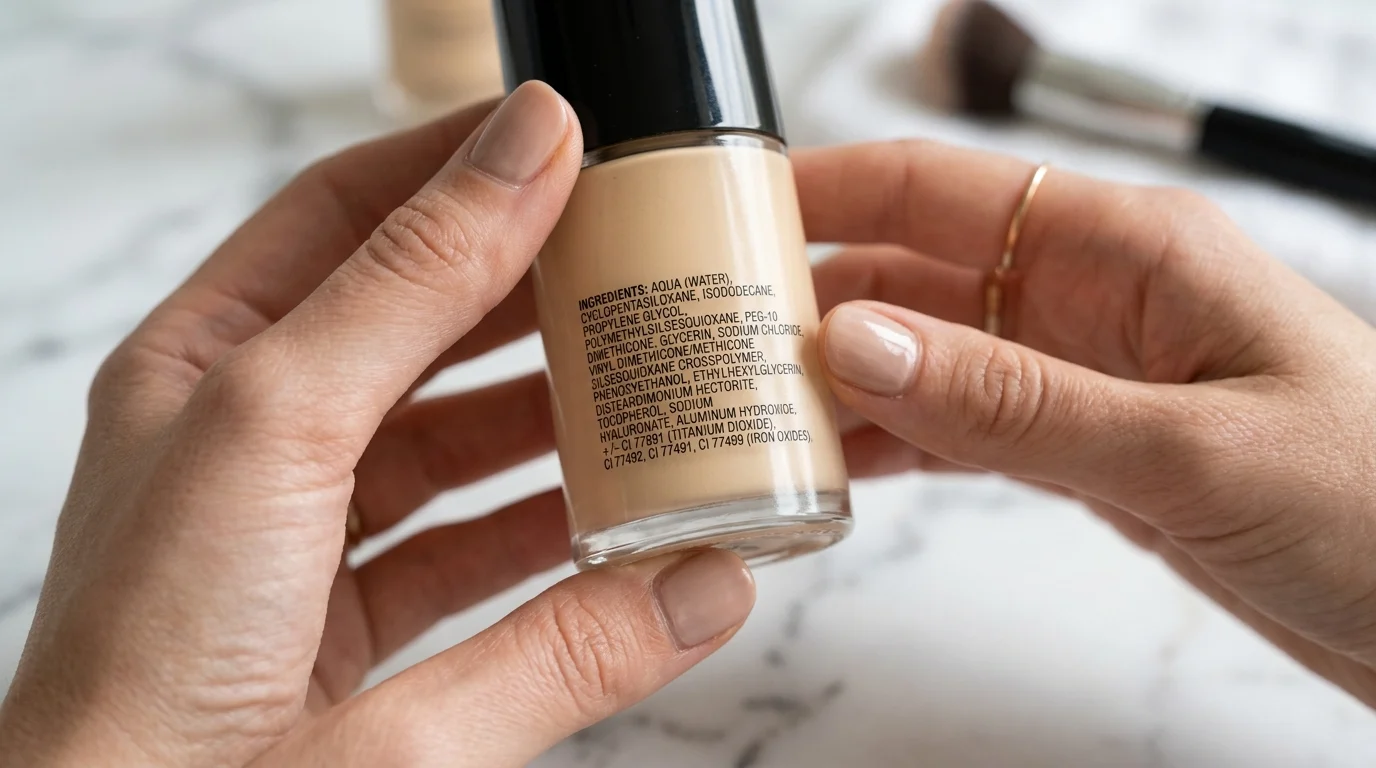
INCI stands for International Nomenclature of Cosmetic Ingredients — the standardized ingredient list printed on every cosmetic product worldwide, organized in descending order of concentration. The first ingredient listed is the one present in the greatest quantity. That single fact makes the base type of almost any foundation identifiable in under thirty seconds.
Silicone-based signals (appearing at or near the top of the INCI list):
- Dimethicone
- Cyclopentasiloxane
- Cyclohexasiloxane
- Phenyl trimethicone
- Trimethylsiloxysilicate
Water-based signals (appearing at or near the top of the INCI list):
- Aqua / Water
- Aloe barbadensis leaf juice
- Glycerin (when listed first or second)
- Rose water or other floral hydrosols
Many foundations are hybrid formulas — both water and silicone appear in the ingredient list. In those cases, their relative position indicates which dominates the formula architecture. A foundation listing dimethicone third and water eighth is fundamentally a silicone-dominant formula, regardless of how it is marketed.
Silicone Foundation and Oily Skin: Why the Chemistry Works
For oily skin, the core problem with foundation wear is sebum — produced constantly by overactive sebaceous glands and working continuously to disrupt whatever sits on top of it. Sebum is a lipid-rich secretion, and it interacts very differently with silicone-based and water-based formulas.
A silicone film resists sebum penetration because the chemistry of the two is largely incompatible — silicone is neither hydrophilic (water-attracting) nor lipophilic (oil-attracting) in the way sebum is. Sebum doesn’t dissolve or migrate through a silicone matrix efficiently. This delays oxidation and significantly extends wear.
The persistent perception that silicone foundations feel heavier is a formulation artifact from earlier generations of the category. Modern silicone foundations can be extraordinarily lightweight in texture while maintaining the film durability that oily skin demands. The weight is a texture variable; the sebum resistance is a chemistry variable. They are not the same thing.
Understanding how sebum changes affect foundation performance on skin after 35 is particularly relevant here, as sebum composition — not just volume — shifts with age, compounding the compatibility question.
Water-Based Foundation and Dry or Mature Skin: The Compatibility Argument
On dry or mature skin, a silicone film can work against the formula rather than for it. Dry skin has a compromised or thinned barrier — its surface texture is often uneven, with fine lines, flakiness, and areas of dehydration. A silicone-based foundation applied over that surface does not integrate with it; it sits on top of it, and in doing so can emphasize rather than smooth what lies beneath. The cling-film analogy becomes less flattering here: a rigid film over an uneven surface highlights every ridge.
Water-based foundations — particularly those formulated with humectants like glycerin or hyaluronic acid — interact more gently with a dry skin surface. The water component can briefly deliver moisture during application, and the formula tends to settle into the skin surface rather than resting on top of it.
The caveat is equally important: a water-based formula applied over a severely dehydrated or barrier-compromised surface can look patchy, because the uneven moisture levels in the skin cause inconsistent pigment distribution. Preparation matters. There are also cases where a tinted moisturiser outperforms foundation for dry or sensitive skin types entirely — worth considering before defaulting to either foundation base type.
The Pilling and Compatibility Problem: Why Base Type Determines Your Whole Routine
Pilling — that frustrating balling-up of product during application — is almost always a compatibility failure, not a product quality failure. Return to the cling-film analogy: two pieces of cling film pressed together don’t integrate smoothly; they grip and bunch against each other rather than melding. Apply a water-based foundation over a silicone-heavy primer, and the silicone layer beneath resists the water-based formula above — the foundation has nothing compatible to adhere to, so it gathers and rolls.
The sunscreen layer adds a frequently overlooked variable. Many chemical SPF formulations use silicone carriers for texture and elegance. Applying a water-based foundation directly over a silicone-heavy SPF can produce exactly the same incompatibility problem — pilling, patchy coverage, and accelerated breakdown.
The compatibility rules, laid out clearly:
- Silicone primer → silicone foundation: compatible — same film chemistry throughout
- Water-based primer → water-based foundation: compatible — consistent base throughout
- Silicone primer → water-based foundation: incompatible — high pilling risk
- Water-based primer → silicone foundation: often compatible, but patch testing is worthwhile
- Silicone sunscreen → water-based foundation: incompatibility and pilling risk
- Water-based sunscreen → either foundation type: generally compatible
The routine architecture can matter just as much as the foundation itself.
Sensitive Skin and Silicone: What the Evidence Actually Says
The association between silicone and sensitive skin irritation is widespread and largely misattributed. Clinical evidence does not support the idea that dimethicone clogs pores or triggers breakouts — the molecules are physically too large to enter the follicular channel.
Where silicone-based foundations do cause reactions in sensitive individuals, the culprits are typically other ingredients in the formula: fragrances, preservatives, film-forming polymers, or active additives that accompany the silicone base.
Water-based foundations tend to be recommended for sensitive skin not because silicones are inherently more reactive, but because water-based formulas are often simpler in architecture — fewer occlusive polymers, sometimes fewer additives. The recommendation is a formulation generalization, not a silicone indictment.
If a new foundation formula causes persistent redness, stinging, or breakouts regardless of base type, patch testing and dermatologist consultation are the appropriate next steps — formula reactions can involve any ingredient category, not only silicone or water-based components.
Silicone vs Water Foundation in Climate and Season
Climate is the variable most foundation guides overlook entirely, and it shifts the calculus meaningfully. In humid or hot conditions — high ambient moisture, elevated body temperature, accelerated sebum production — a silicone film tends to perform better. The film resists external moisture, resists sebum disruption from beneath, and maintains structural integrity under thermal stress. This is why silicone-based foundations have historically dominated the foundation formula types used in stage, film, and high-humidity markets.
In dry, cold climates, the equation inverts. Skin in these conditions is already moisture-deficient; placing an additional semi-occlusive silicone film over an already parched barrier can emphasize texture rather than obscure it. A well-formulated water-based foundation with humectant support interacts more gently with a dry winter skin surface.
Adjusting foundation base seasonally — silicone-dominant in summer or humid climates, water-dominant in dry winter months — is not excessive; it is chemically grounded.
Myth-busting note: The beauty industry’s habitual framing of silicone-based foundations as “bad for skin” and water-based as “clean” or inherently safer is a marketing construct, not a scientific position. Neither base type is universally better or safer. Both are well-established cosmetic formulation systems with decades of safety data behind them. The only relevant question is which formulation chemistry is compatible with the specific skin type, skincare routine, and environment in which it will be worn. Foundation and skin compatibility is a chemistry question with a chemistry answer — not a values one.
Foundation Base by Skin Type: A Quick Reference
| Skin Type / Condition | Generally Better Choice | Main Reason |
|---|---|---|
| Oily skin | Silicone-based | Silicone film resists sebum disruption and delays oxidation |
| Dry skin | Water-based | Settles into the skin surface; humectants support hydration on application |
| Mature / aging skin | Water-based (lightweight) | Less likely to sit on top of fine lines and surface texture |
| Sensitive skin | Water-based (simpler formulas) | Tends toward fewer additives, preservatives, and film-forming polymers |
| Combination skin | Hybrid or silicone-based | Silicone film manages the oily zones without over-drying drier areas |
| Hot / humid climate | Silicone-based | Film resists sweat, humidity, and accelerated sebum production |
| Dry / cold climate | Water-based | Avoids additional occlusion over moisture-deficient skin |
| Silicone-heavy skincare routine | Silicone-based | Maintains compatibility; reduces pilling risk |
| Water-based skincare routine | Water-based | Consistent base chemistry across the full routine |
Final Thoughts
The silicone-based vs water-based foundation question has a more useful answer than most beauty content suggests. It is not about which formula type is cleaner, safer, or more sophisticated — it is about which film-forming chemistry is compatible with a given skin type, barrier condition, and the products layered beneath. Oily skin generally benefits from silicone’s sebum resistance; dry and mature skin often performs better under a water-based formula that settles rather than sits. Neither camp holds a universal advantage.
Reading the INCI list removes the guesswork entirely. Whether dimethicone or aqua appears first tells you almost everything you need to know about a formula’s base architecture — and by extension, how it will likely behave on your skin and interact with the rest of your routine. Primer compatibility, SPF compatibility, and seasonal climate adjustments all follow from that single piece of information.
The most practical takeaway: treat foundation base type as a functional specification, not a marketing signal. Match it to your skin chemistry, your routine architecture, and the environment you’re in — and the performance gap between a formula that works and one that doesn’t will become noticeably smaller.
Frequently Asked Questions
How do I know if my foundation is silicone-based or water-based without reading the full INCI list?
Check the first two to three ingredients on the label. If you see dimethicone, cyclopentasiloxane, or cyclohexasiloxane near the top — it’s silicone-based. If you see aqua, water, or aloe barbadensis juice first — it’s water-based. The first ingredient is always the dominant one by concentration.
Does silicone-based foundation clog pores?
Not at the concentrations used in cosmetics. Dimethicone molecules are too large to enter the follicular channel, and this claim is not well supported by clinical evidence. It persists mainly through repetition in marketing-adjacent content rather than dermatological literature.
Can I use a silicone-based foundation if I have dry skin?
Yes, but preparation matters. A silicone-based foundation applied over a well-moisturized, barrier-supported skin surface can perform well — particularly lighter-coverage formulas with a satin rather than matte finish. Over dry, flaky, or poorly hydrated skin, the film is more likely to settle unevenly and emphasize surface texture. Hydrate thoroughly first and allow skincare to absorb fully before application.