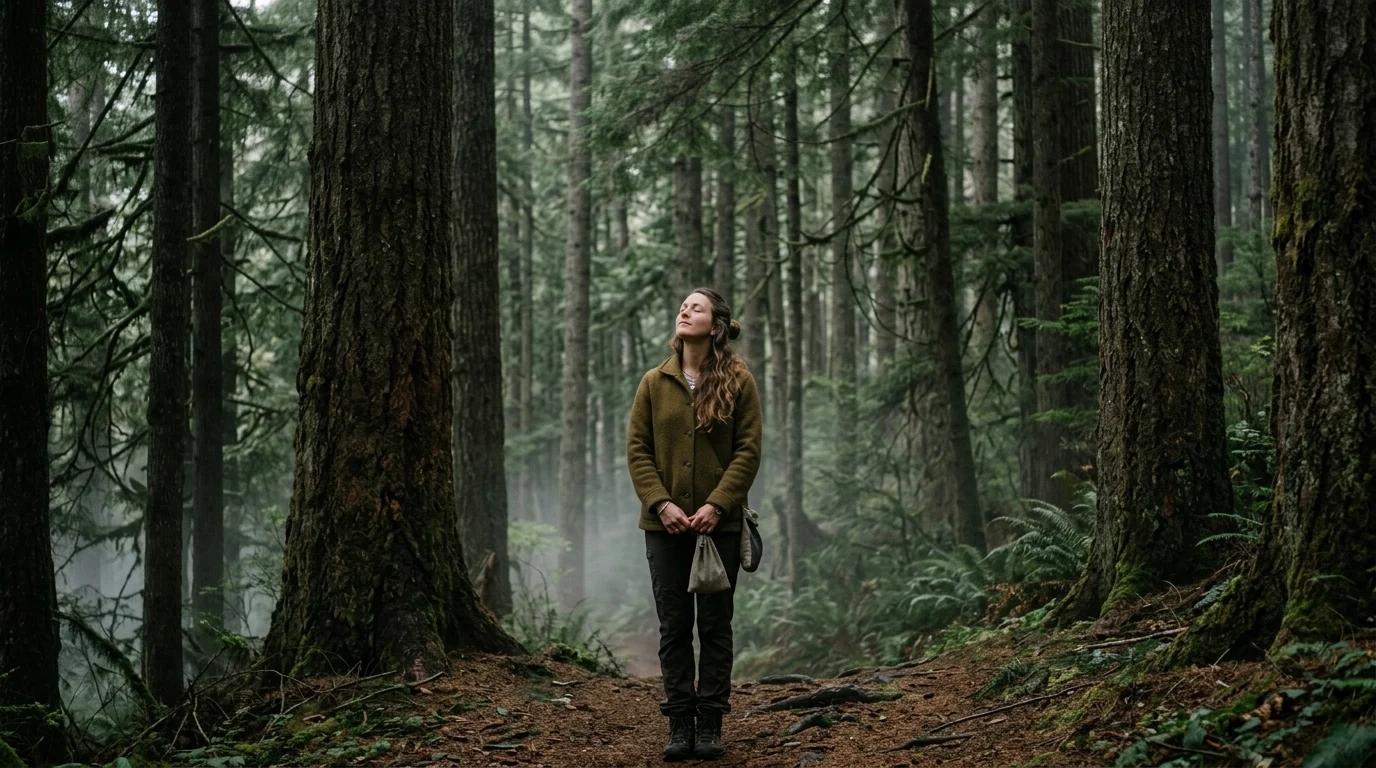
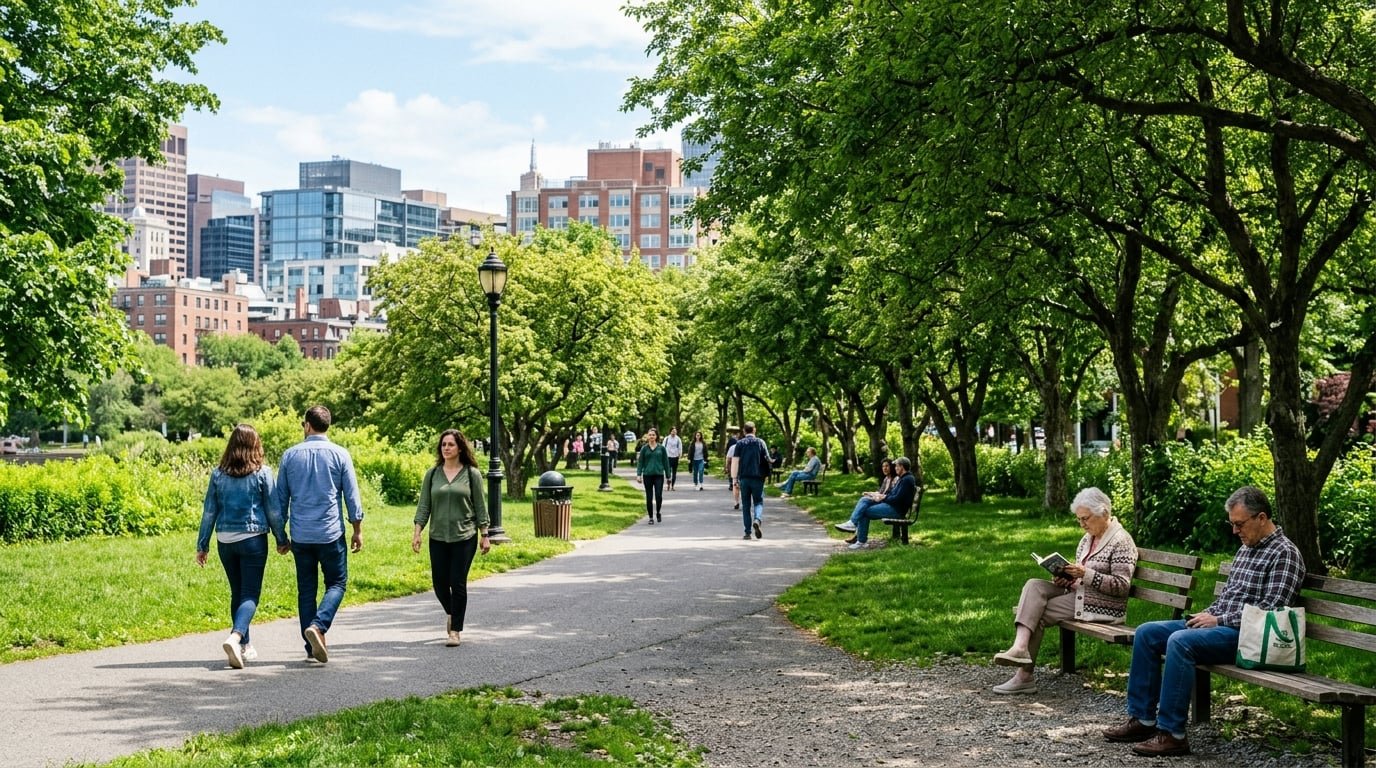
Consider a woman who takes the same 40-minute walk every weekday. Sometimes she moves through her urban neighborhood — pavements, traffic noise, shop fronts, the low hum of a city in motion. Other times she cuts through a nearby park: trees overhead, open sky, birdsong cutting through the ambient noise. Over months, a pattern becomes clear. The park walks leave her noticeably calmer, for longer. Her sleep is slightly better on those evenings. The following morning, her skin tends to look less reactive — less red, less tight. She dismisses it as coincidence. It isn’t. The biological mechanisms behind the difference between walking in a built urban environment and walking among trees are increasingly documented in psychophysiological and environmental health research. And the nature therapy benefits at play extend well beyond mood. They reach into cortisol regulation, immune function, inflammatory balance, and — through these converging pathways — skin health in ways that are measurable, if not yet fully characterized.
This article does not trade in wellness soft-focus. It examines what the current research actually shows, where the evidence is solid, and where it remains promising but preliminary.
What Nature Therapy Actually Is — Beyond the Wellness Language
Defining Nature Therapy as a Research Area
Nature therapy is an umbrella term covering a cluster of practices — forest bathing (shinrin-yoku), ecotherapy, structured green space exposure, and blue space contact (rivers, coastlines, urban water features) — that share a common premise: intentional time in natural environments produces measurable physiological and psychological changes. It is a growing area of psychophysiological research with a peer-reviewed literature base, not a wellness marketing category.
The research quality, however, varies considerably. Some studies are well-controlled, with matched urban and natural exposure conditions and objective biomarker measurement. Others are observational — recording what people report and correlating it with environment type. Throughout this article, that distinction matters and is reflected in how claims are framed.
One distinction worth establishing early: passive nature exposure — sitting in a park — and active nature engagement — walking mindfully among trees with sensory attention to the environment — appear to produce overlapping but not identical responses. Attention and sensory engagement with the natural environment seem to amplify some of the autonomic effects. The mechanisms for this are discussed below.
Why the Environment Type Matters
Not all outdoor environments produce equivalent physiological responses. Research consistently suggests that exposure to natural elements — trees, running water, varied terrain, birdsong — activates different autonomic nervous system responses than urban environments, even when physical activity level is carefully matched between conditions. The body appears to register the difference.
That said, the specific variables determining the magnitude of this effect — tree density, proximity to water, ambient noise levels, individual sensitivity to environment — are not yet fully characterized in the literature. The directional finding is consistent; the dose-response relationship is not yet mapped with clinical precision.
Nature Therapy Benefits for Cortisol and the Stress Response
The Cortisol-Reduction Mechanism
Cortisol is the body’s primary stress hormone — released by the adrenal glands in response to perceived threat or demand, it sharpens focus, mobilizes energy, and prepares the body for action. In short bursts, it is not only appropriate but necessary. The problem is chronic elevation: when the system that releases cortisol remains overactivated by persistent psychological, environmental, or sensory stress, cortisol accumulates effects that are measurably damaging over time.
Think of it as a smoke alarm that has been going off in a room with no fire. The alarm was not wrong to sound. But it needed to be reset. Time in natural environments — particularly green spaces with trees, running water, or varied terrain — is associated with measurable reductions in cortisol in multiple observational and some experimental studies, according to evidence-informed approaches to reducing cortisol and stress hormone levels. The cortisol-lowering association is reasonably supported by research; the precise dose — how many minutes, in what environment, how frequently — required to produce clinically meaningful reduction has not yet been established with precision.
For skin, the downstream consequences of chronic cortisol elevation are specific and significant. Elevated cortisol suppresses ceramide synthesis — ceramides are the lipid molecules that hold the skin barrier together, like mortar between bricks. It amplifies androgen-driven sebum production, contributing to congestion and breakout activity. It reduces hyaluronic acid output and impairs barrier repair mechanisms. An environment that supports cortisol normalization — including regular nature and stress reduction practices — creates the conditions in which these skin functions can resume more efficiently. For more on this cascade, how chronic cortisol elevation affects skin barrier function and inflammatory skin conditions is worth examining in full.
Parasympathetic Activation Through Nature Exposure
The autonomic nervous system operates in two principal modes. The sympathetic branch — fight-or-flight — mobilizes the body for action: elevated heart rate, increased cortisol, reduced digestive function, heightened neurological alertness. The parasympathetic branch — rest-and-repair — is the counterbalance: it slows heart rate, facilitates digestion, and — critically — allows tissue repair and immune maintenance to occur.
Think of chronic sympathetic activation as leaving a car engine running at high RPM continuously. Functional in the short term. Degrading, structurally, over time. Natural environments appear to facilitate a measurable shift toward parasympathetic dominance — the equivalent of switching the system from performance mode to maintenance mode. This shift is associated with improved skin barrier repair, reduced sebaceous gland stimulation, and decreased neurogenic inflammatory activity in skin tissue.
The parasympathetic-activating effect of nature exposure on the nervous system is supported by research measuring heart rate variability — a reliable marker of autonomic balance — in nature versus urban environments. The magnitude and duration of this shift, and its specific consequences for skin repair biology, are areas where more targeted clinical research is still needed.
Phytoncides, Forest Bathing, and Immune Function
What Phytoncides Are and Why They Matter
Shinrin-yoku — the Japanese practice of forest bathing, or slow, mindful immersion in a forested environment — emerged as a formal public health recommendation in Japan in the 1980s. What began as a cultural wellness initiative has since generated a meaningful body of physiological research. Among the most investigated mechanisms are phytoncides: volatile organic compounds released by trees as part of their own biological defense systems. Think of them as the forest’s own immune signals — airborne chemical messages that trees produce in response to insects, pathogens, and environmental stress.
The primary phytoncides studied in relation to human health are alpha-pinene and limonene — molecules with a scent recognizable as the clean, resinous quality of pine and cedar forest air. When inhaled, these compounds appear to have measurable effects on human NK (natural killer) cell activity. NK cells are the immune system’s surveillance team: specialized cells that identify and remove damaged, infected, or abnormal cells without requiring prior exposure to learn the threat.
According to research on forest bathing and its effects on immune function and NK cell activity, NK cell increases observed in controlled forest bathing studies are real and documented — not speculative. However, whether this translates to meaningful clinical immune benefit for healthy individuals in their daily lives — and whether it produces measurable outdoor wellness skin improvements specifically — requires more research before being stated as established fact. The signal is credible. The clinical translation is still being mapped.
What This Means for Skin
NK cells are not solely a cancer-surveillance mechanism. They participate in the immune activity that manages low-grade inflammation, supports tissue repair, and responds to barrier disruption in skin. A well-regulated immune system is associated with better skin barrier resilience and faster recovery from environmental damage.
The connection between shinrin-yoku benefits and skin immune function is biologically plausible — phytoncides influence NK activity, NK cells participate in skin immune regulation, therefore forest exposure may support skin immune resilience. But the direct causal pathway from forest bathing to improved skin immune function has not been established in skin-specific clinical research. Calling it “proven” would outrun the evidence. Calling it a coherent and testable hypothesis is accurate.
Nature Exposure and Chronic Inflammation
The Inflammaging Connection
Inflammaging — a portmanteau of inflammation and aging — refers to the chronic, low-grade inflammatory state that accumulates with age and is increasingly recognized as a driver of accelerated biological aging across organ systems, including skin. It is not the acute inflammation of a healing wound or an immune response to infection. It is a persistent, low-level background inflammatory tone that degrades collagen, impairs barrier function, and accelerates the cellular changes associated with visible skin aging.
Nature exposure may moderate inflammaging through several overlapping mechanisms: cortisol reduction (since chronically elevated cortisol drives pro-inflammatory cytokine release — cytokines being the chemical messengers that coordinate immune and inflammatory activity), parasympathetic activation (which reduces the inflammatory tone that sympathetic nervous system dominance maintains), and reduced sensory overstimulation (which contributes to neurogenic inflammatory activity in skin through stress neuropeptide release). Findings from research on nature exposure and inflammatory marker reduction support the directional association between green space health benefits and reduced systemic inflammatory markers.
These mechanisms are biologically plausible and directionally supported. The skin-specific causal pathway — from nature exposure to measurably reduced skin inflammation — is not yet conclusively established. It is a coherent model that the available data supports but does not yet clinch. For broader context on how lifestyle practices interact with nature and inflammation at the skin level, how lifestyle and wellness practices influence skin inflammation and aging over time offers a useful frame.
If chronic stress is significantly affecting skin conditions or overall health, consulting a dermatologist or healthcare professional is advisable — nature therapy practices are a complementary input, not a clinical intervention for diagnosed conditions.
Reduced Sensory Overstimulation as a Skin-Relevant Variable
Urban environments maintain a continuous low-level sympathetic load that natural environments simply do not. High ambient noise, artificial light at non-circadian frequencies, visual complexity, and the near-constant micro-alerts of digital notification all sustain a degree of neurological activation that the body treats as low-grade demand. This is not metaphor — it produces measurable effects on cortisol and inflammatory tone.
Stress neuropeptides — substance P and calcitonin gene-related peptide, among others — released during sympathetic activation have direct activity in skin tissue, contributing to mast cell degranulation, neurogenic flushing, and barrier disruption. Reducing sensory load through nature therapy mental health and environmental practices may contribute to skin reactivity reduction. The mechanism is biologically plausible and consistent with what is known about neurogenic skin inflammation. Skin-specific clinical research confirming this pathway directly remains limited.
Practical Nature Therapy: What the Research Suggests Is Worth Doing
Frequency and Duration
Some studies suggest that 20–30 minutes of nature exposure may produce measurable cortisol and autonomic response changes. This is a useful benchmark, not a clinical prescription. Optimal frequency, duration, and environment specificity are not yet established with the precision that would allow a specific dose recommendation. What the research does suggest consistently is that regularity matters more than intensity.
Occasional weekend immersion in a forest, while genuinely beneficial in the moment, appears less likely to produce sustained nervous system recalibration than consistent, moderate nature exposure integrated into the weekly routine. This is consistent with what habit formation and behavioral biology research suggests more broadly: the body adapts to what it encounters repeatedly, not just intensely.
What to Combine With Nature Exposure for Skin Benefit
Each of these practices has independent biological rationale. Their combination with regular nature exposure is directionally supported — the precise additive or synergistic effect has not been quantified:
Walking in natural environments: movement plus nature exposure combines microcirculation benefit — improved nutrient and oxygen delivery to skin — with cortisol regulation. Two pathways with independent skin relevance. For more on this, how walking in natural environments combines movement and nature exposure for skin health benefits explores both mechanisms. The walking in nature benefits on skin appear to operate through multiple concurrent pathways rather than a single mechanism.
Morning outdoor light exposure: supports circadian rhythm alignment — a well-established mechanism for improving sleep quality and the nocturnal skin repair processes (collagen synthesis, cellular turnover, barrier restoration) that depend on it.
Reducing screen and notification load during nature time: allows the parasympathetic shift that natural environments facilitate to occur without competing sympathetic stimulation. A walk in a park while monitoring a phone is physiologically different from the same walk with the phone away.
Consistent frequency over occasional duration: regular moderate nature exposure likely produces more sustained nervous system benefit — and therefore more consistent downstream skin benefit — than infrequent intensive exposure. The system responds to pattern, not just peak input.
📋 A Note on Access and Threshold Nature therapy’s curated wellness imagery — misty forests, mountain trails, dramatic coastlines — implies a level of access that most people do not have on a daily basis. The research does not require it. Studies on green space health benefits include urban parks, tree-lined streets, garden spaces, and bodies of water within city environments. The environmental threshold required to produce a measurable autonomic or cortisol response appears to be considerably lower than wilderness immersion.
A park with mature trees is sufficient to produce physiological signals meaningfully different from a paved street. The quality and magnitude of the response likely varies with environment type — a dense forest and an urban pocket park are not equivalent — but the principle that nature exposure requires significant time commitments or wilderness access is not supported by the research base.
Frequently Asked Questions
How much time in nature is needed to see a measurable health or skin benefit?
Some research suggests that 20–30 minutes of nature exposure may produce measurable changes in cortisol and autonomic markers. However, a precise dose has not been clinically established. What the evidence consistently points toward is regularity — moderate, frequent exposure — over occasional intensity. For skin-specific benefits, the pathway runs through sustained nervous system and hormonal changes rather than acute single sessions, which implies consistency matters more than duration per visit.
Is forest bathing just a wellness trend, or is there real science behind it?
There is real science behind it — with important nuance. The NK cell increases observed in controlled shinrin-yoku studies are documented. The phytoncide-immune interaction is a credible mechanism, not marketing language. What the evidence does not yet fully support is a precise clinical translation of these findings into specific health or skin outcomes for healthy individuals. Forest bathing is a legitimate research area with a growing peer-reviewed literature — it is also one where the gap between what studies show and what wellness claims assert is worth keeping in view.
Can urban parks provide the same nature therapy benefits as forests?
Probably not identical benefits — but meaningful ones. Research on ecotherapy benefits and green space exposure includes urban parks, and the autonomic and cortisol-related responses they produce appear to differ from both urban streets and dense forest environments, sitting somewhere directionally between the two. The environmental elements that seem to matter most — trees, natural sound, reduced artificial noise — can be present in well-designed urban green spaces. Equivalent to a forest in all respects? No. Without value? Also no.
We use cookies to improve your experience, analyze traffic, and deliver better content. You can accept or manage your preferences anytime.
Functional
Always active
The technical storage or access is strictly necessary for the legitimate purpose of enabling the use of a specific service explicitly requested by the subscriber or user, or for the sole purpose of carrying out the transmission of a communication over an electronic communications network.
Preferences
The technical storage or access is necessary for the legitimate purpose of storing preferences that are not requested by the subscriber or user.
Statistics
The technical storage or access that is used exclusively for statistical purposes.The technical storage or access that is used exclusively for anonymous statistical purposes. Without a subpoena, voluntary compliance on the part of your Internet Service Provider, or additional records from a third party, information stored or retrieved for this purpose alone cannot usually be used to identify you.
Marketing
The technical storage or access is required to create user profiles to send advertising, or to track the user on a website or across several websites for similar marketing purposes.