

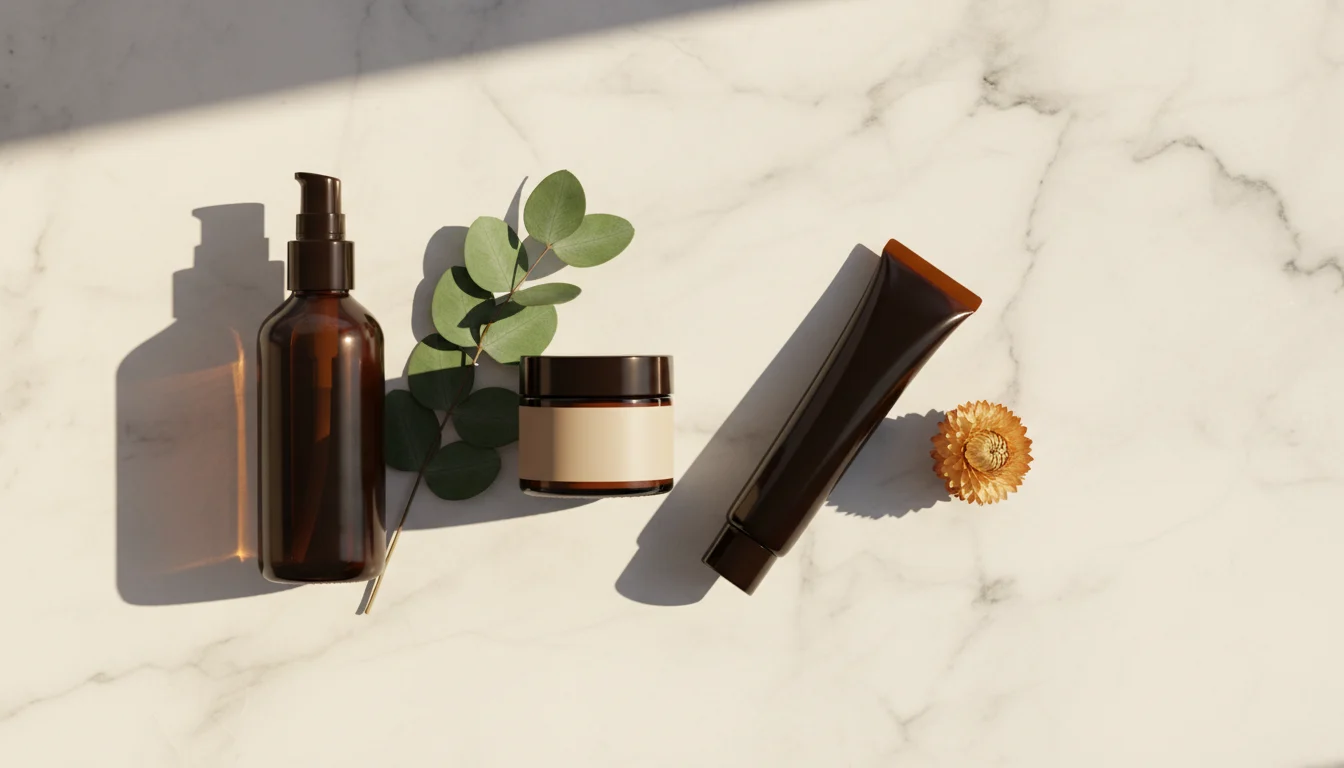
There is a particular moment that many people describe when they first encounter Aesop. It is not in a department store, not from an advertisement. It is usually in someone’s bathroom — a friend’s, a hotel, an Airbnb. The dark amber bottle sitting quietly on the shelf. The smell that is unlike anything else. The feeling that something here is considered, intentional, different. That moment is not accidental. It is exactly what Aesop has been building since 1987.
This Aesop skincare review takes an honest, grounded look at the brand — what it does well, where it earns its price point, and where it falls short. Because the question of is Aesop skincare worth it deserves a real answer, not a glossy one.
—
The Brand Behind the Bottle
Aesop was founded in Melbourne, Australia, by hairdresser Dennis Paphitis. From the beginning, the brand operated differently. No celebrity endorsements. No loud advertising. No promises of overnight miracles. Instead, Aesop built its identity around botanical ingredients, rigorous formulation, and a philosophy that treated customers as intelligent adults.
The stores — each one architecturally unique — became destinations in themselves. The packaging, always in that signature dark amber, was designed to protect the integrity of the formulas inside. Every detail was considered. That consistency of vision, held over nearly four decades, is part of what makes Aesop beauty products feel genuinely different from what fills the shelves of most pharmacies and department stores.
Today, Aesop operates in over 25 countries. It was acquired by L’Oréal in 2023 — a development that raised questions among loyal customers about whether the brand’s independence and values would be preserved. So far, the formulas and ethos appear unchanged. But it is worth noting for those who care about brand ownership.
—
Why This Brand Stands Out

When reading an Aesop skincare review, the question of differentiation always comes up. What actually separates Aesop from a well-formulated drugstore product? The answer is layered.
Formulation Philosophy
Aesop does not chase trends. While other brands rush to include whatever ingredient is currently viral, Aesop’s formulations are built around long-term skin health. The brand uses a combination of plant-based and laboratory-derived ingredients — not because “natural” is a marketing word, but because they believe the best results come from combining both intelligently.
Fragrance as an Intentional Choice
Aesop products are notably fragrant — something that sets them apart from many clean beauty brands that avoid fragrance entirely. This is a deliberate choice. The brand uses essential oils and botanical extracts that serve both sensory and functional purposes. It is also, for some skin types, a point of caution — more on that below.
Ethical and Environmental Commitments
- Cruelty-free — never tested on animals
- Vegan formulations across the majority of the range
- Recyclable packaging and a commitment to reducing environmental impact
- Responsible sourcing of botanical ingredients
- No use of parabens, mineral oils, or synthetic colourants
The Retail Experience
Walking into an Aesop store is genuinely unlike any other beauty retail experience. Staff are knowledgeable, unhurried, and trained to recommend based on skin concern rather than upsell. Samples are offered generously. It is a model that respects the customer’s time and intelligence — and it shows in the loyalty the brand inspires.
—
Aesop Skincare Review — The Best Products Worth Knowing About
Not every product in the range performs equally. These are the best Aesop skincare products that consistently earn their place in a considered routine.
Parsley Seed Anti-Oxidant Facial Toner
One of the most beloved products in the range. Lightweight, non-stripping, and genuinely effective at preparing the skin for the next steps in a routine. The parsley seed extract provides antioxidant protection, and the formula absorbs quickly without leaving any residue. Suitable for most skin types.
Camellia Nut Facial Hydrating Cream
A rich, deeply nourishing moisturiser that works particularly well for dry and mature skin. The texture is luxurious without being heavy, and the formula absorbs well. It is one of the products that consistently appears in positive Aesop skincare reviews from users with drier skin types.
Fabulous Face Cleanser
A gentle, milky cleanser that removes makeup and daily impurities without disrupting the skin barrier. Fragrant but not overwhelming. Works well for normal to dry skin. Those with oily or acne-prone skin may prefer the Purifying Facial Cream Cleanser instead.
Resurrection Aromatique Hand Balm
Technically a hand product, but worth mentioning because it is one of the most iconic Aesop products in existence. The scent — mandarin rind, cedar atlas, and rosemary leaf — is immediately recognisable. The formula is genuinely nourishing. It is the product that converts most people to the brand.
Lucent Facial Concentrate
A brightening serum that targets uneven skin tone and dullness. Contains Vitamin C derivatives and botanical extracts. Results are gradual rather than dramatic — which is consistent with Aesop’s overall philosophy of long-term skin health over quick fixes.
—
Scientifically Backed Ingredients
A thorough review of Aesop skin care products requires looking at what is actually inside the formulas. Here are the key ingredients that appear across the range and what the science says about them.
Parsley Seed Extract
Rich in antioxidants, particularly flavonoids and carotenoids. Antioxidants neutralise free radicals — unstable molecules generated by UV exposure, pollution, and stress — that accelerate skin ageing. Parsley seed extract is a signature Aesop ingredient and appears across multiple products in the range.
Mandelic Acid
An alpha hydroxy acid (AHA) derived from bitter almonds. Mandelic acid exfoliates the skin’s surface by loosening the bonds between dead skin cells, revealing brighter, smoother skin underneath. It has a larger molecular size than glycolic acid, meaning it penetrates more slowly and is generally better tolerated by sensitive skin types. It also has mild antibacterial properties, making it useful for acne-prone skin.
Camellia Oil
Extracted from the seeds of the Camellia sinensis plant — the same plant used for green tea. Camellia oil is rich in oleic acid, which closely mimics the skin’s natural sebum. It absorbs quickly, supports the skin barrier, and provides antioxidant protection through its polyphenol content. Dermatologically, it is considered a non-comedogenic oil suitable for most skin types.
Rosehip Oil
One of the most well-researched plant oils in dermatology. Rosehip oil is high in linoleic acid and trans-retinoic acid — a natural precursor to retinol. Studies have shown it can improve skin texture, reduce hyperpigmentation, and support collagen synthesis with consistent use. It is particularly effective for post-blemish marks and uneven skin tone.
Vitamin E (Tocopherol)
A fat-soluble antioxidant that protects cell membranes from oxidative damage. In skincare formulations, Vitamin E works synergistically with Vitamin C — each enhancing the other’s stability and efficacy. It also has emollient properties, supporting skin softness and moisture retention.
Always consult with a healthcare professional before starting new treatments, particularly if you have a diagnosed skin condition such as rosacea, eczema, or contact dermatitis. Some Aesop formulas contain essential oils and botanical extracts that, while carefully chosen, may not be suitable for highly reactive or compromised skin.
—
What Dermatologists Say — And a Myth Worth Addressing
💡 Dermatologist Perspective
When looking at an Aesop skincare review dermatologist perspective, the general consensus is measured. Dermatologists tend to appreciate Aesop’s avoidance of parabens, mineral oils, and synthetic colourants. The use of evidence-backed actives like AHAs and antioxidants is viewed positively. However, some dermatologists flag the use of fragrant essential oils — particularly for those with sensitive or reactive skin — as a potential irritant.
The Aesop review dermatologist community is not uniformly enthusiastic, but neither is it dismissive. The brand occupies a space that is more thoughtfully formulated than most mass-market options, while not claiming to be a medical-grade skincare line. That honesty is, in itself, worth something.
🚫 Myth: “Niche Brands Are Just Paying for the Packaging”
This is one of the most common criticisms of brands like Aesop — and it deserves a direct response. Yes, the packaging is beautiful. Yes, the store experience is considered. But the formulas themselves contain high-quality, carefully sourced ingredients at meaningful concentrations. The price reflects ingredient quality, ethical sourcing, and formulation expertise — not just aesthetics. That said, premium price does not automatically mean superior results for every skin type. The best approach is always to understand your own skin and choose accordingly.
—
Is Aesop Skincare Good for All Skin Types?
The honest answer to is Aesop skincare good for everyone is: mostly, but not universally. Here is a quick breakdown:
- Dry skin — Aesop excels here. The moisturisers and facial oils are rich, nourishing, and deeply effective.
- Normal to combination skin — Most of the range works well. The toners and lighter moisturisers are particularly suited.
- Oily or acne-prone skin — Some products work well, but choose carefully. The Purifying Facial Cream Cleanser and Parsley Seed Toner are good starting points. Avoid heavier oils.
- Sensitive skin — Proceed with caution. The fragrant formulas, while beautiful, can irritate reactive skin. Always patch test first.
- Mature skin — Aesop is particularly well-suited. The antioxidant-rich formulas and nourishing textures support ageing skin beautifully.
Community discussions — including Aesop skincare review Reddit threads — reflect this nuance. The most enthusiastic reviews consistently come from those with dry, normal, or mature skin. Those with oily or sensitive skin report more mixed experiences.
—
Is Aesop Skincare Worth It — The Honest Verdict
After a thorough look at the formulas, the philosophy, and the real-world results, the answer to is Aesop skincare worth it is: yes — with context.
Aesop is worth it if you value considered formulation, ethical production, and a sensory experience that makes a daily skincare routine feel genuinely pleasurable. The Aesop products review landscape — from beauty editors to everyday users — consistently highlights the brand’s ability to make skincare feel like a ritual rather than a chore. That is not nothing.
It is not worth it if you are looking for the highest concentration of clinical actives at the lowest price point. For that, there are excellent options at a fraction of the cost. But if the question is whether Aesop delivers on its promises with integrity — the answer is yes.
Whether is Aesop good skincare for you specifically depends on your skin type, your values, and what you want from a beauty routine. For many people, it becomes one of those brands they return to quietly, consistently, for years.
—
Where to Find It
Aesop products are available through several channels, but buying directly is always recommended.
- Aesop official website — aesop.com — the most reliable source for the full range, including limited editions and new launches. Purchasing directly also supports the brand’s independence and ensures product authenticity.
- Aesop stores — available in major cities worldwide. The in-store experience includes personalised recommendations and generous sampling — worth visiting at least once.
- Selected retailers — Net-a-Porter, Selfridges, Space NK, and similar premium beauty retailers carry a curated selection. Useful if you prefer to consolidate purchases.
- Avoid third-party marketplaces — Aesop does not authorise sales on Amazon or similar platforms. Products sold there may be counterfeit, expired, or improperly stored.
—
Frequently Asked Questions
Is Aesop skincare actually effective, or is it mostly about the brand image?
Aesop formulas contain genuinely effective, well-researched ingredients — antioxidants, AHAs, plant oils, and vitamins — at meaningful concentrations. The brand image is strong, but it is built on a foundation of real formulation quality. Results vary by skin type, but the products are not simply expensive packaging. For dry, normal, and mature skin in particular, the efficacy is consistently well-regarded.
Is Aesop suitable for sensitive skin?
Some Aesop products are suitable for sensitive skin, but the range as a whole is not fragrance-free. The brand uses essential oils and botanical extracts that can irritate reactive or compromised skin. If you have sensitive skin, always patch test before committing to a full product, and consider starting with the simpler, less fragrant formulas in the range.
Where is the best place to buy Aesop skincare?
The official Aesop website and authorised Aesop stores are always the best options. Purchasing directly ensures product authenticity, proper storage, and access to the full range. Aesop does not authorise sales on third-party marketplaces like Amazon, so products found there should be approached with caution.
Pingback: Niche Skincare vs Luxury Skincare: What's the Real Difference? - Denyva