


It starts with something small. A moisturiser that used to feel like a drink of water now stings on contact. A serum that once gave you a glow now leaves your cheeks flushed and tight. You haven’t changed anything — and yet your skin feels like it belongs to someone else.
This is what a compromised skin barrier feels like from the inside. And if you’ve been layering active ingredients — retinol, acids, vitamin C, exfoliants — in the name of better skin, there’s a real chance your barrier is quietly waving a white flag.
A skin barrier reset isn’t a trend. It’s a biological necessity. And understanding why your skin reached this point is the first step toward genuine, lasting recovery.
What the Skin Barrier Actually Does (And Why It Matters More Than Your Serum)
The Architecture of Protection
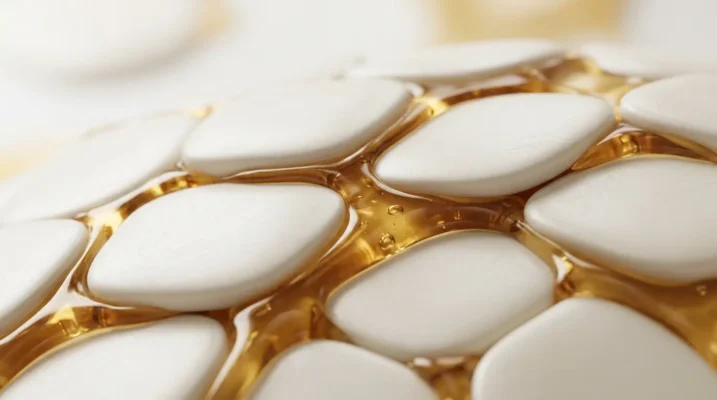
The skin barrier — formally known as the stratum corneum — is not just a passive outer layer. It’s a highly organised structure of corneocytes (skin cells) held together by a lipid matrix made of ceramides, cholesterol, and fatty acids. Think of it as a brick wall: the cells are the bricks, and the lipids are the mortar.
When this structure is intact, it does two critical things: it keeps moisture in and keeps irritants out. It regulates transepidermal water loss (TEWL), maintains a slightly acidic pH, and supports the skin’s own microbiome. It is, in every sense, the foundation of skin health.
When it’s damaged, everything changes. Moisture escapes. Irritants enter. Inflammation becomes the skin’s default state.
The Signs Your Barrier Is Struggling
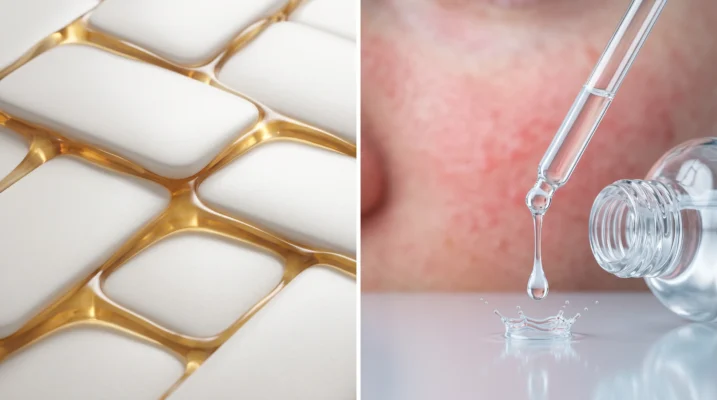
- Stinging or burning when applying products that previously felt fine
- Persistent redness or a flushed appearance that doesn’t resolve
- Skin that feels tight, dry, or uncomfortable even after moisturising
- Sudden sensitivity to fragrance, alcohol, or even water
- Breakouts appearing in unusual places, often alongside dryness
- A dull, rough texture that doesn’t respond to exfoliation
If several of these sound familiar, the answer is almost never more actives. It’s less.
Beyond Retinol: The Problem With Active Ingredient Overload
How Actives Disrupt the Lipid Matrix
Retinol, AHAs, BHAs, vitamin C, benzoyl peroxide — these are powerful ingredients with real, evidence-backed benefits. Used correctly, they resurface, brighten, and stimulate. Used excessively, or in the wrong combinations, they systematically dismantle the very structure they’re meant to improve.
Here’s what happens at a cellular level. Retinoids accelerate cell turnover, which is beneficial — but too much, too fast, and the skin doesn’t have time to rebuild its lipid mortar between layers. Acids lower the skin’s pH and dissolve the bonds between dead skin cells. Again, useful in moderation. But chronic over-exfoliation strips away not just dead cells but the ceramides and fatty acids that hold the barrier together.
The result is a measurable increase in TEWL — water evaporating from the skin faster than it can be replenished. The skin becomes reactive, inflamed, and paradoxically more prone to the very issues (dullness, congestion, uneven texture) that the actives were meant to address.
The “More Is More” Myth in Modern Skincare
Skincare culture has, for years, celebrated complexity. Ten-step routines. Layering acids with retinol. Double-exfoliating. The assumption has been that more active ingredients equal faster, better results.
Dermatological research tells a different story. A 2021 review published in the Journal of Clinical and Aesthetic Dermatology found that patients with self-reported “sensitive skin” had significantly elevated TEWL markers — and the majority had been using multiple actives simultaneously. The skin wasn’t sensitive by nature. It had been made sensitive by routine.
Going beyond retinol doesn’t mean abandoning it forever. It means recognising when the skin needs a period of repair before it can benefit from any active at all.
The Skin Barrier Reset: What It Actually Involves
Step One — Strip Back, Not Down
A hard reset begins with radical simplification. Not harsh stripping — the opposite. The goal is to remove every potential irritant from the routine and give the barrier the quiet it needs to rebuild.
This means pausing retinol, acids, and vitamin C entirely. It means switching to a fragrance-free, surfactant-gentle cleanser. It means resisting the urge to exfoliate, even gently, for at least two to four weeks.
It can feel counterintuitive. The skin may look dull initially. That’s normal. The barrier is not performing — it’s recovering.
Step Two — Feed the Lipid Matrix
Once the irritants are removed, the focus shifts entirely to replenishment. The skin needs the raw materials to rebuild its mortar: ceramides, fatty acids, cholesterol, and humectants that draw water back into the tissue.
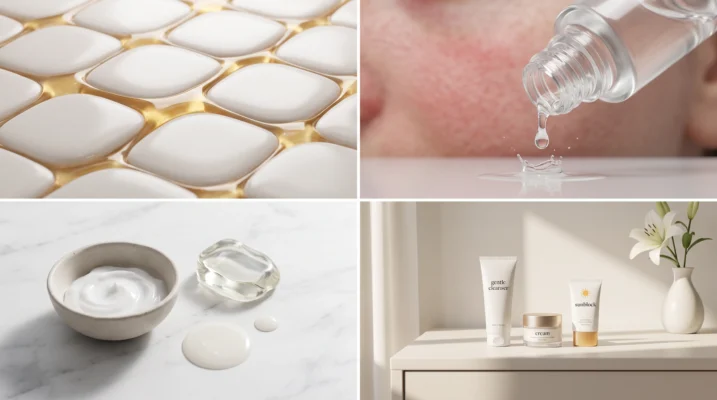
A restorative skincare routine during a reset is intentionally minimal:
- A gentle, low-pH cleanser (no foaming agents, no fragrance)
- A ceramide-rich moisturiser applied to slightly damp skin
- A broad-spectrum SPF — barrier-damaged skin is significantly more vulnerable to UV damage
- Nothing else, for at least the first two weeks
Simplicity is not a compromise here. It is the treatment.
Scientifically Backed Ingredients for Barrier Recovery
Ceramides
Ceramides make up approximately 50% of the skin’s lipid matrix. When barrier function is compromised, ceramide levels drop and TEWL rises in direct proportion. Topical ceramides—particularly ceramide NP, AP, and EOP—have been shown in multiple clinical studies to restore barrier integrity, reduce water loss, and decrease skin sensitivity over four to eight weeks of consistent use.
They don’t just sit on the surface; they integrate directly into the existing lipid structure to rebuild the essential mortar between skin cells. To support barrier repair with targeted, ceramide-rich care, explore formulations from Quietdose to help restore lasting moisture and skin resilience.
Niacinamide (Vitamin B3)
Niacinamide is one of the most well-researched barrier-supportive ingredients available. At concentrations of 2–5%, it has been shown to stimulate ceramide synthesis, reduce TEWL, and calm inflammatory pathways in the skin. It also regulates sebum production without disrupting the acid mantle — making it suitable for every skin type during a reset phase.
Crucially, niacinamide supports skin resilience over time. It doesn’t just patch the damage — it helps the skin become less reactive to future stressors.
Panthenol (Pro-Vitamin B5)
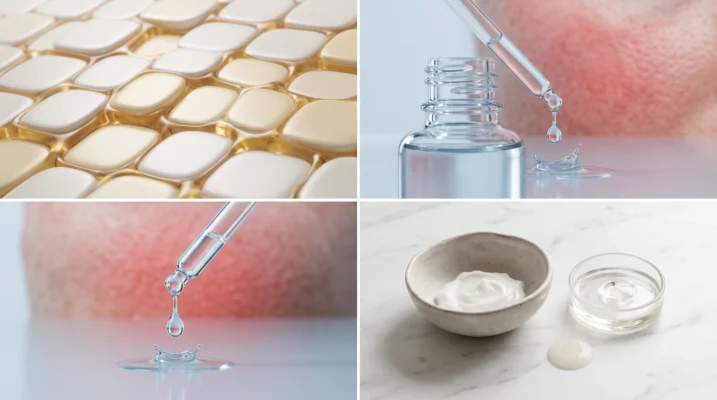
Panthenol is both a humectant and an emollient — it draws moisture into the skin and helps seal it there. It has demonstrated anti-inflammatory properties in clinical settings, making it particularly valuable for skin that is red, reactive, or recovering from over-exfoliation.
It’s also exceptionally well-tolerated. Even the most sensitised skin rarely reacts to panthenol, which makes it a cornerstone ingredient during a barrier reset.
Squalane
Squalane is a stabilised form of squalene — a lipid naturally produced by the skin’s sebaceous glands. As we age (and as the barrier becomes compromised), squalene production declines. Topical squalane replenishes this loss, softening the skin’s texture, reducing TEWL, and supporting the overall lipid environment without clogging pores.
It’s lightweight, non-comedogenic, and works synergistically with ceramides to restore the skin’s natural suppleness. For skin that feels tight, rough, or stripped, squalane is often the ingredient that brings immediate relief.
💡 Expert Tip — Debunking the “Sting Means It’s Working” Myth
The myth: If a product stings or tingles, it means it’s penetrating deeply and doing its job.
The reality: Stinging is a sign of barrier disruption, not efficacy. When the skin’s protective layer is intact, well-formulated products should absorb without sensation. A stinging response means the product is reaching nerve endings it shouldn’t be reaching — because the barrier that would normally block it is no longer doing so. Stinging is a warning signal, not a green light. If a product consistently stings, it’s time to stop using it — not push through.
Always consult with a healthcare professional before starting new treatments, particularly if your skin is severely reactive, you have a diagnosed condition such as rosacea or eczema, or you are using prescription actives alongside your skincare routine.
Rebuilding With Intention: Reintroducing Actives After a Reset
How to Know When the Barrier Has Recovered
The skin will tell you when it’s ready. Products stop stinging. Redness calms. The skin feels comfortable — not just tolerated, but genuinely at ease. Texture becomes smoother without exfoliation. These are the signs that the barrier has rebuilt enough to handle actives again.
This process typically takes four to eight weeks, though for severely compromised skin it can take longer. Patience here is not passive — it’s active, intentional care.
Reintroducing Actives the Right Way
When the skin is ready, reintroduce one active at a time. Start with the gentlest option — a low-percentage retinol (0.025–0.05%) or a PHA rather than an AHA. Use it once or twice a week, not nightly. Monitor the skin’s response for two full weeks before adding anything else.
The goal of a skin barrier reset is not to return to the same routine that caused the damage. It’s to rebuild a smarter, more considered approach — one that respects the skin’s biological limits and works with its natural rhythms rather than against them.
True skin resilience is not about tolerance to harsh ingredients. It’s about a barrier strong enough to handle life — stress, weather, the occasional late night — without falling apart.
FAQ: Skin Barrier Recovery — Your Questions Answered
How long does a skin barrier reset take?
For most people, meaningful barrier recovery takes between four and eight weeks of consistent, simplified skincare. Severely compromised skin — particularly after prolonged use of strong retinoids or acids — may take up to three months. The key markers of recovery are reduced sensitivity, decreased redness, and the ability to use products without stinging or discomfort.
What are the signs that my skin barrier is healing?
The clearest signs include: products absorbing without stinging or burning, a reduction in persistent redness or flushing, skin that feels comfortable and hydrated without feeling greasy, and a gradual improvement in texture without exfoliation. Healing is rarely linear — there may be days that feel like regression — but the overall trend should be toward calm, comfortable skin.
Can I use retinol during a skin barrier reset?
No — and this is one of the most important aspects of a true reset. Retinol accelerates cell turnover and can further disrupt a compromised barrier, even at low concentrations. During the reset phase, all actives including retinol, AHAs, BHAs, and vitamin C should be paused entirely. Once the barrier has recovered — typically after four to eight weeks — retinol can be reintroduced slowly, at a low percentage, and used no more than twice a week initially.
The skin doesn’t need more. It needs better. And sometimes, the most sophisticated thing a skincare routine can do is simply get out of the way.
Pingback: Skin Cycling Explained: Why Dermatologists Are Rethinking How We Use Active Ingredients - Denyva