


It starts with a small decision. One evening, instead of scrolling through a phone until midnight, the screen goes dark an hour earlier. The room feels quieter. The eyes soften. And the next morning, something in the mirror looks different — not dramatically, but noticeably. The skin seems calmer. Less reactive. More itself. That small shift is often the first real introduction to what protecting skin in the age of blue light actually means — and how much the modern environment is quietly working against the skin’s natural balance.
Blue light is everywhere. Laptops, phones, tablets, LED lighting — the average person now spends more than seven hours a day in front of a screen. The conversation around sun protection is well established. The conversation around digital light exposure is only just beginning.
What Blue Light Actually Does to Your Skin
Blue light, or high-energy visible light (HEV), sits at the edge of the UV spectrum. Unlike UVA and UVB rays, it is not blocked by standard glass — and it penetrates deeper into the skin than UVB, reaching the dermis where collagen and elastin live.
Research into blue light and skin is still evolving, but current evidence points to several concerns worth taking seriously. Blue light generates free radicals in skin tissue, triggering oxidative stress that accelerates the breakdown of collagen. It disrupts melanin production, which can lead to uneven pigmentation — particularly in deeper skin tones. And it interferes with the skin’s circadian rhythm, impairing the overnight repair cycle that the barrier depends on.
The result, over time, is skin that looks tired, uneven, and less resilient than it should. Protecting skin from blue light is not about fear — it is about understanding a new environmental factor and responding intelligently.
Digital Detox for Your Face: What It Really Means

A digital detox for your face is not about abandoning technology. It is about creating intentional boundaries — moments in the day where the skin is given space to recover from the constant low-level assault of screen exposure.
This looks different for everyone. It might be a screen-free morning ritual. An hour before bed without devices. A weekend afternoon spent outdoors in natural light rather than artificial. These are not dramatic changes. But cumulatively, they give the skin’s repair mechanisms the conditions they need to function properly.
Practical Digital Detox Habits for Skin Health

- Screen-free mornings: Give the skin at least 30 minutes before introducing artificial light exposure. Use this time for your skincare ritual instead.
- Night mode and distance: Enable warm-tone night mode on devices after sunset. Hold screens at least 30cm from the face.
- Blue light glasses: For those who work long hours at screens, blue light filtering lenses reduce cumulative HEV exposure to the face.
- Outdoor light breaks: Natural daylight — particularly morning light — helps regulate the skin’s circadian rhythm and supports barrier repair cycles.
- Screen-free evenings: The skin does its most significant repair work between 10pm and 2am. Reducing screen exposure in the hours before sleep directly supports this process.
Protecting Skin in the Age of Blue Light: The Barrier First
Understanding what does protecting skin barrier mean is the foundation of any intelligent skincare approach — and it becomes even more relevant in the context of blue light exposure.
The skin barrier is a complex structure of lipids, proteins, and moisture that sits at the outermost layer of the skin. Its job is to keep hydration in and environmental aggressors out. When it is intact, skin is resilient, calm, and able to repair itself efficiently. When it is compromised — by stress, poor sleep, harsh products, or environmental exposure — everything becomes a potential irritant.
Blue light weakens the barrier indirectly, through oxidative stress and circadian disruption. This means that the best products for protecting skin barrier are those that address both structural repair and antioxidant defence simultaneously.
What to Look for in a Blue Light Defence Routine
- Antioxidants — Vitamin C, niacinamide, and resveratrol neutralise the free radicals generated by HEV exposure.
- Barrier repair ingredients — Ceramides, fatty acids, and cholesterol restore the lipid structure of the barrier.
- Iron oxides — Found in tinted SPF formulations, iron oxides are currently the most evidence-backed topical defence against blue light penetration.
- Growth factors — Support cellular regeneration and help counteract the collagen degradation associated with HEV exposure.
Sunscreen and Blue Light: What You Need to Know
Sunscreen protecting skin from UV radiation is well understood. But standard mineral and chemical sunscreens offer limited protection against blue light. This is an important distinction that is often overlooked.
Zinc oxide — found in mineral sunscreens — does offer some HEV protection, but the most effective approach is a tinted SPF containing iron oxides. Studies have shown that iron oxides significantly reduce blue light penetration into the skin, making tinted formulations a meaningful upgrade for anyone concerned about screen exposure.
Expert Myth Busted: Many people believe that sitting indoors means they do not need sunscreen. In reality, UVA rays penetrate glass, and blue light from screens adds an additional layer of daily skin stress. SPF is not just for sunny days outdoors — it is a daily non-negotiable for anyone serious about long-term skin health.
For those who want to know how to tan while protecting skin, the answer lies in mineral SPF applied consistently — allowing gradual, controlled sun exposure while maintaining barrier integrity. Tanning without protection is never advisable, but a well-formulated mineral SPF allows the skin to adapt to sun exposure without the oxidative damage that accelerates ageing.
Scientifically Backed Ingredients for Blue Light Protection
When building a routine focused on protecting skin from blue light, ingredient selection matters. The following have meaningful scientific support for their role in HEV defence and barrier resilience:
- Deer Velvet Extract — Rich in growth factors, IGF-1, and collagen precursors, deer velvet supports cellular regeneration at a biological level. As blue light accelerates collagen degradation, ingredients that actively stimulate repair — rather than simply protect — become particularly valuable.
- Niacinamide (Vitamin B3) — A multitasking active that strengthens the barrier, reduces pigmentation triggered by HEV exposure, and has documented anti-inflammatory properties. One of the most well-tolerated and well-researched ingredients for daily use.
- Vitamin C (L-Ascorbic Acid) — A potent antioxidant that neutralises free radicals generated by blue light. Also a cofactor in collagen synthesis, making it doubly relevant for screen-exposed skin.
- Ceramides — Lipid molecules that restore the structural integrity of the skin barrier. Essential for any routine focused on long-term resilience.
- Resveratrol — A polyphenol antioxidant found in grape skin and certain plants. Research suggests it offers meaningful protection against oxidative stress from HEV light, particularly when used in evening formulations.
- Zinc Oxide — Beyond its UV-blocking properties, zinc oxide offers partial HEV protection and has anti-inflammatory benefits that support barrier health.
- Lutein — A carotenoid antioxidant that has shown promise in early research for filtering blue light at the skin level, similar to its well-established role in eye health.
Always consult with a healthcare professional before starting new treatments, particularly if you are managing a diagnosed skin condition or taking medication that affects skin sensitivity.
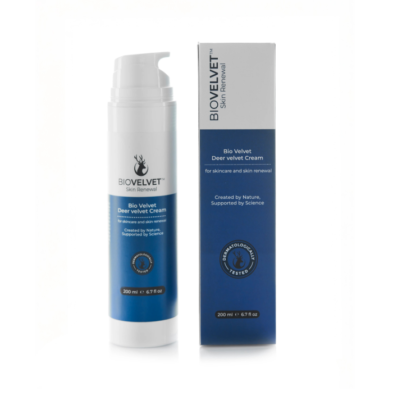
Why This Brand Stands Out: BioVelvet Skin Renewal
In a skincare market that moves quickly — chasing trends, reformulating for marketing cycles, and prioritising novelty over efficacy — BioVelvet represents a quieter, more considered approach.
The brand’s foundation is deer velvet extract: a bioactive ingredient with a long history in traditional medicine and a growing body of modern research supporting its role in cellular regeneration. In the context of blue light protection, this matters. Antioxidant defence is only part of the equation. The skin also needs active repair — and that is where growth factor-rich ingredients like deer velvet become genuinely relevant.
What sets BioVelvet apart in a crowded space:
- Targeted formulation — Products are built around specific biological mechanisms, not ingredient trends. The focus is on barrier support, cellular regeneration, and long-term resilience.
- Ethical sourcing — The deer velvet used is ethically harvested and processed to preserve the bioactive compounds that make it effective. This is not a cosmetic claim — it is a production standard.
- Dermatological testing — All products are dermatologically tested, making them appropriate for sensitive and reactive skin — the skin type most vulnerable to blue light stress.
- Minimalist philosophy — In an industry that profits from complexity, BioVelvet advocates for simplicity. Fewer, better ingredients. Consistent use. Real results over time.
For anyone building a routine around protecting skin from blue light, BioVelvet’s repair-focused formulations offer something that most antioxidant serums do not: active cellular regeneration alongside barrier support.
Building a Blue Light Protection Routine
A routine designed for the digital age does not need to be complicated. It needs to be consistent and targeted.
Morning Routine
- Gentle cleanser — non-stripping, pH-balanced
- Vitamin C serum — applied to clean skin for maximum antioxidant effect
- Barrier-supportive moisturiser — ceramides, niacinamide, or deer velvet extract
- Tinted mineral SPF with iron oxides — the most effective topical defence against blue light
Evening Routine
- Double cleanse — remove SPF, pollution, and the day’s oxidative load
- Resveratrol or niacinamide serum — antioxidant repair while the skin’s circadian cycle is active
- BioVelvet repair cream — growth factor support for overnight cellular regeneration
- Facial massage — two to three minutes to support circulation and lymphatic drainage
The Bigger Picture: Skin as a Reflection of How You Live
Protecting skin in the age of blue light is ultimately about more than skincare. It is about recognising that the environment has changed — and that the skin, as a living organ, responds to that environment in real time.
The screens are not going away. But the relationship with them can be managed with more intention. A digital detox for your face is not a rejection of modern life. It is a recalibration — a decision to give the skin the conditions it needs to remain resilient, even in a world that was not designed with skin health in mind.
Small changes, consistently applied, create meaningful results. That is true of skincare. And it is true of the way we live.
Where to Find It
BioVelvet is available through the brand’s official store and select authorised retailers. Purchasing directly from the brand ensures you receive authentic, freshly formulated product — not stock that has been sitting in a third-party warehouse for months.
Buying direct also gives access to the most current formulations, dedicated customer support, and any exclusive offers the brand makes available to its community.
Explore the full BioVelvet range: Shop BioVelvet here.
FAQ: Protecting Skin in the Age of Blue Light
Does blue light from screens really damage skin?
Yes — research shows that blue light generates free radicals in skin tissue, accelerates collagen breakdown, and disrupts the skin’s circadian repair cycle. The effects are cumulative and become more visible over time, particularly with prolonged daily screen exposure.
What are the best products for protecting skin barrier against blue light?
The best products for protecting skin barrier against blue light combine antioxidants (vitamin C, niacinamide, resveratrol) with barrier-repair ingredients (ceramides, fatty acids) and a tinted mineral SPF containing iron oxides. Growth factor-rich formulations like BioVelvet add an additional layer of cellular repair support.
Can I still tan while protecting skin from blue light and UV damage?
Yes. Learning how to tan while protecting skin involves using a well-formulated mineral SPF consistently, which allows gradual sun exposure while preventing the oxidative damage that accelerates ageing. Tanning without protection is never advisable — but mineral SPF allows the skin to adapt safely.