

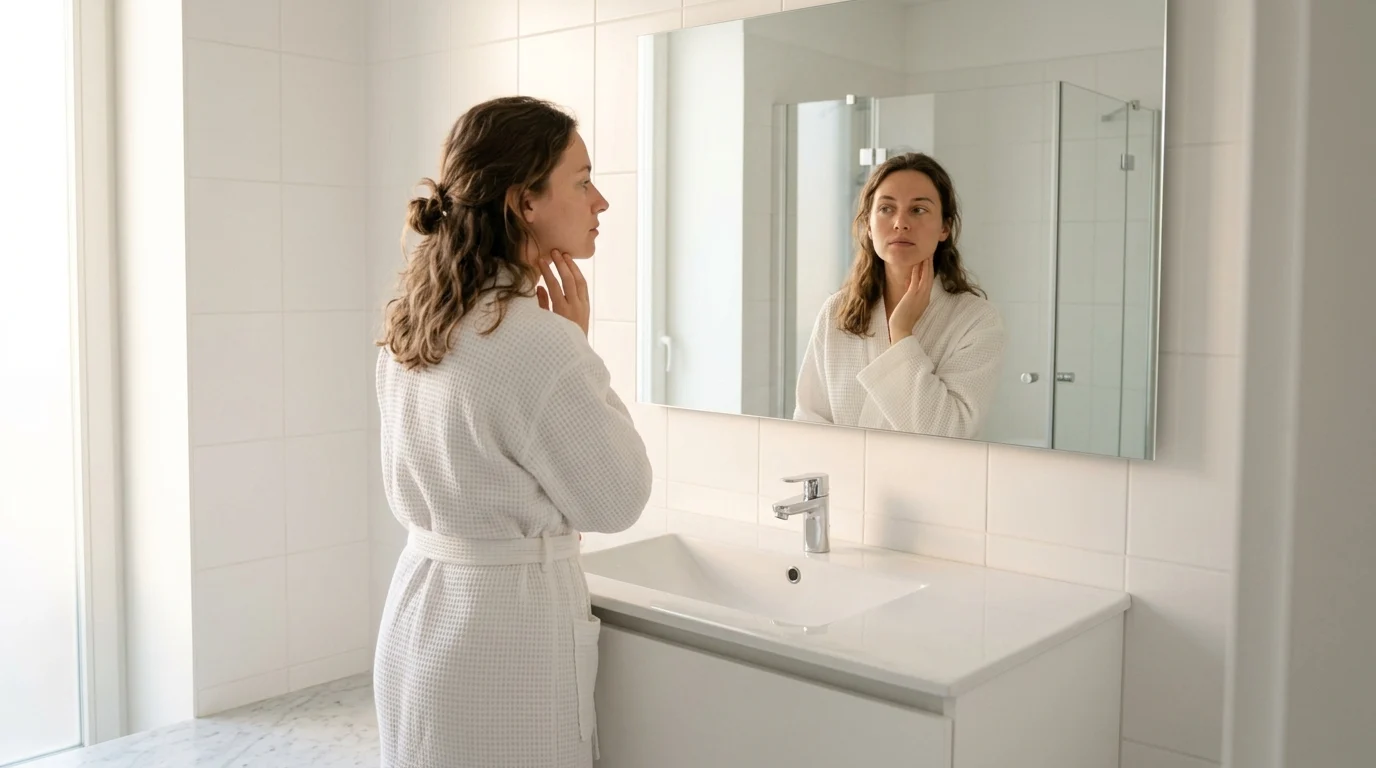
There is a particular moment many people recognise. You are standing in the bathroom, morning light coming through the window, and you catch your reflection. The face looking back at you seems older somehow — duller, more fragile. The skin that once felt like yours now feels like a stranger’s. Fine lines you didn’t notice before. A greyness that no amount of sleep seems to fix. That moment is often the first honest signal that burnout has left its mark — not just on your mind, but on your skin. Post-burnout recovery is a process that begins with one essential step: restoring your skin’s resilience after stress, from the inside out.
Post-burnout recovery is rarely discussed in the context of skincare. Yet the connection between chronic stress and skin health is one of the most well-documented in dermatological science. When the body is under prolonged pressure, it prioritises survival over restoration. The skin — your largest organ — is often the last to receive care and the first to show the damage.
What Burnout Actually Does to Your Skin

Burnout is not simply tiredness. It is a physiological state in which the body’s stress response has been activated for so long that it begins to break down its own systems. Cortisol — the primary stress hormone — disrupts collagen production, impairs the skin’s natural repair cycle, and weakens the protective barrier that keeps moisture in and irritants out.
The result is visible. Skin becomes reactive, dry, or prone to breakouts. Redness appears where it didn’t before. The complexion loses its evenness, and many people notice they need to restore your skin color to something that resembles their pre-burnout baseline.
What makes this particularly challenging is that the skin does not recover the moment stress ends. The burnout recovery timeline for skin can extend weeks or even months beyond the initial period of exhaustion. This is not a failure — it is biology.
How Long Does Burnout Recovery Take for Your Skin?
One of the most common questions asked is: how long does burnout recovery take? The honest answer is that it varies — and the skin’s recovery often lags behind the mind’s.
Mental clarity may return within weeks of reducing stress. But restoring your skin barrier — the lipid-rich protective layer that regulates hydration and shields against environmental damage — can take considerably longer. Research suggests that significant barrier repair can take anywhere from four to twelve weeks with consistent, targeted care.
The Burnout Recovery Timeline: What to Expect
- Weeks 1–2: Inflammation begins to reduce. Skin may still feel tight, reactive, or dull.
- Weeks 3–4: Hydration levels start to stabilise if barrier-supportive ingredients are introduced.
- Weeks 5–8: Texture and tone begin to improve. Collagen synthesis gradually resumes.
- Weeks 9–12+: Deeper resilience after stress becomes visible — skin appears more even, plump, and responsive.
Patience is not passive here. It is an active part of the process.
Restoring Your Skin After Burnout: Where to Begin
The instinct after burnout is often to do more — more products, more treatments, more effort. But the skin in a post-stress state needs the opposite. It needs simplicity, consistency, and ingredients that work with the body’s natural repair mechanisms rather than overwhelming them.
Step One: Prioritise the Barrier
Restoring the skin barrier is the foundation of everything else. Without a functioning barrier, even the most sophisticated serums cannot penetrate effectively. Look for formulations that include ceramides, fatty acids, and humectants — ingredients that mimic the skin’s own lipid structure.
Avoid harsh exfoliants, alcohol-heavy toners, and anything that creates a burning or stinging sensation. These are signs that the barrier is compromised and needs support, not stimulation.
Step Two: Address Inflammation From the Inside

Topical care matters, but internal support is equally important. Chronic stress depletes key nutrients — zinc, vitamin C, omega-3 fatty acids, and B vitamins — that are essential for skin repair. Restoring your skin from within means addressing these deficiencies through diet and, where appropriate, supplementation.
Expert Tip — Myth Busted: A common misconception in the wellness industry is that collagen supplements work immediately. In reality, collagen peptides require consistent intake over at least 8–12 weeks before measurable changes in skin elasticity and hydration are observed. Patience and quality matter far more than quantity.
Always consult with a healthcare professional before starting new treatments, particularly if you are managing post-burnout symptoms alongside other health conditions.
Scientifically Backed Ingredients for Post-Burnout Skin Recovery
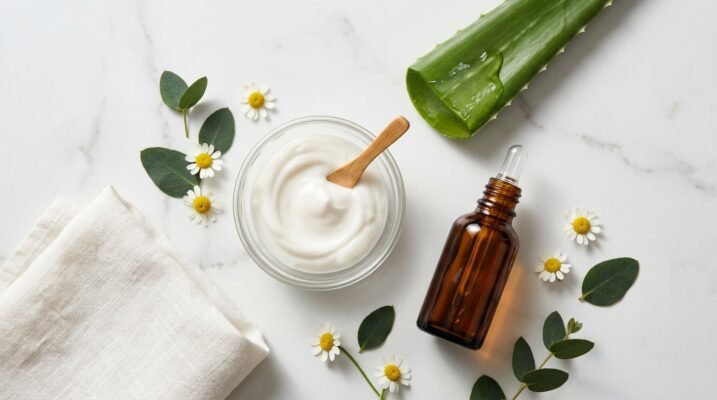
Not all ingredients are created equal. When restoring your skin barrier after a period of chronic stress, the following have meaningful scientific support:
- Deer Velvet Extract — Rich in growth factors, IGF-1, and collagen precursors, deer velvet supports the skin’s natural renewal cycle at a biological level, making it particularly relevant for skin that has been depleted by stress.
- Ceramides — Lipid molecules that form the structural backbone of the skin barrier. Clinical studies consistently show that ceramide-rich formulations improve barrier function and reduce transepidermal water loss.
- Niacinamide (Vitamin B3) — Helps restore your skin color by reducing hyperpigmentation, supports barrier repair, and has well-documented anti-inflammatory properties.
- Zinc — An essential mineral for wound healing and immune regulation. Zinc deficiency — common after prolonged stress — is directly linked to increased skin sensitivity and delayed repair.
- Omega-3 Fatty Acids — Reduce systemic inflammation and support the lipid matrix of the skin barrier from within.
- Vitamin C — A cofactor in collagen synthesis and a potent antioxidant. Stress depletes vitamin C stores rapidly, making replenishment important for both skin and overall resilience after stress.
Why This Brand Stands Out: BioVelvet Skin Renewal
In a market saturated with products that promise everything and deliver little, BioVelvet occupies a different space entirely. What distinguishes it is not marketing language — it is the specificity of its formulation philosophy.
The brand is built around deer velvet extract, an ingredient with a long history in traditional medicine and a growing body of modern scientific research supporting its role in cellular regeneration. This is not a trend ingredient. It is a substantive one.
- Scientific grounding — Formulations are developed with reference to the biological mechanisms of skin repair, not simply ingredient trends.
- Ingredient integrity — The deer velvet used is ethically sourced and processed to preserve bioactive compounds — growth factors, amino acids, and collagen precursors.
- Dermatological testing — Products are dermatologically tested, which is particularly relevant for post-burnout skin in a reactive, compromised state.
- Minimalist philosophy — Rather than layering dozens of actives, BioVelvet focuses on a targeted approach: support the barrier, stimulate repair, and allow the skin’s own intelligence to do the rest.
Building a Post-Burnout Skincare Ritual
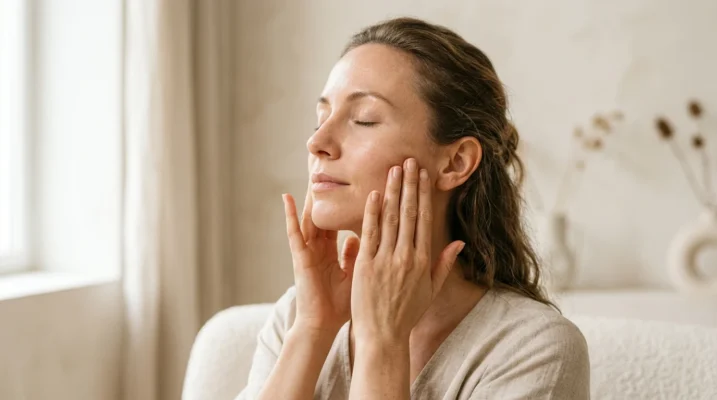
A ritual is different from a routine. A routine is mechanical. A ritual is intentional — it carries meaning beyond the physical act. For post-burnout recovery, the skincare ritual can become a daily anchor. A moment of presence in a period that has been defined by depletion.
A Simple Morning and Evening Framework
Morning:
- Gentle, non-stripping cleanser
- Barrier-supportive serum (ceramides, niacinamide, or deer velvet extract)
- Broad-spectrum SPF — non-negotiable, as stressed skin is more vulnerable to UV damage
Evening:
- Double cleanse if wearing SPF or makeup
- Richer repair cream to support overnight regeneration
- Facial massage — even two minutes — to support lymphatic drainage and circulation
The goal is not perfection. It is consistency.
The Emotional Dimension of Skin Recovery
It would be incomplete to discuss post-burnout recovery without acknowledging that the skin is not separate from the self. The way skin looks and feels affects confidence, self-perception, and the willingness to engage with the world.
When skin begins to recover — when the dullness lifts and the barrier strengthens — something shifts internally too. It is not vanity. It is the body signalling that it is healing. Resilience after stress is not about returning to who you were before burnout. It is about building something more considered — a relationship with your body that includes, rather than ignores, the signals it sends.
Product Recommendation: BioVelvet Deer Velvet Cream

For those in the process of restoring your skin after burnout, the BioVelvet Bio Velvet Deer Velvet Cream is worth serious consideration. Formulated around deer velvet extract — rich in growth factors and collagen precursors — this cream supports the skin’s natural renewal process at a cellular level.
Key benefits relevant to post-burnout recovery:
- Supports barrier restoration and hydration retention
- Stimulates cellular regeneration through bioactive growth factors
- Reduces the appearance of stress-related dullness and uneven tone
- Suitable for daily use as part of a consistent repair ritual
Used consistently over the 8–12 week window that skin recovery genuinely requires, it offers the kind of quiet, substantive results that post-burnout skin needs. Shop BioVelvet here.
FAQ: Post-Burnout Skin Recovery
How long does burnout recovery take for the skin specifically?
Skin recovery after burnout typically takes between 4 and 12 weeks of consistent, targeted care. The burnout recovery timeline for skin often lags behind mental recovery — the barrier and collagen systems need sustained support to rebuild.
Can I use active ingredients like retinol during post-burnout skin recovery?
It is generally advisable to pause strong actives — retinoids, AHAs, BHAs — while the skin barrier is compromised. Introduce them gradually once the skin has stabilised and is no longer reactive or sensitive.