


There is a particular kind of morning light — the kind that comes through linen curtains before the city wakes — that tells the truth about skin. No filter. No softening. Just texture, tone, and the quiet question: what do I actually need today? For those drawn to minimalist makeup, the answer is almost always: less than you think. A skin-first approach isn’t about going bare. It’s about choosing with intention — products that work with your skin’s biology, not against it.
This is the philosophy behind the Denyva edit. Not a routine built on layers, but one built on understanding.
Why Minimalist Makeup Has Become the Language of Effortless Luxury
Luxury, in its most refined form, is restraint. The niche beauty world understood this long before mainstream cosmetics caught up. While mass-market shelves filled with full-coverage foundations and 12-step routines, a quieter movement was building — one rooted in clean ingredients, intelligent formulation, and the radical idea that skin should look like skin.
Minimalist makeup doesn’t mean invisible makeup. It means purposeful makeup. A single product that hydrates, blurs, and adds a whisper of colour. A balm that works on lips, cheeks, and eyelids. A tinted serum that delivers breathable coverage while treating the skin beneath it. This is the vocabulary of effortless luxury — and it’s spoken fluently by the niche beauty brands that have quietly redefined what a makeup bag can look like.
The shift is also cultural. There is a growing fatigue with performance — with the idea that a face must be constructed rather than revealed. Minimalist beauty offers an alternative: presence over perfection.
The Case for Cream-Based Formulas
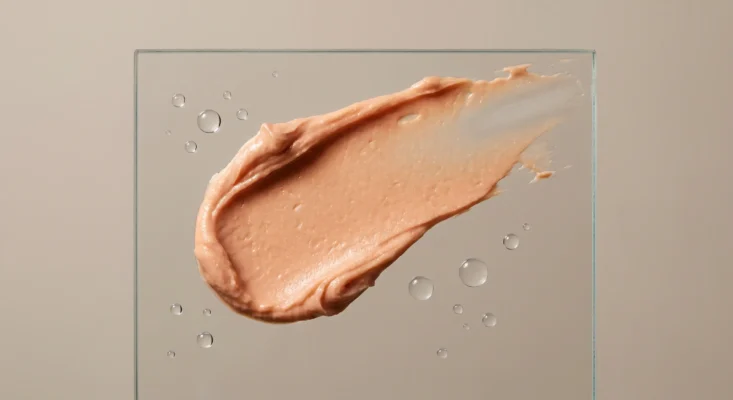
If there is one format that defines the minimalist approach, it is the cream. Cream-based formulas sit at the intersection of skincare and makeup — they move with the skin, melt into it, and rarely betray themselves with visible texture or separation. A well-formulated cream blush doesn’t sit on top of the skin. It becomes part of it.
The best cream products from niche beauty brands share a few qualities:
- Short, legible ingredient lists with no unnecessary fillers
- Skin-compatible bases — often squalane, shea, or jojoba — that support the skin barrier
- Buildable pigment that rewards a light hand
- Multi-use versatility: cheek, lip, eye — one product, three applications
Powder formulas have their place, but for a luminous finish that reads as healthy rather than highlighted, cream is almost always the more intelligent choice. Powder can flatten. Cream reflects.
Scientifically Backed Ingredients: What’s Actually Working in Your Formula
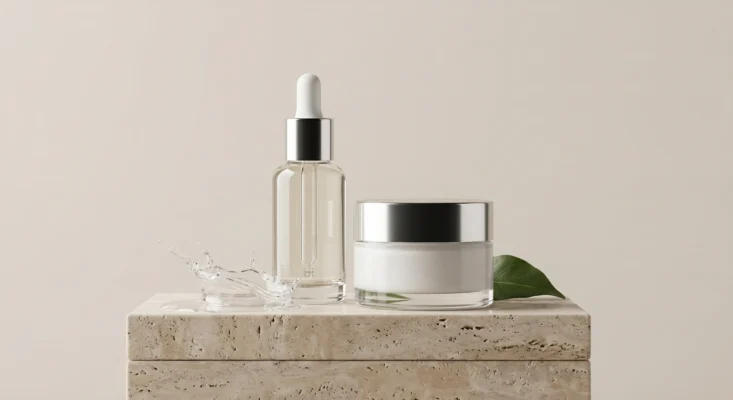
Always consult with a healthcare professional before starting new treatments, particularly if you are introducing active ingredients into a compromised or reactive skin barrier.
The best minimalist makeup doesn’t just cover — it contributes. Three ingredients, in particular, have earned their place in both skincare and cosmetic formulation through consistent, peer-reviewed evidence.
Niacinamide (Vitamin B3) — Originally a skincare staple, niacinamide has migrated into tinted moisturisers and foundations with good reason. It supports the skin’s natural barrier function, reduces the appearance of pores over time, and has demonstrated efficacy in evening skin tone. In a makeup context, it means your base is doing double duty: covering and correcting simultaneously.
Hyaluronic Acid — A humectant that draws moisture to the skin’s surface, hyaluronic acid in a cream formula prevents the dry, cakey finish that plagues many foundations by midday. It keeps the skin plump and the formula fluid, which is precisely why tinted serums built on a hyaluronic base tend to wear so naturally. The skin stays hydrated; the product stays fresh.
Plant-Derived Squalane — Structurally similar to the skin’s own sebum, squalane is one of the most skin-compatible emollients available. It doesn’t clog pores. It doesn’t oxidise. It simply softens, protects, and gives cream formulas that characteristic second-skin quality. In a minimalist routine, a squalane-based product is often the only moisturiser you need.
Expert Tip: Debunking the “Cream Clogs Pores” Myth
The belief that cream-based makeup causes breakouts is one of the most persistent — and most outdated — ideas in beauty. It originates from an era when cream formulas were built on heavy, occlusive waxes and synthetic emollients that did, genuinely, sit on the skin and interfere with normal cell turnover.
Modern cream formulas from reputable niche beauty brands are a different category entirely. When the base is squalane, jojoba, or a lightweight plant oil, the formula is non-comedogenic by nature — meaning it does not block the follicle. The key is always the ingredient list. A cream with clean ingredients and a skin-compatible base will not cause congestion. A cream built on mineral oil and synthetic fragrance might.
The rule is simple: read the first five ingredients. If they are recognisable, skin-compatible, and free from known irritants, the formula is almost certainly safe for all skin types — including oily and acne-prone.
How to Achieve a Luminous Finish with a Minimalist Makeup Approach
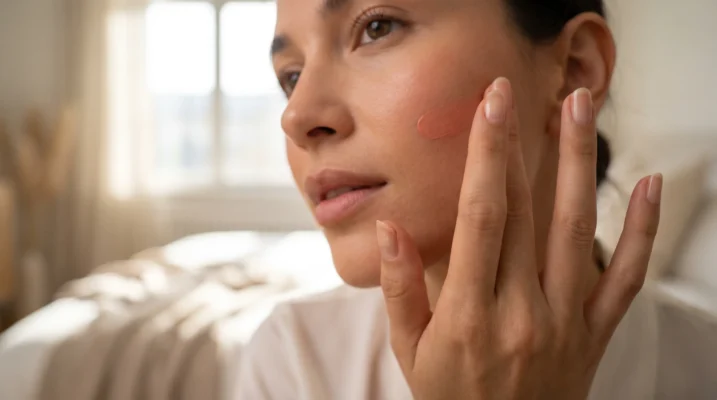
A luminous finish is not the same as a highlighted finish. Highlight sits on top of the skin and catches light artificially. Luminosity comes from within — from skin that is hydrated, healthy, and treated with formulas that enhance rather than obscure its natural radiance.
The following sequence reflects a true skin-first approach:
- Start with skin, not product. A well-hydrated, well-rested face is the foundation of any luminous look. No formula compensates for dehydration.
- Choose a tinted serum or skin tint over a traditional foundation. These offer breathable coverage — enough to unify tone without masking texture.
- Apply with hands, not tools. Fingers warm the product and press it into the skin rather than sitting it on top. The result is more natural, more luminous.
- Use a cream blush on the high points of the face — cheekbones, the bridge of the nose, the temples — and blend upward and outward. This mimics the natural flush of healthy circulation.
- Finish with a balm. On lips, on the inner corners of the eyes, on the cupid’s bow. Balm adds dimension without weight.
- Set nothing. Powder is the enemy of luminosity. If the formula is right, it will last without it.

FAQ: Minimalist Makeup in Practice
Is minimalist makeup suitable for mature skin?
It is, arguably, the most suitable approach. Heavy foundations settle into fine lines and emphasise texture. Cream-based, skin-first formulas move with the skin rather than against it. A tinted moisturiser with hyaluronic acid and squalane will consistently outperform a full-coverage foundation on skin that has lost some of its natural elasticity. The goal is not to cover age — it is to support the skin’s natural vitality.
How do you prevent pilling with cream-based products?
Pilling occurs when product layers don’t bond — usually because a silicone-based formula is applied over a water-based one, or because products are layered before the previous one has fully absorbed. The solution is patience and compatibility. Allow each layer to settle for 60 seconds before applying the next. Choose products within the same formulation family — all squalane-based, or all water-based — and pilling becomes almost entirely avoidable.
How long do cream formulas actually last on the skin?
A well-formulated cream product, applied correctly to prepared skin, will typically last six to eight hours without touch-ups. The variables are skin type (oilier skin will break down cream formulas faster), climate, and the specific formula. For longevity, the most effective strategy is not a setting spray or powder — it is thorough skin preparation. Hydrated, balanced skin holds product. Dehydrated skin consumes it.
The Denyva edit is not a prescription. It is a perspective — one that trusts skin, values simplicity, and finds beauty in what is already there. The best minimalist makeup routine is the one that makes you forget you’re wearing any at all.