

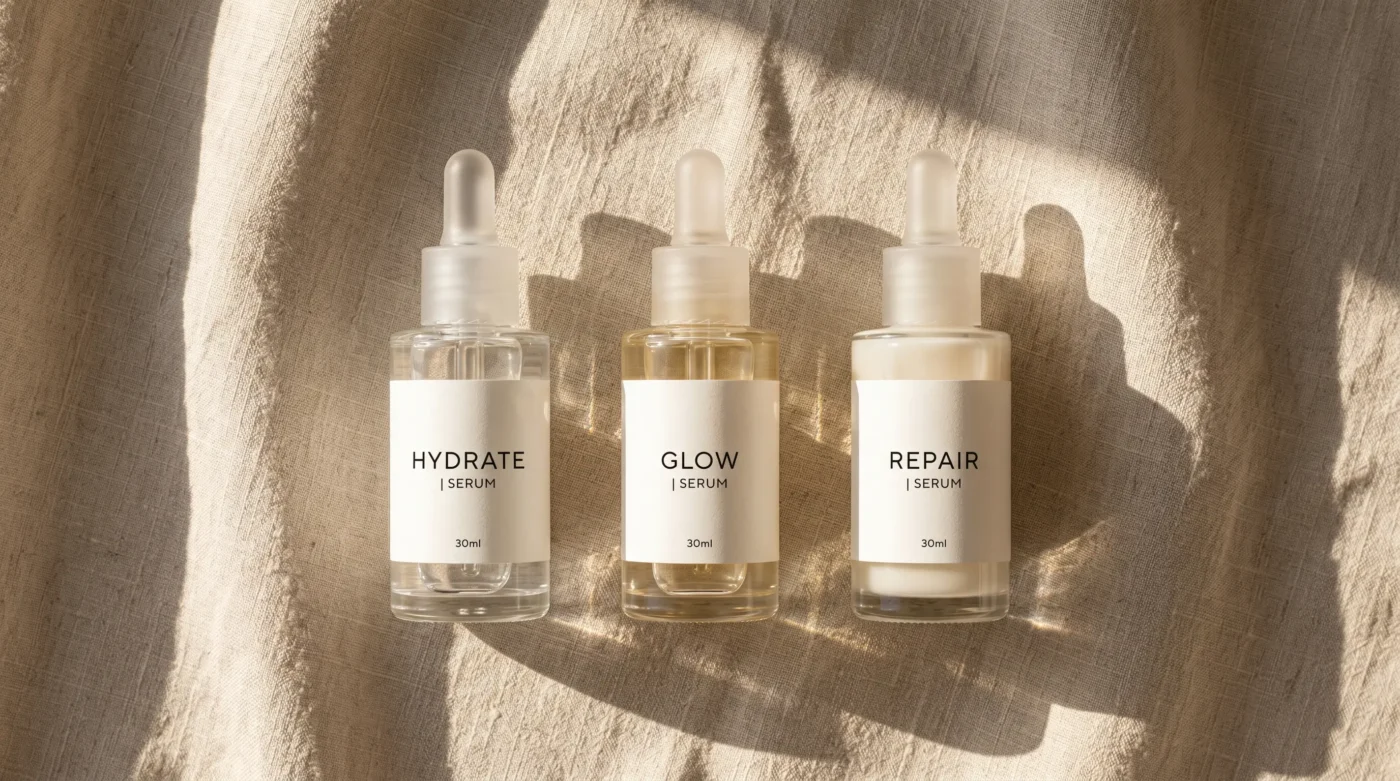
The bathroom shelf tells a story. There’s the vitamin C serum from a brand your facialist recommended. A peptide complex that cost more than your dinner out. A hyaluronic acid formula in a sleek, minimal bottle. And yet — the skin looking back at you in the mirror is dull, dry, or simply unchanged. If your serum not working frustration has reached its peak, the problem is almost never the product. It’s the routine around it.
Serums are the most concentrated, most targeted step in any skincare regimen. They’re also the most misused. Small errors in application, timing, and layering can render even the most potent formulation completely ineffective — or worse, counterproductive. What follows are the five mistakes that consistently stand between good skincare and great skin.
Why Your Serum Is Not Working: The 5 Mistakes
Mistake 1: Applying Serum to Bone-Dry Skin

This is perhaps the most widespread and least discussed error in skincare application. Most people cleanse, pat their face completely dry, and then reach for their serum. It feels logical. It’s actually working against you.
Humectant-based serums — particularly those built around hyaluronic acid — function by drawing moisture from their environment into the skin. On completely dry skin, in a dry room, there is very little ambient moisture to draw from. The humectant can actually pull water from the deeper layers of the dermis upward, only for it to evaporate from the surface. The result is skin that feels temporarily plump, then tighter and drier than before.
The fix is simple but requires a shift in habit:
- After cleansing, pat the skin to about 70–80% dry — still slightly damp
- Apply serum immediately, while that residual moisture is still present
- Follow with a moisturiser within 60 seconds to seal everything in
- In very dry climates or seasons, mist the face lightly with thermal water before serum application
Damp skin is receptive skin. It creates the ideal environment for active ingredients absorption — particularly for water-soluble actives that need a hydrated medium to penetrate effectively.
Mistake 2: Ignoring Skincare Routine Order
Skincare is chemistry. And like any chemical process, sequence matters enormously. Applying products in the wrong order doesn’t just reduce efficacy — it can create a physical barrier that prevents absorption entirely.
The foundational rule of skincare routine order is simple: thinnest to thickest. Water-based products before oil-based ones. Actives before occlusives. But within that framework, there are nuances that most people miss.
Applying a serum after a heavy moisturiser, for example, means the active ingredients are sitting on top of an occlusive layer rather than penetrating the skin. Similarly, applying a niacinamide serum directly after a vitamin C serum — without allowing either to absorb — can cause both to underperform, as they compete for the same absorption pathways.
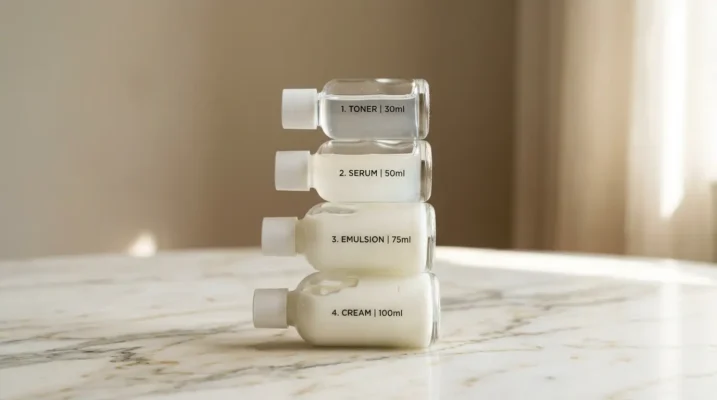
A reliable sequence for how to apply serum correctly:
- Step 1: Gentle cleanser
- Step 2: Toner or essence (if used) — water-based, pH-adjusting
- Step 3: Treatment serum — applied to damp skin, pressed in gently
- Step 4: Eye cream (if used)
- Step 5: Moisturiser — to seal and support
- Step 6 (AM only): SPF — always last, always non-negotiable
Wait 60–90 seconds between each step. It feels slow. It makes a measurable difference.
Mistake 3: Over-Cleansing Before Application

There is a persistent belief in skincare culture that cleaner skin absorbs products better. It’s partially true — and largely misapplied. Yes, a clean surface allows for better penetration. But a stripped, over-cleansed surface is not clean. It’s damaged.
Harsh cleansers — particularly those with high-pH surfactants, foaming agents, or alcohol — disrupt the skin’s acid mantle and strip the lipid barrier. This leaves the skin temporarily more “open,” which sounds beneficial but is actually a vulnerability. Actives applied to a compromised barrier can penetrate too aggressively, causing irritation, sensitivity, and inflammation rather than results.
This is one of the most common professional skincare mistakes — investing in a high-quality serum, then undermining it with a harsh cleanser. The cleanser should be the gentlest product in the routine, not the most aggressive. A low-pH, surfactant-gentle formula preserves the barrier and creates the ideal foundation for everything that follows.
Mistake 4: Mixing Incompatible Active Ingredients
The rise of multi-active routines has created a new category of skincare problem: ingredient conflict. Not all actives play well together. Some cancel each other out. Some create irritation when combined. And some simply require different pH environments to function — making simultaneous application chemically counterproductive.
The most common incompatible pairings:
- Vitamin C (L-ascorbic acid) + Niacinamide: At high concentrations, these can form a compound that causes temporary flushing. Best used at different times of day — vitamin C in the morning, niacinamide in the evening
- Retinol + AHAs/BHAs: Both are exfoliating and cell-communicating. Used together, they dramatically increase the risk of irritation, peeling, and barrier disruption
- Vitamin C + Retinol: Vitamin C requires an acidic pH (below 3.5); retinol is destabilised in acidic environments. They work against each other’s stability
- Multiple exfoliating acids simultaneously: Layering AHAs, BHAs, and PHAs in one routine is rarely beneficial and frequently damaging
The solution is not to use fewer actives — it’s to use them strategically. Alternate morning and evening. Alternate days. Give each ingredient the environment it needs to perform.
Mistake 5: Expecting Results Without Consistency
Skin operates on a biological timeline that has nothing to do with marketing promises. The skin cell renewal cycle takes approximately 28 days in younger skin — and slows to 45–60 days as we age. Any ingredient that works at a cellular level — peptides, retinoids, vitamin C — needs multiple full cycles to produce visible change.
This means that maximizing facial serum results is fundamentally a patience practice. A vitamin C serum used consistently for eight weeks will outperform an expensive serum used sporadically for six months. Consistency is the active ingredient that most people forget to apply.
The benchmark for realistic expectations:
- Hydration and plumpness: Visible within days to two weeks
- Texture and radiance: Four to six weeks of consistent use
- Pigmentation and tone: Eight to twelve weeks minimum
- Fine lines and firmness: Three to six months of uninterrupted use
If a product is abandoned at week three because “nothing is happening,” the skin never had the opportunity to respond. Give it time. Give it consistency. Then evaluate.
Scientifically Backed Ingredients: What’s Actually Happening in the Skin
Hyaluronic Acid — Molecular Weight Matters
Not all hyaluronic acid is equal — and this is where formulation quality becomes critical. Hyaluronic acid exists in multiple molecular weights, each penetrating to a different depth in the skin. High molecular weight HA sits on the surface, forming a film that reduces TEWL and creates immediate plumpness. Low molecular weight HA penetrates into the epidermis, hydrating at a deeper level. Multi-weight formulations address both simultaneously.
This is precisely where niche skincare benefits become tangible. Independent, science-led brands frequently invest in multi-weight hyaluronic acid complexes and precise concentration levels that mass-market products rarely prioritise — because the research, sourcing, and formulation cost more. The difference on the skin is measurable.
Vitamin C — Stability and pH Are Everything
L-ascorbic acid is the most bioavailable form of vitamin C — and the most unstable. It oxidises rapidly when exposed to light, air, and heat, turning the serum orange or brown and rendering it not just ineffective but potentially pro-inflammatory. Effective vitamin C serums require a pH below 3.5, opaque or airless packaging, and concentrations between 10–20% for clinical efficacy.
Vitamin C derivatives — ascorbyl glucoside, sodium ascorbyl phosphate — are more stable but require enzymatic conversion in the skin before becoming active. They work, but more slowly. Knowing which form is in a formula, and whether the packaging protects it, is the difference between a serum that delivers and one that decorates a shelf.
Peptides — Cellular Signaling, Not Surface Treatment
Peptides are short chains of amino acids that act as biological messengers. They don’t sit on the skin and fill in lines — they signal to fibroblasts to produce more collagen, elastin, and hyaluronic acid. This is a fundamentally different mechanism from most skincare actives, and it requires time and consistency to produce results.
Different peptides target different pathways. Signal peptides (like Matrixyl) stimulate collagen synthesis. Carrier peptides deliver trace minerals to support enzymatic activity. Neurotransmitter-inhibiting peptides (like Argireline) temporarily reduce muscle contraction. A well-formulated peptide serum will specify which peptides are present and at what concentration — another area where independent brands with transparent formulation practices consistently outperform their mass-market counterparts.
💡 Myth Debunked: “More Serum Equals Faster Results”
The myth: Using more product — a larger amount, more frequently — will accelerate results.
The reality: Skin has a finite absorption capacity. Once the receptor sites and penetration pathways are saturated, additional product simply sits on the surface, is wiped off, or — in the case of actives — increases the risk of irritation without increasing efficacy. A pea-sized to two-pump amount is sufficient for the full face in most formulations. Using three times as much does not produce three times the result. It produces waste, and sometimes, sensitivity. More is not a strategy. Consistency is.
Always consult with a healthcare professional before starting new treatments, particularly if you are pregnant, using prescription medications, or managing a diagnosed skin condition such as rosacea, eczema, or acne.
A Note on Formulation Quality: Why the Brand Behind the Bottle Matters
There is a meaningful difference between a serum that contains an ingredient and a serum that delivers it effectively. Concentration, pH, molecular weight, packaging, and preservation systems all determine whether an active ingredient reaches its target in the skin — or simply claims to.
Independent, niche skincare brands operate with a different set of priorities. Without the pressure of mass-market margins, they can invest in higher active concentrations, more sophisticated delivery systems, and packaging that genuinely protects formula integrity. They tend to be more transparent about what’s in their products and why — because their audience demands it.
This doesn’t mean every expensive or niche product is superior. It means that when evaluating why a serum is not working, the formulation itself — not just the application — deserves scrutiny.
FAQ: Serum Application, Absorption, and Results
How long does it take for a serum to absorb into the skin?
Most water-based serums absorb within 60–90 seconds when applied correctly to slightly damp skin. Oil-based serums or those with heavier textures may take two to three minutes. Waiting this time before applying the next product is not optional — it’s what allows the active ingredients to penetrate rather than being diluted or blocked by the subsequent layer. If a serum is still visibly sitting on the skin after two minutes, it may be the wrong texture for your skin type, or the skin’s barrier may be compromised.
Should I use my serum in the morning, at night, or both?
It depends entirely on the active ingredients. Vitamin C serums are best used in the morning — they provide antioxidant protection against UV and pollution damage throughout the day. Retinol and retinoid serums should always be used at night, as they increase photosensitivity and degrade in sunlight. Peptide and hyaluronic acid serums are generally well-tolerated morning and evening. If using multiple serums, splitting them between AM and PM routines reduces the risk of ingredient conflict and allows each to work in its optimal environment.
How long should I use a serum before deciding it’s not working?
A minimum of eight weeks of consistent, daily use is the standard benchmark for evaluating a serum’s efficacy — and for some actives, particularly peptides and retinoids, twelve weeks is more realistic. Hydration-focused serums will show results within one to two weeks. Anything targeting pigmentation, firmness, or fine lines requires multiple full skin cell cycles to produce visible change. If after twelve weeks of consistent use there is genuinely no improvement, it’s worth reassessing the formulation, the application method, or whether the product is addressing the right concern for your skin.

The most expensive serum in the world cannot compensate for the wrong routine. But the right habits — applied consistently, with the right products — can change everything.
Pingback: Makeup Microbiome: How Your Beauty Products Affect Your Skin Ecosystem - Denyva