

The New Standard: Why Serum-Infused Foundation Is the Ultimate Skin Investment
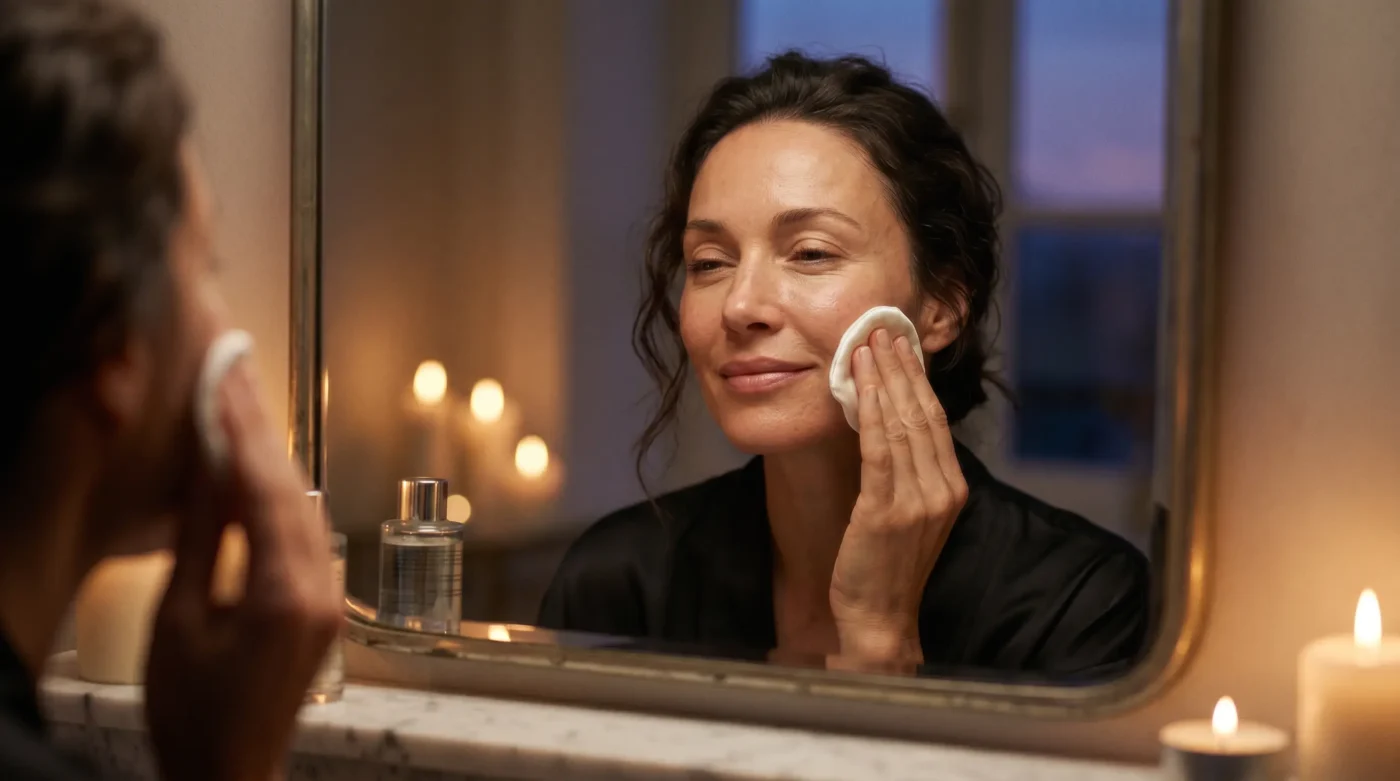
There is a particular moment that happens at the end of the day — standing at the bathroom mirror, cotton pad in hand, watching the day dissolve. And sometimes, unexpectedly, the skin that emerges looks better than it did that morning. Not despite the makeup worn. Because of it. This is the quiet promise of the serum-infused foundation: that coverage and care are not opposing forces, but a single, intelligent act.
This is where modern cosmetics has arrived. Not through compromise, but through genuine formulation intelligence.
From Masking to Nurturing: The Shift Toward a Skin-First Approach
For decades, foundation was understood as concealment. The goal was opacity — to cover, to correct, to present a surface that bore little resemblance to the skin beneath it. The heavier the coverage, the more “professional” the result was considered to be. Skin was something to be managed, not celebrated.
That logic has quietly collapsed.
A new generation of formulators — many of them emerging from the world of clinical skincare rather than traditional cosmetics — began asking a different question. Not how do we cover the skin? but how do we support it while we cover it? The answer was the hybrid product: a foundation built not on a base of silicone and pigment alone, but on a serum architecture — one that delivers active ingredients with every application.
The skin-first approach is not a trend. It is a correction. A return to the understanding that skin is living tissue. It breathes. It responds. It remembers what you put on it, day after day, year after year. A foundation that works against that biology is, at best, a short-term solution. One that works with it is something else entirely.
The Art of Weightless Texture: Why Less Density Signals More Intelligence
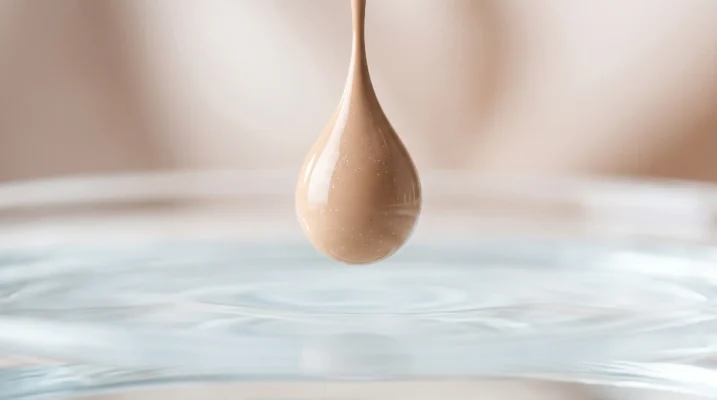
There is a persistent misconception that coverage requires weight. That a foundation must feel like something — must sit on the skin with a certain presence — to be doing its job. This is, in almost every case, incorrect.
Weightless texture is not a compromise on performance. It is a marker of formulation sophistication. When a product feels like nothing on the skin, it means the base has been engineered to integrate rather than coat — to become part of the skin’s surface rather than a layer above it. This is technically far more difficult to achieve than a heavy, occlusive formula. It requires precision.
The best serum-infused foundations share a particular quality: they disappear. Not in coverage, but in sensation. The skin looks unified, luminous, and — crucially — like itself. The texture reads as skin, not as product. This is the hallmark of a modern minimalist approach to base makeup: the absence of artifice as the highest form of craft.
Density, in this context, is not luxury. Lightness is.
Breathable Coverage: What It Actually Means for Skin Health
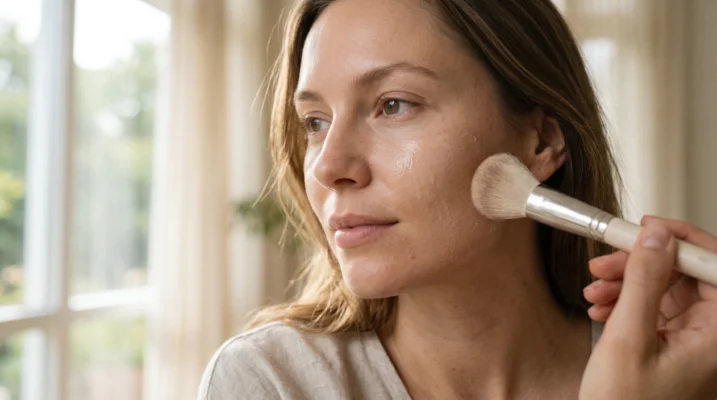
The term breathable coverage is used frequently and explained rarely. It deserves more precision.
Skin does not literally breathe through its surface in the way lungs do — but it does regulate temperature, release moisture, and maintain a microbiome that is sensitive to occlusion. A heavy, film-forming foundation can interfere with these processes: trapping heat, disrupting the skin’s natural moisture balance, and — over time — contributing to congestion and sensitivity.
A breathable formula, by contrast, is one that allows the skin’s natural functions to continue undisturbed. It sits lightly on the surface, uses non-comedogenic ingredients, and does not form a seal. The skin beneath it remains active. This is not a cosmetic claim — it is a measurable quality, determined by the molecular weight and occlusive potential of the formula’s base ingredients.
For those who wear foundation daily, this distinction matters enormously. The cumulative effect of a breathable formula over months is skin that remains balanced. The cumulative effect of a heavy one is often the opposite.
Scientifically Backed Ingredients: The Actives That Make the Difference
Always consult with a healthcare professional before starting new treatments, particularly when introducing new active ingredients to sensitive or reactive skin.
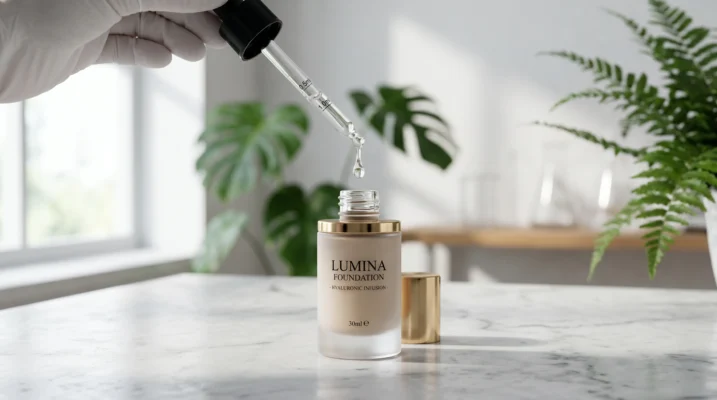
The credibility of any serum-infused foundation rests entirely on its ingredient list. Three actives, in particular, have demonstrated consistent, evidence-based efficacy in both skincare and hybrid cosmetic formulations.
Low Molecular Weight Hyaluronic Acid
Hyaluronic acid in makeup is not a novelty — but the molecular weight of the hyaluronic acid used makes an enormous difference to its actual function. Standard hyaluronic acid molecules are too large to penetrate the skin’s surface; they sit on top and provide surface hydration. Low molecular weight hyaluronic acid, however, can reach the deeper layers of the epidermis, where it binds water and supports the skin’s structural integrity from within. In a foundation context, this means the skin stays genuinely hydrated throughout the day — not just coated.
Niacinamide (Vitamin B3)
Few ingredients have accumulated as much clinical evidence as niacinamide. In the skin, it supports the production of ceramides — the lipids that form the skin’s protective barrier — and has demonstrated measurable effects on hyperpigmentation, pore appearance, and sebum regulation. In a foundation formula, niacinamide works continuously against the skin: every hour of wear is an hour of treatment. For those dealing with uneven tone or enlarged pores, a niacinamide-infused base is not a luxury. It is a logical choice.
Peptides
Peptides are short chains of amino acids — the building blocks of proteins like collagen and elastin. In topical formulations, certain peptides act as signalling molecules, communicating with skin cells to support collagen synthesis and improve firmness over time. Their inclusion in a foundation formula represents a genuine evolution in cosmetic science: a product that not only covers the signs of ageing but actively works against their progression. The results are not immediate, but they are cumulative — and that is precisely the point.
Together, these three actives — alongside botanical extracts such as centella asiatica, green tea, and bakuchiol — form the backbone of the most intelligent hybrid formulas currently available from niche beauty brands.
Expert Tip: Debunking the High-Coverage Myth
The belief that high coverage equals better results is one of the most deeply embedded assumptions in beauty — and one of the least supported by evidence.
High-coverage foundations typically rely on large quantities of film-forming agents and heavy pigment loads to achieve their opacity. The result is a surface that looks uniform but behaves poorly: it settles into fine lines, emphasises texture, and — critically — delivers nothing to the skin beneath it. It is, in the most literal sense, a mask.
A well-formulated serum-infused foundation with medium or buildable coverage, by contrast, does something more intelligent. It unifies tone without erasing texture. It allows the skin’s natural luminosity to come through. And it treats the skin while it covers it — so that the face at the end of the day is in better condition than the face at the beginning.
The question worth asking is not how much does this cover? but what does this do while it covers? That reframe changes everything about how a foundation is chosen.
How to Get the Best Results from a Serum-Infused Foundation
Application technique matters as much as formula. A few principles consistently produce better results with hybrid products:
- Prepare the skin, not just the surface. A serum-infused foundation performs best on skin that has been properly hydrated. Apply a lightweight moisturiser and allow it to absorb fully before foundation — this creates a receptive base and prevents the formula from being drawn into dry patches.
- Use fingers or a damp sponge. Both methods press the product into the skin rather than dragging it across the surface. This is particularly important with lightweight, serum-based formulas, which can be disrupted by the friction of a brush.
- Apply in thin layers. The weightless texture of these formulas is designed to be buildable. One thin layer provides a natural, skin-like finish. A second, applied only where needed, adds coverage without weight. This approach consistently outperforms a single heavy application.
- Allow the formula to settle. Give the product 60–90 seconds to integrate with the skin before assessing coverage or adding additional product. Serum-based formulas continue to adapt to the skin’s surface for a short period after application.
- Mind your formulation layering. If a water-based serum is used beneath an oil- or squalane-based foundation, patience is not optional — it is chemistry. Water and oil do not bond; applying a squalane-based formula over a serum that has not fully dried creates the conditions for pilling. Allow the serum to absorb completely — at least 60–90 seconds, or until the skin no longer feels tacky — before reaching for the foundation. The wait is brief. The difference is visible.
- Avoid heavy powders. Setting with a light, finely milled powder is acceptable if needed for longevity — but heavy powders will counteract the luminous, skin-like finish that makes these formulas worth using. If the formula is right, minimal or no setting is required.

FAQ: Serum-Infused Foundation in Practice
Is serum-infused foundation suitable for oily skin?
Yes — and in many cases, it is the more intelligent choice for oily skin than a mattifying formula. Many serum-infused foundations contain niacinamide, which regulates sebum production over time, and are built on non-comedogenic bases that do not contribute to congestion. The key is to look for formulas that are water-based or squalane-based rather than silicone-heavy, and to avoid those with occlusive waxes in the first five ingredients. Oily skin often overproduces sebum in response to dehydration — a hydrating, breathable formula can, over time, help to rebalance that cycle. One practical note: if the morning routine includes a water-based serum followed by a squalane-based foundation, allow the serum to absorb fully before applying the base. These two formulation families do not interact well when layered wet — the result is pilling, not coverage. A full 60–90 seconds of absorption time resolves the issue entirely.
Can a serum-infused foundation replace my morning serum?
It can supplement it — but not replace it entirely. The concentration of active ingredients in a foundation formula is, by necessity, lower than in a dedicated serum. A foundation is applied to a larger surface area, worn for hours, and must remain stable across a range of conditions; these constraints limit how much active it can carry. That said, a well-formulated hybrid product does deliver a meaningful dose of actives with every application — enough to make a measurable difference over time. The most effective approach is to use both: a targeted serum for treatment, and a serum-infused foundation to extend and reinforce that work throughout the day.
How long does breathable coverage actually last?
A well-formulated serum-infused foundation on properly prepared skin will typically maintain its finish for six to eight hours. The variables are skin type, climate, and the specific formula. Oilier skin types may find that coverage softens slightly by midday — a light press with a clean sponge (no additional product) is usually sufficient to refresh the finish. The advantage of a breathable, skin-integrated formula is that it tends to wear gracefully: rather than cracking or separating as heavier foundations do, it simply becomes part of the skin’s surface over the course of the day.
The evolution of foundation is, at its core, a shift in values — from the idea that beauty requires concealment to the understanding that it is better served by care. A serum-infused foundation does not ask the skin to disappear. It asks it to be its best version. That is a quieter ambition, and a more lasting one.
Pingback: 5 Makeup Skincare Actives That Actually Improve Your Skin - Denyva