


There’s a particular kind of clean that doesn’t feel clean at all. The face has been washed, toned, and treated — and yet the skin feels tight, reactive, and somehow more irritated than before. Redness that appears without reason. Breakouts that arrive despite a careful routine. A dullness that no serum seems to touch. What’s often missing from this picture isn’t another product. It’s an understanding of the skin microbiome — the invisible, living ecosystem that determines whether skin thrives or simply survives.
The skin is not a flat, passive surface waiting to be corrected. It is a garden. And like any garden, it needs the right conditions, the right inhabitants, and — crucially — the wisdom to know when to stop interfering.
What Is the Skin Microbiome?
A Living Community, Not a Contamination
The skin microbiome is a vast, diverse community of microorganisms — bacteria, fungi, viruses, and even microscopic mites — that live on and within the skin’s surface layers. There are estimated to be over one trillion microbial cells on the human body at any given time, with the skin hosting approximately 1,000 different bacterial species alone. This is not a problem to be solved. It is a biological system to be respected.

These microorganisms are not passive residents. They are active participants in skin health. They compete with pathogenic bacteria for space and nutrients, produce antimicrobial compounds, regulate the skin’s pH, and communicate directly with the immune system. A balanced skin flora balance is, in many ways, the skin’s most sophisticated defence mechanism — one that no topical product can fully replicate.
The microbiome varies significantly across different areas of the face and body. Oily zones like the nose and forehead host different microbial communities than dry zones like the cheeks or forearms. This diversity is intentional. Each microenvironment supports the specific needs of that skin region.
The Skin’s First Line of Defence
When the microbiome is balanced, it functions as a living shield. Beneficial bacteria like Staphylococcus epidermidis produce bacteriocins — natural antimicrobial compounds — that actively suppress the growth of harmful pathogens like Staphylococcus aureus and Cutibacterium acnes (formerly known as P. acnes). They also produce short-chain fatty acids that help maintain the skin’s naturally acidic pH, typically between 4.5 and 5.5.
This acidic environment is not incidental. It is essential. At this pH, the skin’s own enzymes function optimally, the lipid barrier remains intact, and opportunistic pathogens — which prefer a more alkaline environment — struggle to establish themselves. The microbiome and the healthy skin barrier are not separate systems. They are deeply, functionally interdependent.
The Problem: How Modern Skincare Is Creating a Microbial Desert
The Over-Sanitized Skin Epidemic

Somewhere along the way, skincare became synonymous with sterilisation. Foaming cleansers with high-pH surfactants. Alcohol-heavy toners. Antibacterial washes used daily. Preservative-laden formulations designed to eliminate microbial life entirely — including the beneficial kind. The result, increasingly visible in clinical and aesthetic practice, is what researchers are beginning to call “dysbiosis” — a state of microbial imbalance that leaves the skin reactive, vulnerable, and chronically inflamed.
A 2019 study published in the Journal of Investigative Dermatology found a direct correlation between reduced microbial diversity on the skin and increased incidence of conditions including atopic dermatitis, rosacea, and acne. The skin wasn’t failing because it lacked products. In many cases, it was failing because it had too many of the wrong ones.
Harsh cleansers don’t just remove makeup and excess sebum. They strip the acid mantle, disrupt the lipid matrix, and — critically — wash away the microbial communities that took years to establish. What’s left is a surface that is technically “clean” but biologically impoverished. A microbial desert, where opportunistic pathogens can colonise without competition.
The Preservative Problem in Mass-Market Skincare
Preservatives are a necessary part of cosmetic formulation — they prevent contamination and extend shelf life. But certain preservatives, particularly those used at high concentrations in mass-market products, have demonstrated antimicrobial activity that extends beyond the formula itself. Parabens, methylisothiazolinone, and certain phenoxyethanol concentrations have all been studied for their potential to disrupt the skin’s resident microbial communities.
This is not an argument against preservation. It is an argument for precision. The concentration, type, and combination of preservatives in a formula matters — and it’s an area where formulation philosophy makes a measurable difference to the skin’s long-term microbial health.
Prebiotics, Probiotics, and Postbiotics: What Science Actually Says
Prebiotics — Feeding the Right Bacteria
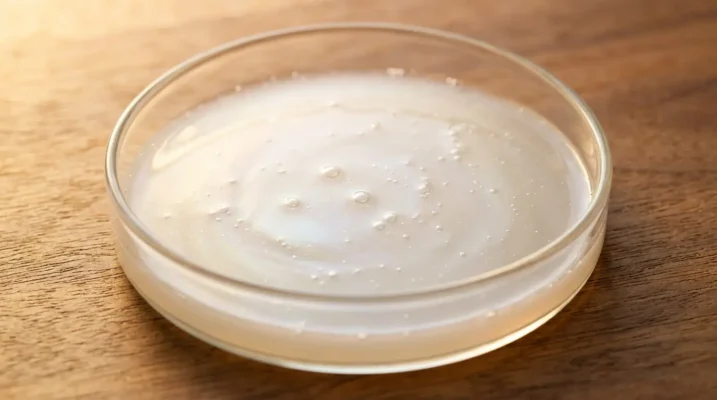
Prebiotics are substrates — typically sugars and plant-derived fibres — that selectively nourish beneficial microorganisms on the skin’s surface. Inulin, derived from chicory root, is one of the most well-researched topical prebiotics. Fructooligosaccharides (FOS) and beta-glucans also fall into this category.
The mechanism is elegantly simple. By providing a preferential food source for beneficial bacteria like Lactobacillus and S. epidermidis, prebiotics give these organisms a competitive advantage over pathogenic species. They don’t introduce new bacteria — they support the ones already present. For skin that is reactive or prone to imbalance, this is often a gentler and more sustainable approach than introducing live cultures directly.
Topical prebiotics also support the skin’s acid mantle. As beneficial bacteria metabolise prebiotic sugars, they produce lactic acid and other organic acids that help maintain the skin’s optimal pH range — creating an environment where harmful bacteria struggle to thrive.
Probiotics — Live Cultures and Fermented Intelligence
Probiotic skincare introduces live or lysed (inactivated) beneficial bacteria directly to the skin’s surface. Lactobacillus ferments are among the most studied — they produce natural antimicrobial peptides, support ceramide synthesis, and have demonstrated anti-inflammatory activity in multiple clinical studies.
The challenge with live probiotics in topical formulations is stability. Live cultures require specific temperature conditions, pH environments, and packaging to remain viable. This is precisely where independent, science-led brands have a significant advantage. Without the constraints of mass-market shelf life requirements and distribution logistics, smaller brands can invest in encapsulation technology, refrigerated formulations, and fermentation processes that preserve the biological activity of probiotic cultures in ways that large-scale manufacturing rarely accommodates.
Fermented ingredients — fermented rice water, fermented sea kelp, fermented plant extracts — represent a middle ground. The fermentation process produces a rich array of postbiotic compounds while also partially breaking down molecules for enhanced skin penetration. They are stable, effective, and increasingly central to microbiome-friendly routine formulation.
Postbiotics — The Metabolic Byproducts That Do the Work
Postbiotics are the bioactive compounds produced when bacteria metabolise their environment — short-chain fatty acids, antimicrobial peptides, enzymes, and organic acids. They are, in many ways, the most immediately actionable component of the microbiome conversation in skincare.
Unlike live probiotics, postbiotics are inherently stable. They don’t require refrigeration or specialised packaging. And their effects are well-documented: short-chain fatty acids support the lipid barrier and maintain acidic pH; antimicrobial peptides directly suppress pathogenic bacteria; lactic acid gently exfoliates while simultaneously supporting the acid mantle.
Postbiotic-rich formulations represent a sophisticated approach to resilient skin — one that works with the skin’s existing biology rather than attempting to override it. For skin that is too sensitised for traditional actives, postbiotics often provide a pathway to improvement without the risk of further disruption.
💡 Myth Debunked: “All Bacteria on Skin Are Bad”
The myth: Bacteria on the skin are contaminants. The goal of skincare is to eliminate as much microbial life as possible for cleaner, healthier skin.
The reality: The vast majority of bacteria on healthy skin are not just harmless — they are essential. Staphylococcus epidermidis, one of the most abundant skin bacteria, actively produces compounds that suppress S. aureus and C. acnes, supports the immune response, and helps maintain the skin’s acidic pH. Eliminating it through aggressive cleansing or antibacterial products removes a critical layer of biological protection. The goal of modern skincare is not sterility. It is balance — a diverse, stable microbial community that keeps opportunistic pathogens in check naturally.
Always consult with a healthcare professional before starting new treatments, particularly if you are managing a diagnosed skin condition such as eczema, psoriasis, or severe acne, or if you are considering probiotic supplementation alongside topical microbiome skincare.
Building a Microbiome-Friendly Routine
The Principles of Microbiome-Supportive Skincare
A microbiome-friendly routine is not about adding more products. It is about removing the ones that cause harm and replacing them with formulations that support the skin’s biological intelligence. The shift is philosophical as much as practical.
Core principles:
- Cleanse gently, not aggressively — choose low-pH, surfactant-gentle cleansers that remove impurities without stripping the acid mantle or microbial communities
- Avoid daily use of antibacterial ingredients — triclosan, high-concentration benzoyl peroxide, and alcohol-based toners used routinely can cause significant microbial disruption
- Prioritise pH-appropriate formulations — products formulated between pH 4.5 and 5.5 support the skin’s natural environment rather than disrupting it
- Introduce prebiotic and postbiotic ingredients — inulin, beta-glucan, fermented extracts, and short-chain fatty acids support microbial balance without introducing instability
- Reduce unnecessary layering — every additional product is a potential source of disruption; a minimal, intentional routine is often more microbiome-supportive than a complex one
Why Niche Brands Are Leading the Microbiome Revolution
The microbiome conversation requires a level of formulation sophistication that mass-market skincare has been slow to adopt. Live cultures need careful handling. Fermented ingredients require time and expertise to produce. Prebiotic complexes need to be balanced against other formula components to remain effective. These are not constraints that sit comfortably within high-volume, long-shelf-life production models.
Independent, science-led brands have the flexibility to work differently. They can formulate in smaller batches, use fresher ingredients, invest in encapsulation technology for probiotic stability, and avoid the harsh preservative systems that larger brands rely on for global distribution. They can also be transparent — listing specific strains, fermentation processes, and prebiotic sources in a way that allows the consumer to make genuinely informed choices.
This is not a blanket endorsement of small over large. It is an observation about where the most rigorous, biologically intelligent microbiome formulations are currently being developed — and why the niche skincare benefits conversation is particularly relevant in this space.
Signs of a Balanced Microbiome — And What Disruption Looks Like
When the Ecosystem Is Thriving
- Skin feels comfortable and settled — not tight, not greasy, not reactive
- Products absorb easily without stinging or pilling
- Breakouts are infrequent and resolve quickly
- Redness and sensitivity are minimal, even in response to environmental stressors
- The skin has a natural, even luminosity — not from products, but from genuine health
When the Ecosystem Is Disrupted
- Persistent redness or flushing that doesn’t respond to calming products
- Breakouts that appear in unusual patterns or alongside dry, flaky skin
- Stinging or burning from products that previously felt fine
- An oily-yet-dehydrated feeling — the skin producing excess sebum to compensate for barrier disruption
- Slow wound healing or prolonged post-inflammatory marks
- A general sense of skin “unpredictability” — reacting differently from day to day without clear cause
These are not random occurrences. They are signals from a biological system under stress — and they deserve a biological response, not simply more product.
FAQ: Your Skin Microbiome Questions Answered
How can I tell if my skin microbiome is out of balance?
The most reliable indicators are persistent, unexplained sensitivity, recurring breakouts that don’t respond to conventional treatment, and skin that feels reactive to products it previously tolerated well. A sudden increase in redness, unusual dryness alongside oiliness, or slow-healing blemishes can all point to microbial dysbiosis. These signs are the skin’s way of communicating that its internal ecosystem has been disrupted — often by over-cleansing, overuse of actives, or prolonged use of antibacterial ingredients. If symptoms are severe or persistent, a dermatological assessment is always worthwhile.
What is the difference between prebiotics and probiotics in skincare?
Prebiotics are food sources — typically plant-derived sugars and fibres like inulin or beta-glucan — that selectively nourish the beneficial bacteria already living on the skin. They don’t introduce new microorganisms; they support the existing community. Probiotics, by contrast, introduce live or inactivated beneficial bacteria directly to the skin’s surface. The distinction between prebiotics vs probiotics matters in practice: prebiotics are generally more stable in formulations and suitable for all skin types, while probiotics require careful formulation to remain biologically active. Postbiotics — the metabolic byproducts of bacterial activity — offer a third pathway that combines stability with direct biological activity.
Can I use microbiome-supportive products alongside retinol?
Yes — and in many cases, it’s advisable. Retinol accelerates cell turnover and can temporarily disrupt the skin’s barrier and microbial balance, particularly during the initial adjustment period. Using prebiotic and postbiotic formulations alongside retinol can help buffer this disruption, supporting the acid mantle and microbial diversity while the skin adapts. The key is sequencing: apply retinol as directed, and use microbiome-supportive products — particularly ceramide-rich moisturisers with prebiotic or fermented ingredients — as the final step to seal and support. Avoid using probiotic-rich formulations immediately before or after retinol application, as the pH difference between the two can reduce the efficacy of both.
The skin has been managing its own ecosystem for hundreds of thousands of years. The most sophisticated thing modern skincare can do is learn to support that process — rather than override it.