


It is 9 p.m. The dishes are still in the sink, the laptop is still glowing, and somewhere between answering one last email and remembering you forgot to drink water today, you catch your reflection in the bathroom mirror. The jawline looks puffy. A small cluster of breakouts has shown up near the chin. The cheeks feel tight, almost papery. Nothing dramatic, just a face that looks tired in a way no concealer can fully soften.
That face is not failing you. It is reporting to you. And the message it is carrying has very little to do with your last serum, and almost everything to do with your nervous system.
The conversation around cortisol and skin health has finally moved out of clinical journals and into the everyday vocabulary of women who simply want to feel calm in their own skin again. Because the truth is, modern life pushes the body into a near-constant state of low-grade alert, and the skin, being the largest organ and the most visible one, becomes the place where that alert quietly writes itself.
The Modern Cortisol Problem
Cortisol is not a villain. It is a survival hormone, designed to rise sharply when the body senses a threat and fall back down once the threat has passed. The problem is that modern threats rarely pass. Notifications, deadlines, overstimulation, scrolling, caffeine on an empty stomach, poor sleep, emotional load, the mental tab of everyone else’s needs. The nervous system reads all of it as ongoing pressure.
So cortisol stays elevated. And when cortisol stays elevated, the skin begins to show it long before the calendar reminds you to rest.
This is also why so many women describe their skin as “fine one week, completely unrecognisable the next.” The skin is not unstable. The internal environment is.
The Brain-Skin Axis Explained
There is an entire field of research dedicated to this exact relationship. It is called psychodermatology, and it studies the very real, very measurable nervous system skin connection.
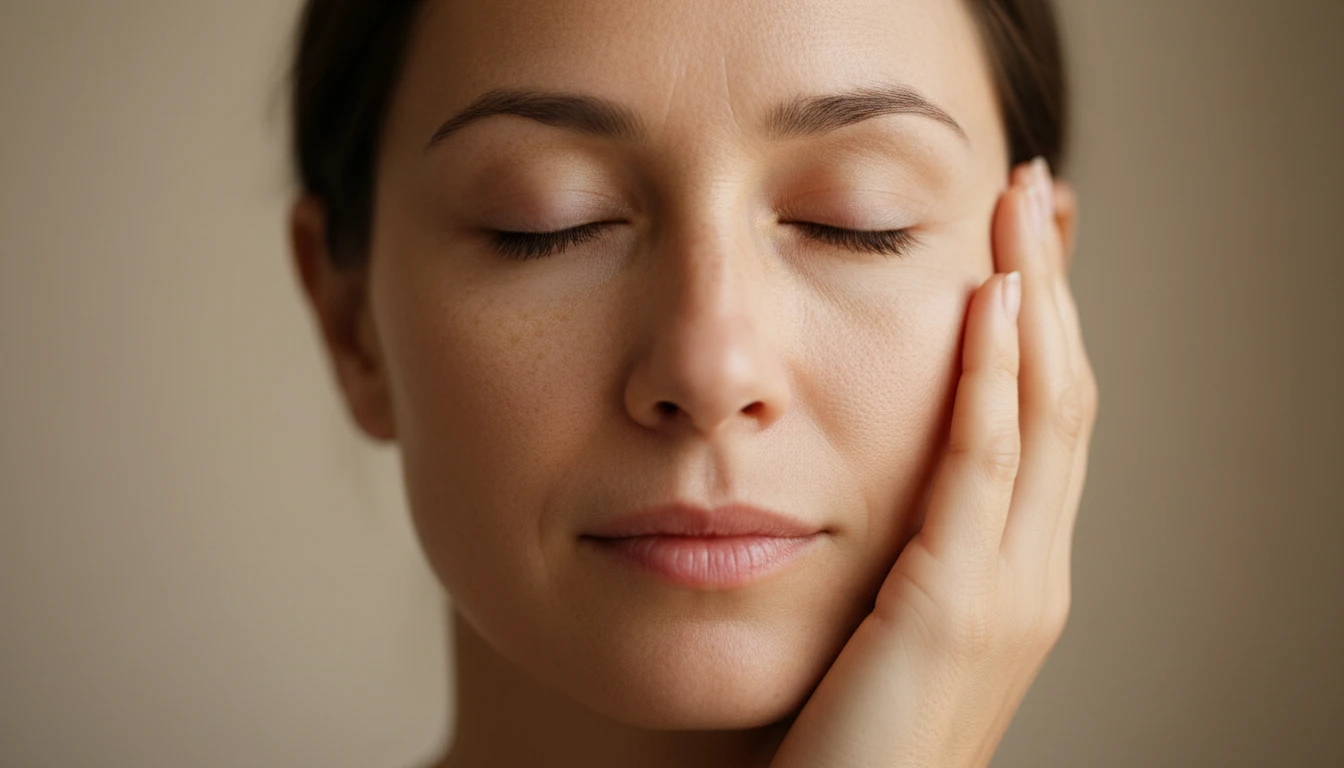
The skin and the brain are born from the same embryonic tissue. They never really separate. They communicate constantly through nerve endings, hormones, and immune messengers. When the brain perceives stress, the skin receives the memo within seconds.
That is why a difficult phone call can leave your cheeks flushed. Why a sleepless week can dull your glow. Why grief can sit on the surface of the face like weather. The skin is not reacting separately from your emotional state. It is part of the same circuit.
What Cortisol Actually Does to Skin
Understanding how stress affects skin on a biological level helps remove the guilt many women carry when their skin “misbehaves.” It is not misbehaving. It is responding correctly to an incorrect environment.
When cortisol stays elevated over time, several things happen at once:
- Increased TEWL (transepidermal water loss): the skin loses moisture faster than it can hold it, leading to that tight, thirsty, slightly crepey feel.
- Chronic low-grade inflammation: the immune system stays slightly switched on, making everything feel reactive.
- Collagen breakdown: cortisol interferes with collagen synthesis, which is the foundation of cortisol skin aging, including fine lines, loss of bounce, and a sudden “deflated” look around the eyes and cheeks.
- Excess oil production: sebaceous glands respond to stress hormones by producing more sebum, which is one of the main drivers behind stress hormones skin breakouts.
- Barrier dysfunction: the protective lipid layer thins, leaving the skin sensitive, easily irritated, and slow to heal.
The relationship between skin barrier and stress is especially important here. A compromised barrier does not just look dry, it behaves anxiously. Products sting. Weather feels harsher. Sleep marks linger longer. If this sounds familiar, the gentle process of repairing the skin barrier is often the most loving place to begin.
Why Stress Shows Up Differently on Different Faces
Two women can live through the same stressful season and show it in completely different ways. This is genetics, hormones, skin type, and nervous system patterning all weaving together.
The most common stress signatures on the skin
- Acne: usually along the jawline, chin, and lower cheeks, often deep and tender.
- Redness: diffuse flushing, sensitivity to skincare, visible capillaries.
- Dryness: tightness after cleansing, flakiness, dehydration lines.
- Dullness: a grey or “switched-off” quality, often paired with under-eye shadowing.
- Sensitivity: a skin that used to tolerate everything and suddenly tolerates nothing.
If you have noticed your skin reacting to environments more than to products lately, especially screens and artificial light, you may find this piece on protecting skin in the age of blue light a soft companion to today’s topic. Overstimulation, both digital and sensory, often sits underneath these symptoms. The article on overstimulation and skin health goes deeper into that thread.
The Cortisol Curve
Cortisol is not meant to stay flat. It is meant to curve. In a healthy circadian rhythm, cortisol peaks in the morning to wake the body, gently lowers throughout the day, and reaches its lowest point at night so melatonin can rise and repair can begin.
When that curve flattens or inverts, which is what happens during chronic stress, late-night screens, irregular meals, or under-sleeping, the skin loses its built-in repair window. It cannot regenerate properly at night. It cannot brighten properly in the morning. It simply exists in a permanent in-between.
Healing the curve is often more powerful than adding another serum.
Morning Rituals That Lower Skin Stress
Mornings set the tone for the entire cortisol curve. A frantic morning teaches the nervous system that the day is an emergency. A soft morning teaches it that it is safe.

- Delay the phone for the first 20 to 30 minutes after waking.
- Drink a full glass of water before coffee.
- Get natural light on the face within the first hour, even through a window.
- Cleanse gently, never with hot water or stripping foams.
- Apply hydration on slightly damp skin, then a barrier-supporting moisturiser.
- Always finish with SPF, even on grey days.
This is the spirit behind the slow beauty movement, and it pairs beautifully with the broader idea of wellness as the foundation of skin health.
Evening Rituals That Help Barrier Recovery
The evening is where the skin does most of its real repair work, but only if the body is willing to soften.
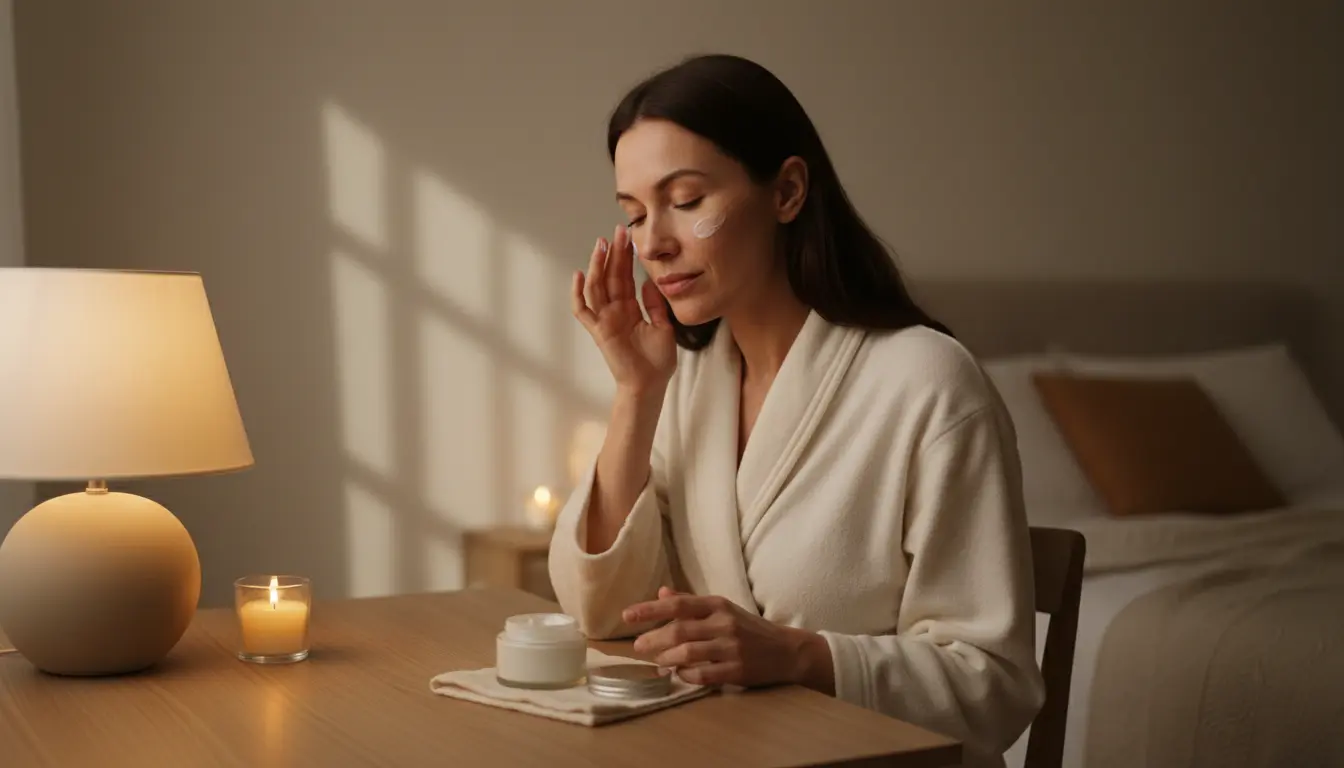
- Dim the lights an hour before bed to support melatonin.
- Double cleanse, but kindly. Oil or balm first, then a creamy second cleanse.
- Layer humectants (hyaluronic acid, glycerin) before occlusives (ceramides, squalane).
- Skip actives on stressed evenings. Retinol on a depleted barrier is not bravery.
- Try a few minutes of slow nasal breathing before bed.
If your skin has been through a long stressful season, the rebuild is gentle and gradual, much like the process described in restoring your skin’s resilience after stress.
Scientifically Backed Ingredients
Skincare cannot replace rest, but the right ingredients can absolutely support the skin while the nervous system catches up. Always consult with a healthcare professional before starting new treatments.
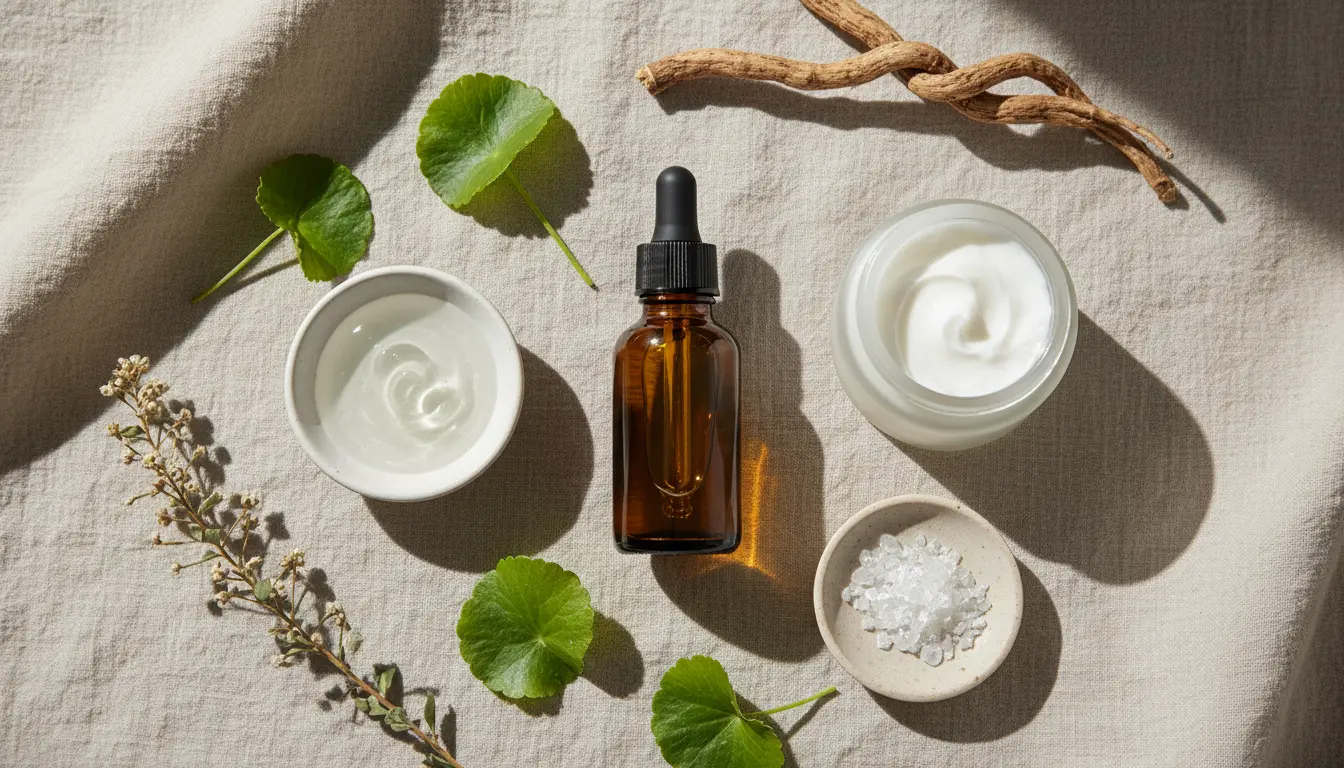
Niacinamide
A form of vitamin B3 that strengthens the barrier, calms redness, regulates oil, and reduces TEWL. One of the most evidence-backed ingredients for stressed skin.
Hyaluronic acid
A humectant that binds water within the skin. It restores the plumpness that cortisol quietly drains, especially under the eyes and across the cheeks.
Ceramides
Lipids that naturally exist in the skin barrier. Stress depletes them. Replacing them topically is one of the most direct ways to rebuild resilience.
Peptides
Short chains of amino acids that signal the skin to produce more collagen and elastin. Especially helpful for the slow, subtle cortisol skin aging pattern.
Magnesium
Often called the “calming mineral.” Internally, it supports the nervous system and sleep quality. Topically (in baths or magnesium oil), it can ease tension that ends up stored in the face.
Adaptogens
Botanicals like ashwagandha, reishi, and centella asiatica help the body modulate its stress response. Centella in particular has strong dermatological data for soothing inflammation and supporting wound healing.
Pairing these with clean, well-formulated ingredients matters far more than chasing whatever trend is loudest this month.
Expert Tip and a Common Myth
A gentle expert tip
If your skin flares during a stressful week, reduce your routine instead of adding to it. A cleanser, a humectant, a barrier cream, and SPF is often more healing than a ten-step protocol. Stressed skin does not need more. It needs less, more consistently.
The myth worth unlearning
“Stress breakouts are just hormonal acne.”
They are related, but not identical. Hormonal acne follows the menstrual cycle with relative predictability. Stress-driven breakouts can appear at any point in the cycle, often deeper, more inflamed, and concentrated along the jaw and chin. They are driven by cortisol’s effect on sebum, inflammation, and the skin’s microbiome, not by oestrogen and progesterone alone. Treating them as purely hormonal is why so many women feel stuck on a cycle of “fixing” skin that simply needs nervous system care. The deeper link between stress and collagen loss sits in this same territory.
Bringing It All Together
The face is honest in a way the rest of us rarely allow ourselves to be. It tells the truth about how much we are carrying, how little we are sleeping, how rarely we exhale fully. Tending to cortisol and skin health is not about chasing perfection. It is about returning the body to a rhythm where the skin is allowed to rest, repair, and reflect a softer inner state. On days when the world feels loud, even something as small as choosing quiet luxury makeup, a well-matched concealer, or a gentle tinted moisturiser over heavy foundation can be a form of nervous-system kindness too.
FAQ
1. Can lowering cortisol actually improve my skin, or is that just wellness marketing?
It genuinely can. Lower cortisol supports better sleep, stronger barrier function, balanced oil production, and healthier collagen synthesis. The effects are usually visible within a few weeks of consistent nervous system care, even without changing skincare products.
3. How long does it take for stressed skin to recover?
A mildly stressed barrier can rebuild in 2 to 4 weeks. Skin affected by months of chronic stress often needs 8 to 12 weeks of gentle, consistent care, paired with better sleep and reduced stimulation, before the deeper glow returns.
3. Do I need to give up actives like retinol or acids during stressful periods?
Not entirely, but pausing or reducing them is often wise. When the barrier is compromised, strong actives can prolong inflammation. Reintroducing them slowly once the skin feels calm again usually gives much better long-term results.
Pingback: Relaxation Benefits for Skin: What Happens When Your Nervous System Slows Down - Denyva
Pingback: Nature Therapy Benefits: Why Time Outdoors Changes More Than Your Mood - Denyva