


The most forward-thinking skincare brands — Augustinus Bader, Noble Panacea, and a growing cohort of science-led niche houses — have quietly stopped using the word “anti-aging” in their core positioning. Not because aging is no longer relevant, but because the science has outgrown the term. This is not a semantic pivot or a marketing repositioning — the underlying research has moved, and the terminology is following it. Anti-aging implies opposition to a biological process. Skin longevity implies something more precise: maintaining the cellular conditions under which skin functions, repairs, and regenerates at its biological best — for as long as possible.
The distinction matters more than it might seem. Anti-aging, as a framework, is reactive and cosmetic. It targets visible endpoints — lines, pigmentation, laxity — without necessarily addressing the biological mechanisms that produce them. Skin longevity science inverts this. It asks not “how do we reduce the appearance of aging?” but “what cellular conditions allow skin to maintain optimal function across decades?” — and then works backward to identify what supports or degrades those conditions.
This article traces that framework through the cellular mechanisms that define biological skin aging: epigenetic drift, mitochondrial decline, senescent cell accumulation, barrier function erosion, and the emerging field of skin as a systemic longevity biomarker. These are not abstract concepts. They are the biological levers that serious formulation science — and a growing body of dermatological research — is now beginning to target directly.
Skin Is Not Just an Aesthetic Organ — It Is a Longevity Biomarker
For most of cosmetic history, skin was treated as a surface problem. Wrinkles were a texture issue. Pigmentation was a tone issue. Sagging was a volume issue. What skin as a longevity biomarker in aging science increasingly reveals is that this surface-level view fundamentally misrepresents what skin is and what it does.
Skin aging markers — barrier permeability, collagen density, inflammatory cytokine levels, epidermal turnover rate — appear to correlate measurably with cardiovascular, metabolic, and immune aging trajectories. The skin may not simply be aging in parallel with the rest of the body. Research suggests it functions, in measurable ways, as a proxy for it. Emerging geromedicine research on skin aging and longevity positions the skin as one of the most accessible tissues through which systemic biological aging can be monitored and potentially influenced.
This is why skin longevity research is now intersecting directly with geroscience — the interdisciplinary field studying the biological mechanisms of aging and their relationship to age-related disease. If skin reflects systemic biological age, then interventions that meaningfully support skin’s cellular health are not acts of vanity. They are, conceptually and physiologically, longevity practice. Explore more on why healthy aging and skin longevity are the same science.
What Accelerated Aging Conditions Teach Us About Normal Skin
Some of the most clarifying research into how and why skin ages comes not from studying normal aging — but from studying what happens when aging is dramatically accelerated. Conditions such as progeria (Hutchinson-Gilford Progeria Syndrome) and Werner syndrome run the biological aging clock at a compressed rate. What they reveal, mechanistically, is which cellular systems appear most central to aging itself.
What accelerated aging research reveals about normal skin aging mechanisms is striking in its specificity: the same cellular systems that collapse catastrophically in these rare conditions — DNA repair capacity, telomere maintenance, and mitochondrial function — are the systems that degrade gradually, over decades, in normal biological skin aging. The difference is speed, not mechanism.
For skin longevity science, this is significant. It helps validate the cellular targets that longevity-oriented formulation is beginning to address. Supporting DNA repair enzymes, maintaining mitochondrial efficiency, reducing oxidative load on telomeres — these are not speculative interventions. They are evidence-grounded responses to the same mechanisms that rare aging conditions have made visible at an accelerated rate. The basic science of skin aging is now considerably clearer than it was a decade ago, and it points consistently toward cellular function — not surface correction — as the meaningful target.
Your Skin Has a Biological Age — And It May Not Match Your Birthday
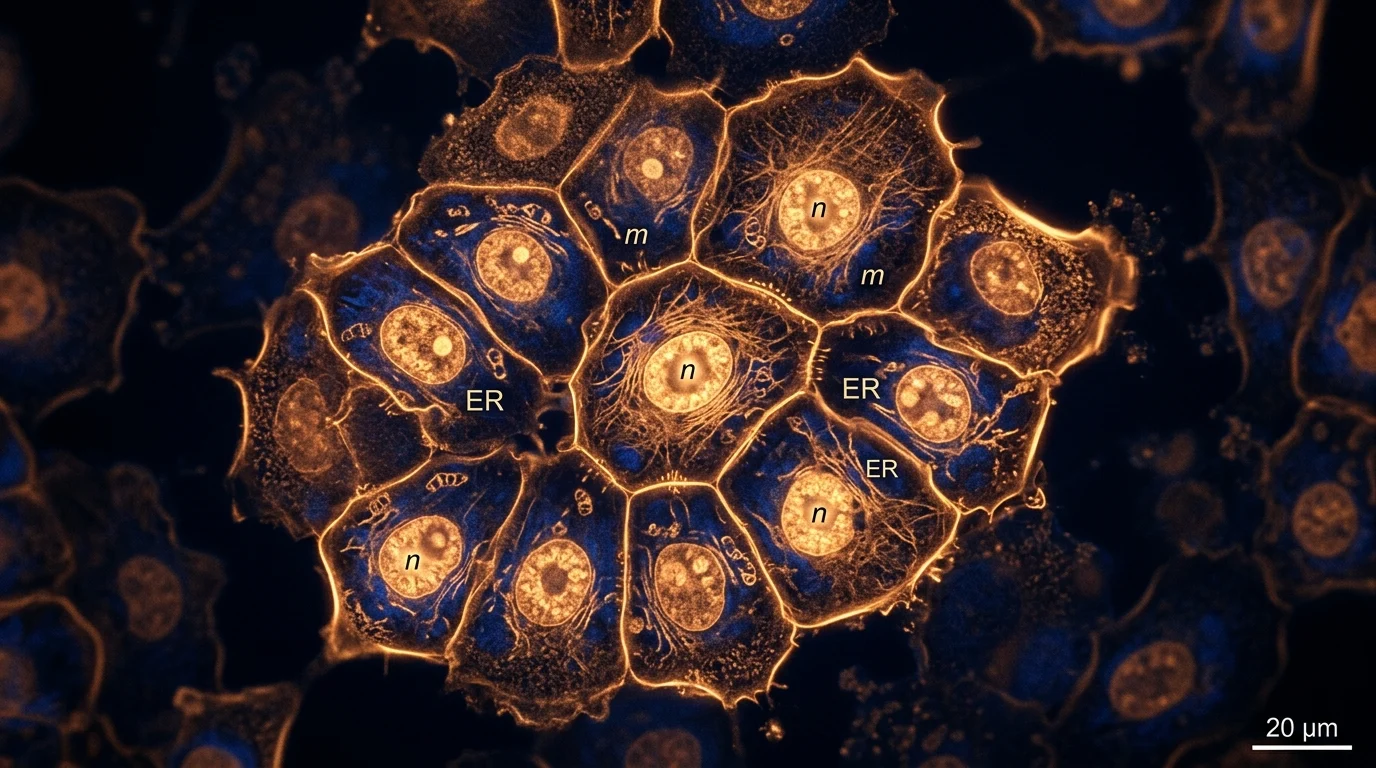
Two people born in the same year can have measurably different biological ages. Not by estimate, but by molecular measurement. Epigenetic clocks — developed through analysis of DNA methylation patterns across thousands of genomic sites — measure biological age independently of chronological age. Think of DNA methylation as a running record of how cells have responded to everything they have experienced: UV exposure, chronic stress, nutritional inputs, sleep disruption, inflammatory load. The pattern shifts over time, and those shifts can be read as a biological age.
According to research on epigenetic clocks and skin biological aging, epigenetic age in skin tissue can diverge significantly from a person’s actual age — in either direction. Crucially, this biological age is not fixed. Current evidence suggests it is modifiable. Specific inputs appear to measurably influence the rate at which epigenetic aging advances in skin cells:
- Sleep quality and circadian alignment: Cellular repair processes — including DNA damage correction and collagen synthesis — are regulated by circadian rhythms. Disrupted sleep is associated with accelerated epigenetic aging rate in skin.
- Chronic stress and cortisol regulation: Sustained elevated cortisol impairs barrier function, promotes inflammatory signalling, and has been associated in some studies with accelerated telomere shortening — though this relationship in skin-specific cell populations requires further characterisation.
- Dietary antioxidant density: Oxidative stress is a primary driver of epigenetic damage. A diet dense in polyphenols, carotenoids, and vitamin C equivalents may reduce the oxidative burden on skin cell DNA.
- UV exposure management: UV radiation is the single most established accelerant of epigenetic skin aging. Its effects are cumulative and, at the epigenetic level, substantially difficult to reverse — making sustained prevention functionally more impactful than post-hoc correction.
- Barrier-supportive skincare that reduces chronic low-grade inflammation: A compromised barrier can sustain a low-level inflammatory state in the dermis. This chronic inflammation — sometimes called “inflammaging” — is directly associated with accelerated epigenetic aging in skin tissue.
The practical implication is significant: skin biological age is not simply something that happens to you. It is continuously shaped by inputs — many of which are genuinely within your control.
Cellular Senescence: The Hidden Driver of Skin That Looks Older Than It Should
Cellular senescence is one of the more counterintuitive concepts in aging biology — and one of the most important for understanding why skin deteriorates at the rate it does. Senescent cells are cells that have stopped dividing. They are no longer dead, but they are no longer functioning. The useful analogy: a retired colleague who refuses to leave the office and actively disrupts everyone around them.
What makes senescent cells particularly damaging is the SASP — the senescence-associated secretory phenotype. Senescent cells release a cocktail of pro-inflammatory cytokines, proteases, and signalling molecules into the surrounding tissue environment. In the dermis, this has direct consequences: according to research on cellular senescence and skin aging mechanisms, the SASP appears to degrade collagen and elastin architecture and sustain low-grade dermal inflammation. It also impairs neighbouring healthy fibroblasts and disrupts the epidermal stem cell niche — the cellular reservoir responsible for ongoing skin renewal.
Senescent cell burden accumulates with chronological age — but evidence suggests it accumulates at an accelerated rate under conditions of UV exposure, chronic inflammation, oxidative stress, and sleep disruption. This is why two people of the same age can have dramatically different dermal environments. The skin longevity framework specifically targets reducing senescent cell accumulation and SASP expression — through lifestyle modulation, barrier integrity, and emerging topical senolytics currently in active research. Understand more about how cellular senescence and barrier dysfunction accelerate visible skin aging.
Mitochondria and Skin Energy: The Cellular Engine of Longevity
Mitochondrial decline is among the most consistently documented hallmarks of biological aging across tissues. In skin, this matters acutely — because skin cells carry an unusually high metabolic load. Barrier maintenance, collagen synthesis, cellular turnover, and repair all demand sustained cellular energy. When mitochondrial efficiency declines, these processes are among the first to slow.
Research on mitochondrial function and skin aging indicates that mitochondrial dysfunction in skin is associated with reduced collagen synthesis capacity, impaired barrier repair, increased oxidative stress, and accelerated cellular senescence. Research suggests these relationships are bidirectional: mitochondrial decline appears to increase oxidative damage, which may in turn further impair mitochondrial function — a feedback loop well-documented in aging biology, though its precise dynamics in human skin tissue continue to be characterised.
Longevity-oriented skincare increasingly targets mitochondrial support as a foundational strategy — through antioxidants that may reduce the oxidative burden on mitochondrial membranes, and through biotech actives that aim to support cellular energy metabolism at the fibroblast level. Supporting mitochondrial function in skin cells means supporting the cellular machinery through which skin longevity inputs are actually executed. This is categorically different from surface-level intervention. Microbiome-supportive formulations also play a role — explore how microbiome-supportive skincare contributes to skin cellular health.

What Skin Longevity Looks Like in Practice: Ingredients and Approaches With Evidence
The skin longevity framework does not generate an entirely new ingredient list. It recontextualises which existing ingredients are doing meaningful biological work — and why — while identifying the emerging categories that align specifically with cellular longevity targets.
- Peptides and growth factors: Signal collagen and elastin synthesis at the fibroblast level. Rather than masking surface texture, well-formulated peptide complexes engage the cellular machinery responsible for structural protein production. The distinction is between cosmetic correction and biological signalling.
- Antioxidants (vitamin C, niacinamide, resveratrol, CoQ10): May reduce oxidative burden on mitochondria and DNA. Vitamin C is additionally a co-factor in collagen synthesis — making it both a protective and structurally supportive active. Resveratrol has been shown in preclinical studies to modulate sirtuin pathways associated with cellular longevity regulation, though evidence for meaningful sirtuin activation via topical application in humans remains limited. CoQ10, though its topical penetration to living dermal cells remains a subject of ongoing formulation research, is among the most studied mitochondria-associated antioxidants in skin aging.
- Retinoids: Among the most rigorously studied longevity-adjacent actives in topical skincare. Retinoids have demonstrated in clinical research the ability to increase epidermal turnover, upregulate collagen synthesis, and reduce the formation of abnormal cross-linked collagen that accumulates with photoaging. Their mechanism of action aligns closely with skin longevity science.
- Barrier lipids (ceramides, fatty acids, cholesterol): The ratio of these lipids in the stratum corneum determines barrier integrity. A structurally sound barrier reduces the chronic low-grade inflammatory state that appears to accelerate epigenetic aging and feeds senescent cell signalling.
- Biotech actives (peptide complexes, postbiotics, encapsulated retinoids): Postbiotics in topical skincare are an emerging area primarily supported by evidence related to barrier function and microbiome modulation — relevant to skin longevity through their role in reducing inflammaging rather than direct cellular signalling. Encapsulation technology, meanwhile, is designed to improve release precision and delivery depth, reducing irritation potential while aiming to improve efficacy at the dermal level.
Explore what comes after retinol in the skin longevity ingredient conversation, and consider building a night routine aligned with skin longevity science — given that cellular repair and mitochondrial quality-control processes are most active during sleep-phase circadian cycles.
Always consult with a dermatologist before introducing longevity-oriented actives into your routine, particularly if you have a diagnosed skin condition, are pregnant, or are managing significant skin sensitivity.
The Brands Building Skin Longevity Into Their Core Science
The cultural proof of this scientific shift is most visible in the formulation philosophy of two brands that have genuinely embedded longevity science into their architecture — not merely their language.
Augustinus Bader is built around the TFC8 (Trigger Factor Complex) peptide system, developed from Professor Bader’s regenerative medicine research on severe burn wound repair. TFC8 is designed not to address the skin’s surface but to engage signalling pathways associated with the skin’s own cellular repair and regeneration processes. The founding science connects to cellular repair biology rather than cosmetic surface correction — a distinction that the skin longevity framework makes meaningfully visible. Read Augustinus Bader reviewed for sensitive skin and long-term barrier support for a grounded assessment of its clinical positioning.
Noble Panacea is built around time-release delivery technology — Organic Super Molecular Vessels (OSMVs) — designed to influence the timing and depth at which actives are released into skin tissue, an approach that, in theory, aligns with the skin’s circadian repair biology. Delivery architecture matters in longevity-oriented formulation: an active that cannot reach its intended cellular target at the right time is, functionally, an inert one. See Noble Panacea reviewed for delivery technology and skin longevity philosophy for an analytical look at how this approach positions itself within the broader longevity science conversation.
A Note on Over-Intervention Skin longevity is not about maximising the number of actives applied to skin. This conflation is worth addressing directly. The skin longevity framework is focused on maintaining the cellular conditions under which skin can repair, regenerate, and function consistently — over decades. Chronic over-treatment disrupts the very conditions this science is trying to preserve. An over-exfoliated, chronically inflamed barrier — regardless of how many longevity actives it is receiving — cannot execute the cellular processes those actives are designed to support. Less targeted intervention, done consistently and intelligently, is categorically more aligned with skin longevity science than aggressive multi-active stacking.
Frequently Asked Questions
What is the difference between anti-aging skincare and skin longevity skincare?
Anti-aging skincare targets the visible endpoints of aging — lines, pigmentation, laxity — primarily through cosmetic correction. Skin longevity skincare targets the biological mechanisms that produce those endpoints: epigenetic drift, mitochondrial decline, senescent cell accumulation, barrier dysfunction. The former addresses the symptom; the latter addresses the process generating it.
Can skincare actually influence how fast skin ages at the cellular level?
Within measurable limits, research suggests it can. Barrier-supportive skincare appears to reduce the chronic inflammatory state associated with accelerated epigenetic aging. Antioxidants may reduce oxidative burden on mitochondria and DNA. Retinoids have demonstrated in clinical research the ability to influence epidermal turnover and collagen synthesis at the cellular level. None of these halt aging. But findings on epigenetic clocks in skin indicate that biological aging rate in skin tissue is modifiable — and that topical inputs are among the variables that influence it.
What are the most important skin longevity habits beyond skincare products?
Consistent, high-quality sleep — which is when cellular repair, collagen synthesis, and mitochondrial quality-control processes are most active. Chronic stress regulation, which directly impacts cortisol-mediated barrier disruption and telomere dynamics. Daily broad-spectrum UV protection, which remains the single most evidence-supported intervention for slowing epigenetic skin aging. And dietary antioxidant density, which may reduce the systemic oxidative burden that skin cells are continuously managing.