


She had spent the better part of a decade building a routine around names that felt like guarantees — heritage houses with counters in every department store, cream-coloured boxes, and the quiet authority of a French or Swiss address on the label. She rotated serums. She upgraded moisturisers. Her skin remained reactive, her texture stubbornly uneven, and the results she had been paying for — quietly, persistently — never quite arrived. Then, on a dermatology-adjacent forum rather than a glossy editorial, she found a small, founder-led brand with no department store presence and packaging that prioritised function over ceremony. Six weeks in, something had shifted — genuinely shifted. The products were less beautiful to look at. The brand had no heritage narrative. But the formulation philosophy was categorically different, and that difference is precisely what this article examines. Niche skincare brands frequently outperform luxury beauty brands not because of brand mystique or cultural cachet, but because of where they direct their resources: formulation depth, ingredient concentration, and delivery science — rather than advertising spend, premium packaging, and retailer margin.
Where the Money Goes: Formulation vs. Marketing in Luxury Beauty
The Cost Structure of a Luxury Skincare Product
Most consumers assume that a higher price tag in skincare reflects a higher investment in what goes inside the formula. The reality is structurally more complicated. In a typical mass-luxury skincare product — the kind sold through department store counters with attendant sampling programmes and seasonal campaigns — the active ingredient cost can represent as little as 5–15% of the retail price. The remainder is distributed across premium packaging, retailer margin (often 40–60% in department store models), advertising, licensing, celebrity affiliations, and the cost of maintaining global brand infrastructure.
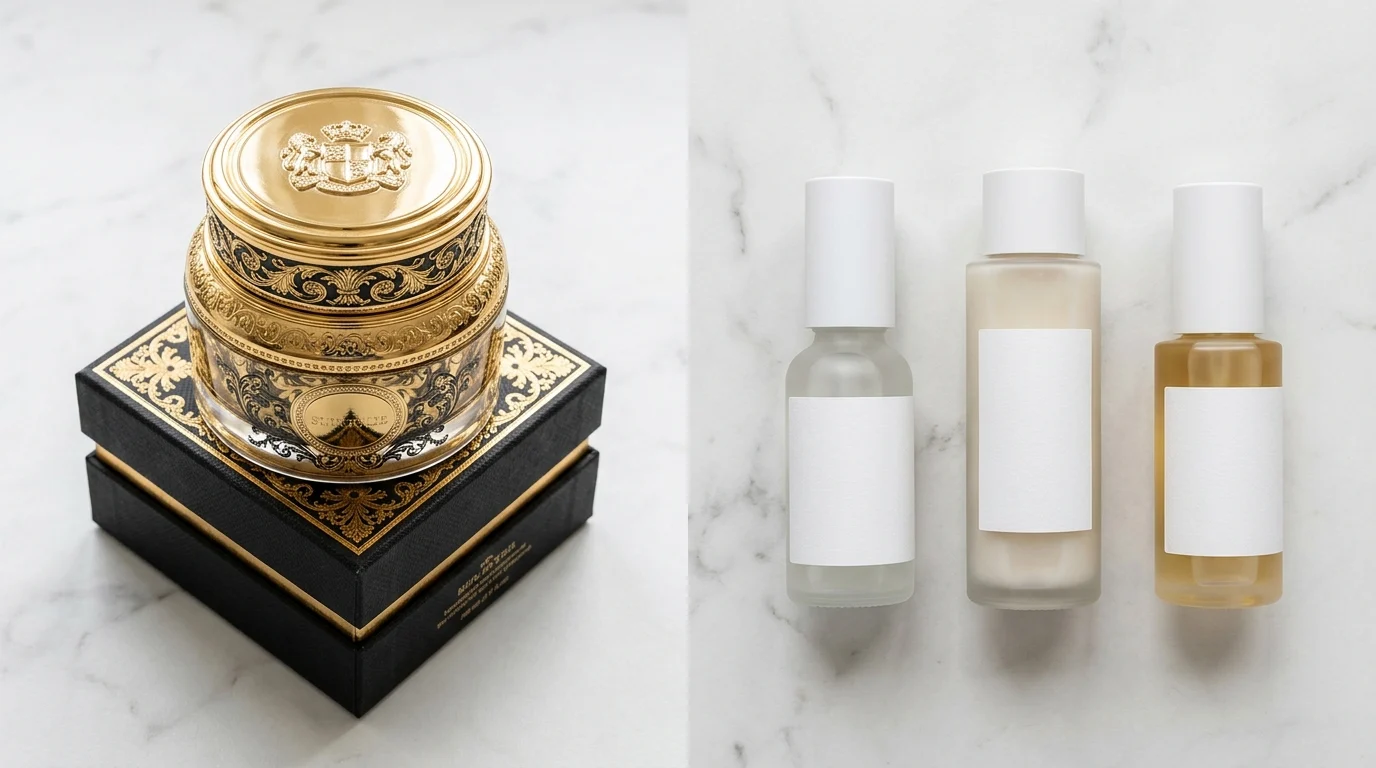
This is not an allegation against any specific brand. It is an industry-standard cost allocation pattern that shapes formulation decisions long before a chemist ever enters the development process. When the active ingredient budget is constrained from the outset, the formula reflects it — regardless of how the product is positioned on counter.
In niche skincare vs luxury beauty, this structural difference is one of the most analytically significant — and least discussed — performance variables.
What Niche Brands Do With the Same Budget
Direct-to-consumer, founder-led niche brands operate under a fundamentally different cost model. Without department store margin, large-scale advertising campaigns, or the overhead of a global retail footprint, a higher proportion of revenue can be redirected toward ingredient quality, stability testing, and delivery system research. The best niche skincare brands exploit this structural advantage deliberately — investing in formulation architecture that luxury houses, working under different financial constraints and stakeholder expectations, often cannot justify.
This does not mean every indie brand is formulating brilliantly. Poor niche formulation exists. But the structural opportunity to invest more directly in what is inside the formula is real, and the brands that recognise this are producing measurably different results.
Why Niche Skincare Brands Often Outperform in Formulation Science
Skin Barrier Physiology and Why Formulae Must Work With Biology
The skin barrier — specifically the stratum corneum and its surrounding lipid matrix — is the primary biological interface through which any topical formula must work. Understanding the fundamentals of skin barrier physiology and why formulation matters is not optional for a brand serious about performance. The barrier’s lipid architecture is composed of ceramides, fatty acids, and cholesterol in precise molar ratios; disruption of these ratios — through over-cleansing, inappropriate pH, or barrier-incompatible ingredients — is the underlying mechanism behind reactive, sensitised, and chronically dehydrated skin.
A product that sits on top of this barrier film behaves very differently from one designed to interact with its lipid architecture. Think of the barrier as a very specific kind of lock. A formula that happens to share some structural characteristics with the lock’s components will engage with it. One that does not — however elegantly it spreads, however well it photographs — will not. Skin barrier niche skincare is not a marketing phrase; it describes a formulation approach that takes this biology seriously at the molecular level.
Niche brands with genuine dermatological grounding are significantly more likely to formulate with ceramide-fatty acid-cholesterol ratios that mirror the skin’s own lipid profile, rather than using these ingredients decoratively at low concentrations for label appeal.
Pharmaceutical Delivery Science Applied to Skincare
Pharmaceutical formulation science — the discipline that determines how an active ingredient reaches its biological target at the right concentration and the right tissue depth — is increasingly being applied to advanced skincare. Understanding pharmaceutical formulation principles and their application to skincare delivery reveals a concept that fundamentally reframes how we should evaluate product performance: bioavailability.
Consider the analogy of an oral medication. A pill containing the correct active ingredient that dissolves in the stomach rather than being absorbed into the bloodstream is, functionally, ineffective — regardless of what the label says. Skincare operates by the same logic. An active ingredient in a poorly engineered delivery system may never reach the skin layer where it needs to work: the dermis for collagen-stimulating peptides, the lower epidermis for certain retinoids, the stratum corneum itself for barrier lipids.
This is where niche beauty formulation — particularly science-led skincare brands investing in encapsulation, liposomal delivery, and pH-adjusted vehicles — frequently separates itself from luxury houses that prioritise sensorial texture and fragrance over delivery architecture. Liposomal delivery, for example, uses lipid-based spheres to transport actives through the skin’s lipid matrix. Encapsulation protects an unstable active until it reaches its target, then releases it. These are not marketing concepts. They are borrowed directly from pharmaceutical science, and they require genuine investment to implement correctly.
Ingredient Concentration and Bioavailability
INCI list position — the order in which ingredients appear, from highest to lowest concentration — tells only part of the formula story. The fuller account involves research on cosmetic ingredient penetration and bioavailability, which establishes that functional delivery depends on a cluster of variables: molecular size, the carrier vehicle, pH of the formula, lipophilicity (how fat-soluble the ingredient is), and whether encapsulation technology is employed.
The clearest practical example: a vitamin C serum at 20% concentration in a formula without appropriate delivery architecture — incorrect pH, no stabilisation, no encapsulation — may deliver functionally less vitamin C to the dermis than one formulated at 10% in a well-engineered, pH-optimised, encapsulated delivery system. Higher concentration on the label does not equal higher concentration at the target tissue.
Niche skincare ingredient transparency — the practice of publishing active concentrations and delivery system information — makes this kind of comparative evaluation possible. When a brand withholds this information, the consumer is effectively prevented from assessing what they are actually purchasing. Luxury brands relying on proprietary complex branding (trademarked ingredients with opaque compositions) benefit from precisely this opacity.
Active Ingredient Stability: The Packaging and Formulation Problem
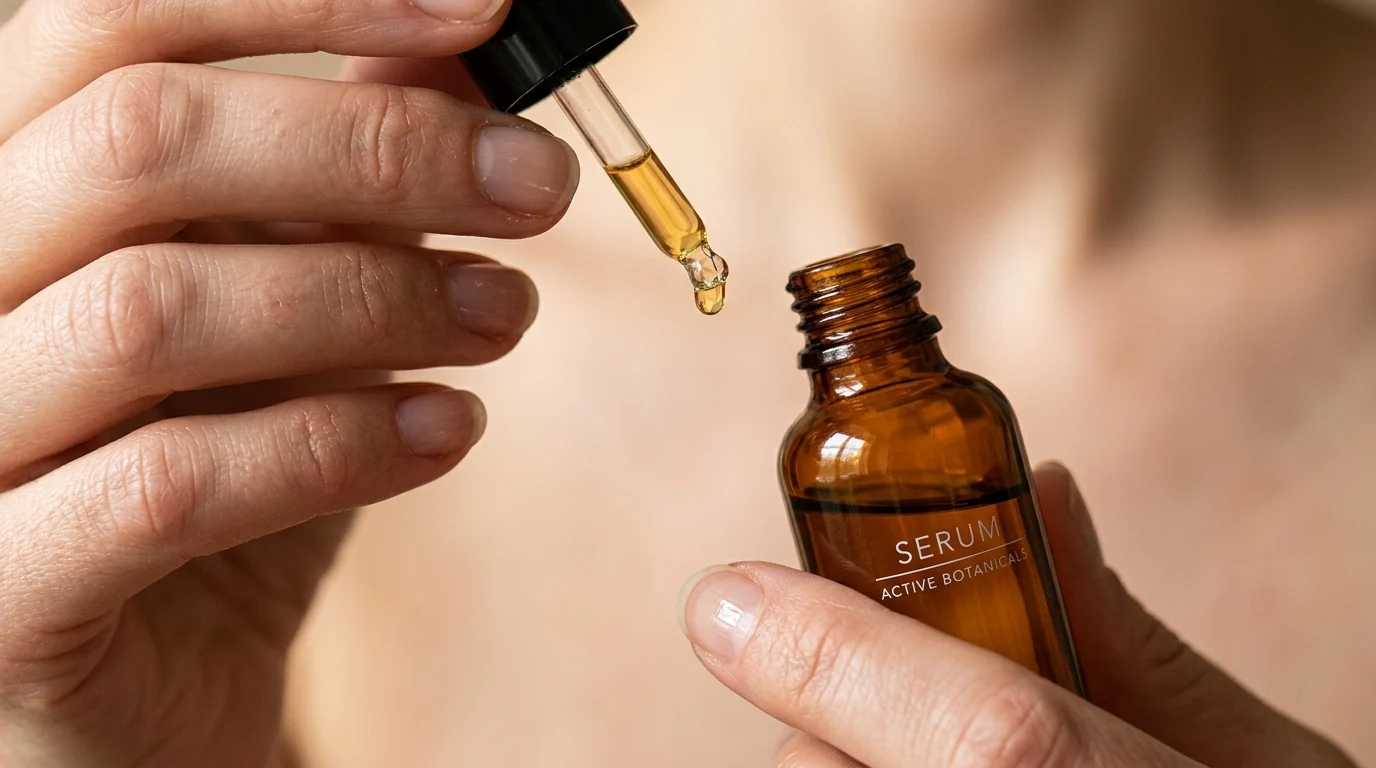
Many of the most clinically validated actives in skincare are chemically fragile. According to research on antioxidant stability and skin aging, vitamin C (ascorbic acid), retinoids, and certain peptides degrade with exposure to light, air, heat, and pH shift. A formula that contains 15% vitamin C on manufacture may deliver a fraction of that potency by the time it reaches the consumer’s skin, if packaging and formulation stability have not been appropriately considered.
Here lies one of the more quietly damaging conflicts in luxury beauty brand ingredients: the drive toward elegant, sensorial, fragrance-forward formulas works directly against active ingredient stability. Fragrance compounds — particularly those containing aldehydes and certain terpenes — can interact with and degrade chemically sensitive actives. Jar packaging, however beautiful, exposes the entire formula to repeated air and bacterial contamination. Clear glass communicates transparency but destroys vitamin C.
Stability-relevant signals to look for when selecting a product:
- Vitamin C in opaque, airless, or dark amber packaging → active stability has been considered in packaging design
- Vitamin C in clear glass or open-jar format → stability is likely compromised with regular use
- Fragrance-heavy formula containing retinoids → fragrance compounds may actively degrade retinoid potency over time
- pH-appropriate serum with acid actives (AHAs, BHAs, vitamin C) → delivery system awareness; pH below 3.5 is required for ascorbic acid efficacy
- Jar packaging for any water-containing active formula → consistent contamination and oxidation risk from repeated finger contact and air exposure
- Pump or airless dispenser with opaque packaging → stronger signal of formulation-first thinking regardless of brand tier
Biotech skincare niche brands — particularly those with pharmaceutical or academic founding teams — are considerably more likely to address active stability as a design requirement rather than an afterthought. Luxury skincare price vs performance gaps are, not infrequently, explained by exactly this: a premium-priced formula in beautiful but functionally inappropriate packaging delivering degraded actives.
The Consumer Intelligence Shift: Why Niche Skincare Brands Are Growing

Research on consumer trust and cosmetic ingredient transparency documents what many in the niche beauty space have observed qualitatively: a measurable, accelerating shift in consumer behaviour toward ingredient literacy and formulation scrutiny. Consumers who read INCI lists, cross-reference clinical abstracts, and seek direct communication with brand founders are making categorically different purchasing decisions than those responding primarily to advertising and heritage brand positioning.
This shift has structural implications. Luxury brands operate within large corporate architectures, maintain long-standing department store relationships, and manage legacy brand identities with significant inertia. Adapting to a consumer who wants to know the exact percentage of niacinamide in a serum — and whether it is paired with a penetration enhancer — requires a formulation transparency that conflicts with decades of proprietary complex branding strategy.
Personalized skincare niche brands and founder-led indie brands, by contrast, are structurally positioned to have direct, technically fluent conversations with their customers. The founder who developed the formula can explain the delivery system. The brand that publishes active percentages invites scrutiny rather than deflecting it. In a market where consumer intelligence is rising, this communicative transparency is itself a performance differentiator.
Clean niche skincare — a term that requires careful parsing, since “clean” remains unregulated — has benefited significantly from this shift. The most credible clean niche brands pair ingredient exclusion policies with formulation quality rather than treating the two as independent. The least credible use “clean” as a marketing position without meaningful formulation substance behind it.
Niche Skincare Brands Worth Understanding: Five Formulation-Led Examples
Noble Panacea
Founded by Nobel Prize-winning chemist Sir Fraser Stoddart, Noble Panacea built its formulation philosophy around time-release active delivery. The brand’s proprietary OSMV™ (Organic Super Molecular Vehicle) technology — derived from supramolecular chemistry — releases actives at defined rates and defined depths rather than depositing them all at once on surface contact. This represents pharmaceutical delivery logic applied precisely to skincare. Noble Panacea reviewed for delivery technology and formulation depth offers a detailed critical assessment of this approach in practice.
Vintner’s Daughter
Vintner’s Daughter reportedly spends four or more years on the development of a single product — a timeline that is essentially incompatible with the launch cadence of luxury conglomerates. The brand uses biofermentation to increase the bioavailability of botanical actives, a process that mirrors pharmaceutical techniques for improving solubility and cellular uptake. Concentrated botanical actives without bioavailability enhancement are largely performative; with it, the efficacy profile changes substantially. See Vintner’s Daughter Active Botanical Serum reviewed for ingredient bioavailability and skin results for a formulation-focused evaluation.
Augustinus Bader
The TFC8® complex at the core of Augustinus Bader’s formulation philosophy is not a trademarked blend of familiar actives given a proprietary name. It derives from decades of regenerative medicine research — specifically, stem cell activation and wound healing science developed in an academic and clinical context. This is clinical science translated directly into consumer skincare formulation, a translation with a different kind of credibility than heritage brand positioning. Augustinus Bader reviewed for sensitive skin and clinical formulation philosophy addresses how this translates for sensitised and reactive skin types.
Typology Paris
In the context of niche vs department store skincare, Typology’s commitment to publishing exact active ingredient percentages is genuinely distinctive. Knowing that a niacinamide serum contains 10% niacinamide is functionally useful; knowing the exact percentage in a luxury serum that lists “niacinamide” somewhere in the middle of a 40-ingredient INCI list is not. This concentration transparency allows the consumer to make informed comparisons across brands rather than relying on brand authority. Typology Paris reviewed for ingredient concentration transparency examines this philosophy across the range.
Twelve Beauty
Founder Pedro Catala spent years in botanical extraction research before founding Twelve Beauty, and the brand’s formulation approach reflects that specificity. Products are designed with sensitive skin compatibility and barrier support as primary design parameters — not afterthoughts. The botanical materials used are selected and processed for skin compatibility rather than fragrance or marketing appeal. Twelve Beauty reviewed for sensitive skin formulation and barrier-supportive philosophy offers a closer look at this approach.
When Luxury Beauty Does Outperform Niche Skincare
Intellectual honesty requires addressing this directly. Large luxury brands have clinical testing budgets, in-house safety teams, and regulatory compliance infrastructure that many small niche brands cannot match. Dermatological and ophthalmological testing at scale, long-term stability data, and post-market safety surveillance are resource-intensive. For consumers with diagnosed skin conditions, barrier compromise, or post-procedure skin, the safety testing depth of a large brand’s clinical programme can matter in ways that go beyond formulation elegance.
Additionally, not every niche brand is formulating thoughtfully. The structural opportunity to invest in formulation is not always taken. Some indie skincare brands use “niche” or “clean” positioning as a marketing strategy while delivering underdosed, unstable, or poorly tested products. The intelligent approach is evaluating formulation quality across both categories, using the same criteria — ingredient transparency, delivery system logic, active stability, and skin barrier compatibility — regardless of brand size or price point.
Always patch test new skincare products regardless of brand tier, and consult a dermatologist before introducing potent actives if you have a diagnosed skin condition or barrier compromise.
Myth: Price Is a Reliable Proxy for Formula Quality In skincare, retail price reflects a combination of ingredient cost, delivery system investment, packaging, retailer margin, and advertising spend — in proportions that vary dramatically by brand model. A £300 luxury face cream and an £80 niche serum may invest very different proportions of their retail price in active ingredient quality and delivery architecture. The £300 product is not necessarily the one investing more in formula. Evaluating what is inside the product — not what is on the outside or what the price implies — is the only reliable method.
Frequently Asked Questions
Are niche skincare brands actually better than luxury beauty brands?
Not categorically — but structurally, many are better positioned to invest in formulation depth. The direct-to-consumer model, reduced retail overhead, and founder-led transparency that characterise the best niche skincare brands allow a higher proportion of revenue to be directed toward what is inside the formula. Whether that opportunity is taken requires brand-by-brand evaluation, not a blanket assumption.
How do I evaluate whether a niche skincare brand has a genuinely superior formula?
Look for active ingredient percentages on the label or published by the brand, delivery system information (encapsulation, liposomal, pH-adjusted vehicles), packaging appropriate to the formula’s stability requirements, and clear explanation of the formulation rationale. Brands that can answer “why this concentration, in this vehicle, in this packaging” with scientific specificity are doing something different from brands that rely solely on heritage or aesthetic positioning.
What should I look for when comparing a niche serum to a luxury brand equivalent?
Compare INCI lists for active concentration and position, assess packaging for stability appropriateness (airless, opaque, pH-indicating), check whether the brand discloses delivery system technology, and evaluate whether the formula’s pH is appropriate for the actives it contains. A £40 niche serum in airless opaque packaging with published pH and active percentages may be doing more functional work than a £200 luxury serum in a fragrant, clear-glass formula with an INCI list that reads primarily as texture agents.