


“Biological skin age” has the ring of another biohacking buzzword — the kind of phrase that shows up next to red light masks and cold plunges. But the science underneath it predates the wellness influencer entirely. Skin aging clock science has been quietly developing in genetics labs for over a decade, and it offers a genuinely rigorous way to explain why two 45-year-olds can have skin that looks a decade apart. Understanding biological skin age means understanding what’s actually happening at the cellular level — not just what’s visible in the mirror.
Chronological Age vs. Biological Age — The Core Distinction
Chronological age is simple: it’s the number of years you’ve been alive, counted from your birth certificate. It moves at exactly one rate, for everyone, always. There’s nothing dynamic about it.
Biological age is different. It reflects how your cells are actually functioning relative to that fixed number — and research suggests it can run ahead of, behind, or roughly in step with your birthday. This gap has been documented across nearly every organ system studied.
Skin is a particularly interesting case. Unlike your liver or kidneys, skin sits at the direct interface between your body and the outside world, absorbing UV radiation, pollution, and other environmental stressors in real time. That constant exposure makes it an unusually sensitive — and measurable — indicator of biological aging. It’s worth being grounded about this: skin being a good indicator doesn’t mean it’s a perfect one, and the science is still refining what it can and can’t tell us.
The Science of Epigenetic Clocks — What They Actually Measure
The technical foundation here is DNA methylation — chemical tags that attach to your DNA and influence which genes get switched on or off. Think of them like sticky notes on your genome, telling cellular machinery what to read and what to ignore. Crucially, these tags shift in fairly predictable patterns as we age.
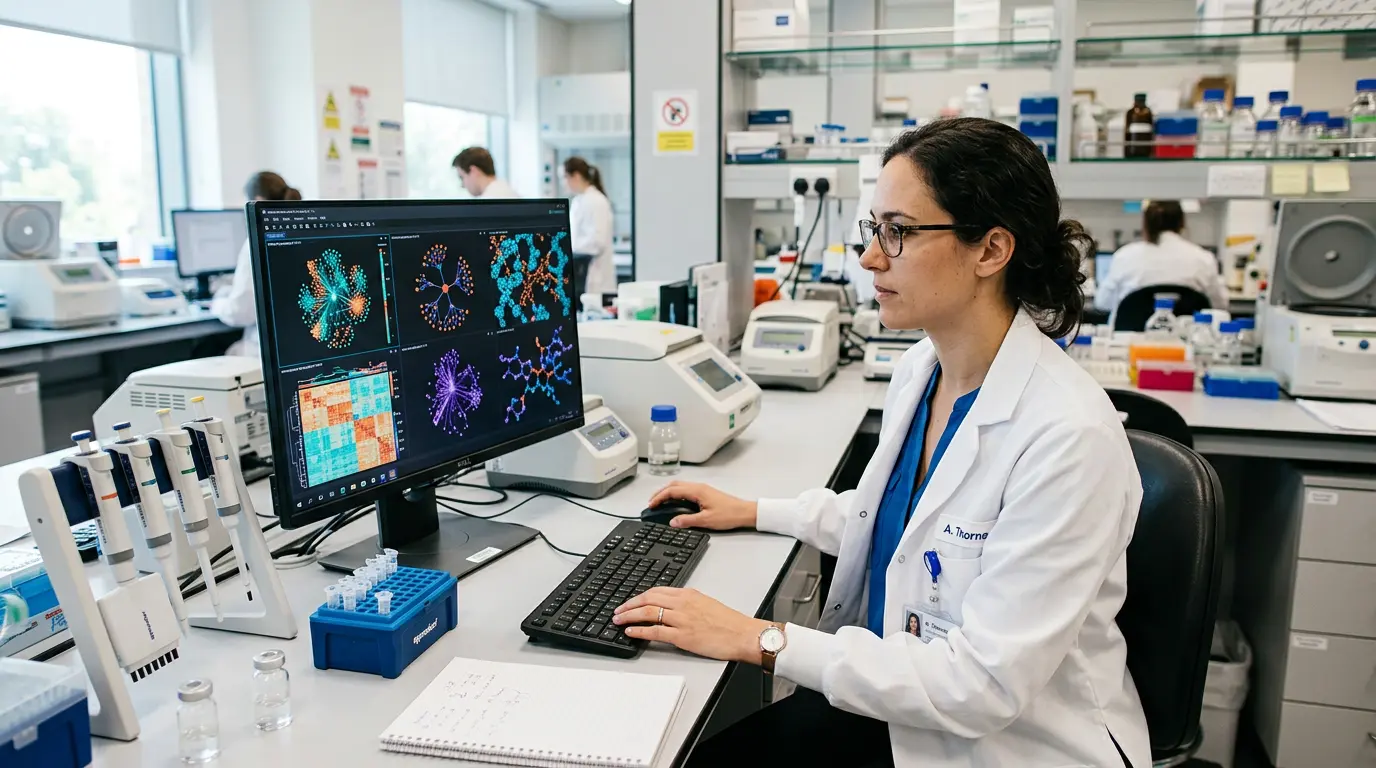
Epigenetic clocks are algorithms trained on large population datasets that use methylation patterns at specific genetic locations — called CpG sites — to estimate biological age. The foundational model in this field is the Horvath clock, developed by Dr. Steve Horvath. It’s a pan-tissue clock, meaning it was built to work across multiple tissue types, using 353 CpG sites as its measurement backbone.
The insight that makes this field matter clinically is this: your epigenetic age can be ahead of your chronological age — often called accelerated aging — or behind it, known as decelerated aging. Evidence indicates this gap is measurable, reproducible, and tied to real biological outcomes, not just a statistical curiosity.
Skin-Specific Clocks — A More Precise Tool
Here’s a limitation worth naming directly: the original Horvath pan-tissue clock wasn’t optimized specifically for skin. It was built to generalize across tissue types, which is powerful, but it left room for something more precise.
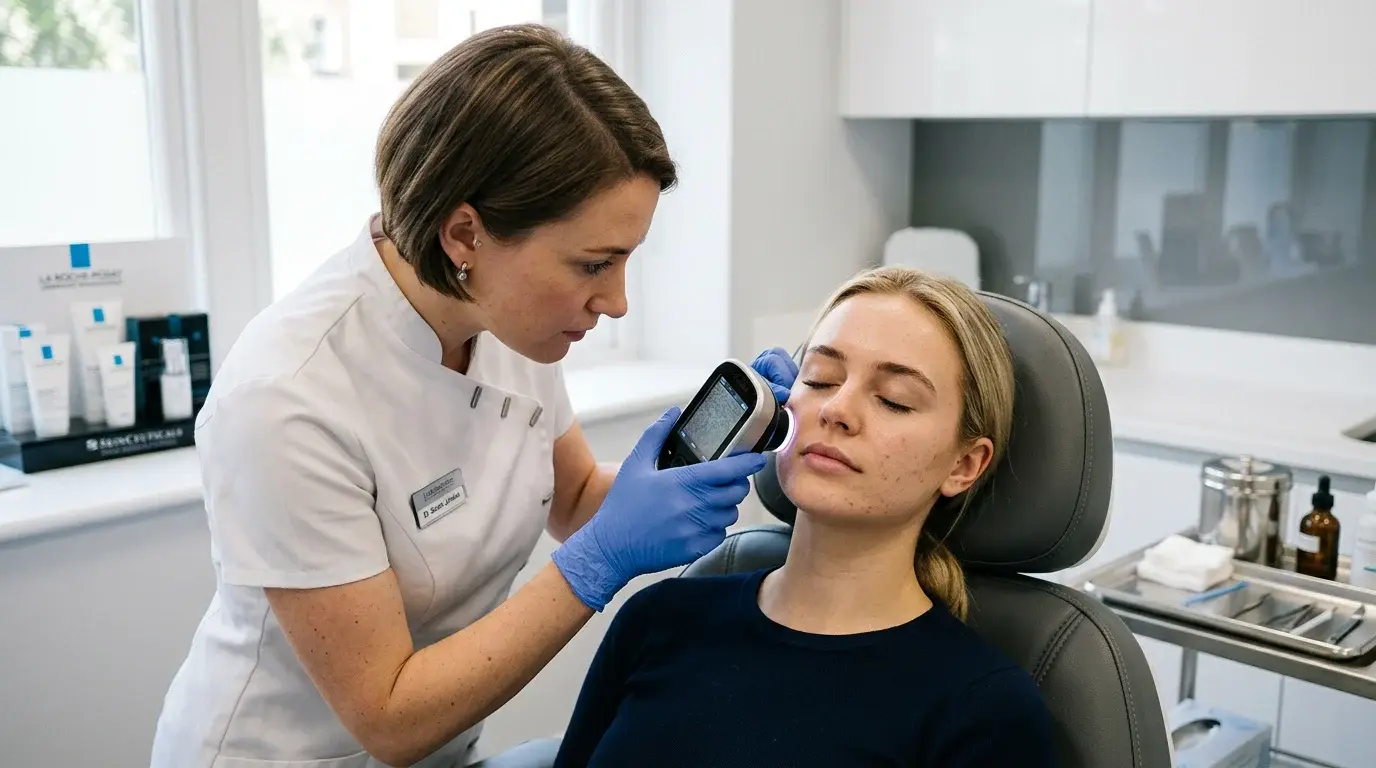
That precision arrived with tools like VisAgeX, a second-generation epigenetic clock trained specifically on epidermal samples from 378 female volunteers, as described in a 2023 Frontiers in Aging study (also indexed on PubMed). Unlike earlier clocks, VisAgeX was designed to predict visual age progression — how old skin actually looks relative to chronological age, including wrinkle grade and overall visual facial age. It also surfaced novel molecular pathways connected to why individuals age at different rates, which is arguably the more scientifically interesting part.
Separately, the Horvath Skin & Blood clock, built on 391 CpG sites, offers higher accuracy than the pan-tissue version specifically for fibroblasts and keratinocytes — the key structural and barrier cell types in skin. The practical takeaway is this: these tools now let researchers measure not just how old skin cells are, but whether they’re aging faster or slower than expected, and increasingly, why.
What Accelerates Skin’s Biological Age?
UV radiation remains the primary environmental driver of epigenetic skin aging, and this isn’t a new or speculative claim — it’s mechanistically established. UV exposure causes widespread hypomethylation in heterochromatic regions of DNA and upregulates collagen-degrading enzymes through changes in histone modification.
Oxidative stress compounds this. Reactive oxygen species accumulate with age and environmental exposure, and they destabilize methylation patterns over time. Oxidative stress is one of the more well-documented accelerants of biological skin aging — a topic covered in detail in Oxidative Stress and Skin Aging: The Cellular Damage You Can’t See.
Chronic, low-grade inflammation — often referred to as inflammaging — disrupts epigenetic maintenance and accelerates the buildup of senescent cells. Sleep disruption and circadian misalignment appear to play a role too; growing evidence suggests circadian biology is tightly linked to epigenetic upkeep, and disrupting it accelerates methylation drift.
A high-glycemic diet is another contributor worth noting. Glycation products generated by excess sugar have downstream effects on both methylation patterns and cellular signaling, according to a 2025 PMC review on epigenetic clocks and the skin exposome.
Can You Actually Slow the Biological Skin Clock?
This is the question most readers actually care about, so it’s worth being precise about where the evidence is solid versus where it’s still forming.
Evidence is reasonably strong for a handful of interventions. Consistent sun protection reduces UV-driven epigenetic damage — not a revelation, but now mechanistically supported at the methylation level. Antioxidant support, both topical and dietary, appears to help buffer the reactive-oxygen-driven methylation drift described above. Sleep and circadian consistency support the pathways involved in epigenetic maintenance. And targeted clinical treatments — fractional lasers and radiofrequency devices — have been shown in studies to partially reset cutaneous epigenetic markers while promoting collagen synthesis, according to 2025 research published on PubMed.

Other findings are more early-stage and deserve appropriate caution. Pharmacological agents such as dihydromyricetin (DHM) and low-dose aspirin have been studied in association with decelerated epigenetic skin aging, per the same 2025 PMC review — but these are preliminary findings, not recommendations to act on.
The core message worth sitting with: unlike chronological age, biological skin age is plastic. It responds to inputs. The broader cellular basis for this plasticity is explored further in Skin Longevity: Why Modern Skincare Is Moving Beyond Anti-Aging. That plasticity is both the scientific significance of this concept and its practical relevance to anyone reading this.
Where Is Biological Skin Age Testing Now?
It’s worth being honest about what’s actually accessible right now, because the marketing around this space tends to run ahead of the science. Commercial epigenetic age tests exist — blood-based products from companies like TruDiagnostic and Elysium are already on the market. But these measure systemic biological age, not skin-specific age. They’re not the same thing.
Skin-specific epigenetic profiling, of the kind VisAgeX represents, remains primarily in the research domain rather than the consumer one. Non-invasive approaches using tape-strip sampling are emerging — a method explored in an npj Aging study on non-invasive epigenetic profiling — but these are not yet mainstream clinical tools.
For now, the most practical use of this science isn’t a test you can buy. It’s the framework it provides: a clearer picture of which inputs actually drive epigenetic skin aging, and which ones consistently support slower aging. That distinction matters more than any single number a test might eventually spit out.
FAQ
Is biological skin age the same as how old my skin looks?
Not exactly. Biological skin age refers to the molecular state of your skin cells, measured via DNA methylation patterns. How old your skin looks is influenced by biological age, but also by structural changes — collagen density, hydration, pigmentation — that don’t always track directly with epigenetics.
Can skincare products change my biological skin age?
Research is still catching up to this question. There is reasonable evidence that certain ingredients, such as retinoids and antioxidants, influence cellular turnover and oxidative stress in ways that may affect epigenetic markers. But “this serum reverses your epigenetic age” is not a claim supported by current clinical evidence.
How is a skin epigenetic clock different from a general biological age test?
General biological age tests, usually blood-based, measure systemic aging across the whole body. Skin-specific epigenetic clocks, like VisAgeX or the Horvath Skin & Blood clock, are trained specifically on skin tissue and capture local methylation changes that don’t always mirror what’s happening systemically. Skin ages differently depending on local exposures — UV, pollution, barrier integrity — which a blood test simply can’t see.
Is accelerated biological skin age reversible?
Evidence suggests it’s at least partially modifiable. Epigenetic changes aren’t permanent in the way DNA mutations are — the methylation tags that clocks measure can shift over time. Studies on clinical procedures and lifestyle interventions have shown measurable epigenetic improvements, though whether these translate to long-term functional rejuvenation at scale is still being established.