

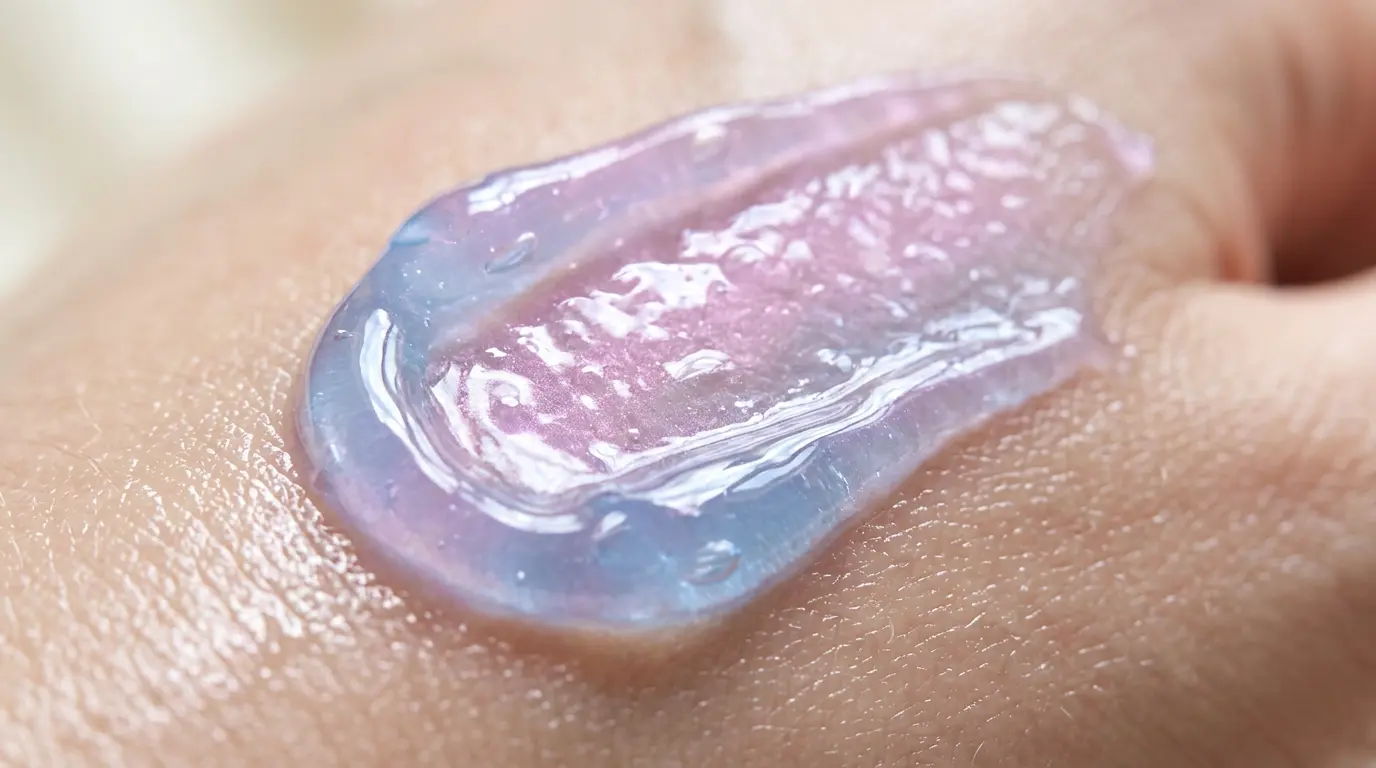
Gel blushes, jelly highlighters, and water-burst primers have taken over social feeds this year, praised mostly for their cooling snap and glassy finish. Beyond the viral aesthetic, however, lies a more interesting story rooted in physical chemistry. For reactive skin prone to stinging and barrier disruption, conventional heavy oil-in-water emulsions can trap heat and rely on strong surfactants to hold together. Understanding how a gel makeup texture sensitive skin profile actually behaves alongside modern jelly formula cosmetics reveals why hydrogel networks can deliver pigment with minimal mechanical friction and none of the heavy occlusivity that irritated skin tends to react against.
The Biophysics of Hydrogels: High Water Content vs Heavy Occlusion
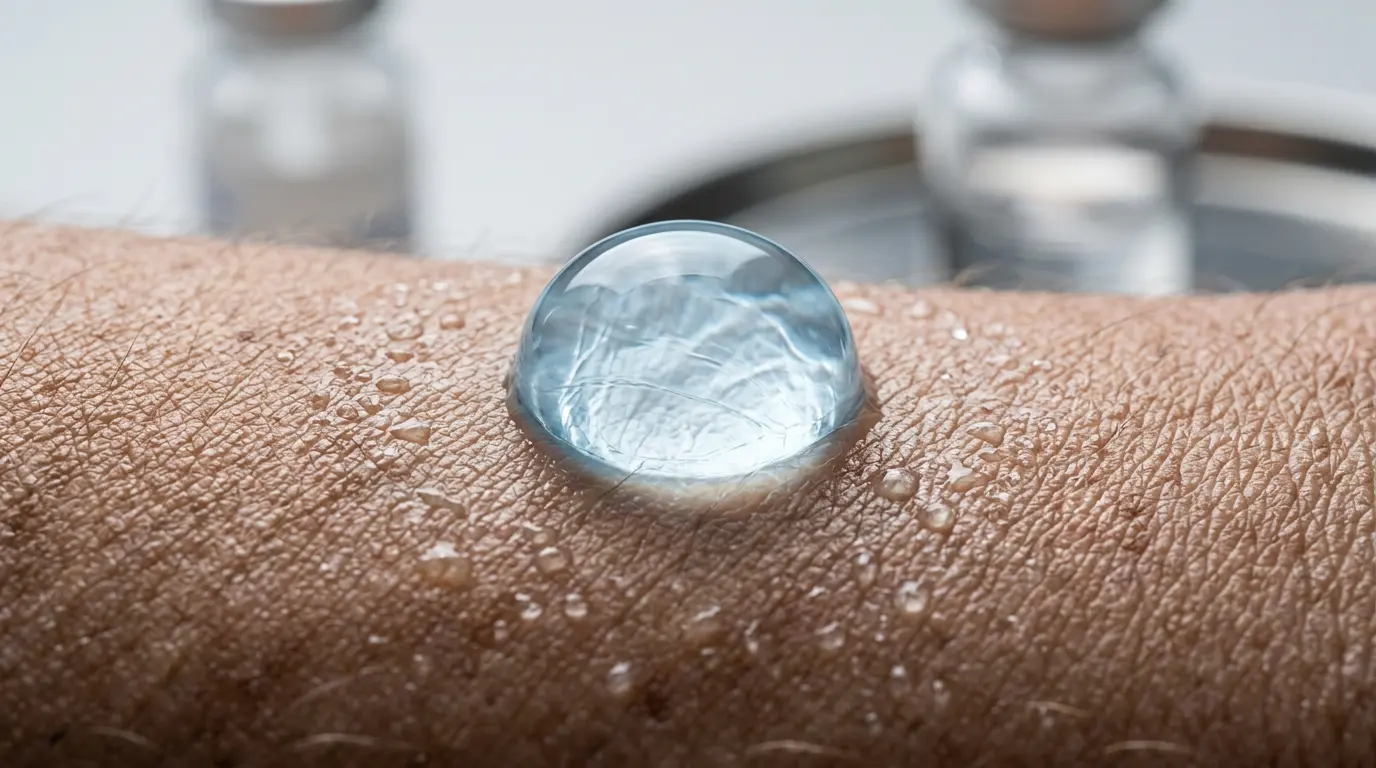
A hydrogel is not simply “water with pigment in it.” It is a cross-linked network of hydrophilic polymers—carbomers, cellulose derivatives, certain gums—capable of holding a substantial volume of water within its matrix without dissolving. That structure is what gives jelly textures their bounce and their immediate cooling sensation on contact, since evaporation at the skin surface pulls heat away almost instantly.
This is fundamentally different from how a silicone- or lipid-heavy base behaves. Those systems form a near-impermeable occlusive film designed to physically block water loss. Hydrogels, by contrast, allow a degree of vapor exchange through the polymer network while still supporting hydration in the stratum corneum, the skin’s outermost functional layer.
Research on hydrogel physical properties and their interaction with epidermal barrier hydration indicates that these matrices can support water retention through humectant binding rather than through a suffocating occlusive seal (source). In practice, that means reduced transepidermal water loss without the buildup of trapped heat, sebum, or the airless feeling that many reactive-skin users associate with heavier cream formulas.
For someone whose skin flushes or overheats easily, this distinction matters more than it might first appear. A formula that hydrates without sealing the surface is working with the skin’s own vapor exchange rather than against it.
The Emulsifier Problem: Why Less Is More for Reactive Barriers
Traditional cream foundations and heavier liquid cosmetics depend on emulsifiers to bind their oil and water phases into a stable, spreadable product. These surfactant systems are effective at texture engineering, but they are not inert once applied. Emulsifier residues left on the skin can interact with the intercellular lipids that hold the stratum corneum together.
Clinical research on cosmetic emulsifiers and cutaneous barrier function has linked certain surfactant classes to increased skin permeability, which in compromised or reactive barriers can translate into stinging, redness, or a delayed inflammatory response (source). This is not a universal effect across every emulsifier, but it is a mechanism worth understanding rather than dismissing as marketing noise.
Jelly and gel cosmetics sidestep much of this problem structurally. Because they rely on water-soluble gelling agents rather than an oil-water emulsion, many formulas require few or no harsh surfactants to remain stable. Less emulsifier load generally means less opportunity for lipid disruption at the surface.
The broader question of how different vehicle types interact with skin architecture—waxes, oils, powders, and now gels—is one we’ve examined in more depth in Cream vs. Powder Makeup, which is worth a look if you’re trying to map out which base categories tend to suit which skin behaviors.
Friction-Free Pigment Delivery and Reduced Shearing Stress
There is a mechanical side to irritation that gets far less attention than ingredient lists. Applying a heavy cream or thick paste requires real rubbing force to spread evenly, and that repeated shear stress against reactive skin can trigger localized histamine release and visible flushing, independent of any single ingredient.
Jelly formulas behave differently under pressure. Most exhibit thixotropic properties, meaning they thin and flow more easily under light pressure but hold their structure at rest. That property lets pigment disperse across the skin with a fraction of the contact force a cream would demand, which is part of why the “glide” of these products feels so distinct in application videos.
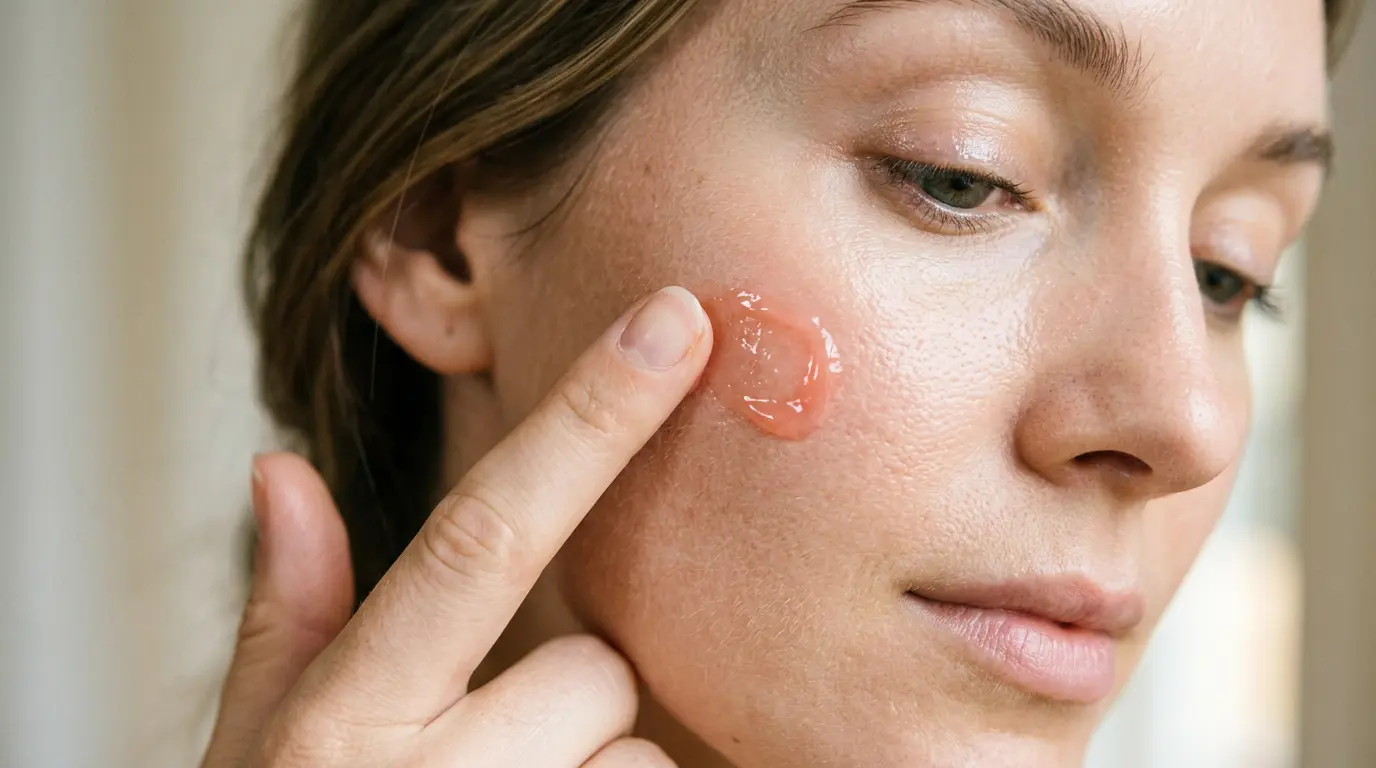
As the water content evaporates, what remains is an ultra-thin, flexible polymer-pigment film that moves with the skin rather than pulling against it or settling into fine lines. For skin that reacts to friction as readily as it reacts to actives, that lower mechanical load is a genuine advantage, not just a sensory one.
This idea—that reducing skin traction can be as important as reducing ingredient load—runs through the broader shift toward lighter, less effortful makeup application discussed in Quiet Luxury Makeup.
Potential Pitfalls: Preservatives and Alcohol in Water-Rich Formulas
None of this makes gel and jelly textures automatically safe for sensitive skin, and a science-first read has to hold that line. High water content is, by definition, a more hospitable environment for microbial growth than an anhydrous or oil-based formula. That means these products need robust, broad-spectrum preservative systems to stay stable and safe over their shelf life.
Preservatives themselves are not the enemy here, but formulation choices around them can be. Some commercial gels lean on volatile drying alcohols, such as alcohol denat, to speed up set time and improve the “snap” of the finish. Those same alcohols can strip surface moisture on contact, producing the stinging sensation that sensitive-skin users are specifically trying to avoid.
Fragrance is another quiet risk. Raw polymer bases can have a faint chemical odor, and some brands mask it with essential oils or synthetic fragrance. That single addition can turn an otherwise soothing hydrogel vehicle into a genuine irritant, undoing much of the barrier logic described above.
The takeaway is straightforward: high water content demands a clean formulation to actually deliver on its promise. Alcohol-free and fragrance-free are not nice-to-haves in this category—they are close to non-negotiable for reactive skin.
How to Select and Layer Jelly Formulas Safely
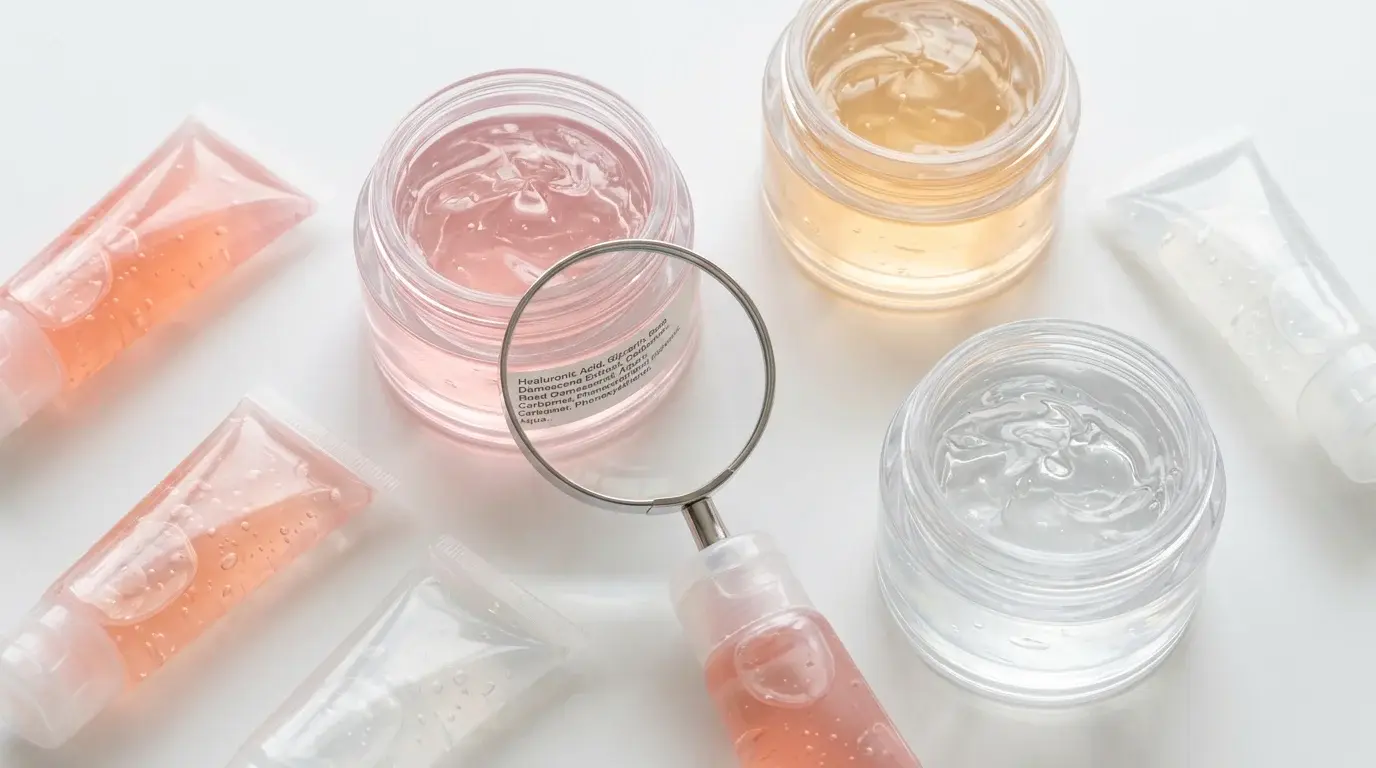
Choosing well in this category starts with the ingredient list, not the marketing copy on the jar. Scan the INCI for drying alcohols, essential oils, or synthetic fragrance sitting near the top of the list, since position roughly correlates with concentration.
Timing and layering also affect how these products perform. Applying a jelly product over a well-absorbed, fragrance-free moisturizer, or onto slightly damp skin, tends to maximize the humectant’s water-binding capacity rather than letting it evaporate uselessly on dry, unprepared skin.
Application tools matter more than they get credit for. Gentle pressing with fingertips or a barely damp sponge preserves the thin polymer film that forms as the product sets, whereas buffing brushes can break that film and reintroduce the mechanical irritation gel textures are meant to avoid.
Finally, pay attention to compatibility. Pairing water-based jelly blushes and highlighters with water-based or lightweight fluid bases tends to prevent the separation and pilling that can happen when very different vehicle chemistries are stacked on top of each other.
FAQ
Are jelly makeup products suitable for dry, sensitive skin?
Yes, provided they contain effective humectants like hyaluronic acid or glycerin and are layered over a supportive moisturizer. While jellies deliver immediate hydration, dry skin types still require a thin underlying layer of lipids to lock in that moisture permanently.
Why do some gel makeup products sting when applied?
Stinging typically occurs if the gel contains volatile drying alcohols, fragrance, or high concentrations of certain active glycolic or botanical extracts. Pure, well-formulated hydrogels without these additives should feel cooling and soothing on sensitive skin.
Do jelly cosmetics last as long as traditional liquid makeup?
Jelly cosmetics form a flexible, light-reflecting film as their water content evaporates, offering impressive resistance to creasing. However, because they lack heavy occlusive waxes and resins, they may require light setting on oily areas for all-day wear.
Can I layer jelly blushes over powder foundation?
It is generally not recommended. Applying a high-water jelly product over dry powder can cause the powder to absorb the liquid unevenly, leading to patchiness or pilling. For best results, apply jelly textures over liquid bases or bare skin.