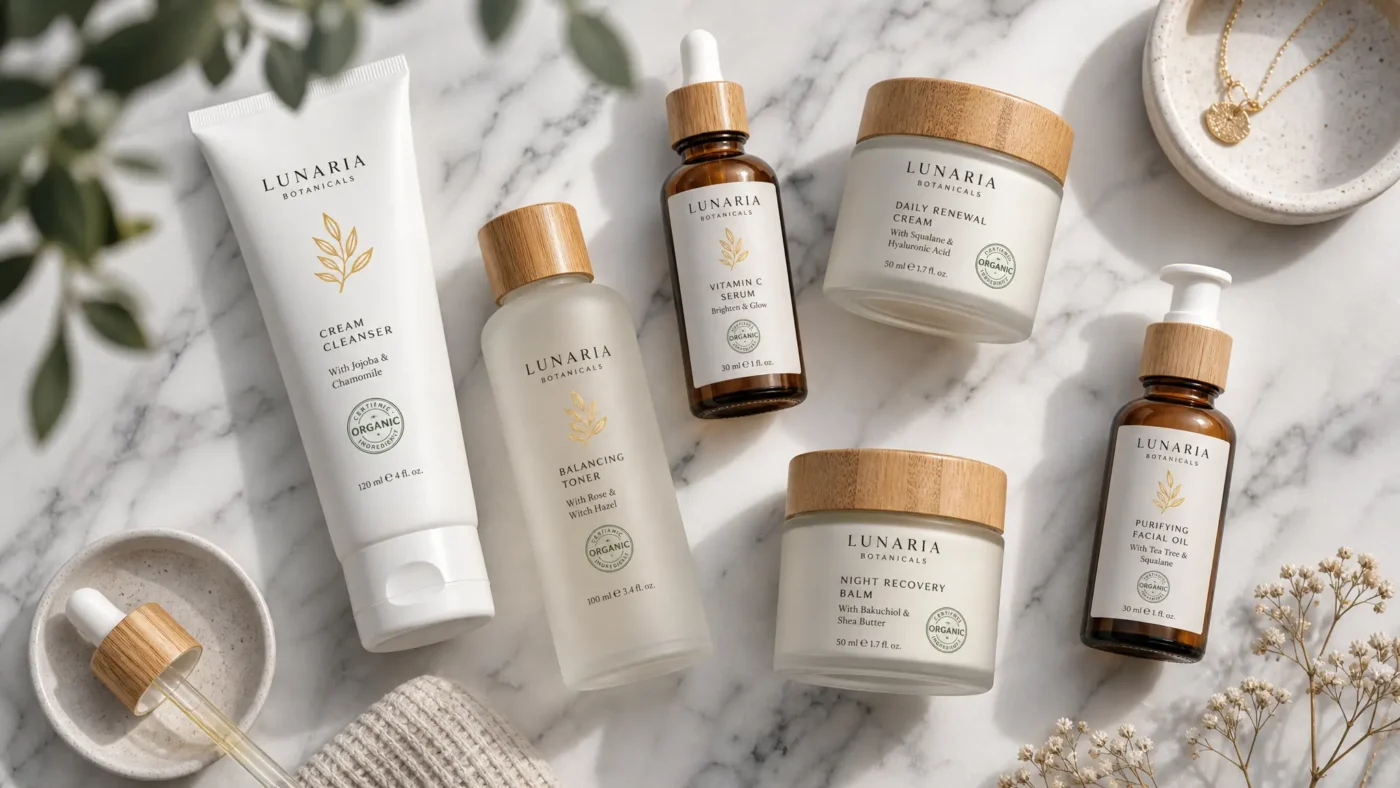
Navigating a beauty aisle often feels like deciphering a wall of green stamps, leaf icons, and safety seals stacked on top of each other. Having cosmetic certification labels explained in plain terms matters because these marks are not interchangeable, even when they look similarly reassuring on a label. ECOCERT, COSMOS, and EWG Verified audit entirely different dimensions of a formula, from organic farming percentages to ingredient hazard scoring. Understanding what COSMOS organic certification skincare actually guarantees—and where its authority stops—lets buyers judge a product by its chemistry rather than its packaging iconography.
The Architecture of Natural Standards: COSMOS and ECOCERT Dissected
ECOCERT is not itself a standard. It is an auditing body, one of the founding organizations that helped build COSMOS as a unified European framework for certifying natural and organic cosmetics. When a product carries an ECOCERT stamp today, it typically signals that ECOCERT performed the inspection against COSMOS criteria, not that ECOCERT invented its own separate rulebook.
The COSMOS Organic tier is the stricter of the two designations. Its official technical specifications require that at least 95% of physically processed agro-ingredients be organic, alongside a minimum of 20% organic content across the entire finished formulation, dropping to 10% for rinse-off products such as cleansers and shampoos. That distinction matters: a leave-on serum and a rinse-off body wash are held to different organic-content floors under the same certification family.

COSMOS Natural, by contrast, is concerned primarily with ingredient origin and processing purity rather than organic percentage minimums. It audits biodegradable synthetics closely and explicitly bans petrochemical silicones and parabens, but it does not demand the same organic-content thresholds as the Organic tier. Readers who want to go deeper into how raw material sourcing and labeling actually work can find that ground covered in Ingredient Transparency Skincare.
EWG Verified vs. European Certifications: Hazard vs. Risk Assessment
EWG Verified operates on a fundamentally different logic than COSMOS. It functions as a hazard-based screening database, scoring individual ingredients against published scientific literature and flagging substances associated with toxicity or endocrine disruption. A product earns the seal by avoiding ingredients that appear on EWG’s own watchlists and by meeting its labeling transparency requirements.
European certifications take a different starting point entirely. COSMOS prioritizes ingredient origin, green chemistry processing, and biodegradability, rather than compiling exposure-independent hazard lists. Toxicological research shows this reflects a broader scientific divide between hazard identification—does an ingredient have the theoretical capacity to cause harm—and risk assessment, which asks whether real-world exposure levels make that harm plausible. A PubMed analysis on cosmetic risk assessment methodology lays out this distinction in detail.

The practical limitation of hazard-based databases is their tendency to disregard dose-response relationships. A concentration deemed safe by regulatory panels like the EU’s Scientific Committee on Consumer Safety can be treated with the same red-flag weight as a raw industrial exposure level, even though the two scenarios bear little resemblance to how the ingredient is actually used in a finished formula. This gap in nuance is one reason greenwashing and inconsistent safety claims persist across the category, a pattern explored further in Clean Beauty Transparency.
What Certification Seals Guarantee (and What They Ignore)
Certification seals are genuinely useful for certain claims. They verify supply chain traceability, confirm green processing chemistry, audit eco-friendly packaging choices, and document the absence of specific synthetic preservatives or solvents from a formula. These are real, checkable commitments backed by third-party inspection.
What they do not verify is arguably more important for anyone shopping with skin health in mind. No third-party certification seal—COSMOS, ECOCERT, or EWG Verified—guarantees clinical efficacy, confirms barrier compatibility through patch testing, establishes low comedogenicity, or promises freedom from allergic reactions. Regulatory frameworks indicate these seals were never designed to function as dermatological safety certifications in the first place.
This distinction becomes clinically relevant with natural and organic standards specifically, since they explicitly permit high concentrations of botanical essential oils and terpene fractions. Dermatological evidence suggests these compounds remain among the more common triggers for contact dermatitis and reactive skin presentations, a pattern documented in JAAD Reviews’ clinical analysis of natural plant extract sensitization and barrier function. A certified organic serum can be entirely compliant with its standard while still containing the exact botanical compounds most likely to irritate sensitized skin.
How Consumers Should Evaluate Certified Skincare
The most useful approach treats each certification as answering one specific question rather than a blanket verdict on quality. COSMOS Organic is worth prioritizing when environmental sustainability, green chemistry processing, and sustainable agricultural sourcing are the primary purchasing criteria driving a decision.
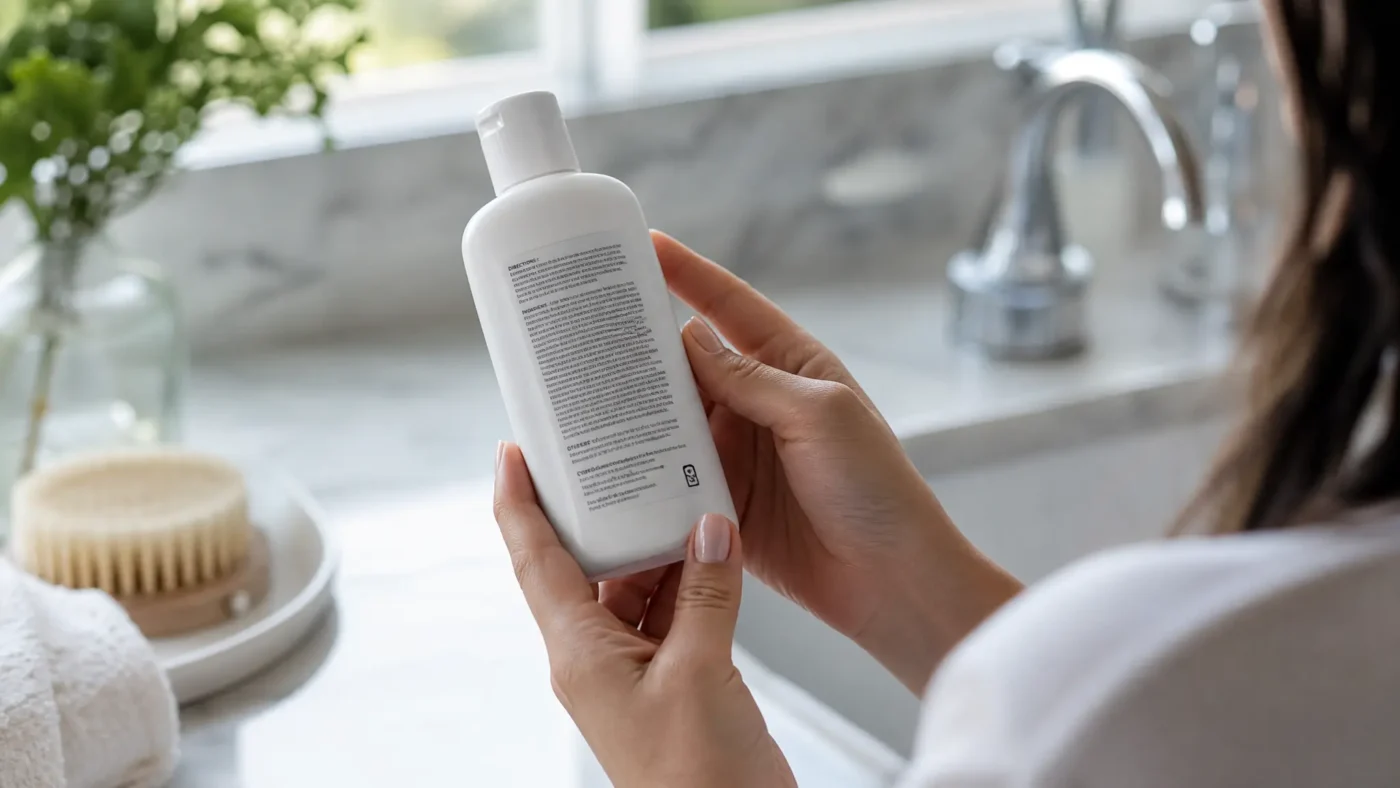
For anyone with hyper-reactive or sensitized skin, ingredient lists deserve independent scrutiny regardless of what seal appears on the front of the packaging. Certified organic products frequently rely on unrefined botanical extracts that are, by nature, richer in the compounds known to provoke natural allergic responses than their synthetic, purified counterparts.
The most defensible mental model is to treat certification seals as transparent supply chain audits rather than absolute guarantees of dermatological safety, cosmetic elegance, or targeted therapeutic performance. A seal tells a shopper something true and verifiable about how an ingredient was sourced or processed. It does not tell them how that ingredient will behave on their particular skin barrier.
The Final Verdict: Do Certification Seals Mean Better Products?
Certification seals provide meaningful audit transparency regarding ingredient origin, processing ethics, and environmental impact across increasingly complex global supply chains. That transparency has real value, particularly for consumers who prioritize agricultural sourcing and ecological accountability over other formulation criteria.
However, an organic seal does not make a formula inherently safer or more performant on human skin than a well-formulated synthetic product built under strict European SCCS safety guidelines. Regulatory frameworks indicate that safety and “natural origin” are evaluated along entirely separate axes, and conflating the two is where most greenwashing narratives take root.
The most effective approach combines genuine appreciation for sustainable certification standards with a clear-eyed understanding of one’s own skin barrier needs and individual ingredient tolerances. Neither a stamp nor its absence should substitute for reading the actual ingredient list.
FAQ
Is ECOCERT the same as COSMOS Organic?
ECOCERT is an independent auditing body that conducts inspections for cosmetics, whereas COSMOS is the actual standard being applied. ECOCERT assesses products against the unified COSMOS criteria, which specifies mandatory thresholds for organic ingredient content and green processing methods.
Does EWG Verified mean a product is dermatologically safe?
Not necessarily. EWG Verified confirms that a product avoids ingredients listed on EWG’s hazard watchlists and meets specific labeling transparency guidelines. It does not measure clinical safety, dermatological patch testing, or whether a product might trigger individual skin irritation.
Why do organic certified products still cause skin reactions?
Organic standards certify agricultural sourcing and green extraction methods, not skin compatibility. Many certified organic formulas rely on natural plant oils, essential oils, and unrefined extracts that contain volatile terpenes, which are well-documented triggers for contact allergies.
Are non-certified skincare products unsafe?
No. Obtaining third-party certifications like COSMOS or EWG is an expensive commercial process that many smaller or clinical brands choose not to pursue. Uncertified products sold in major markets must still comply with rigorous government safety regulations, such as the EU Cosmetic Regulation.