


Most skincare conversations start and end with serums, actives, and routines applied while you’re awake. Yet the biological foundation of cutaneous repair actually happens while you’re unconscious, during deep, uninterrupted sleep. Over the past several years, deep pressure therapy via weighted blankets has moved from an occupational therapy tool into a science-backed sleep intervention. The connection between weighted blanket skin recovery and deep pressure therapy sleep quality lies in the autonomic nervous system, nocturnal cortisol regulation, and the physiological cascades that drive night-time cellular repair.
The Neurobiology of Deep Pressure Stimulation
Deep Pressure Stimulation (DPS) works through touch, but not the kind you consciously register as pleasant or unpleasant. It exerts gentle, distributed mechanical pressure across cutaneous mechanoreceptors, including Merkel discs and Ruffini endings embedded in the skin. These receptors relay sustained pressure signals to the brain differently than a light touch or a poke would.
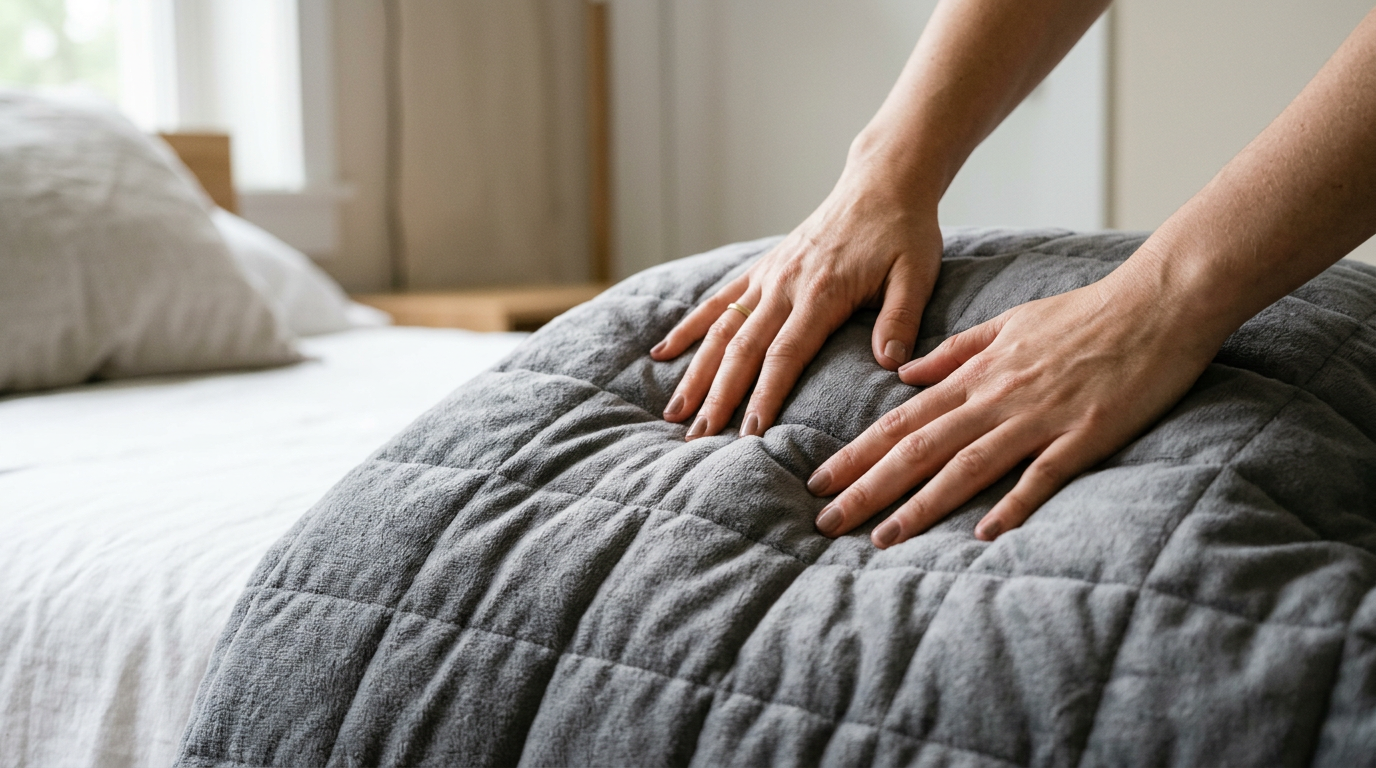
That distinction matters physiologically. Sustained, even pressure shifts autonomic balance by downregulating sympathetic “fight-or-flight” activity while stimulating parasympathetic “rest-and-digest” dominance. A randomized controlled trial examining weighted chain blankets found measurable effects on autonomic arousal modulation, supporting the idea that this isn’t just a subjective feeling of coziness but a trackable nervous system shift (PMC randomized controlled trial on weighted chain blankets).
Elevated parasympathetic tone lowers heart rate and blood pressure, which prepares both the brain and peripheral tissues for deep, restorative slow-wave sleep. This is the physiological on-ramp to everything that follows in the recovery cascade. Without that autonomic downshift, the body tends to linger in lighter, more fragmented sleep stages, and skin repair is one of the first casualties.
Cortisol, Melatonin, and the Nocturnal Skin Repair Cascade
Stress hormones and skin health are more entangled than most people assume. Chronic evening stress elevates systemic cortisol levels, which degrades structural collagen fibers, impairs epidermal tight junctions, and triggers low-grade micro-inflammation. Over time, this shows up as a compromised barrier and a complexion that looks perpetually tired, regardless of what’s applied topically. Restoring Your Skin’s Resilience After Stress goes deeper into how this breakdown happens at the cellular level.
Clinical evidence demonstrates that deep pressure therapy stimulates pre-sleep melatonin release in healthy adults while attenuating stress-induced cortisol spikes, according to a crossover study examining weighted blanket use (PubMed crossover study on weighted blankets and melatonin). That dual action—more melatonin, less cortisol—is where the mechanical and the hormonal start to intersect.
Melatonin isn’t only a sleep signal. It also acts as a potent endogenous lipid-soluble antioxidant within skin cells, neutralizing reactive oxygen species and promoting nocturnal DNA repair within keratinocytes. In other words, the same hormone that tells your brain it’s time to sleep is simultaneously working inside your skin cells to counter oxidative damage accumulated during the day.
Sleep Architecture: Why Slow-Wave Sleep Equals Cutaneous Cellular Renewal
Sleep quality is not merely about duration. It’s about architecture—specifically, how much time you spend in slow-wave (N3) sleep, the primary phase during which human growth hormone (HGH) is pulsed into circulation. This is the stage that gets sacrificed first when sleep is shallow or interrupted, even if total hours logged look adequate on paper.
HGH drives protein synthesis, fibroblast proliferation, and matrix rebuild, which makes deep sleep essential for structural firmness and barrier recovery. Skin isn’t just resting overnight; it’s actively rebuilding the scaffolding that keeps it resilient. Interrupt that window consistently, and the rebuilding never quite finishes.

Fragmented sleep or frequent awakenings disrupt these physiological repair windows, leading to elevated transepidermal water loss (TEWL) and dull skin texture. A clinical review examining weighted blankets alongside insomnia severity index scores found associated improvements in sleep quality parameters, which indirectly supports the case for protecting N3 sleep as a skin-health strategy (PubMed clinical review on weighted blankets and insomnia). The mechanisms connecting fragmented sleep to weakened skin barriers and impaired microcirculation are explored further in Sleep Deprivation Skin Health.
Synergistic Sleep Protocols: Combining Mechanical Pressure and Nutritional Support
Deep pressure therapy provides a mechanical signal for nervous system relaxation, but it isn’t the only lever available. Biological sleep optimization often requires adequate enzymatic and mineral support working alongside that physical input, rather than in place of it.
Magnesium acts as a natural NMDA receptor antagonist and GABA agonist, working in tandem with deep pressure stimulation to calm neural excitability and lower nocturnal muscle tension. A review of integrative insomnia therapies examining sensory integration and parasympathetic activation supports the broader principle that combining physical and biochemical inputs tends to outperform either approach in isolation (PMC review on integrative insomnia therapies).
Combining physical grounding tools with targeted evening nutritional habits creates a more complete environment for deep cellular recovery and skin health. Neither replaces the other; they address different points in the same physiological chain. For more on how mineral replenishment supports both nervous system calming and epidermal hydration, see Magnesium for Better Sleep and Skin.
How to Choose and Use a Weighted Blanket Safely

Choosing a weighted blanket isn’t purely a comfort decision; weight and material both influence whether you actually get the physiological benefits described above. The general rule of thumb is to aim for approximately 10% of total body weight, which distributes pressure evenly without causing physical restriction or discomfort.
Material matters just as much as weight. Opt for breathable, thermoregulating outer covers, such as bamboo or linen, to prevent overheating, since elevated body temperature can disrupt sleep architecture and cause night sweats that undo the very repair processes you’re trying to support.
Adaptation takes time, and expecting immediate results can lead to premature disappointment. Allow a 7-to-14-night adjustment period for the nervous system to acclimate to the sensory input before judging whether it’s working for you.
FAQ
How does a weighted blanket directly help my skin?
A weighted blanket improves skin indirectly by reducing evening cortisol levels and elevating pre-sleep melatonin release. By shifting your body into a parasympathetic state, it supports deeper sleep phases where cellular repair, growth hormone release, and collagen synthesis peak.
Can using a heavy blanket cause skin irritation or acne?
If the blanket causes overheating or is made from non-breathable synthetic fabrics, trapped sweat and heat can potentially irritate sensitive skin or aggravate acne. Choosing a breathable, washable cover and maintaining a cool room temperature prevents this issue.
How heavy should a weighted blanket be for optimal sleep quality?
Dermatological and occupational therapy recommendations generally suggest choosing a blanket that is roughly 10% of your ideal body weight. This delivers sufficient deep pressure stimulation without placing uncomfortable pressure on joints or restricting breathing.
How long does it take to see improvements in sleep quality and skin appearance?
While parasympathetic calming effects can occur during the first few nights, clinical trials tracking sleep quality metrics typically observe significant improvements in sleep maintenance and daytime recovery after 2 to 4 weeks of continuous use.