

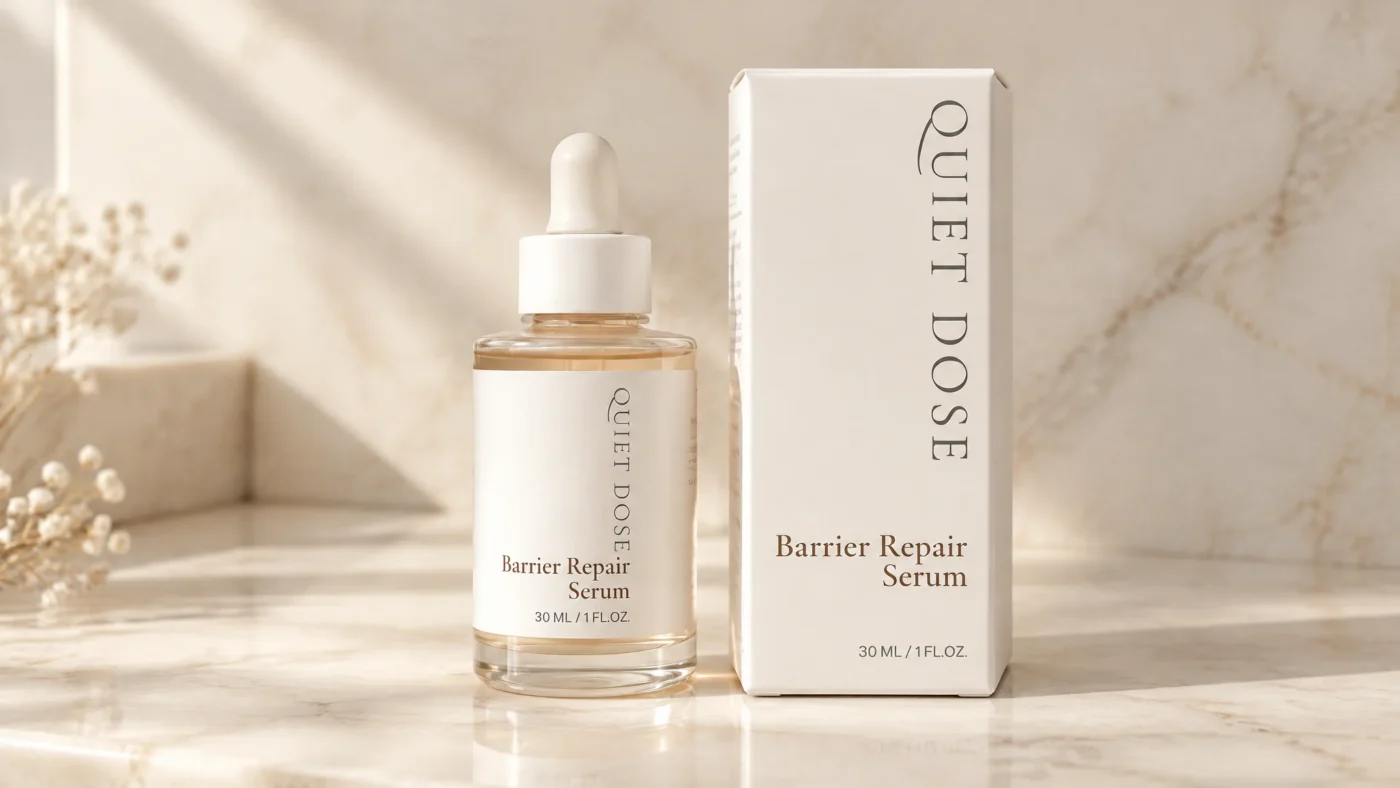
Most “barrier repair” serums lean on one or two headline ingredients and call it a day. Quiet Dose Barrier Repair Serum takes a different approach: five ceramide types, cholesterol, 5% panthenol, and a dose of ectoine, all built around a single idea — that skin which stings, tightens, or reacts doesn’t need more actives, it needs its own protective layer restored. That combination is what makes this Quiet Dose review worth writing, even without having tried the product firsthand. This is a close look at the formulation logic, what the ingredients are capable of in general, and where the brand’s claims still need more evidence behind them.
What Makes This Serum Worth a Second Look
Quiet Dose positions the serum specifically for skin that reacts — redness, stinging, tightness, that generally unsettled feeling after trying one too many actives. Instead of chasing a long list of trendy ingredients, the formula is built around skin-identical lipids (the fats your skin already makes) plus a short list of well-regarded hydrators. That’s a sensible strategy for anyone whose skin has been irritated by more aggressive routines, and it’s the kind of formulation concept that deserves genuine attention rather than a quick skim.
The appeal isn’t just conceptual. On paper, this is a formula that reads like it was built by someone who understands barrier function, not just someone assembling a trending ingredient checklist.
The Ingredients That Actually Matter Here
Ceramides and Cholesterol: The Core of the Formula
Your skin barrier is essentially a brick-and-mortar structure — skin cells are the bricks, and lipids like ceramides, cholesterol and fatty acids are the mortar holding everything together. When that mortar is depleted, water escapes more easily and irritants get in more easily, which is exactly the cycle behind tight, reactive, easily-upset skin. Peer-reviewed research on skin lipids backs up just how central ceramides and cholesterol are to keeping that barrier intact.
Quiet Dose includes five ceramide types — EOP, NS, NP, AS and AP — alongside cholesterol, which mirrors the mix of lipids your skin naturally relies on rather than relying on a single ceramide type alone. That’s a more sophisticated approach than many serums take, and it’s worth knowing about if you’re drawn to formulas built around barrier lipids rather than exfoliating acids or retinoids. The brand lists this complex under a “0.5%” heading, though it’s not fully clear whether that refers to the combined total or something else — worth keeping in mind, but not a reason to dismiss the concept. If you want to go deeper on how ceramide ratios are thought to work, Denyva has a dedicated piece on how ceramides support the skin barrier.
Panthenol at 5%: A Meaningful Concentration
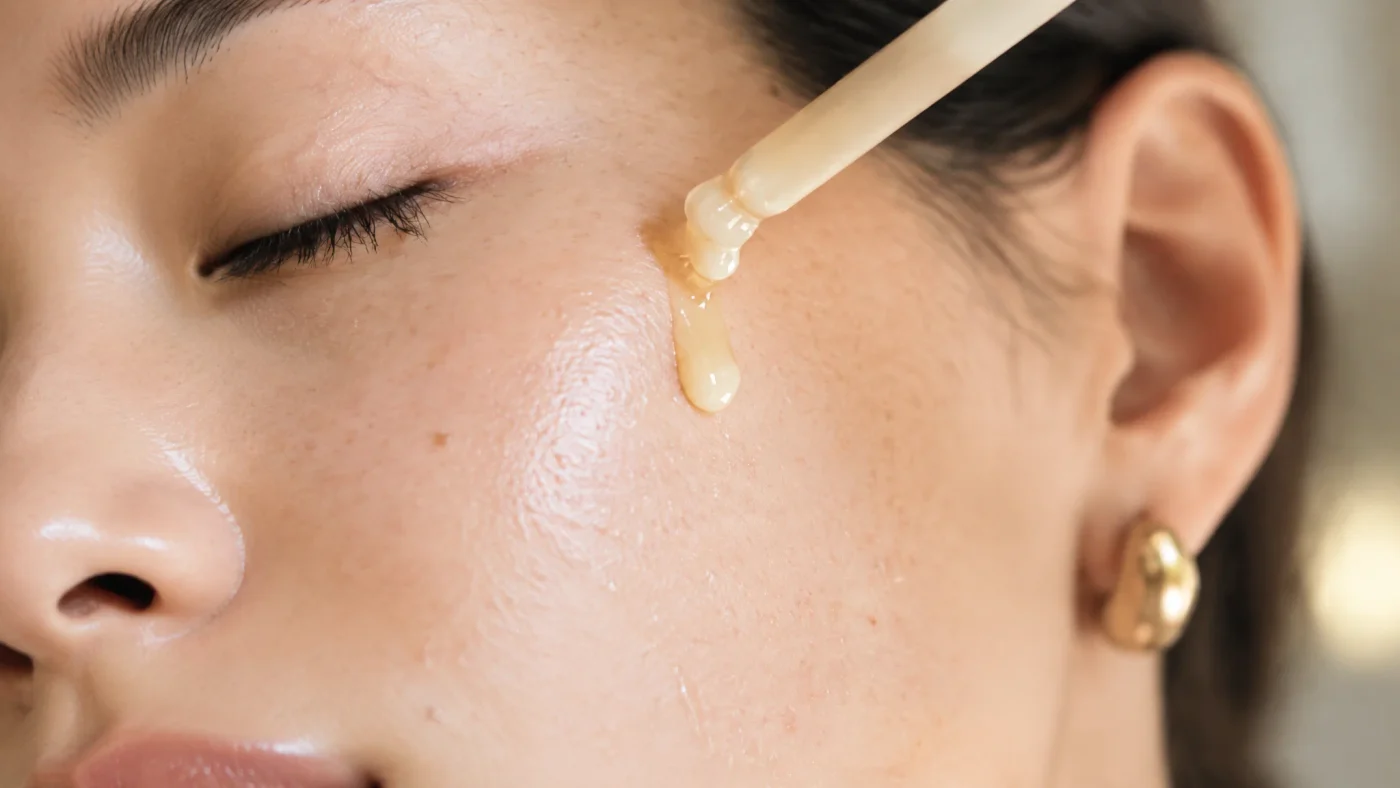
Panthenol (pro-vitamin B5) is one of the more reliable, well-tolerated ingredients in skincare — a humectant that also has a long history of use in soothing and recovery-focused formulas. Many serums include panthenol in trace amounts just to put it on the label. Quiet Dose discloses 5%, which is a concentration high enough to plausibly contribute to how the product feels and performs, rather than being there for marketing purposes alone. That’s a genuinely interesting detail for a barrier-focused serum, even though a higher percentage on its own doesn’t guarantee the product outperforms every alternative.
Glycerin, Sodium Hyaluronate and Sodium PCA: Built-In Hydration Support
A barrier-repair formula without adequate hydration support would be an odd combination, and Quiet Dose doesn’t make that mistake. Glycerin is one of the most extensively studied humectants available, sodium hyaluronate helps draw moisture to the skin’s surface, and sodium PCA is a naturally occurring part of skin’s own moisture-retaining system. Together, they round out the lipid-focused ceramide complex with the kind of water-binding ingredients that make sense in a serum aimed at compromised, moisture-poor skin.
Squalane, Jojoba Oil and Sunflower Seed Oil: Quiet Workhorses
Rounding out the formula are a few well-established emollients — squalane, jojoba seed oil and sunflower seed oil — which help soften and smooth skin while complementing the hydration-and-lipid strategy the rest of the formula is built on. Squalane’s exact concentration here hasn’t been disclosed, so it’s hard to say how much it contributes specifically, but its inclusion fits the overall logic of the formula.
Ectoine at 0.1%: Promising Ingredient, Modest Dose
Ectoine is a newer addition to mainstream skincare, originally studied for its ability to help cells cope with environmental stress. It’s an interesting ingredient to see in a product like this. The research reviewing ectoine’s skin benefits has generally looked at formulations with 5.5–7% ectoine — notably higher than the 0.1% used here, so those findings shouldn’t be assumed to apply directly to this serum. It’s a nice-to-have addition rather than a headline ingredient, and worth knowing that distinction going in.
Who This Serum Is Worth Considering For
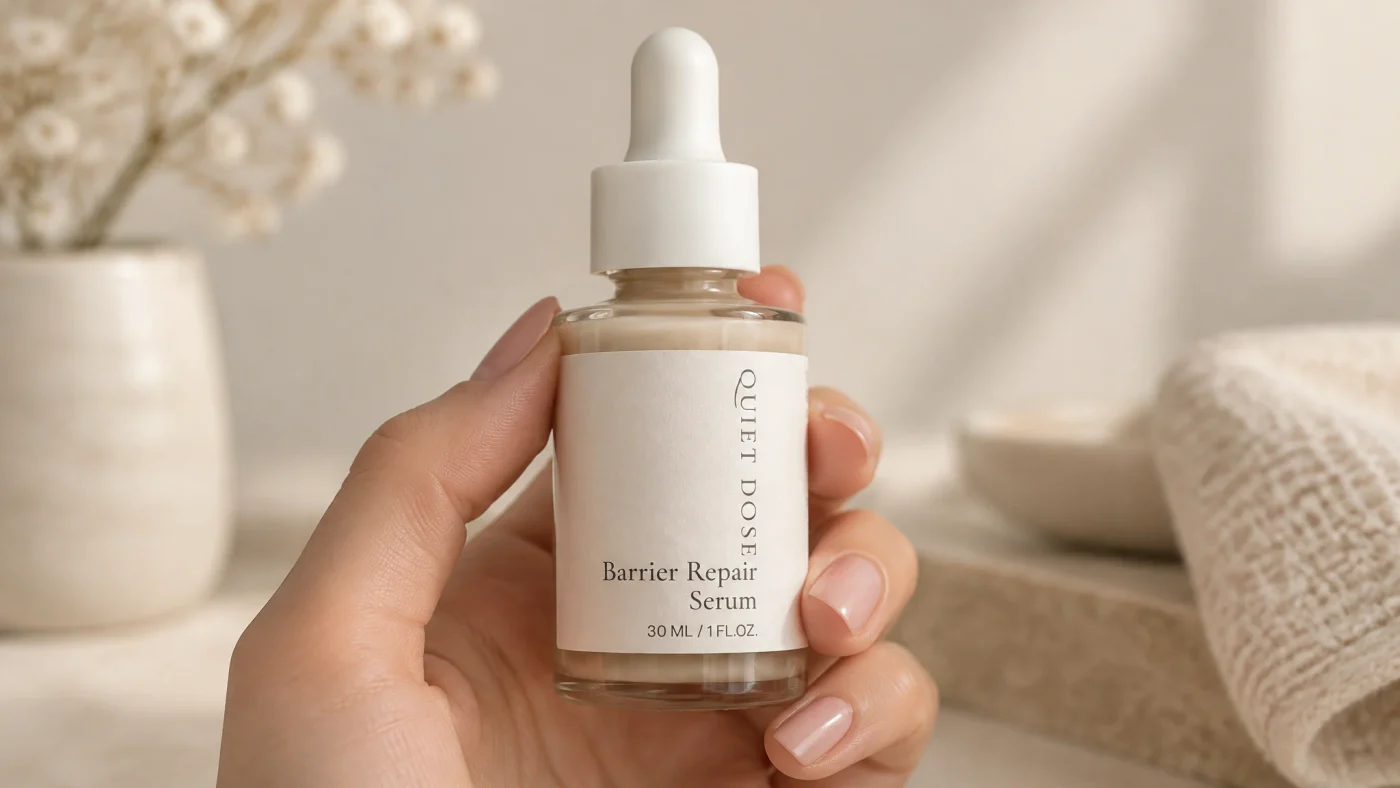
Quiet Dose makes the most sense for a specific kind of reader: someone whose skin reacts easily to actives, someone trying to simplify an overcomplicated routine, or someone specifically looking to add a barrier-support step alongside a gentle cleanser and moisturizer. If you’ve been layering acids, retinoids and vitamin C and your skin has started pushing back, a formula built around ceramides, cholesterol and panthenol is a logical thing to try instead. For more on paring routines down to what actually matters, Denyva’s piece on why using fewer products can sometimes make sense is a good companion read.
That said, this isn’t a product everyone needs. If your current routine already keeps your skin calm and comfortable, there’s no real reason to add another step just because the ingredient list looks appealing. And while the formula is designed with sensitive, reactive skin in mind, no ingredient list — however thoughtfully built — can guarantee how an individual person’s skin will respond. Anyone managing a diagnosed condition like eczema, rosacea or dermatitis is better off looping in a dermatologist before adding something new. For a broader framework on evaluating niche formulas like this one, see Denyva’s guide to choosing skincare for sensitive skin.
Is the Price Reasonable for What’s Disclosed?
Quiet Dose Barrier Repair Serum costs €59 for 30 ml as a one-time purchase, or €45 per 30 ml shipment on a 45-day subscription — about €1.97 per ml versus €1.50 per ml, making the subscription roughly 23.7% cheaper per shipment.
For a formula built around five ceramide types, cholesterol, 5% panthenol and ectoine, that price sits in a reasonable range for ingredient-forward, barrier-focused skincare — it’s not a budget drugstore product, but it’s also not priced like a luxury prestige serum. Whether it’s genuinely worth it comes down to whether the finished formula performs the way its ingredient list suggests it could, which isn’t something price or ingredients alone can confirm. The 45-day subscription cadence is simply Quiet Dose’s billing interval — it isn’t a guarantee that one bottle will last exactly that long, since usage depends on how much you apply and how often. If you’re trying to figure out whether a price tag is justified by what’s actually in the bottle, Denyva’s article on price versus formulation quality walks through how to think about that more broadly.
What About the Brand’s Clinical Claims?
Quiet Dose describes the serum as “clinically formulated” with “48-hour clinically tested hydration,” and reports that 87% of users felt relief from tightness by week two, 78% saw less redness by week five, and 91% reported lasting resilience by week twelve. Those are the brand’s own reported figures, and the underlying study methodology — sample size, design, how outcomes were measured — hasn’t been made publicly available for independent review. That doesn’t mean the numbers are false, but it does mean they should be read as Quiet Dose’s self-reported results rather than independently confirmed clinical proof, and they shouldn’t be expected to apply to everyone equally.
The Verdict
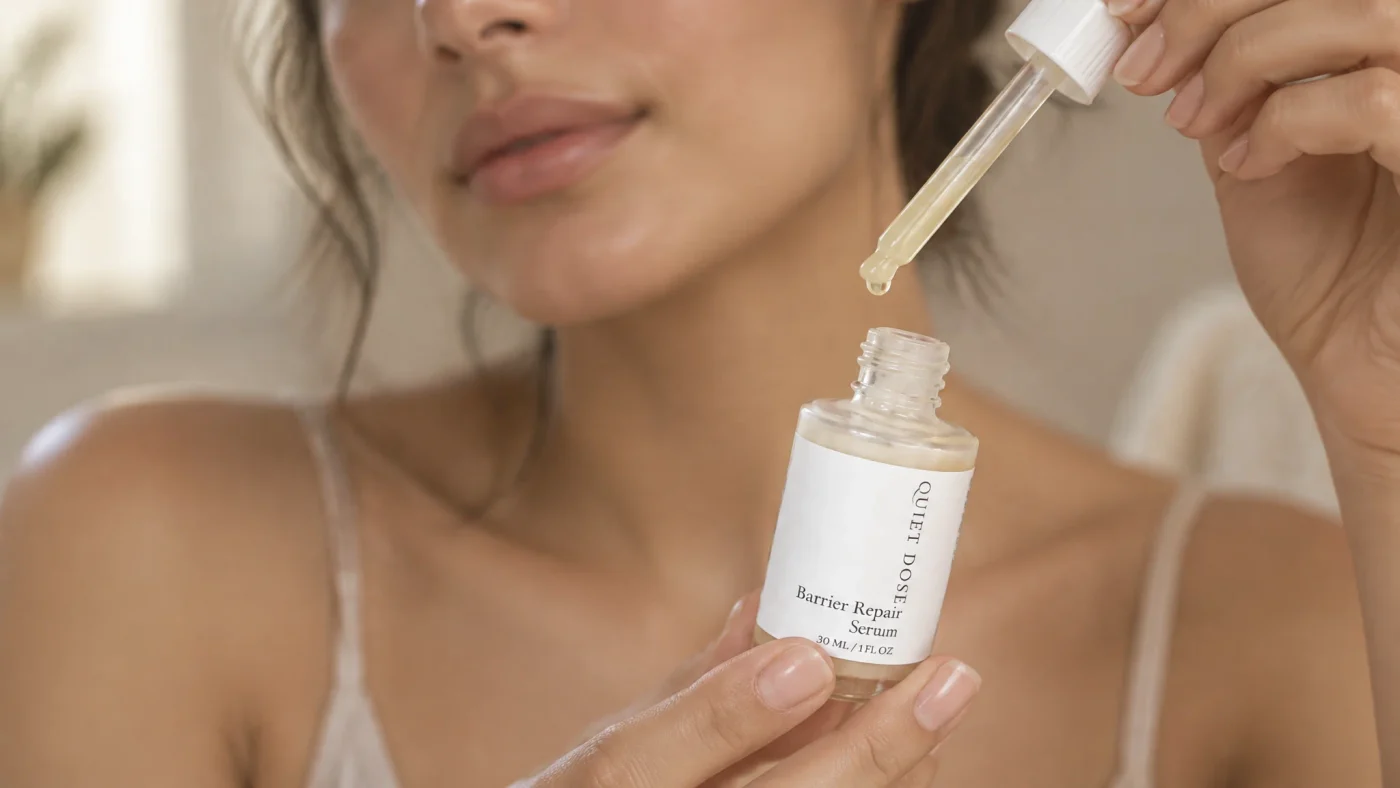
Quiet Dose Barrier Repair Serum is a thoughtfully conceived formula. Five ceramide types alongside cholesterol, a meaningful 5% panthenol concentration, supporting humectants, and a dose of ectoine add up to a genuinely interesting approach for anyone looking to calm and rebuild a stressed skin barrier rather than push it further with actives. The formulation logic holds up well against what’s generally known about how skin barriers function and what helps repair them.
What’s still missing is independent, product-specific proof that this exact formula delivers the brand’s reported results — that gap exists for most niche skincare brands, not just this one, and it doesn’t erase the fact that the ingredient choices here are sound. If you’re drawn to barrier-focused, minimalist formulas and your skin has been asking for a break from heavier routines, this is a serum worth considering. For more on building that kind of pared-back approach, Denyva’s guide to building a minimalist skincare routine is a useful next read.
Interested in Quiet Dose?
If Quiet Dose Barrier Repair Serum caught your interest, you can find it here.
FAQ
Is Quiet Dose Barrier Repair Serum backed by independent clinical proof?
Not yet in a form that’s been independently reviewed. The brand reports specific percentages and a “clinically tested” claim, but hasn’t published the underlying study details, so those figures should be read as brand-reported rather than independently verified.
Is this a good fit for sensitive or reactive skin?
The formula’s focus on ceramides, cholesterol and panthenol is a sound approach for easily irritated skin, and it’s clearly built with that audience in mind. Still, individual sensitivities vary, so there’s no guarantee it will work for every reactive skin type.
Is the subscription worth it over a one-time purchase?
If you already expect to use the serum regularly, the subscription’s €1.50 per ml (versus €1.97 per ml one-time) is a meaningful saving of about 23.7% per shipment. If you’re just trying it out, the one-time purchase makes more sense until you know it fits your routine.
This article contains an affiliate link, which means Denyva may earn a commission at no extra cost to you.