


You’ve applied the moisturizer religiously, twice a day, for six weeks. The label promises “ceramides” in bold letters. Yet your skin still feels tight after cleansing, flakes along the nose, and stings when you apply vitamin C. If this sounds familiar, the issue likely isn’t consistency — it’s chemistry. The ceramides skin barrier ratio in a formula matters far more than the mere presence of ceramides on an ingredient list.
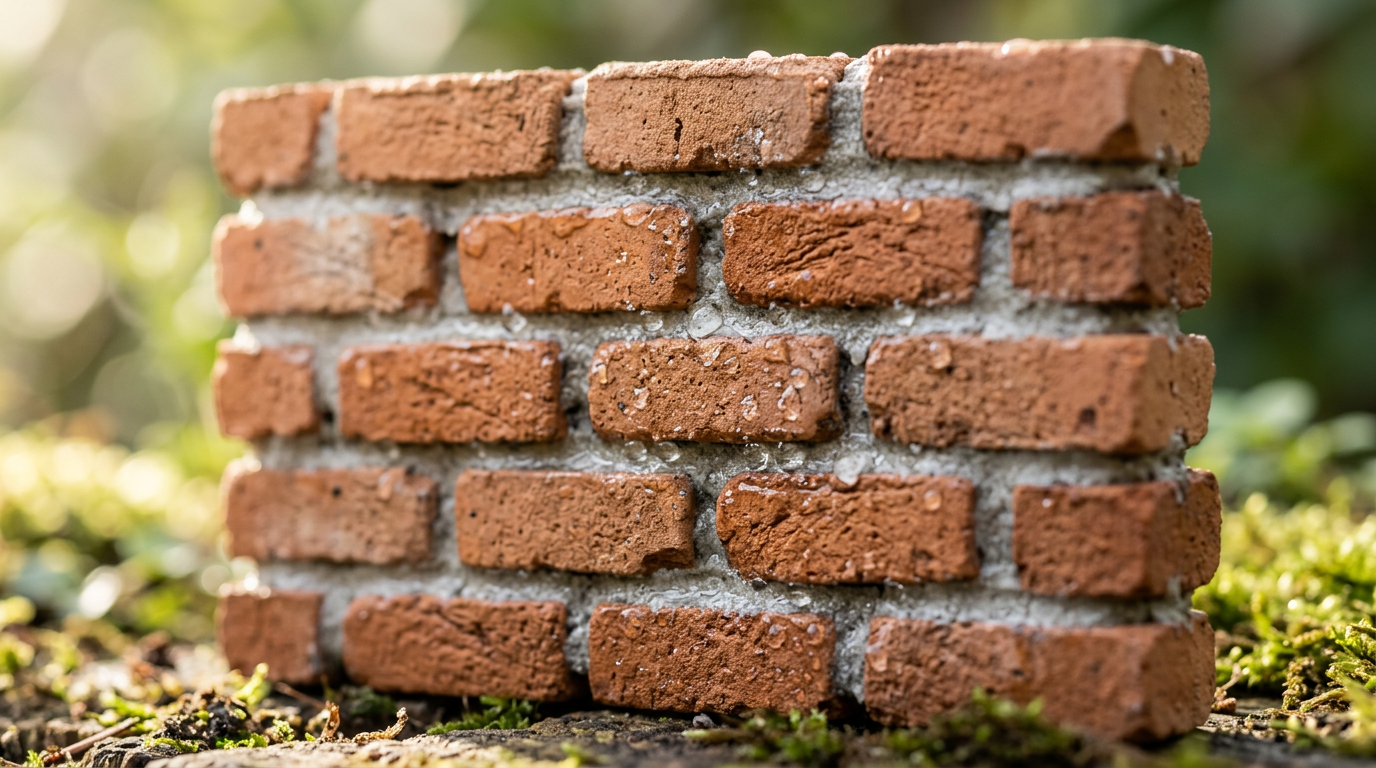
Think of it like building a brick wall. Ceramides are the bricks. But bricks alone don’t hold a wall together — you need mortar, and mortar has a specific recipe. Skip the recipe, and the wall looks structurally similar but crumbles under stress. This is precisely what happens when isolated ceramides are dropped into a cream without their two essential partners: cholesterol and free fatty acids. True barrier repair depends on a physiologic lipid mixture, not a single hero ingredient.
The Stratum Corneum Mortar: Why Single Ingredients Fail
The outermost layer of skin, the stratum corneum, isn’t just dead cells stacked like shingles. Between those cells sits a lipid matrix — the “mortar” holding the “bricks” (corneocytes) together. Dermatologist Peter M. Elias spent decades mapping this matrix, and his research established that it isn’t randomly composed. It follows a consistent, biologically encoded proportion.
By weight, healthy stratum corneum lipids break down roughly as:
- Ceramides — approximately 50%
- Cholesterol — approximately 25%
- Free fatty acids — approximately 15%
The remaining fraction includes cholesterol sulfate and other minor lipids. This composition isn’t arbitrary — it’s what allows lipids to pack into the tight, organized sheets that make skin waterproof.
Here’s the counterintuitive part: applying ceramides alone, without cholesterol and fatty acids in proportion, can actually delay recovery. Excess ceramide relative to the other two components disrupts the natural lamellar organization, creating a lopsided mixture that doesn’t assemble properly. For a deeper look at how this imbalance manifests clinically, the guide to skin barrier dysfunction outlines how lipid deficiency shows up as visible flaking, sensitivity, and impaired healing.
Unpacking the 3:1:1 Ratio: Molar Proportion vs. Weight Percentage
The “3:1:1” figure gets thrown around loosely in marketing copy, but it has a precise origin. It refers to three parts ceramides, one part cholesterol, and one part free fatty acids — typically expressed as a molar ratio rather than a simple weight measurement. Molar ratio means counting molecules, not grams, which matters because these three lipid classes have different molecular weights and packing behaviors.
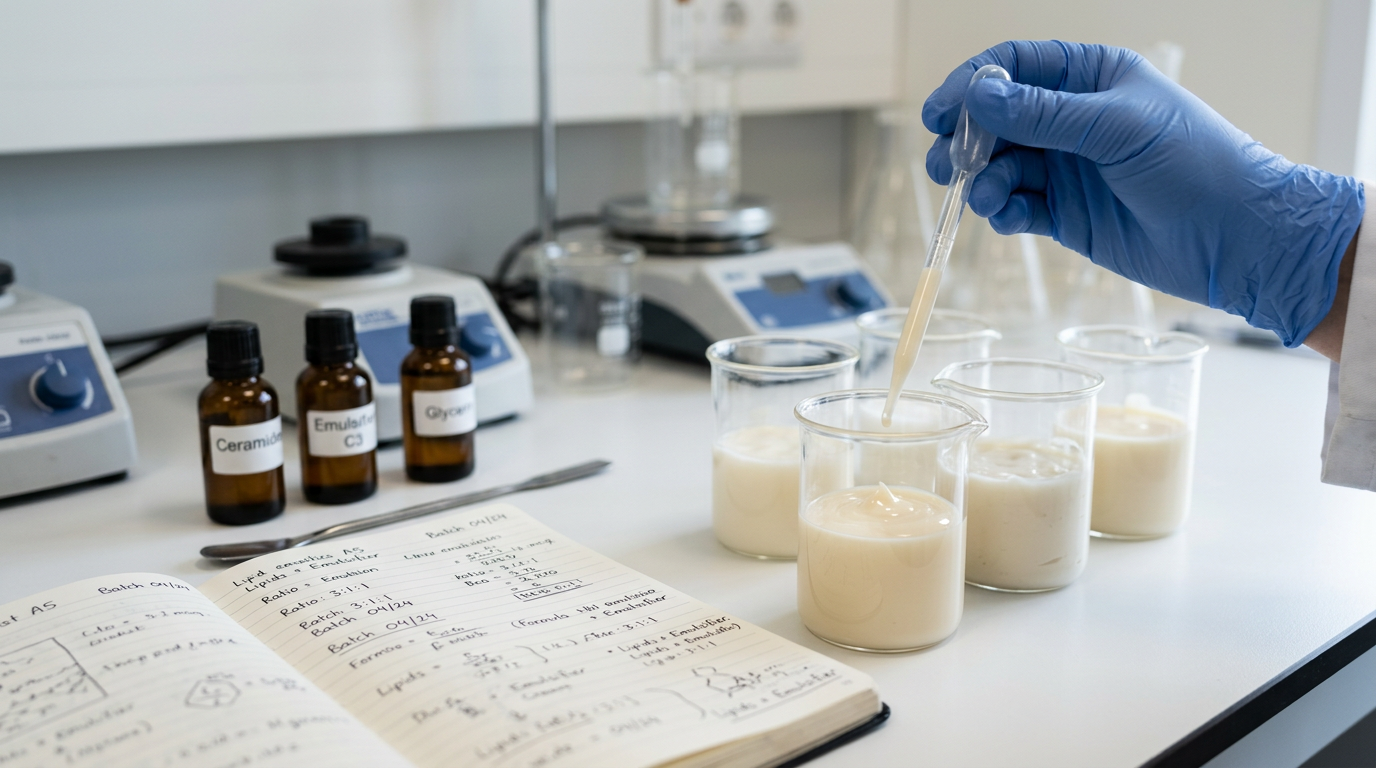
Why does this matter for formulation? Lipids don’t just sit passively in a cream — they self-assemble. When mixed in the correct proportion, ceramides, cholesterol, and free fatty acids spontaneously organize into a lamellar gel phase: stacked, orderly sheets that mimic the skin’s own architecture. Get the ratio wrong, and the lipids form disordered, less protective structures instead.
Some formulators adjust this baseline ratio for specific conditions. Aged or significantly damaged skin, for instance, may benefit from a modestly higher cholesterol fraction, since cholesterol synthesis naturally declines with age. This is a refinement of the equimolar lipid ratio, not a departure from it.
Detailed work on how these mixtures behave at a molecular level, including studies on equimolar lipid organization, has shown that the self-assembly process is remarkably sensitive to proportion. A slight excess of one lipid class can shift the entire mixture from an ordered orthorhombic phase to a looser, less protective hexagonal phase.
How the 3:1:1 Formula Directly Halts Transepidermal Water Loss (TEWL)
All of this molecular detail translates into something measurable and practical: how much water your skin loses to the air. Transepidermal water loss, or TEWL, is the standard clinical metric for barrier function. Elevated TEWL correlates directly with dryness, sensitivity, and slower wound healing.
The lamellar lipid structure formed by a correctly proportioned 3:1:1 mixture acts as a physical barrier to water vapor. Picture the lipid bilayers as overlapping shingles on a roof — each layer tightly interlocked with the next, leaving no gaps for moisture to escape. A disordered lipid mixture is like a roof with shingles missing: water still gets through, no matter how thick the layer looks.
Clinical data support this mechanistically. In controlled studies, applying a complete 3:1:1 physiologic lipid mixture normalized barrier recovery significantly faster than mixtures missing one component, or than non-physiologic oils applied alone. The clinical research on physiologic lipid recovery ratios remains one of the most cited demonstrations that ratio, not just ingredient presence, drives repair speed.
This is worth internalizing: a cream can feel occlusive and “moisturizing” in the short term while doing almost nothing to restore actual barrier integrity. For a closer look at what TEWL measurements reveal about barrier status, see this resource on understanding transepidermal water loss (TEWL).
Anatomy of a True Barrier Repair Cream vs. Marketing Gimmicks
Reading an INCI list with a cosmetic chemist’s eye changes how you shop. Marketing claims are easy to print; a physiologic lipid mixture is harder to formulate and costs more to include at meaningful concentrations.
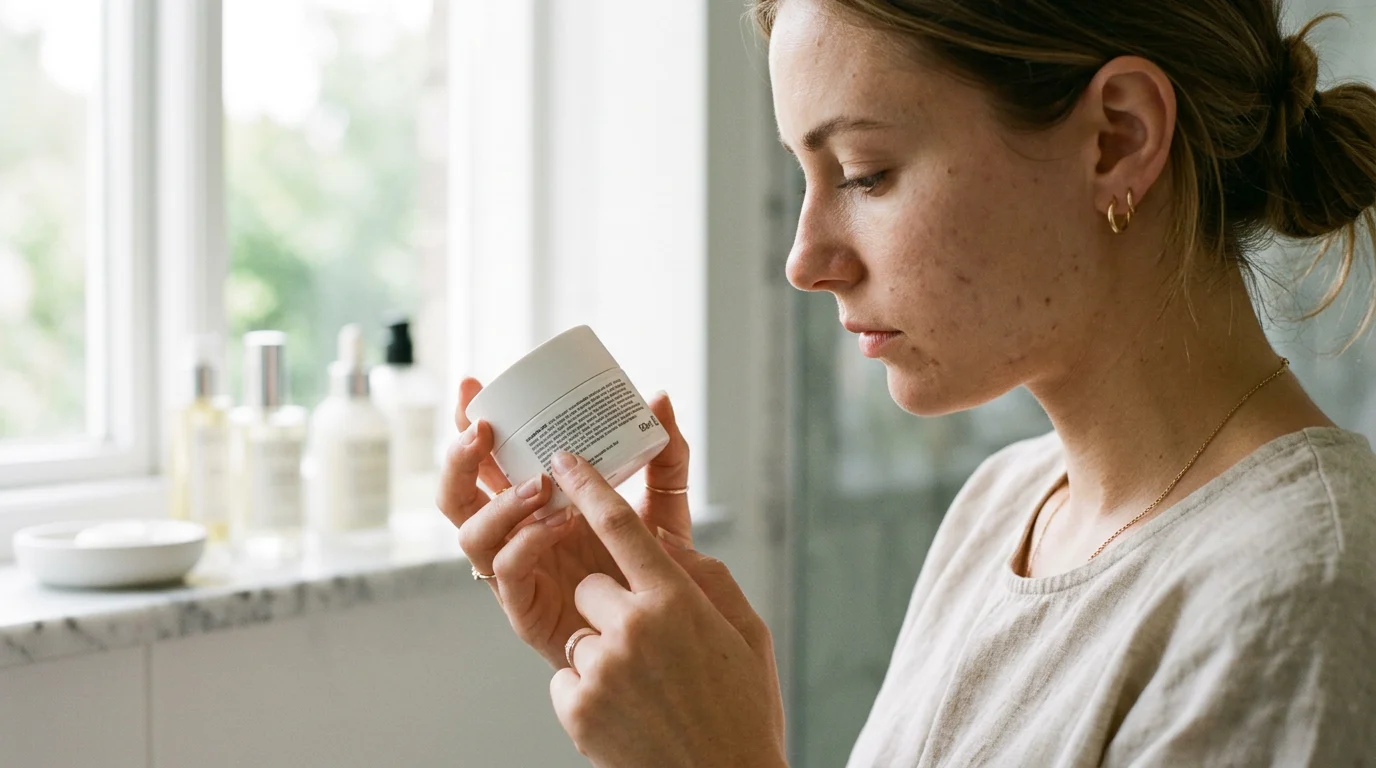
What a genuine barrier repair moisturizer should show on its label:
- Multiple ceramide species listed together — commonly Ceramide NP, Ceramide AP, and Ceramide EOP, reflecting the natural diversity of skin ceramides
- Cholesterol listed in the same section of the ingredient list, not buried at the very bottom in trace amounts
- Free fatty acids such as stearic acid, palmitic acid, or linoleic acid, positioned near the ceramides and cholesterol rather than isolated as an emulsifier component
- Ingredient order suggesting the three lipids appear in comparable, deliberate concentrations — not one dominant lipid with the others as afterthoughts
Red flags to watch for:
- “5 Ceramide Complex” branding with no cholesterol or fatty acids anywhere on the list
- Heavy reliance on petrolatum, dimethicone, or mineral oil to simulate softness without any lipid-matrix ingredients
- Ceramides listed so far down the ingredient list they’re present in negligible, cosmetically insignificant amounts
Myth-busting note: A thick, greasy texture is not proof of barrier repair. Occlusives like petrolatum form a temporary surface seal that reduces water loss mechanically, which feels effective in the short term. But they do not penetrate into the nucleated layers of the epidermis or contribute to rebuilding the skin’s own lamellar lipid structure. Only a physiologic 3:1:1 lipid mixture integrates into that living structure for lasting repair.
Always patch test new high-lipid formulas if you are prone to acne or folliculitis, and consult a dermatologist if you suspect an underlying skin condition like atopic dermatitis or contact dermatitis.
Frequently Asked Questions
Why do ceramides need cholesterol and fatty acids to work effectively?
Ceramides alone don’t replicate the skin’s natural lipid environment. Cholesterol fluidizes the lipid bilayers just enough to allow proper stacking, while free fatty acids fill in molecular gaps between ceramide chains. Without these partners, applied ceramides can crystallize unevenly or fail to integrate into the existing lamellar structure. Research on physiologic lipid mixtures indicates that all three components acting together — not any one in isolation — produce the ordered, water-resistant lamellar phase associated with healthy skin barrier lipids.
Can a 3:1:1 ceramide cream cause breakouts on acne-prone skin?
It’s possible, though not guaranteed, and the risk depends heavily on the specific fatty acids and texture used. Some free fatty acids, particularly oleic acid, are more comedogenic in susceptible individuals than others like linoleic acid. Formulations built around lighter fatty acid sources and non-comedogenic emulsifiers tend to be better tolerated. Anyone with a history of clogged pores or folliculitis should patch test on the jawline or forearm for several days before applying a new lipid-rich cream to the full face.
How long does it take for a 3:1:1 lipid ratio cream to repair a damaged skin barrier?
Clinical studies on physiologic lipid mixtures generally show measurable improvements in TEWL within days of consistent use, with more substantial normalization over two to four weeks. The exact timeline depends on the severity of the initial damage — a barrier compromised by prescription retinoids or over-exfoliation may respond faster than one affected by chronic eczema. Consistency matters more than product-switching here; giving a single well-formulated product a full month before judging results is a reasonable clinical expectation.