

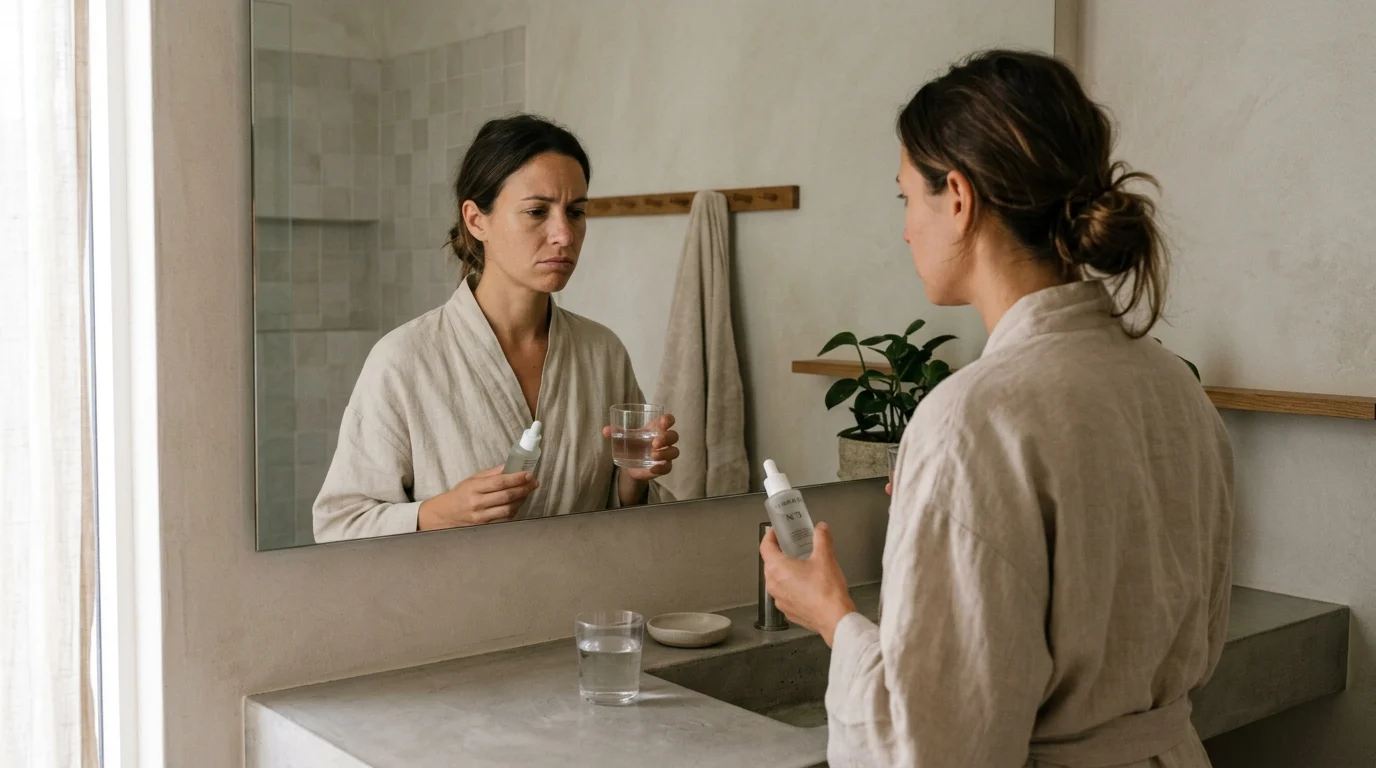
Picture this: a woman who drinks two litres of water a day, applies a hydrating serum every morning, and still wakes up with skin that feels tight, looks dull, and flakes slightly at the corners of her nose. The logical conclusion — that she needs more hydration — leads nowhere. She adds a richer serum. She drinks another glass of water before bed. Her skin does not improve. The real culprit has a name she has almost certainly never encountered: transepidermal water loss. It is not about how much water goes in. It is about how much is silently escaping through a barrier that is no longer retaining it effectively. That distinction — between water intake and water retention at the skin surface — is the central argument of everything that follows. TEWL is the variable most people have never heard of that explains, precisely and measurably, why their hydration efforts are not producing results.
What Is Transepidermal Water Loss — And Is It Always a Problem?
Transepidermal water loss is the continuous, passive evaporation of water through the skin’s outermost layers. It occurs in every person, at all times, without any sensation whatsoever. A useful way to picture it: the skin is a bucket holding water. Even a perfectly intact bucket loses a small, steady amount of water through microscopic imperfections in its surface — this is normal, baseline TEWL, and it is entirely healthy. The problem begins when a crack forms. Water drains faster than the body can replenish it, and no amount of water poured into the top addresses a structural leak at the bottom.
Dermatologists and researchers measure TEWL using an instrument called a tewameter — a non-invasive device placed against the skin surface that quantifies how much water vapor escapes per square centimetre per hour. It is the clinical equivalent of checking how quickly water drains from that bucket to determine whether a leak exists and how severe it is. For the scientific definition and measurement of transepidermal water loss, this device-based assessment remains the research and clinical gold standard. The goal is never zero TEWL — that is physiologically impossible and would indicate a completely sealed, non-functional skin surface. The goal is maintaining TEWL within a range consistent with an intact, healthy barrier. Values above that baseline are a measurable signal of what skin barrier dysfunction actually means and how TEWL is involved.
Two terms that appear interchangeable in most skincare conversations are worth separating here. Skin dehydration vs dryness describes a genuine clinical distinction: dry skin refers to a relative lack of lipids — the oils and fats that form the barrier structure. Dehydrated skin refers to reduced water content within the skin cells themselves. Elevated TEWL contributes to both states: when the barrier lipids are compromised, water escapes more rapidly, surface cells lose their plumpness, and the skin looks dull, feels tight, and develops fine surface lines. The appearances overlap, which is why the two conditions are so frequently confused — and why addressing only one often leaves the other unresolved.
The Brick-and-Mortar Structure: Why Your Barrier Either Holds Water or Loses It
The outermost layer of the skin is called the stratum corneum — the outermost layer of bricks in a wall. These bricks are flattened, largely anucleate skin cells called corneocytes. Between them sits a lipid matrix: a precisely organised mixture of ceramides, free fatty acids, and cholesterol arranged in lamellar bilayers. This is the mortar. Far from passive filler, it is a highly ordered structural system that physically impedes water from moving outward through the intercellular spaces.
Ceramides constitute approximately 50% of this lipid matrix by weight in healthy skin, making them the dominant structural component. Free fatty acids contribute to the matrix’s slightly acidic pH and its water-resistant character. Cholesterol regulates fluidity throughout the lipid layers, ensuring they remain neither too rigid in cold conditions nor too permeable under heat or stress. When these three components are present in appropriate ratios, research on stratum corneum structure and water retention consistently shows that the barrier maintains water effectively and TEWL remains within a healthy range.
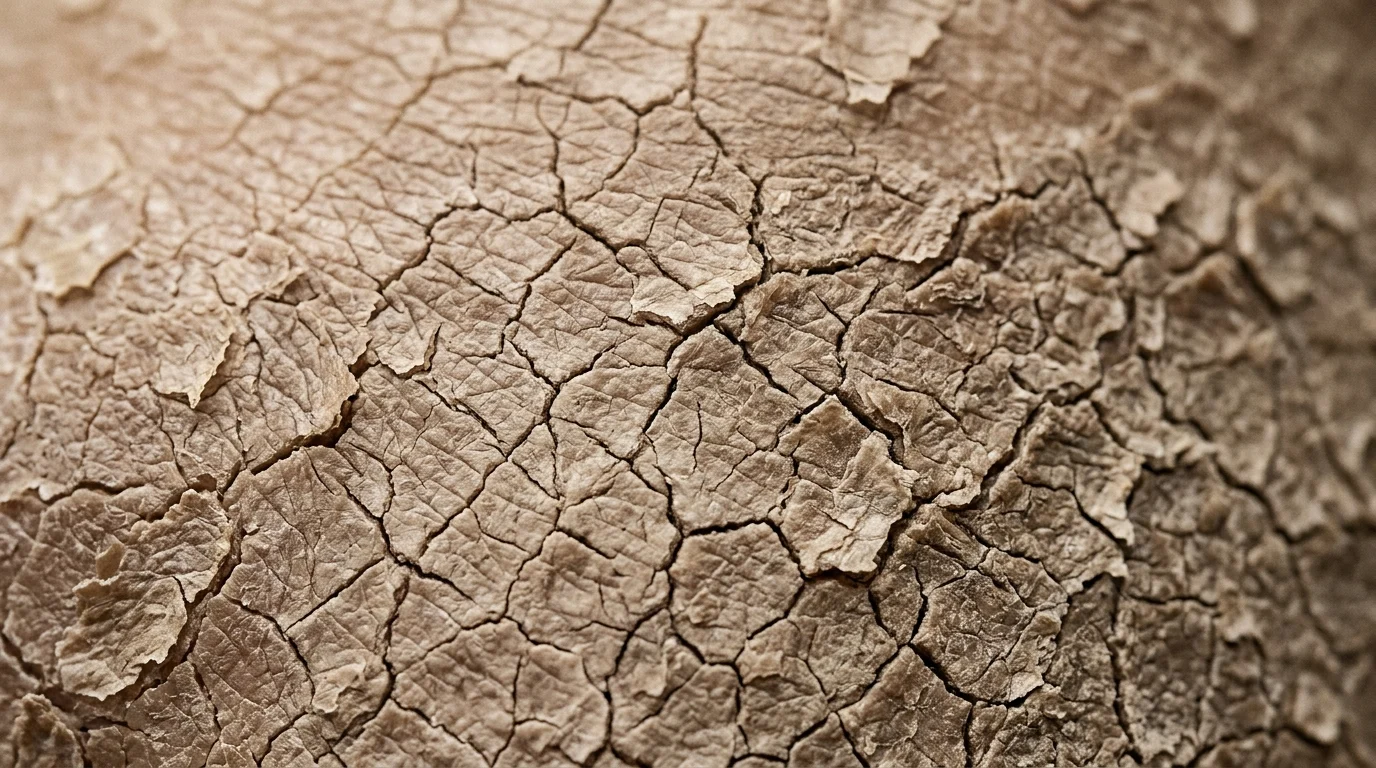
When the mortar erodes, water moves through the gaps. The following are among the most well-documented causes of lipid matrix disruption — and, by extension, of elevated stratum corneum water loss and skin barrier dysfunction:
- Aggressive cleansers containing harsh anionic surfactants, which can solubilise and remove surface lipids with each wash cycle
- Repeated exfoliating acids (AHAs, BHAs) applied without adequate recovery intervals, which accelerate corneocyte shedding faster than the lipid matrix can regenerate
- Retinoids introduced too rapidly, which may temporarily increase cellular turnover in a way the lipid matrix struggles to keep pace with during the adaptation period
- Low humidity environments and cold dry air, which draw water from the skin surface and have been associated with reduced lipid synthesis over time
- Chronic psychological stress, which research suggests may suppress ceramide synthesis through glucocorticoid-mediated pathways — though the precise mechanisms in humans remain an active area of investigation
- Disrupted or shortened sleep, which has been shown to impair the nocturnal barrier repair cycle, leaving the lipid matrix less fully replenished by morning
Each factor disrupts the mortar through a different pathway, but the downstream consequence is consistent: intercellular gaps widen, water loss accelerates, and TEWL rises. It is also why a minimalist skincare approach can reduce TEWL-inducing barrier stress — fewer actives and fewer cleansing steps mean fewer simultaneous insults to a lipid matrix that needs time to recover between them.
The Three Types of Skincare Ingredients That Address TEWL — And How They Differ
Not all moisturising ingredients work by the same mechanism. Understanding the functional difference between humectants, emollients, and occlusives shifts product application from hopeful ritual to deliberate strategy.
- Humectants — hyaluronic acid, glycerin, urea — attract and bind water molecules, drawing moisture either from the environment or from the deeper skin layers into the stratum corneum. A sponge inside the wall is a useful model: they increase the water content of the cells, but they do not seal the surface. Applied alone in low-humidity conditions, humectants can draw water to the skin surface only for it to evaporate rapidly — potentially increasing TEWL rather than reducing it. They are most effective when followed by an occlusive layer.
- Emollients — squalane, shea butter, linoleic acid, fatty alcohols — soften the skin surface and partially fill the intercellular spaces between corneocytes. Putty filling surface cracks is an apt comparison. Emollients improve texture and suppleness and contribute partially to barrier repair, but they do not form a meaningful seal against water vapour escape.
- Occlusives — petrolatum, dimethicone, lanolin, beeswax — create a low-permeability film over the skin surface that physically slows TEWL. A roof laid over the wall: they do not add water to the skin; they reduce the rate at which what is already there can escape. Of the three categories, occlusives produce the most immediate, measurable reduction in TEWL.
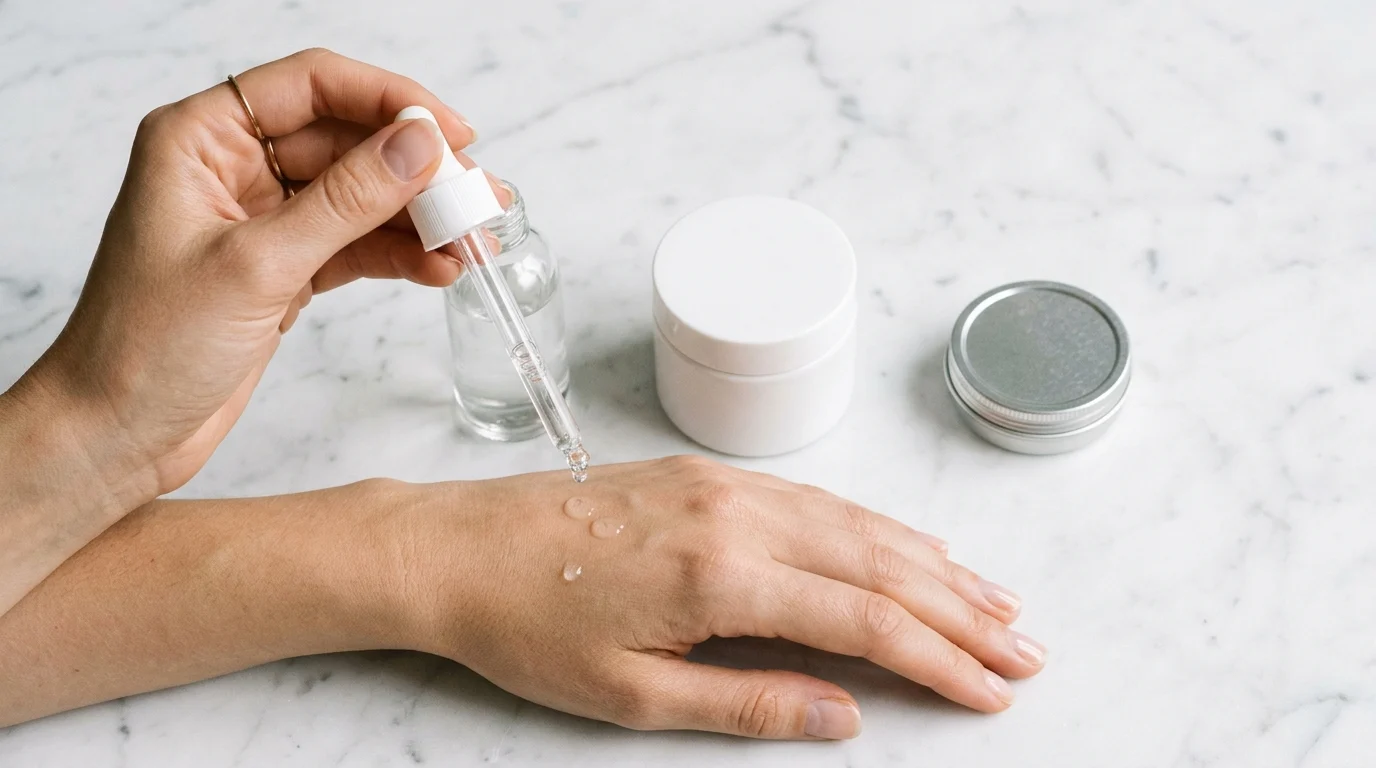
The most evidence-supported approach layers all three categories in sequence: humectant applied first to draw water into the corneocytes, emollient second to smooth and partially fill the intercellular gaps, occlusive last to seal the surface and slow evaporation. Occlusives are particularly relevant at night, when the skin’s natural barrier repair cycle is active and the barrier benefits most from a reduced evaporative load. This is the formulation logic behind why French pharmacy skincare has long prioritised barrier-supportive formulation — the preference for simple, lipid-rich textures is an expression of applied barrier science rather than aesthetic conservatism.
Sleep and TEWL: The Nocturnal Window You Cannot Afford to Miss
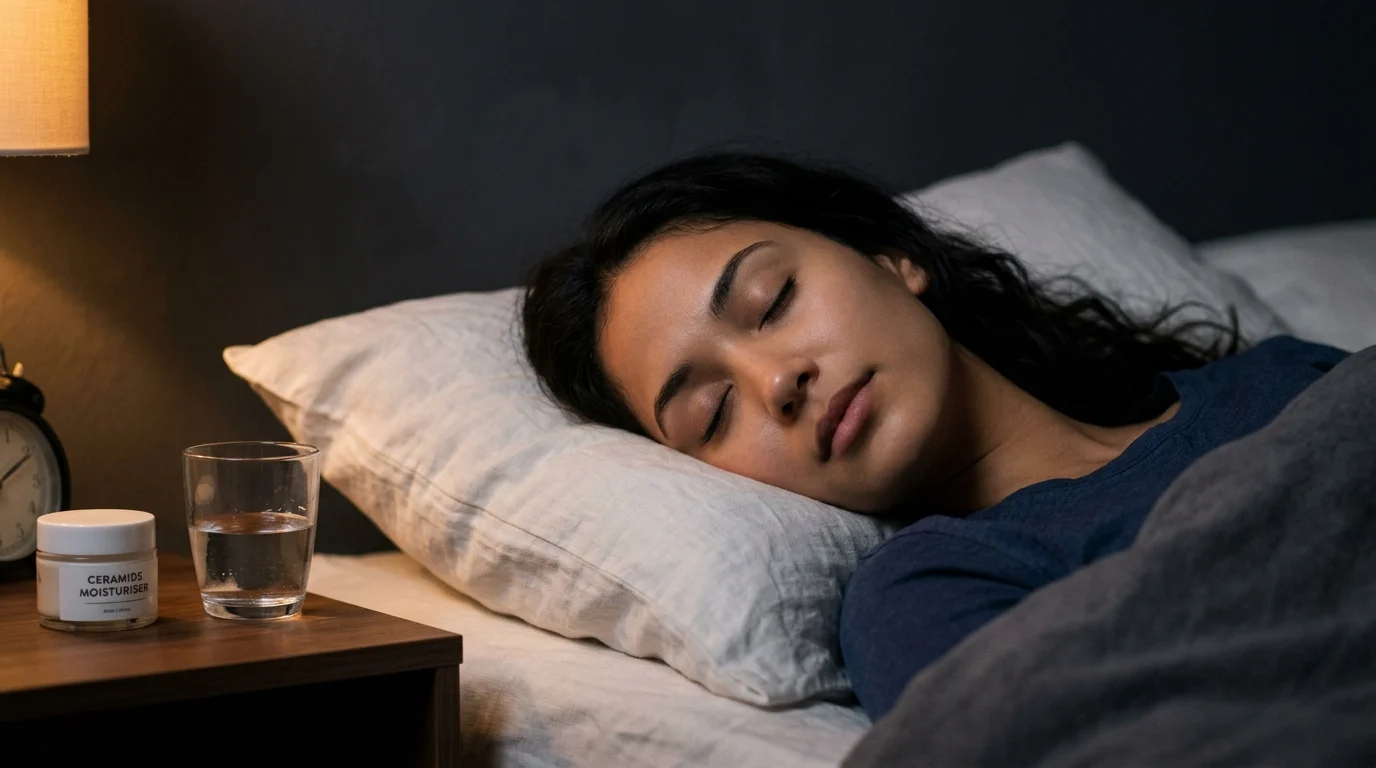
The skin does not simply rest during sleep — it works. Ceramide synthesis, lipid matrix replenishment, and the cellular turnover responsible for replacing damaged corneocytes are all known to follow circadian rhythms, with peak activity occurring during the early hours of the night when cortisol levels are at their daily low and skin surface temperature rises slightly.
A useful parallel: the stratum corneum is a road surface, and the repair crew works overnight to fill cracks and resurface worn patches. Shorten that window, fragment the schedule, or misalign it with the body’s biological clock, and the crew cannot finish. The surface remains compromised, and the same damage accumulates again the following day. Research on sleep quality and skin barrier repair has shown that poor sleep quality is associated with measurably increased TEWL and impaired barrier recovery — though the relative contributions of sleep duration, sleep architecture, and circadian alignment are still being characterised in the literature.
The practical implication is direct. An occlusive applied at night does more than trap moisture — it reduces the evaporative load on a barrier that is actively rebuilding. Disrupting sleep and attempting to compensate with additional product load works against the skin’s own repair biology. The connection between TEWL and aging skin is partly explained by this mechanism: both sleep architecture and the skin’s intrinsic ceramide synthesis capacity tend to decline with age, compounding barrier vulnerability over time.
Your Skin Microbiome and TEWL: A Two-Way Relationship
The skin microbiome — the diverse community of bacteria, fungi, and other microorganisms colonising the skin surface — is not independent of barrier function. Current evidence indicates the relationship is bidirectional and self-reinforcing. Consider the barrier and the microbiome as the walls and the security system of a building: damage the walls, and the security system loses its structural foundation; disable the security system, and the walls become exposed to threats that would otherwise be contained.
When the barrier is compromised and TEWL is elevated, the altered skin surface — drier, more permeable, with a disrupted slightly acidic pH — appears to create conditions that favour microbial imbalance, or dysbiosis. Certain opportunistic organisms may proliferate while commensal species that support barrier maintenance decline. The inflammatory mediators associated with a dysbiotic microbiome have, in turn, been proposed to interfere with ceramide synthesis in the deeper epidermal layers, potentially further degrading the lipid matrix. Research on skin microbiome and barrier function interdependence supports this bidirectional relationship, though many of the precise molecular mechanisms — particularly around microbial influence on lipid synthesis — remain under active investigation.
This relationship has particular relevance for TEWL and sensitive skin. Reactive or easily irritated skin frequently presents with both barrier compromise and signs of microbiome disruption occurring simultaneously. Addressing only one side of this dynamic tends to produce partial and short-lived results. How microbiome-supportive skincare may help regulate TEWL and barrier function is a genuinely emerging dimension of barrier care — one with a plausible mechanistic basis, even as the clinical evidence continues to develop.
TEWL as a Clinical Marker: What the Latest Research Shows
TEWL measurement has moved well beyond the research laboratory. Recent research on TEWL as a clinical skin barrier marker reflects a growing consensus that tewameter-based assessment is a practical clinical tool — useful for evaluating barrier condition at baseline, monitoring how the barrier responds to treatment over time, and helping guide product or therapeutic recommendations with objective data rather than subjective patient reporting alone.
A patient describing “dry skin” provides a clinician with limited, unquantified information. A TEWL reading significantly above the established normal range for a given body site provides a precise, reproducible picture of barrier compromise. In this respect, elevated TEWL becomes a measurable, addressable variable — not a vague complaint. Conditions including atopic dermatitis, skin barrier dysfunction associated with rosacea, and the progressive barrier thinning seen in aging skin all produce characteristic TEWL elevations. Tracking changes in those values over time gives clinicians a meaningful way to assess whether an intervention is producing genuine structural barrier improvement or simply a transient sensory improvement in how the skin feels.
How to Actually Reduce TEWL: What the Science Supports
The following strategies have the most consistent support from current barrier biology and clinical skincare research. Each addresses a specific mechanism within the TEWL cycle rather than simply adding moisture to the surface.
- Apply moisturiser to damp skin promptly after cleansing. The skin surface retains more water in the minutes immediately after washing, and humectant uptake into the stratum corneum is generally more effective during this window.
- Use a ceramide-containing moisturiser daily. Topical ceramides have been shown to help restore lipid matrix integrity in barrier-compromised skin, making them among the most directly relevant ingredients for addressing ceramides and TEWL reduction — though the extent to which exogenous ceramides integrate into the lamellar bilayers is still being studied.
- Apply an occlusive ingredient at night. Petrolatum remains among the most studied and consistently effective occlusives for reducing TEWL, with controlled studies showing substantial water retention under experimental conditions. Squalane and purpose-formulated barrier creams offer less occlusive but still meaningful alternatives. Nighttime application aligns with the skin’s peak repair window.
- Limit hot water exposure during cleansing. Hot water is more effective than lukewarm water at removing surface skin barrier lipids. Shorter, cooler showers are a simple and evidence-consistent adjustment.
- Reduce the concurrent active ingredient load. Exfoliating acids and cell-turnover actives each place a measurable demand on the barrier’s repair capacity. Introducing them slowly and building in recovery periods reduces the cumulative disruption.
- Prioritise sleep quality. Nocturnal barrier repair is a genuine biological process, not a marketing concept. Consistent, well-timed sleep supports the lipid synthesis and cellular renewal that sustained TEWL reduction depends on.
The Hydration Myth Worth Addressing Directly
Drinking more water does not resolve dry, tight, or flaky skin in someone who is already adequately hydrated. Skin surface hydration is governed primarily by TEWL — by how effectively the barrier retains water at the stratum corneum level — not by systemic fluid intake once baseline hydration needs are met. Research does not support the idea that increasing water consumption meaningfully raises skin moisture content in healthy, adequately hydrated individuals. The appropriate fix for elevated TEWL is barrier repair: ceramides, occlusives, simplified routines, and sleep. Not another glass of water.
If elevated TEWL, persistent skin dryness, or reactive sensitivity do not respond to barrier-supportive skincare adjustments, consult a dermatologist — conditions such as eczema, psoriasis, and rosacea involve barrier dysfunction that may require clinical assessment and targeted treatment.
Frequently Asked Questions
What causes high transepidermal water loss?
Elevated TEWL results from a disrupted lipid matrix in the stratum corneum — the structural mortar between skin cells has been depleted, creating pathways through which water escapes at an accelerated rate. Well-documented triggers include over-cleansing with harsh surfactants, frequent acid exfoliation without adequate recovery periods, rapid retinoid introduction, low-humidity or cold environments, chronic psychological stress, and disrupted sleep. Certain skin conditions — atopic dermatitis, psoriasis, rosacea — involve barrier dysfunction that produces chronically elevated TEWL as a defining feature. Age is also a relevant factor, as the skin’s ceramide synthesis capacity and overall barrier resilience tend to decline from the mid-thirties onward.
How do I know if my TEWL is elevated without a clinical device?
No consumer method offers the precision of a tewameter, but several consistent signs suggest the barrier is losing water faster than it retains it. Persistent skin tightness within an hour of cleansing, visible surface flaking despite regular moisturiser use, increased sensitivity or stinging with products that previously caused no reaction, and skin that remains dull or dehydrated-looking regardless of water intake are all patterns associated with elevated TEWL in clinical observation. If these symptoms are chronic, unresponsive to basic barrier care, or accompanied by significant redness or itch, a dermatological assessment is appropriate.
What is the single most effective ingredient for reducing TEWL?
For immediate, measurable reduction in water evaporation from the skin surface, petrolatum is the most consistently well-studied occlusive in the published literature. Controlled studies have demonstrated substantial reductions in TEWL under experimental conditions, though the degree of effect varies by application thickness, skin condition, and environmental factors. For longer-term barrier rebuilding — addressing the structural deficit rather than managing its surface consequence — topical ceramide formulations represent the most mechanistically direct approach, as ceramides are the primary lipid component depleted in the majority of barrier dysfunction presentations.