

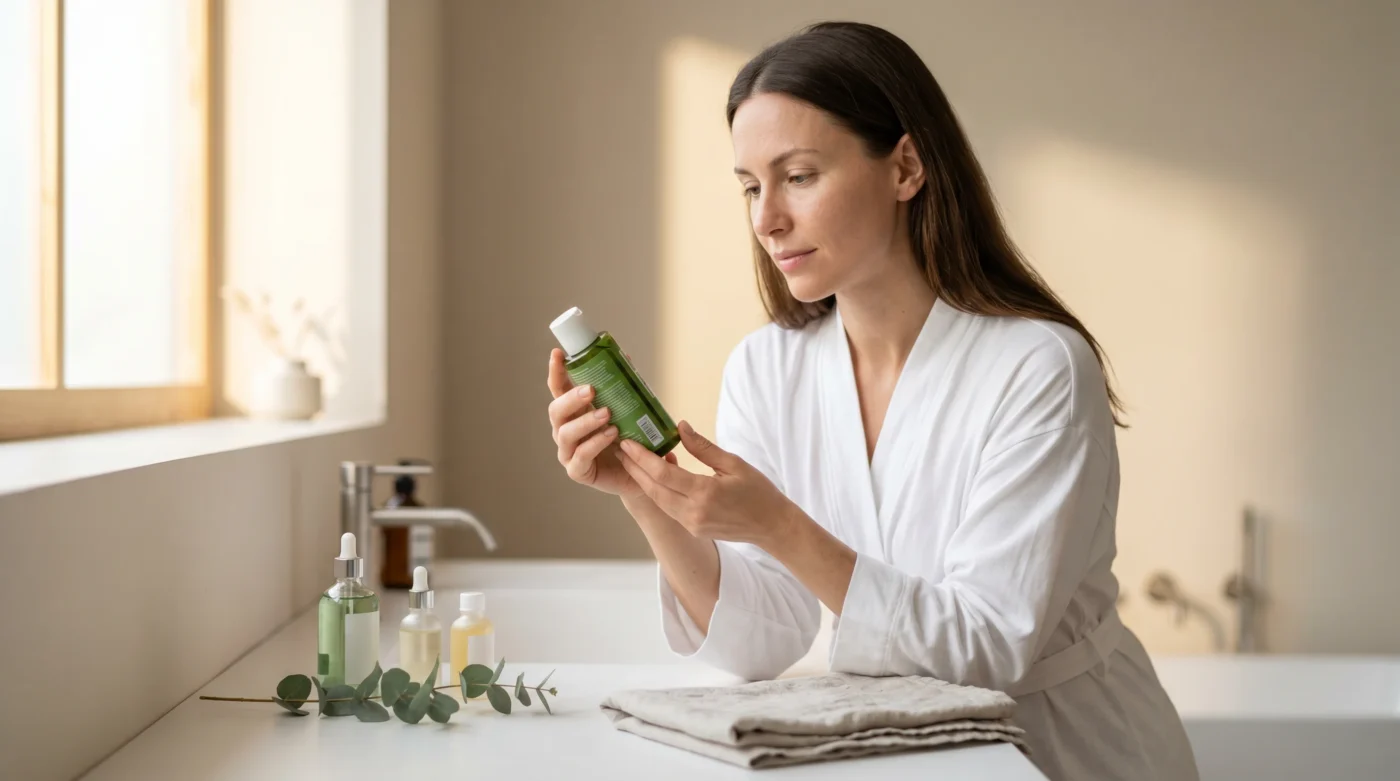
It’s a quiet Tuesday evening. The bathroom counter is crowded with serums, creams, and a new green-labeled cleanser promising something close to a miracle. The label says “clean,” “natural,” “free from.” But what does any of that actually mean for the skin? This is where Clean Beauty Transparency stops being a marketing slogan and starts becoming a genuine practice — one rooted in science, sourcing, and honesty rather than aesthetics.
The truth is, the word “clean” has no legal definition in most countries. A brand can print it on a box without offering a single piece of supporting data. That doesn’t make every “clean” brand dishonest — many are deeply committed to quality. But the absence of regulation has opened a wide door for confusion, and for some, for skincare greenwashing.
The Quiet Rise of Greenwashing in the Beauty Industry
Clean beauty trends grew out of something genuine. Consumers wanted fewer questionable ingredients, less packaging waste, and more accountability. That demand was real. The marketing response, however, didn’t always match the values behind it.
Greenwashing in the beauty industry tends to follow a recognizable pattern. Earthy colors. Leaf icons. Vague phrases like “pure,” “gentle,” or “inspired by nature.” None of these terms describe what’s actually inside the bottle. They describe a feeling.
Beauty marketing claims often lean on absence rather than presence. “Free from parabens.” “Free from sulfates.” “Free from silicones.” These statements can be technically true while saying nothing about whether the formula actually performs — or whether the replacements used are gentler at all. A preservative-free product, for example, may sound appealing, but without a stable preservative system, microbial contamination becomes a real concern.
Why “Free-From” Lists Can Be Misleading Skincare Labels
A “free-from” claim is only meaningful if the excluded ingredient was ever a relevant risk in that product category. Calling a water-based toner “oil-free” is a bit like calling bread “gluten-light” without measuring it. The label exists. The substance behind it doesn’t always.
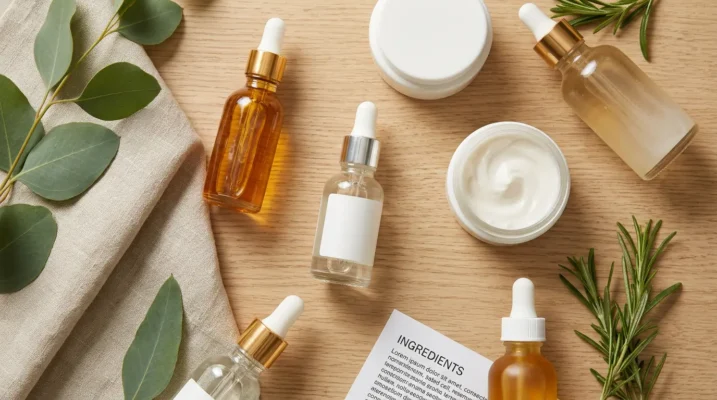
This is the core of clean beauty greenwashing: technically accurate statements arranged to imply something they don’t quite say. Reading past the front of the box — into the full ingredient list, the concentration percentages, and the brand’s sourcing practices — is where real clarity begins.
What Formulation Transparency Actually Looks Like
Formulation transparency isn’t about disclosing every trade secret. It’s about giving the consumer enough information to make an informed decision. That includes the full INCI list, meaningful disclosure of active ingredient concentration, sourcing notes when relevant, and honesty about what a product can and cannot do.
A transparent brand will usually tell you:
- The percentage of key actives (not just that they’re “included”)
- The type of preservative system used and why
- Whether the product is dermatologically tested, and on whom
- How the formula remains stable through its shelf life
- Where botanical or synthetic ingredients are sourced
That last point matters more than most marketing suggests. Ingredient sourcing affects purity, potency, and environmental footprint. A poorly sourced botanical extract can carry pesticide residues, heavy metals, or inconsistent active compound levels — all of which can cause irritation or simply make the product less effective.
Synthetic vs Natural Skincare: A Necessary Reframe
One of the more persistent myths in clean beauty is that natural ingredients are automatically safer than synthetic ones. Dermatology doesn’t support that idea. Poison ivy is natural. Petrolatum, often dismissed as “chemical,” is one of the most well-tolerated occlusives in dermatologic literature and is regularly recommended for compromised skin barriers.
The synthetic vs natural skincare debate misses the actual question, which is: Is this ingredient appropriate, well-formulated, and tolerated by this particular skin?
Myth, debunked: “Natural ingredients are always gentler than synthetic ones.” Some of the most common irritants in skincare — including certain essential oils, citrus extracts, and botanical fragrances — are entirely natural. Synthetic doesn’t mean harsh, and natural doesn’t mean safe. What matters is the molecule, its concentration, and how the skin responds to it.
Scientifically Backed Ingredients
Evidence-based skincare relies on ingredients with published, peer-reviewed research behind them. These aren’t trendy. They’re studied. Below are a few that consistently appear in dermatological literature with strong, reproducible results.
Niacinamide (Vitamin B3)
Niacinamide is one of the most well-researched ingredients in modern dermatology. At concentrations between roughly 2% and 5%, it has been shown to support the skin barrier by stimulating ceramide synthesis, reduce transepidermal water loss, and help regulate sebum production. It also plays a role in modulating melanin transfer, which is why it’s often used in formulas addressing uneven tone.
It’s generally well tolerated, even by reactive skin types, though some individuals notice flushing at higher percentages.
Hyaluronic Acid
Hyaluronic acid is a glycosaminoglycan naturally present in the skin and connective tissue. In topical formulations, it acts as a humectant, drawing water into the upper layers of the epidermis. Different molecular weights penetrate to different depths, which is why well-formulated products often combine several weights for layered hydration.
It doesn’t “plump from within” in the dramatic way some advertising suggests, but its hydrating effect on the stratum corneum is real and measurable.
Retinoids
Retinoids — including retinol, retinaldehyde, and prescription tretinoin — remain the most evidence-supported category for addressing photoaging, fine lines, and uneven texture. They work by binding to retinoic acid receptors in skin cells, accelerating cellular turnover and stimulating collagen production. This is the foundation of most serious anti-aging skincare strategies in clinical practice.
They also require careful introduction. Starting slowly, buffering with moisturizer, and pairing with daily sunscreen is essential.
Niacinamide, Ceramides, and the Microbiome
Newer research keeps reinforcing how much the skin’s microbial ecosystem influences barrier function, sensitivity, and even visible aging. Formulas that respect this ecosystem tend to focus on gentle cleansing, prebiotic support, and minimal disruption — the same principles that guide microbiome-friendly skincare.
To nourish your skin barrier without upsetting its delicate ecosystem, explore Quietdose for gentle formulations designed to keep your skin balanced, calm, and resilient.
Essential Oils in Skincare: Where Things Get Complicated
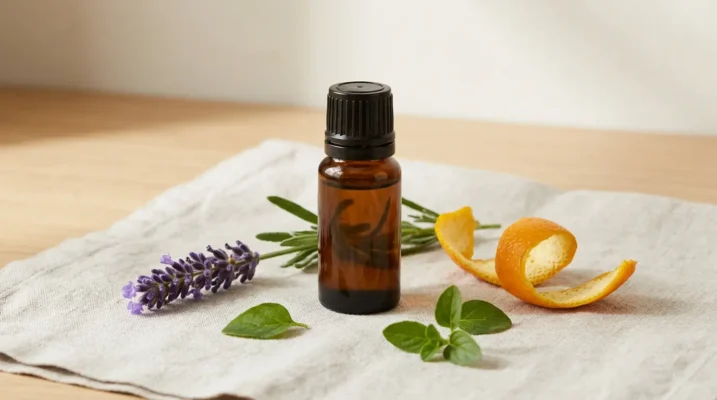
Essential oils in skincare occupy an uncomfortable middle ground. They are natural. They smell beautiful. They are also among the most common irritants in skincare formulations, particularly for sensitive or barrier-compromised skin.
Linalool, limonene, citral, and geraniol — all naturally occurring fragrance components — are listed as recognized allergens under EU cosmetic regulation. That doesn’t mean every product containing them is harmful. It means awareness matters, especially when managing sensitive skin or rosacea-prone complexions.
Always consult with a healthcare professional before starting new treatments, particularly if there is a history of contact dermatitis, eczema, or other reactive conditions.
How to Read a Label Without Getting Overwhelmed
Ingredient lists follow a specific order. Anything present at more than 1% is listed by concentration, from highest to lowest. After that 1% threshold, the order becomes flexible, which is why fragrance and preservatives often appear toward the end regardless of their actual concentration.
A few practical habits help:
- Look at the first five ingredients. They make up the bulk of the formula.
- Find the active ingredient and check whether the brand discloses its percentage.
- Notice the preservative system. A well-preserved product is a safe product.
- Be cautious of long lists of essential oils near the top of the formula.
- Check whether the brand publishes stability and patch-testing information.
Product stability is one of the most underdiscussed elements of formulation. A vitamin C serum that turns dark amber isn’t aging gracefully — it’s oxidizing. The active ingredient is degrading, and the by-products can actually irritate the skin. Stable packaging, proper pH, and protective antioxidants all play a role here.
What “Dermatologically Tested” Really Means
The phrase “dermatologically tested” appears on countless products. On its own, it doesn’t reveal much. It usually means the product was tested under the supervision of a dermatologist, often on a small panel of volunteers, sometimes for as little as 24 to 48 hours.
It does not necessarily mean:
- The product is hypoallergenic
- It was tested on sensitive or reactive skin specifically
- It was tested over long periods
- It was found suitable for all skin types
This isn’t to dismiss the claim — only to place it in context. Reliable brands typically share what type of testing was done, on how many participants, and for how long.
Building a Routine Around Honesty, Not Hype
Once the noise of marketing fades, skincare becomes surprisingly simple. A thoughtful minimalist skincare routine often outperforms a shelf full of trendy products, because it allows the skin to respond predictably. Cleanser. Moisturizer. Sunscreen. One or two well-chosen actives. That’s often enough.
For those just beginning, a structured beginner’s guide to a skincare routine offers a calmer starting point than chasing every new launch. And if a beloved product suddenly stops delivering results, the issue is rarely the product itself — more often, it’s layering, pH conflicts, or barrier disruption. There’s a thoughtful breakdown of why your serum is not working that’s worth reading before reaching for a replacement.
Frequently Asked Questions
How can someone tell if a brand is greenwashing?
Look for specifics. Honest brands disclose active ingredient concentrations, preservative systems, sourcing details, and testing methods. Vague language like “pure,” “clean,” or “inspired by nature” — without ingredient lists or data to back it up — is the most common signal of marketing-led, rather than science-led, formulation.
Are synthetic ingredients worse than natural ones?
Not inherently. Safety and tolerance depend on the specific molecule, its concentration, and the formulation as a whole. Some synthetic ingredients are exceptionally gentle and well-studied, while some natural ingredients — particularly certain essential oils — are recognized irritants. The natural-versus-synthetic framing oversimplifies what is really a question of formulation quality.
Does “clean beauty” mean a product is safer or more effective?
Not necessarily. “Clean” has no standardized definition, so it tells the consumer very little on its own. A product is safer and more effective when it’s well-formulated, stable, properly preserved, and supported by transparent ingredient and testing information — regardless of whether it falls under the clean beauty umbrella.
Pingback: Makeup Ingredients to Avoid: The Truth About Irritating Cosmetic Formulas - Denyva