


It happens in a particular kind of light. Late afternoon, a window, an unguarded moment. The skin looks different — not dramatically, not overnight, but noticeably. A little thinner. Less resilient. The kind of “bounce” that used to return immediately after pressing a finger to the cheek now takes a beat longer. The popular brands have been used faithfully. The anti-aging niche ingredients conversation has been largely ignored in favour of familiar names and accessible price points. But the routine that worked at thirty is no longer enough at forty — and the skin, in its quiet biological language, is making that very clear.
This is not a crisis. It is an invitation to look more carefully at what the skin actually needs — and at the ingredients that have the science to deliver it.
From Anti-Wrinkle to Pro-Age: A Necessary Shift in Thinking
The Problem With the “Erase It” Approach
For decades, anti-aging skincare was built around a single premise: reduce the visible signs of aging as aggressively as possible. High-percentage retinoids. Aggressive peels. Formulations designed to resurface, strip, and rebuild on repeat. The results were sometimes visible. The collateral damage — chronic sensitivity, barrier disruption, skin that looked “done” rather than healthy — was rarely discussed.
The conversation has shifted. Dermatologists, longevity researchers, and a growing number of independent formulators are moving away from the language of erasure and toward something more biologically intelligent: skin resilience. The goal is not to make the skin look younger by force. It is to support the cellular processes that keep skin functioning well — collagen synthesis, lipid production, mitochondrial energy, barrier integrity — so that the skin ages with genuine vitality rather than simply being managed.
This is the pro-age philosophy. And it requires a different category of ingredients to support it.
Why Mass-Market Anti-Aging Often Falls Short
Mass-market anti-aging products are formulated for the widest possible audience. This means conservative active concentrations, extensive preservative systems, and ingredient choices driven as much by cost and stability as by efficacy. Retinol at 0.1%. Peptides listed near the bottom of an INCI. Hyaluronic acid as a primary claim, when the molecular weight and concentration determine everything about its actual performance.
There is nothing inherently wrong with these products. But for skin that is genuinely changing — losing collagen at approximately 1% per year after the age of twenty, experiencing declining mitochondrial function, producing less natural squalene and ceramides — they are often insufficient. The skin needs more targeted support. And that support increasingly comes from outside the mainstream.
The Anti-Aging Niche Ingredients That Deserve Attention
Deer Velvet Extract — Growth Factors and Collagen Precursors
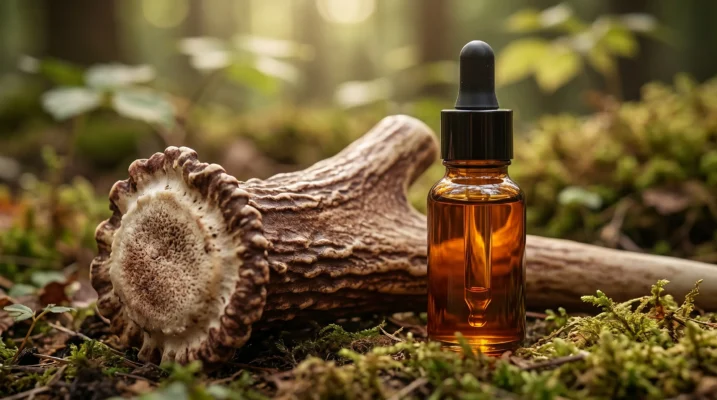
Deer velvet is one of the most biologically complex ingredients to enter professional skincare in recent years — and one of the most misunderstood. Harvested from the rapidly growing antler tissue of deer before calcification, it contains a remarkable concentration of growth factors, including insulin-like growth factor 1 (IGF-1), epidermal growth factor (EGF), and transforming growth factor beta (TGF-β). These are not cosmetic claims. They are measurable biological compounds with documented roles in cellular regeneration.
IGF-1, in particular, has been studied for its role in stimulating fibroblast activity — the cells responsible for producing collagen, elastin, and hyaluronic acid in the dermis. When fibroblast activity declines with age, the structural proteins that give skin its firmness and elasticity are produced more slowly and degraded more quickly. Growth factors applied topically can signal these cells to resume more active production, supporting the skin’s own regenerative capacity rather than simply filling in the surface.
Deer velvet also contains collagen precursors — the amino acid building blocks (glycine, proline, hydroxyproline) that the skin uses to synthesise new collagen fibres. Combined with its natural concentration of chondroitin sulphate and glucosamine, it supports not just the surface but the deeper structural matrix of the skin. For those seeking why BioVelvet is a must-try for those seeking deeper repair, the science behind this ingredient offers a compelling answer.
cellular regeneration at this level — working with the skin’s own biological signalling rather than overriding it — represents a genuinely different approach to aging. One that respects the skin’s intelligence rather than simply demanding results from it.
Copper Peptides — Signaling, Repair, and Remodelling
Copper peptides (GHK-Cu) are among the most extensively researched anti-aging ingredients available — and among the most underutilised in mainstream skincare. First identified in human plasma in the 1970s, GHK-Cu has since been studied for its ability to stimulate collagen and elastin synthesis, promote wound healing, activate antioxidant enzymes, and support the skin’s natural remodelling processes.
What makes copper peptides particularly valuable in the context of cellular regeneration is their dual action. They are both signaling molecules — communicating with fibroblasts to increase structural protein production — and antioxidant supporters, activating superoxide dismutase and other enzymes that protect cells from oxidative damage. As oxidative stress is one of the primary drivers of skin aging at a cellular level, this dual function is clinically significant.
Copper peptides also have a notable effect on the skin’s remodelling cycle. They support the breakdown of abnormal, cross-linked collagen (the kind that contributes to scar tissue and uneven texture) while simultaneously stimulating the production of new, well-organised collagen fibres. The result, over consistent use, is skin that becomes genuinely more resilient — not just temporarily smoother.
Niacinamide — Barrier Strength, Tone, and Longevity
Niacinamide (Vitamin B3) has earned its place in almost every serious skincare conversation — and in the context of anti-aging, its role extends well beyond brightening. At concentrations of 4–5%, niacinamide has been clinically shown to stimulate ceramide synthesis, strengthen the skin barrier, reduce the appearance of enlarged pores, and improve uneven skin tone by inhibiting melanosome transfer between melanocytes and keratinocytes.
For aging skin specifically, niacinamide’s ability to support barrier function is particularly relevant. As the skin ages, ceramide levels decline, TEWL increases, and the barrier becomes progressively less effective at retaining moisture and excluding irritants. Niacinamide addresses this directly — not by adding moisture from the outside, but by supporting the skin’s own capacity to produce and maintain its lipid matrix.
It also works synergistically with most other actives, including peptides and growth factors, without the pH conflicts that complicate vitamin C or retinol layering. In a sophisticated anti-aging routine, niacinamide functions as both an active and a stabiliser — improving the skin’s overall environment so that other ingredients can perform more effectively.
Coenzyme Q10 — Cellular Energy and Oxidative Defence
Coenzyme Q10 (ubiquinone) is a naturally occurring compound found in every cell of the human body, where it plays a central role in mitochondrial energy production. In the skin, it functions as both an energy substrate and a powerful antioxidant — neutralising free radicals in the lipid layers of cell membranes where other antioxidants cannot reach.
The challenge is that CoQ10 levels in the skin decline measurably with age — and this decline correlates directly with reduced cellular energy, slower repair processes, and increased vulnerability to oxidative damage. Topical CoQ10, particularly in its reduced form (ubiquinol), has been shown to penetrate the epidermis and partially restore mitochondrial function in skin cells, supporting faster turnover, more efficient repair, and improved resilience to environmental stressors.
In the context of professional skincare results, CoQ10 is rarely the headline ingredient — but it is frequently the one doing quiet, essential work in the background. Formulations that combine CoQ10 with growth factors or peptides create a synergistic environment where cells have both the energy and the signals they need to function optimally.
💡 Myth Debunked: “High-Percentage Retinol Is the Only Way to Reverse Aging”
The myth: The higher the retinol percentage, the better the anti-aging results. If your skin isn’t peeling or purging, it isn’t working.
The reality: Retinol is a valuable ingredient — but it is one tool in a much larger biological toolkit, not the definitive answer to skin aging. High-percentage retinol accelerates cell turnover and can stimulate collagen production, but it also increases photosensitivity, disrupts the skin barrier, and causes significant irritation in a large proportion of users — particularly those with sensitive or mature skin. More importantly, retinol addresses aging primarily at the surface level. It does not replenish growth factors, support mitochondrial function, or provide the collagen precursors that the dermis needs for structural repair. Ingredients like deer velvet extract, copper peptides, and CoQ10 work at a cellular depth that retinol simply does not reach. A sophisticated anti-aging approach uses retinol strategically — not exclusively, and not at the highest tolerable dose.
Always consult with a healthcare professional before starting new treatments, particularly if you are pregnant, breastfeeding, using prescription retinoids, or managing a skin condition that may be affected by active ingredients or growth factors.
Building an Effective Anti-Aging Routine With Niche Ingredients
The Layering Logic
Niche ingredients require the same foundational principles as any active skincare — correct sequencing, appropriate concentration, and consistency over time. The difference is that many of these ingredients work at a deeper biological level, which means results develop more gradually and more durably than surface-level treatments.
A considered anti-aging routine built around these ingredients might look like this:
- Morning: Gentle low-pH cleanser → Niacinamide serum (4–5%) → CoQ10-rich moisturiser → Broad-spectrum SPF 50
- Evening: Gentle cleanser → Growth factor or deer velvet serum → Copper peptide treatment → Ceramide-rich moisturiser
- 2–3 times per week (evening): Low-percentage retinol (0.025–0.1%) in place of the growth factor serum, followed by a barrier-supportive moisturiser
Note the separation of copper peptides and retinol — used on alternating evenings rather than simultaneously, as retinol’s acidic pH environment can reduce copper peptide stability. This is the kind of formulation intelligence that distinguishes a considered routine from a complicated one.
The BioVelvet Difference
For those ready to move beyond the familiar and invest in genuinely targeted cellular support, BioVelvet represents one of the most scientifically grounded applications of deer velvet extract in professional skincare. Formulated with a focus on growth factor preservation and bioavailability, it addresses the deeper structural changes of skin aging in a way that conventional anti-aging products rarely attempt.
The formulation philosophy behind BioVelvet reflects a broader truth about niche skincare: that the most meaningful results come not from the most aggressive ingredients, but from the most intelligent ones — those that work with the skin’s own biology rather than demanding results from it.
What to Expect — And When
Realistic Timelines for Cellular-Level Results
Ingredients that work at a cellular level — growth factors, copper peptides, CoQ10 — operate on the skin’s biological timeline, not a marketing one. This is worth understanding before beginning, so that the absence of overnight results is not mistaken for absence of effect.
- Weeks 1–2: Improved hydration, skin feels more comfortable and settled
- Weeks 3–6: Gradual improvement in texture, early signs of improved tone and radiance
- Weeks 8–12: Visible improvement in firmness, reduction in fine lines, more even skin surface
- Months 4–6: Structural changes become apparent — skin appears genuinely more resilient, less reactive, with improved elasticity
These are not promises. They are the biological timelines that clinical research supports for consistent use of these ingredient categories. The skin is not a problem to be solved in a week. It is a living system that responds to sustained, intelligent care.
FAQ: Anti-Aging Niche Ingredients — Your Questions Answered
When should I start an anti-aging routine?
The most honest answer is: earlier than most people think, and with less urgency than the beauty industry suggests. Collagen production begins declining in the mid-twenties, and oxidative stress accumulates from the moment of sun exposure and environmental contact. A preventative approach — focused on barrier support, antioxidant protection, and SPF — is appropriate from the mid-twenties onward. More targeted ingredients like growth factors, copper peptides, and CoQ10 become particularly relevant from the mid-thirties, when the cumulative effects of cellular aging begin to manifest visibly. There is no single “right” age — the skin’s condition and concerns are always a more reliable guide than a number.
How do niche anti-aging ingredients differ from drugstore options?
The difference lies primarily in concentration, formulation sophistication, and ingredient sourcing. Drugstore anti-aging products are formulated for broad accessibility — which typically means lower active concentrations, more conservative preservative systems, and ingredient choices driven partly by cost. Niche, independent brands can invest in higher active concentrations, specialised delivery systems (encapsulation, liposomal technology), and ingredients like deer velvet extract or high-purity copper peptides that are simply not viable at mass-market price points. The gap is not always about brand prestige — it is about what is biologically possible within different formulation and production constraints.
Are niche anti-aging ingredients safe for sensitive skin?
Many of them are exceptionally well-suited to sensitive skin — particularly growth factors, postbiotics, and niacinamide, which support barrier function rather than disrupting it. Copper peptides are generally well-tolerated but should be introduced gradually, as with any active. Deer velvet extract, being a biological compound, should be patch-tested before full application, particularly for those with known animal-derived ingredient sensitivities. The key principle for sensitive skin is always the same: introduce one new ingredient at a time, monitor the skin’s response over two full weeks, and prioritise barrier support throughout. When in doubt, a consultation with a dermatologist or skin specialist provides the most personalised guidance.
The skin doesn’t need to be fought. It needs to be understood. And the ingredients that work best are almost always the ones that speak the skin’s own biological language.
Pingback: Clean Beauty Transparency: Why "Clean" Labels Aren't Enough - Denyva
Pingback: Skin Cycling Explained: Why Dermatologists Are Rethinking How We Use Active Ingredients - Denyva