


Gently Does It: The Art of a Makeup for Sensitive Skin Routine That Truly Feels Safe
The mirror in the morning tells its own story. A slight flush across the cheeks. A tightness that arrived with the first splash of water. That familiar, low-level anxiety — not about the day ahead, but about the next step: reaching for the makeup bag and wondering, quietly, whether today’s makeup for sensitive skin routine will feel like armour or like another irritant. For those who live with reactive, easily disrupted skin, this is not a dramatic concern. It is simply Tuesday.
That experience deserves to be met with something better than compromise.
Reductive Beauty: Why Less Is the Most Intelligent Choice for Sensitive Skin
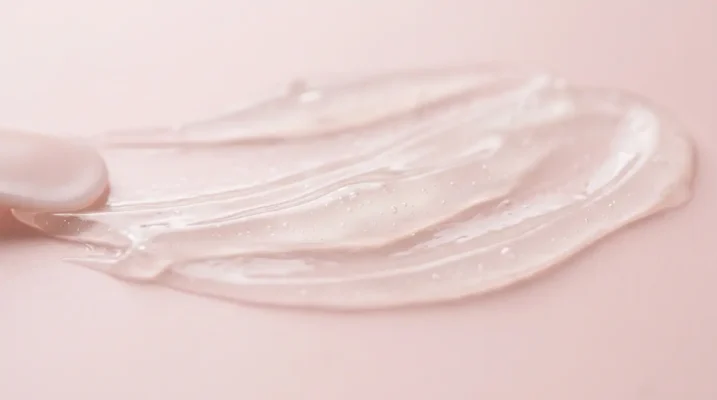
There is a philosophy gaining quiet momentum in the most thoughtful corners of the beauty industry. It is called reductive beauty — and for sensitive skin, it is not a trend. It is a clinical reality.
The principle is straightforward: every ingredient applied to reactive skin is a variable. The more variables, the greater the probability of a response. A formula with forty ingredients is not more luxurious than one with twelve. It is simply forty opportunities for the skin to object. Reductive beauty asks a different question — not what can we add? but what can we remove without losing anything essential?
For sensitive skin, this approach is not minimalism for its own sake. It is kindness, expressed through formulation discipline. A shorter ingredient list, built on well-tolerated actives and a clean base, is not a lesser product. It is a more considered one.
The no-makeup look — that quietly luminous, skin-like finish that appears effortless — is, paradoxically, the most achievable aesthetic for sensitive skin. It requires fewer products, lower pigment loads, and gentler formulas. The skin is not asked to disappear beneath coverage. It is asked to be its calmest, most balanced version. That is a request it can usually honour.
The Foundation of a Safe Makeup for Sensitive Skin Routine: Formula Choices That Matter
Not all formulas are equal in their relationship with reactive skin. Two categories, in particular, have earned their place as the most reliable starting points for anyone navigating sensitivity.
Mineral-Based Formulas
Mineral-based formulas — built on zinc oxide, titanium dioxide, and iron oxides — have a long and well-documented history of tolerance in sensitive and reactive skin types. Their inert mineral structure means they sit on the skin’s surface rather than penetrating it, reducing the likelihood of systemic absorption and the sensitisation that can accompany it. Zinc oxide, in particular, carries anti-inflammatory properties that make it actively beneficial for reactive skin, not merely neutral. A mineral foundation or tinted SPF is not a compromise for sensitive skin. It is frequently the most intelligent choice available.
Fragrance-Free Cosmetics
Fragrance is the single most common cause of cosmetic contact dermatitis. This includes both synthetic fragrance compounds and many natural essential oils — a distinction that matters enormously and is addressed in more detail below. Fragrance-free cosmetics are not unscented products; they are products formulated without any fragrance compounds, natural or synthetic. The difference is significant. “Unscented” can mean that a masking fragrance has been added to neutralise the smell of other ingredients. “Fragrance-free” means the category has been excluded entirely. For sensitive skin, only the latter offers genuine reassurance.
These two commitments — mineral bases and fragrance-free formulation — form the non-negotiable foundation of any makeup routine designed with reactive skin in mind. Everything else is built on top of them.
Scientifically Backed Ingredients: What Sensitive Skin Actually Needs
Always consult with a healthcare professional before starting new treatments, particularly when introducing new products to reactive, sensitised, or condition-affected skin.
The most effective approach to makeup for sensitive skin is one that treats the routine as an extension of skincare — not a departure from it. Three ingredients, in particular, have demonstrated consistent, evidence-based benefit for reactive skin in both dermatological and cosmetic formulation contexts.
Bisabolol
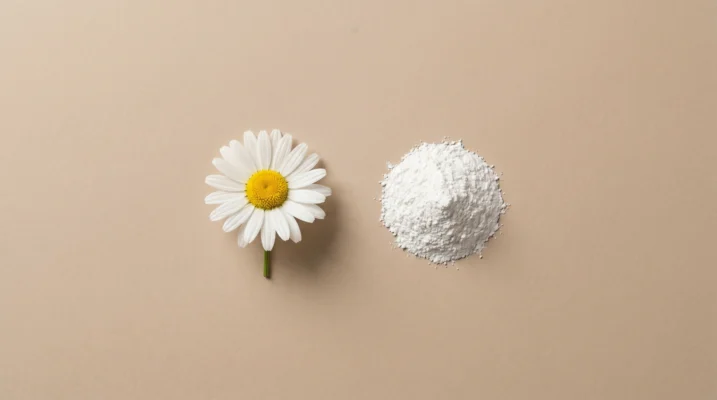
Derived from chamomile (and now also produced synthetically in its pure form), bisabolol is one of the most well-tolerated anti-inflammatory agents available in topical cosmetics. Its mechanism is precise: it inhibits the production of pro-inflammatory cytokines at the skin’s surface, reducing redness and the sensation of heat that accompanies reactive episodes. In a makeup formula, bisabolol serves a dual function — it calms the skin during application and continues to work throughout wear. For skin that flushes easily or responds to environmental triggers, a foundation or primer containing bisabolol is not a luxury addition. It is a functional one. Calming ingredients of this calibre belong in every sensitive skin formula.
Ceramides
The skin barrier — the outermost layer of the epidermis — is composed largely of ceramides: lipid molecules that form the mortar between skin cells, regulating moisture retention and protecting against environmental aggressors. In sensitive and reactive skin, ceramide levels are frequently depleted, either through genetic predisposition (as in eczema and rosacea) or through cumulative exposure to harsh products and environmental stressors. Topical ceramides, when applied in formulations that match the skin’s own lipid ratios, have been shown to measurably restore barrier function over time. In a makeup context, ceramide-containing formulas do not merely sit on compromised skin — they actively support its repair. Skin barrier support through daily cosmetic use is one of the most meaningful contributions a makeup product can make to long-term skin health.
Zinc Oxide
Beyond its role as a mineral UV filter, zinc oxide has a well-established profile as a dermatological active. It modulates the skin’s inflammatory response, supports wound healing, and has demonstrated antimicrobial properties relevant to acne-prone sensitive skin. Its physical rather than chemical UV-filtering mechanism means it does not generate free radicals upon sun exposure — a significant advantage over chemical filters for reactive skin types. In a tinted mineral formula, zinc oxide provides coverage, sun protection, and anti-inflammatory benefit simultaneously. It is, in the most practical sense, a multitasking ingredient that earns its place in a reductive routine.
Expert Tip: “Natural” Does Not Mean Safe for Sensitive Skin
One of the most persistent and genuinely harmful myths in the sensitive skin space is the equation of “natural” with “gentle.” It is understandable — the logic seems sound. Synthetic chemicals cause reactions; natural ingredients do not. In practice, this is almost exactly backwards.
Essential oils — lavender, eucalyptus, rose, citrus — are among the most potent sensitisers in cosmetic formulations. They are natural. They are also complex chemical mixtures, many of which contain known allergens (linalool, limonene, geraniol) at concentrations that regularly trigger contact dermatitis in sensitive individuals. A product labelled “natural” or “botanical” that contains essential oils is not a safe choice for reactive skin. It may, in fact, be a more problematic one than a well-formulated synthetic alternative.
The same applies to certain plant extracts — particularly those from the Asteraceae family (chamomile, arnica, calendula in high concentrations) — which can cross-react with known allergens in sensitised individuals.
This connects directly to the broader principle of clean ingredients in cosmetics: transparency about what a formula contains matters more than the natural or synthetic origin of its components. As explored in the context of lip cosmetics, the most trustworthy products are those that disclose fully and test independently — regardless of whether their ingredients come from a laboratory or a field. The skin does not distinguish between natural and synthetic. It responds to chemistry.
Building the No-Makeup Look: A Step-by-Step Approach for Reactive Skin
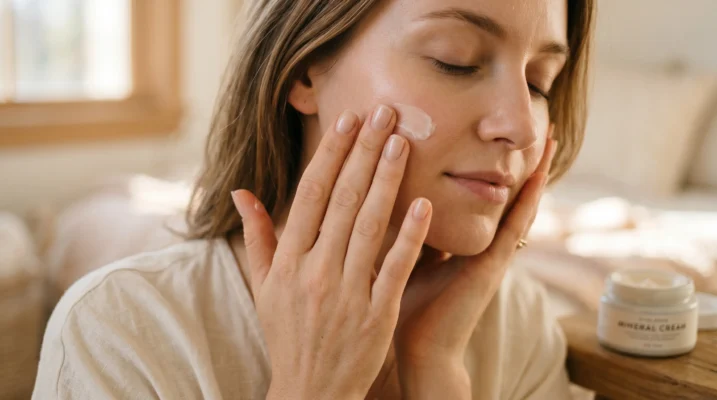
The no-makeup look for sensitive skin is built on preparation, restraint, and the right sequence. Each step is an opportunity to support the skin rather than challenge it.
- Step 1 — Barrier preparation. Begin with a ceramide-rich, fragrance-free moisturiser. Allow it to absorb fully — at least two minutes — before any colour product is applied. This creates a hydrated, balanced surface that reduces the likelihood of reactive application and improves the evenness of mineral formula distribution.
- Step 2 — Tinted mineral SPF or light mineral foundation. A single, well-chosen mineral product can unify tone, provide sun protection, and deliver anti-inflammatory benefit simultaneously. Apply with clean fingertips or a soft, natural-fibre brush using gentle pressing motions rather than dragging. The goal is skin-like coverage — not opacity.
- Step 3 — Targeted concealment, if needed. A fragrance-free, mineral-based concealer applied only where necessary — not as a second layer across the entire face. Less product means less occlusion, less weight, and less opportunity for irritation.
- Step 4 — A single soft definition element. For the no-makeup look, this might be a tinted brow gel, a soft mineral blush in a skin-toned rose, or a ceramide-infused tinted lip balm. One element. Applied lightly. The skin does the rest.
- Step 5 — Setting, if needed. A finely milled, unfragranced mineral powder — used sparingly — can extend wear without adding a significant ingredient load. For very reactive skin, skipping this step entirely is often the better choice.
This is hypoallergenic luxury in its most honest form: not a stripped-back routine born of limitation, but a considered one born of respect for what the skin actually needs. The result — calm, luminous, unified — is indistinguishable from the most elaborate ten-step finish. And it arrives without the cost.
It is worth noting that the same principle of formulation intelligence that makes serum-infused foundations so effective for general skin health applies here with even greater relevance. When a base product actively supports the skin barrier while providing coverage, the routine becomes genuinely restorative — not merely cosmetic.

FAQ: Sensitive Skin Makeup in Practice
Is mineral makeup suitable for very dry, sensitive skin?
Yes — with one important qualification. Loose mineral powders, applied to dry skin without a hydrating base, can emphasise dryness and settle into fine lines. The solution is not to avoid mineral formulas, but to choose them in the right format. Cream-to-powder or liquid mineral foundations — those that combine mineral pigments with a hydrating, ceramide-rich base — perform beautifully on dry sensitive skin. They provide the tolerance benefits of mineral formulation without the desiccating effect of a pure powder. Applying over a well-absorbed, fragrance-free moisturiser is non-negotiable for this skin type. The base layer determines the finish as much as the product itself.
How do you remove makeup safely without compromising the skin barrier?
Cleansing is, for sensitive skin, as consequential as application — and often more damaging when done carelessly. The principles of skin barrier support apply equally at the end of the day. A fragrance-free, low-surfactant micellar water or a ceramide-containing cleansing balm are the most reliable options for reactive skin. Avoid foaming cleansers with sulphates (sodium lauryl sulphate in particular), which strip the skin’s natural lipid layer and leave it more vulnerable to the next day’s exposures. Apply with soft cotton pads using gentle, downward strokes — never circular scrubbing motions. Rinse with lukewarm water; hot water disrupts the skin’s acid mantle. Follow immediately with a ceramide moisturiser while the skin is still slightly damp, to seal in hydration before the barrier has time to lose it.
Which ingredients should be avoided if skin is prone to redness and flushing?
Several categories consistently aggravate reactive, redness-prone skin and are worth identifying by name:
- Fragrance and essential oils — the primary sensitisers in cosmetic formulations, as discussed above.
- Alcohol denat. (denatured alcohol) — a common solvent and texture agent that disrupts the skin barrier and triggers flushing in rosacea-prone skin.
- Chemical UV filters (oxybenzone, avobenzone, octinoxate) — known sensitisers for reactive skin; replace with zinc oxide or titanium dioxide.
- Synthetic dyes — particularly D&C Red colourants, which have documented sensitisation potential. As noted in the context of lip cosmetics and clean ingredients, these are worth identifying by their CI numbers on the INCI list.
- High-concentration niacinamide — while niacinamide is generally well-tolerated and beneficial, concentrations above 5% can cause transient flushing in some sensitive individuals. In makeup formulas, concentrations are typically low enough to be safe — but worth monitoring on first use.
- Menthol and camphor — cooling agents that create a sensation of relief but actively stimulate nerve endings and can worsen reactive patterns over time.
Cross-referencing any new product’s INCI list with the EWG Skin Deep database before first use takes minutes and provides a reliable, evidence-based risk profile for each ingredient.
Sensitive skin is not a flaw to be managed. It is a characteristic to be understood — and, with the right knowledge and the right formulas, one that need not stand between anyone and the quiet confidence of a luminous, considered finish. The routine does not need to be elaborate. It needs to be honest. That is enough.
Pingback: Cream vs Powder Makeup: Why Cream Formulas Rule Niche Beauty - Denyva
Pingback: The Art of the 'No-Makeup' Look for Sensitive Skin - Denyva
Pingback: Why Independent Beauty Brands Are Quietly Beating Luxury Icons in Skincare - Denyva