


Environmental dermatologists increasingly recognize that ultraviolet radiation is not the sole atmospheric factor accelerating cutaneous degradation. Evaluating the true connection between air quality and skin aging requires examining microscopic particulates suspended in urban air. While smog is often viewed as a respiratory concern, fine particulate matter penetrates cutaneous structures to trigger intracellular oxidative stress cascades. Understanding how pollution particles skin damage transpires—from AhR receptor signaling to accelerated lentigines formation—clarifies whether urban anti-pollution skincare addresses real biological mechanisms or simply capitalizes on environmental anxiety.
The Physics of Airborne Particulates: PM2.5, PM10, and PAHs
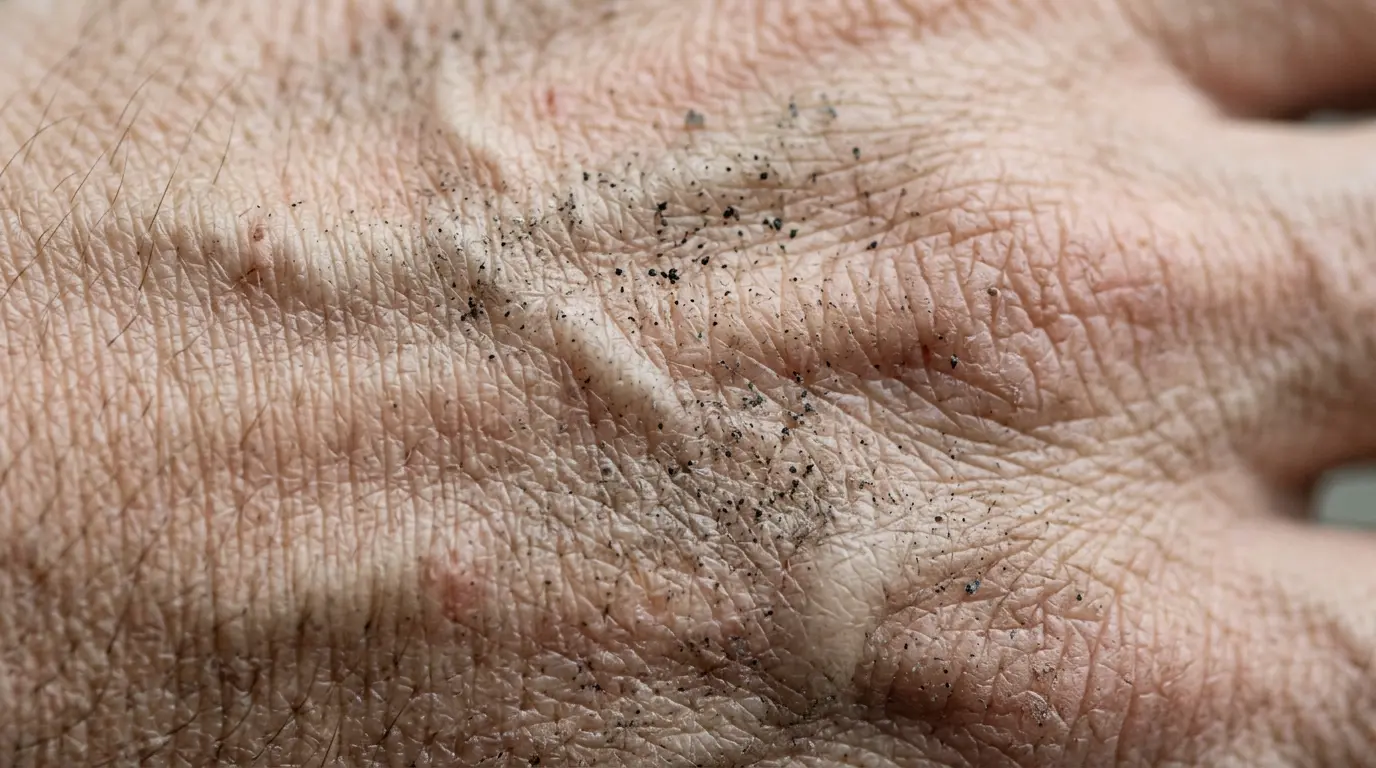
Atmospheric particulate matter is not a uniform substance. It is categorized by aerodynamic diameter—coarse particles (PM10) and fine particles (PM2.5)—and this size distinction matters enormously for cutaneous exposure. Fine particles carry a far larger surface-area-to-volume ratio, which means they can adsorb a disproportionate load of toxic organic compounds onto their surface.
Among these adsorbed compounds, polycyclic aromatic hydrocarbons (PAHs) bound to fine soot particles are of particular concern. Dermatological research suggests these PAH-laden particles readily exploit transfollicular routes and can work their way into stratum corneum lipid bilayers, a published analysis of particulate classification and cutaneous transport has detailed. The skin’s follicular openings, rather than being a minor architectural detail, function as an entry corridor for sub-micron pollutants.
Once lodged within dermal structures, these particles do not sit inert. They act as catalytic platforms, continuously generating free radicals upon contact with surrounding lipid structures. Understanding how these oxidative cascades impair structural cellular integrity is explored in Oxidative Stress and Skin Aging, which maps the broader biochemical fallout of this radical generation.
The Molecular Mechanism: AhR Activation and Collagen Breakdown
The bridge between airborne exposure and visible skin aging runs through a specific receptor. Inhaled and topically absorbed PAHs bind to the Aryl Hydrocarbon Receptor (AhR), a ligand-activated transcription factor expressed in both keratinocytes and dermal fibroblasts. This is not a passive interaction—it actively reprograms cellular gene expression.
Activation of the AhR signaling cascade triggers overproduction of matrix metalloproteinases, particularly MMP-1, enzymes that degrade type I and type III collagen fibers. A peer-reviewed examination of AhR pathway activation and extracellular matrix degradation outlines how this enzymatic overdrive directly undermines the structural scaffolding that keeps skin firm. Collagen does not simply wear down passively with pollution exposure; it is actively dismantled by an upregulated enzymatic response.
Concurrently, particulate-induced reactive oxygen species deplete endogenous antioxidant reserves. This dual assault—enzymatic degradation paired with antioxidant depletion—accelerates structural skin slackening and wrinkle formation in ways that resemble, and often compound, photoaging. Evaluating how high-energy environmental radiation compounds particulate damage is detailed in Protecting Skin from Blue Light, since both stressors converge on overlapping oxidative pathways.
Pigmentation and Barrier Breakdown: The SALIA Cohort Insights

Mechanistic biology is one thing; population-level clinical evidence is another, and the two align here. The landmark SALIA epidemiological study demonstrated a direct clinical association between traffic-related particulate soot and increased facial pigment spots, or lentigines. This is not a marketing claim manufactured by a cosmetics brand—it is a finding drawn from long-term cohort observation, discussed in a clinical review of the SALIA study’s soot and hyperpigmentation data.
Beyond pigmentation, particulate pollution impairs stratum corneum integrity through a slower, cumulative process. It induces lipid peroxidation, lowers natural ceramide content, and elevates transepidermal water loss over time. A barrier that is chronically losing water is a barrier that ages faster, regardless of what serums sit on top of it.
The picture becomes more concerning when exposures overlap. Particulate matter combined with ambient ultraviolet radiation creates a compounded oxidative environment that exacerbates inflammatory hyperpigmentation beyond what either stressor produces alone. Examining atmospheric waveband defense alongside urban pollution protocols is covered in Protecting Skin in the Age of Blue Light, a useful companion for readers weighing layered environmental exposure.
Evaluating Anti-Pollution Skincare: What Works vs. Marketing Hype
Given this mechanistic backdrop, which interventions have actual biological plausibility? Film-forming polymers and occlusive agents create physical barriers that limit particle adherence to the stratum corneum surface. This is a straightforward physical principle rather than a novel discovery—reduce surface contact, reduce the catalytic radical-generation opportunity described earlier.
Topically applied antioxidants—Vitamin C, Ferulic Acid, and Niacinamide among them—neutralize free radicals generated by particulate interaction before they can trigger downstream AhR cascades. This positions antioxidant formulation not as a cosmetic flourish but as an intervention aimed squarely at the oxidative stress mechanism outlined above.
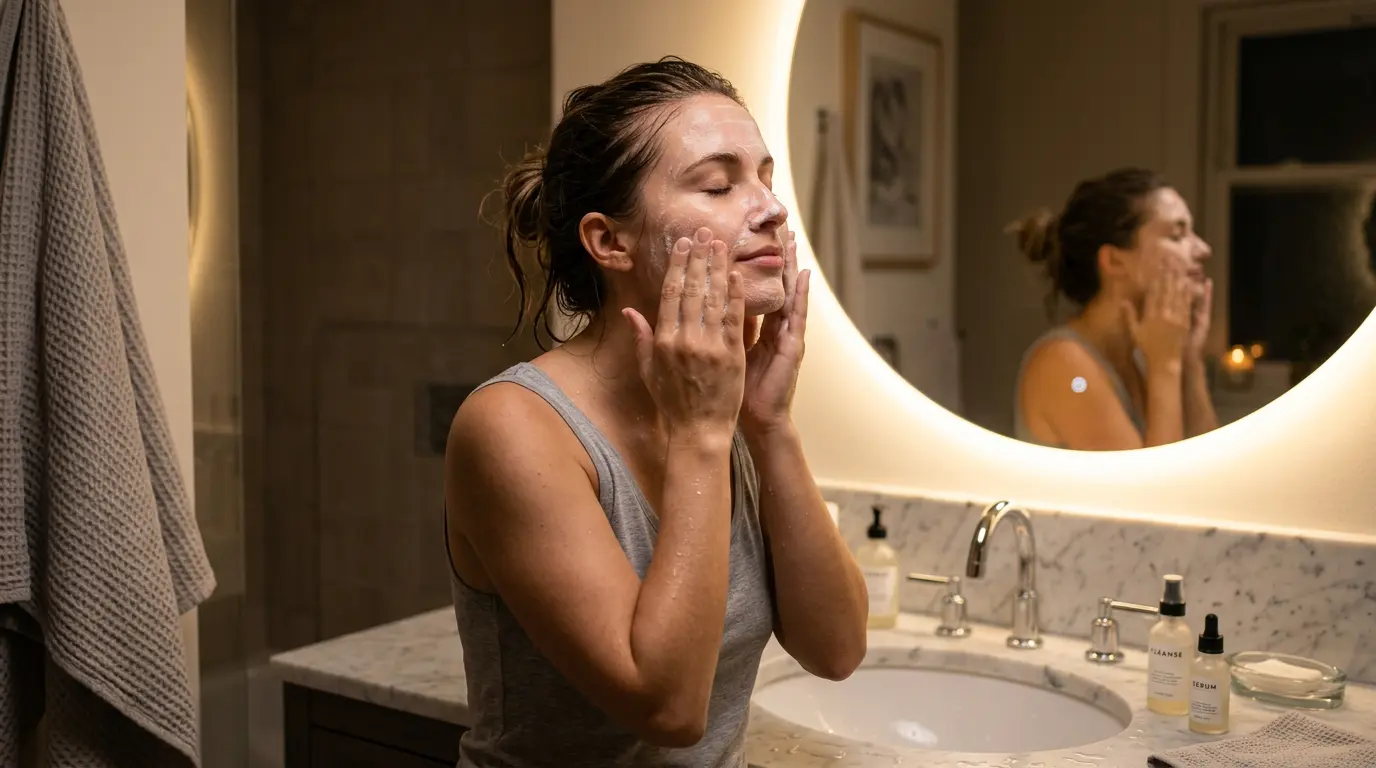
Perhaps the least glamorous but most defensible intervention is procedural rather than formulaic. Thorough evening double-cleansing effectively removes lipophilic particulate soot before prolonged overnight contact, reducing cumulative follicular penetration. No serum compensates for particulate matter left sitting on skin for eight hours. The unglamorous cleansing step may carry more evidence-based weight than most anti-pollution serums marketed at a premium.
The Final Verdict: Is Urban Pollution a Major Driver of Skin Aging?
Ambient air pollution represents a scientifically validated driver of premature skin aging, operating through AhR activation, reactive oxygen species generation, and lipid peroxidation. This is not speculative environmental anxiety—it is a mechanistic chain supported by receptor biology and cohort-level clinical observation. Readers should not dismiss air quality as merely a respiratory or visibility issue.
However, urban atmospheric damage can be substantially mitigated through consistent topical barrier protection, targeted antioxidant use, and meticulous skin cleansing. None of these interventions require exotic formulations; they require consistency and an understanding of what is actually being neutralized.
When integrated with broad-spectrum UV protection, addressing air quality factors forms an essential component of modern urban dermatological health. The two exposures compound each other biochemically, so treating them as separate concerns misses how they actually behave on skin.
FAQ
Can pollution particles actually pass through healthy skin?
Ultra-fine particulates like PM2.5 and associated PAHs can enter through hair follicles and sebaceous glands, while small lipophilic compounds diffuse directly through damaged stratum corneum lipid bilayers.
Does living in a rural area completely protect skin from pollution damage?
Not entirely. While urban centers host higher concentrations of traffic-related PM2.5 soot, rural regions frequently experience high levels of agricultural emissions, wildfire smoke, and ground-level ozone, which also trigger cutaneous oxidative stress.
Do “anti-pollution” cosmetic labels guarantee real protection?
No. Regulators do not enforce a standardized definition for “anti-pollution” claims. The most reliable protection comes from well-formulated antioxidants, film-forming barriers, and thorough cleansing rather than marketed buzzwords.
How does atmospheric ozone affect skin differently than particulate matter?
Ground-level ozone primarily attacks the outermost lipid layers of the stratum corneum, causing immediate lipid peroxidation and depleting Vitamin E, whereas fine particulate matter penetrates deeper into follicles to activate inflammatory signaling pathways.