

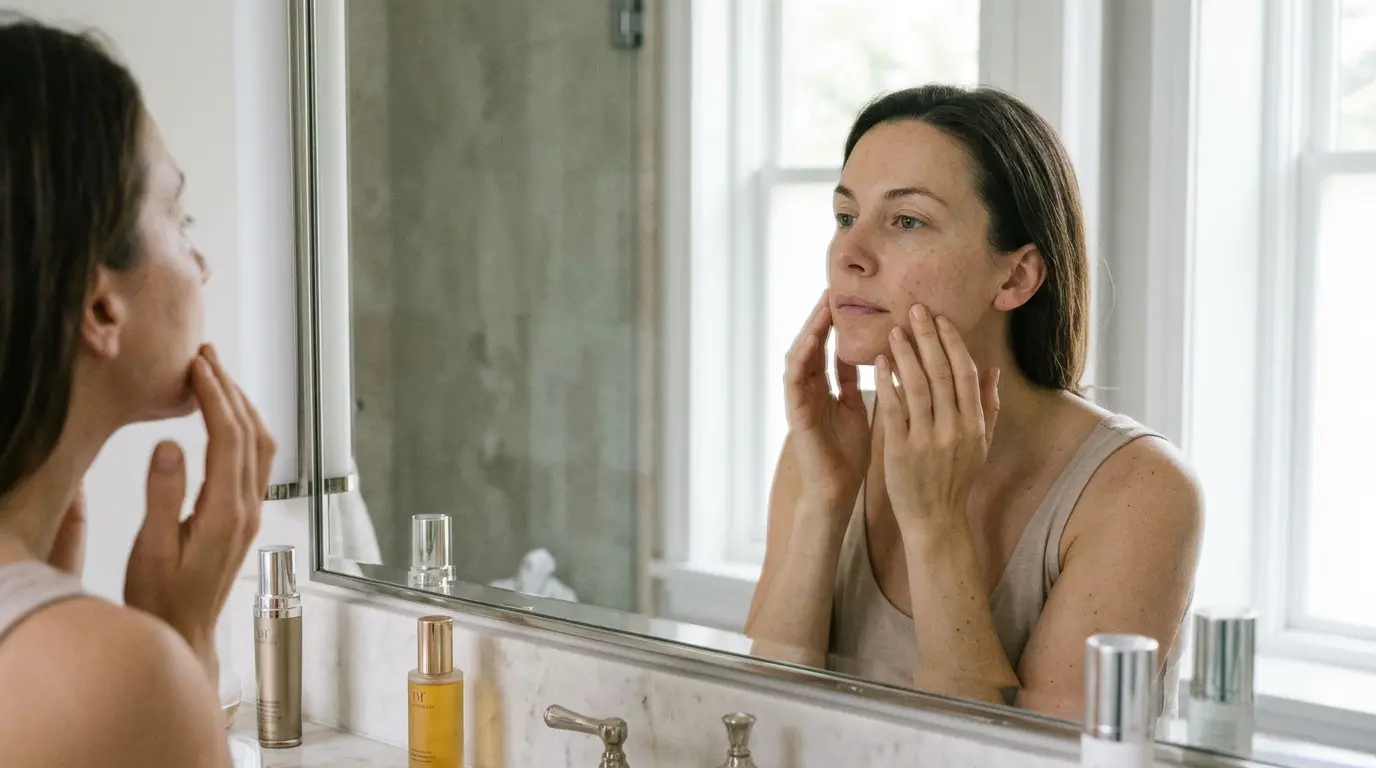
Somewhere around your mid-thirties, the mirror starts telling a different story than it used to. Skin that once bounced back overnight now looks a little duller by 3pm. Your routine hasn’t changed. Your cleanser, your serum, your SPF — all the same. So what gives?
Much of this shift comes down to free radicals skin damage — an invisible chemical process happening deep inside your skin cells, long before anything shows up as a wrinkle. Free radicals are unstable molecules that are missing a piece of themselves, and in their search to become whole again, they end up damaging the very structures that keep skin firm, smooth, and even. This article breaks down, in plain language, what actually happens at the cellular level, and what genuinely helps.
What Are Free Radicals, Really? (No Jargon Explanation)
Think of a molecule as a pair of dance partners — electrons like to move in twos. A free radical is a molecule that has lost its partner. It becomes unstable, restless, and desperate to pair up again. So it does the only thing it can: it steals an electron from a nearby healthy molecule.
That theft doesn’t end the story — it starts a chain reaction. The molecule that just got robbed is now unstable too, so it steals from its neighbor, and so on. This cascade is what scientists call reactive oxygen species skin exposure, since most free radicals in the body are oxygen-based compounds formed during this electron-stealing process.
Where do these unstable molecules come from in the first place? A few everyday sources:
- UV rays from sun exposure
- Air pollution and traffic exhaust
- Cigarette smoke, including secondhand smoke
- Normal cellular metabolism — your cells naturally produce some free radicals just by converting food into energy
Your skin actually has built-in defenses against this — enzymes and antioxidant compounds that mop up free radicals before they cause trouble. Problems start when free radical production outpaces those defenses. That imbalance is what’s known as oxidative stress skin cells experience, and it’s the real engine behind a lot of visible aging. For a deeper look at how this imbalance plays out over time, oxidative stress and skin aging is worth reading in full.
What Free Radicals Actually Do Inside Your Skin Cells
Once free radicals outnumber your skin’s defenses, they start attacking whatever is nearby — and inside a skin cell, that means cell membranes, DNA, and proteins. Cell membranes are the thin walls holding a cell together; when free radicals damage them, the cell struggles to hold its shape and function properly.
DNA damage is more serious still, since DNA holds the instructions your cells use to repair and reproduce themselves. Damaged instructions mean sloppier repairs over time. Proteins take a hit too, including the structural proteins that keep skin looking plump.
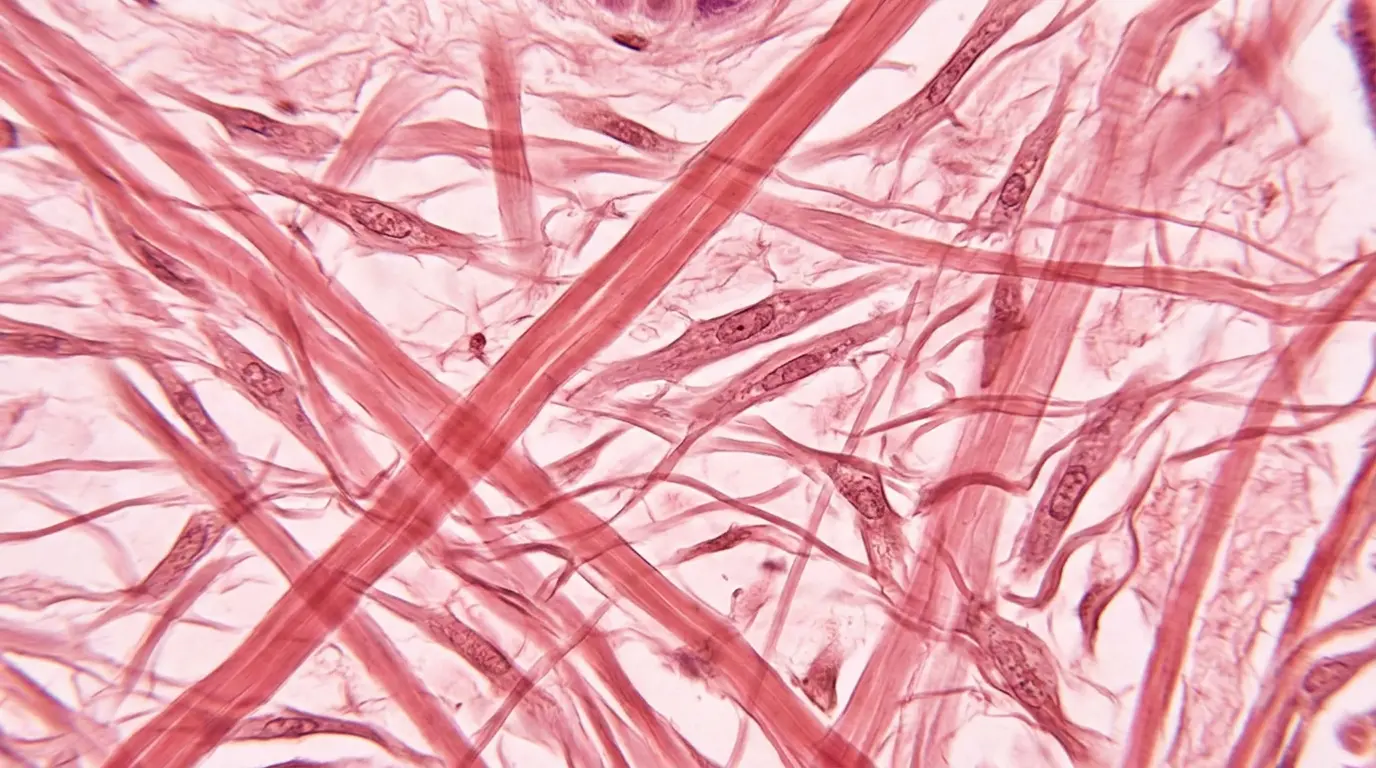
One of the most important targets is the fibroblast — the cell responsible for producing collagen, the protein scaffolding that gives skin its firmness and bounce. Research on fibroblast damage from oxidative stress has found something particularly frustrating: as collagen breaks down (a process called fragmentation), the fibroblasts sitting in that damaged collagen actually shrink. And shrunken fibroblasts generate even more reactive oxygen species internally, which damages more collagen, which shrinks more fibroblasts. It’s a feedback loop, not a one-time event.
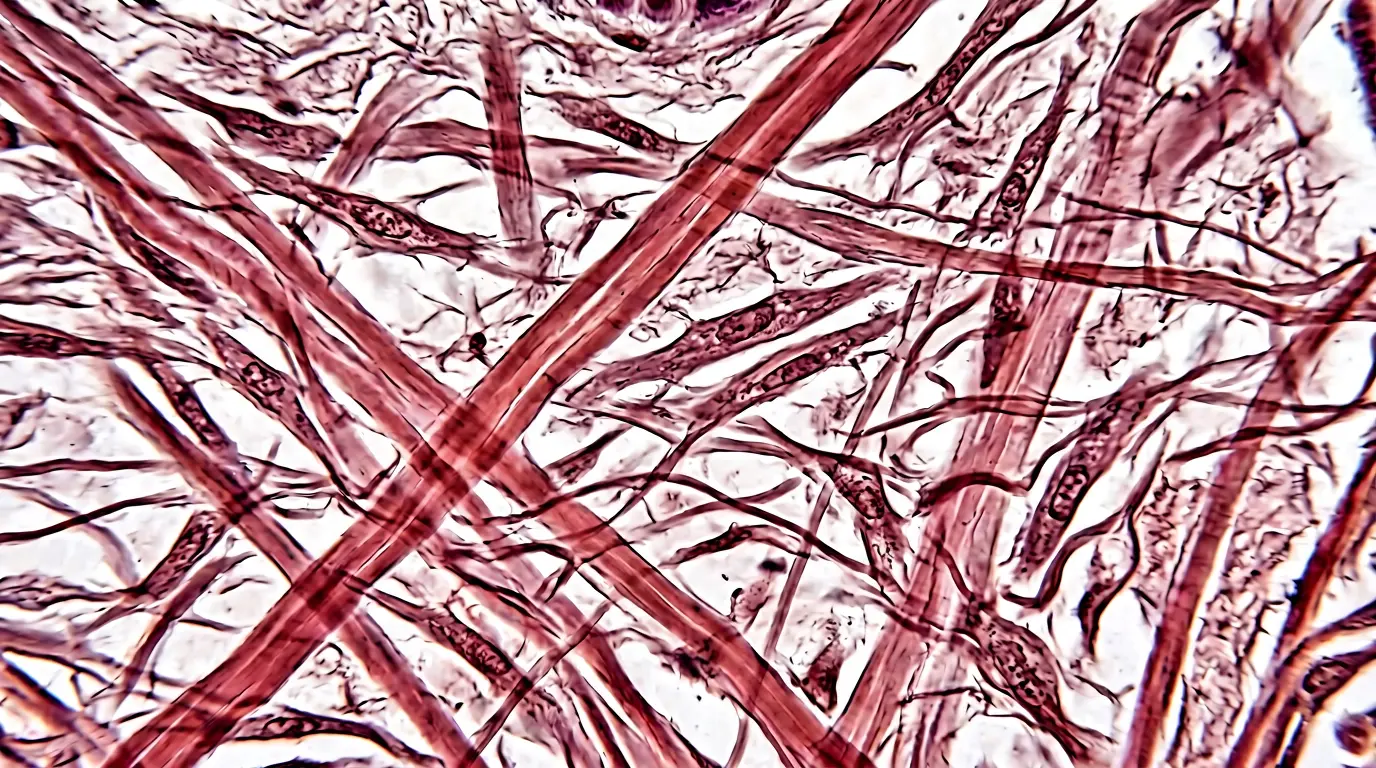
This is why free radical damage collagen breakdown tends to accelerate rather than stay steady — once the cycle starts, skin’s own repair machinery starts working against itself, slowing recovery and making each new bit of damage harder to bounce back from.
Visible Signs: How Cellular Damage Shows Up on the Surface
None of this stays invisible forever. Cellular oxidative damage skin experiences eventually surfaces — quite literally — as changes you can see and feel. The timeline varies person to person, but the pattern is fairly consistent:
- Fine lines and loss of bounce: as fibroblasts produce less collagen, skin loses the springy structure that once resisted creasing.
- Dull, uneven tone: oxidative stress disrupts normal cell turnover, so dead cells linger on the surface longer instead of shedding on schedule.
- Increased sensitivity and slower healing: damaged cell membranes and weakened repair processes make skin more reactive to products it used to tolerate fine.
- Accelerated sagging: as collagen and elastin (its stretchier structural partner) break down, the scaffolding under skin loses tension.
These changes are often described together as free radicals aging skin — not a single event, but an accumulation of small cellular injuries that compound. It’s rarely one bad sunburn or one stressful year; it’s thousands of tiny unrepaired insults stacking up. For the fuller picture of how this compounding effect plays out over decades, how oxidative stress accelerates visible aging covers the long-term mechanics in more depth.
Where Most of the Damage Comes From (And What You Can Actually Control)
Not all free radical exposure is equal. Some sources contribute far more than others, and understanding the hierarchy helps prioritize where effort actually pays off.
UV induced free radicals from sun exposure are, by a wide margin, the single largest contributor to oxidative damage in skin. UV rays don’t just cause sunburn — they generate reactive oxygen species directly inside skin cells within minutes of exposure, even on cloudy days. This is the main reason dermatologists treat daily SPF as non-negotiable rather than optional.
Pollution is the next major player, particularly for anyone in urban environments. Airborne particles, ozone, and traffic exhaust settle on skin and generate free radicals on contact, layering onto whatever UV damage has already occurred. These sit alongside other environmental skin stressors like humidity swings and harsh climates, which can further tax skin’s defenses.
Lifestyle factors matter too, even if they get less attention:
- Smoking, which floods the body with free radicals directly
- Poor sleep, which reduces the body’s overnight repair capacity
- High sugar intake, linked to increased inflammatory and oxidative activity
A broader review of oxidative stress and skin disease outlines how these environmental and internal sources concretely affect skin cell function, reinforcing that damage rarely comes from one source alone — it’s cumulative exposure across a lifestyle.
How Antioxidants Actually Help (Without the Marketing Spin)
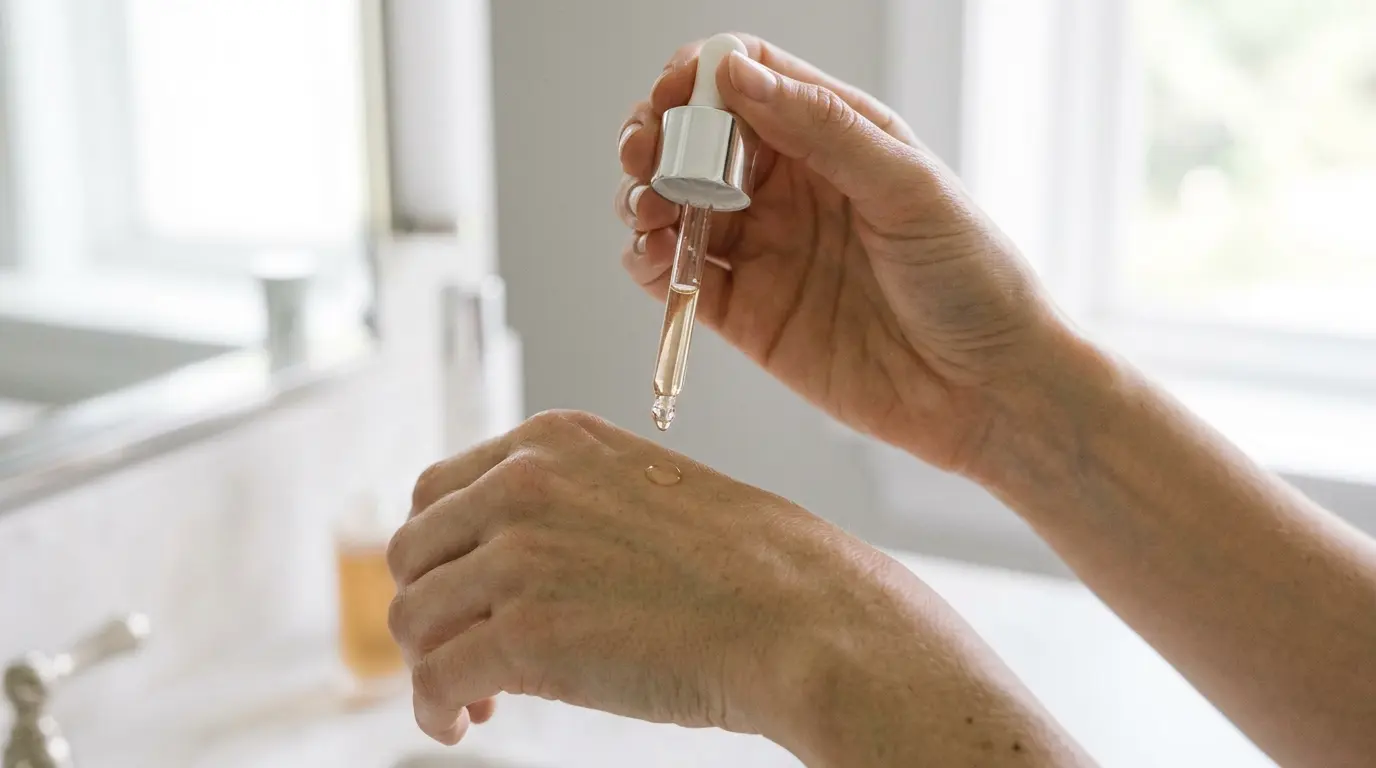
Antioxidants work by offering up their own electron to a free radical, satisfying its need without damaging a skin cell in the process. Think of them as a decoy — they get “stolen from” instead of your collagen or DNA. That’s the entire mechanism, and it’s genuinely useful, if unglamorous.
Here’s where the marketing tends to overpromise: an antioxidant serum is not a shield that undoes sun damage or erases oxidative stress on its own. It’s one layer in a broader defense system. Daily SPF remains the most important layer, since it reduces free radical generation at the source. Antioxidants work best as backup — mopping up the free radicals that still get through.
That said, formulation quality matters. Some actives are considerably more stable and better absorbed than others, and combining certain compounds can meaningfully boost their effectiveness compared to using them alone. For a closer look at which formulations tend to hold up under real-world use, niche anti-aging ingredients that actually work is a useful reference point when building out a routine.
Antioxidants skin protection is best understood as damage limitation, not damage reversal — a distinction worth keeping in mind before assuming any single product will do all the work.
Myth-Busting Note: More antioxidants does not mean more protection. Oxidative stress is a balance your skin is constantly trying to maintain, not a war you win by piling on every antioxidant serum in existence. Layering five different actives at once can overwhelm skin’s barrier and cause irritation, which ironically triggers more oxidative stress, not less. A couple of well-chosen, well-formulated antioxidants used consistently will outperform a crowded, chaotic routine every time.
Frequently Asked Questions
Can free radical damage be reversed once it happens?
Not entirely, though skin has some capacity to repair itself. Damaged DNA can often be corrected by the cell’s own repair enzymes, and fibroblasts can resume healthier collagen production once oxidative stress is reduced. But damage that has already broken down structural collagen generally isn’t rebuilt from topical products alone — prevention tends to matter more than correction here. Research suggests consistent protection slows the cycle far more effectively than trying to reverse it after the fact.
Do I need antioxidant products if I already wear sunscreen every day?
SPF and antioxidants address different parts of the problem. Sunscreen blocks UV rays before they generate free radicals in the first place, while antioxidants neutralize the free radicals that form from pollution, blue light, and normal metabolism — sources sunscreen doesn’t touch. Wearing SPF alone is a strong foundation, but it isn’t a complete defense against every environmental stressor skin encounters daily.
Are free radicals only caused by sun exposure?
No, though UV exposure is the largest single contributor. Free radicals also form from pollution, cigarette smoke, poor sleep, high sugar diets, and even the skin’s own normal metabolic processes. Studies indicate that people in polluted urban environments show measurable oxidative stress markers in skin even with minimal sun exposure, which is why environmental factors beyond UV deserve real attention too.