

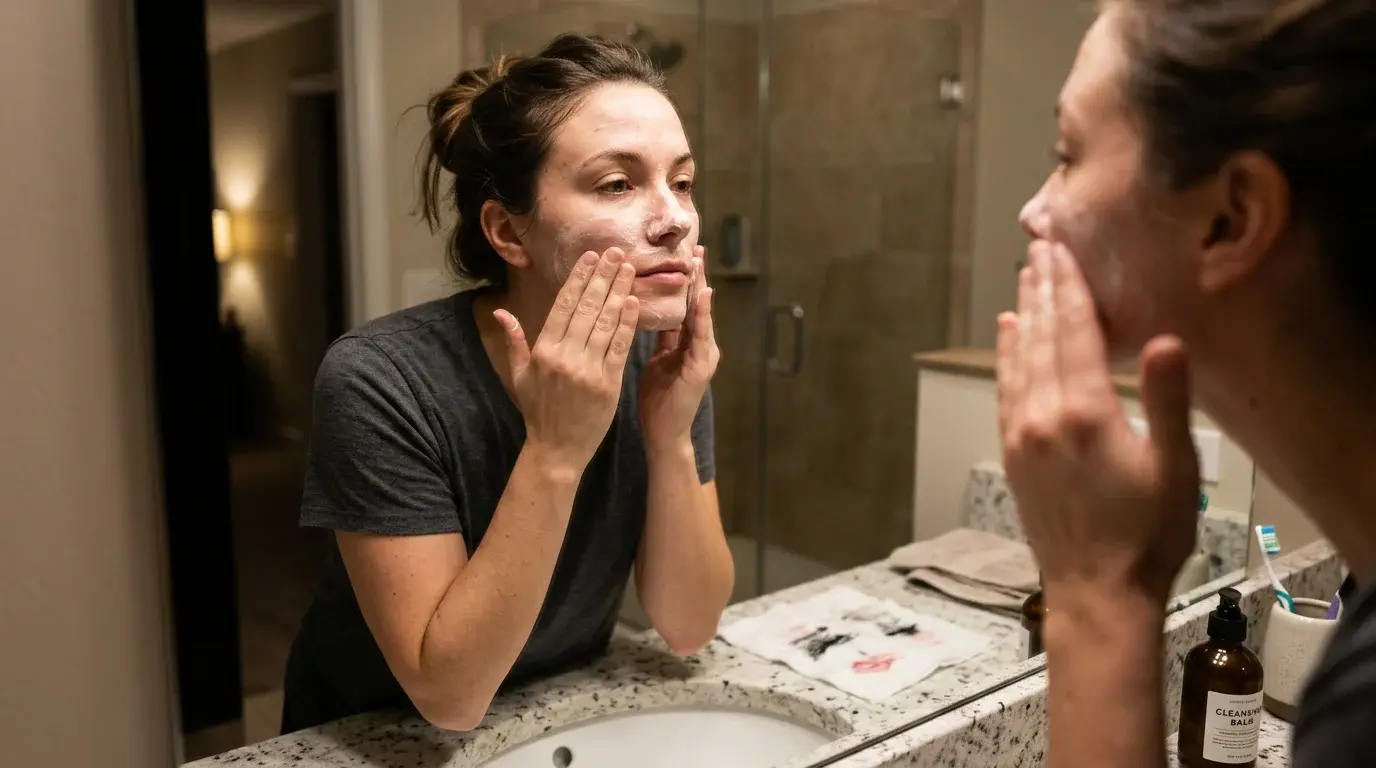
Long-wear liquid lipsticks, budge-proof mascaras, and 24-hour foundations rely on hydrophobic polymers designed to resist water, sweat, and facial oils. While these formulas excel at staying power, taking them off at night often degenerates into a violent ritual of cotton pad scrubbing, harsh micellar waters, and stripping foams. The reality of waterproof makeup removal and over-cleansing skin barrier damage is that the mechanical and chemical force required to dissolve film-formers often inflicts severe collateral damage on epidermal lipids. What feels like thoroughness at the sink is, more often, a slow erosion of the barrier that keeps skin calm and hydrated.
The Chemistry of Long-Wear Cosmetics: Why Water Won’t Cut It
Modern long-wear formulas depend on hydrophobic film-forming resins — trimethylsiloxysilicate, acrylate copolymers, and isododecane-based carriers among them. These compounds cross-link as they dry, forming a thin, flexible, essentially waterproof matrix over the skin’s surface. That is precisely what makes a liquid lipstick survive a meal or a mascara survive a humid commute.
The trouble is structural, not incidental. Because these polymers are engineered to be insoluble in water, conventional water-based cleansers simply cannot break them down on contact. Splashing, rinsing, or even a foaming cleanser applied briefly will bead off the surface rather than dissolve it.
When water alone fails, most people escalate instinctively. That escalation takes one of two forms: mechanical force, in the form of vigorous rubbing with wipes or cotton rounds, or chemical aggressiveness, reaching for high-foaming cleansers built on strong surfactants. Both responses solve the immediate problem of pigment removal, but both set off a cascade of epidermal stress that outlasts the makeup itself. Waterproof formulas are, by design, built to withstand water — forcing them off with water-based friction tends to strip the skin rather than the product.
What Surfactants Actually Do to Your Epidermal Lipids
To understand the damage, it helps to look at what sits beneath the makeup layer. The stratum corneum — skin’s outermost layer — depends on an intercellular lipid matrix made up of ceramides, cholesterol, and free fatty acids, arranged in tightly packed lamellae. This matrix functions less like a wall and more like mortar between bricks, holding corneocytes together and controlling water loss.
Harsh surfactants, particularly strong anionic cleansing agents, do not confine their activity to cosmetic pigments. Research on surfactant interaction with stratum corneum lipids indicates that these molecules intercalate directly into the skin’s lipid bilayers, swelling stratum corneum proteins and leaching out natural moisturizing factors and structural lipids alongside whatever pigment they were meant to lift.
The consequences compound with repetition. A review of cleanser-induced barrier disruption points to elevated transepidermal water loss (TEWL), destabilization of the lipid lamellae, and a pattern of chronic, low-grade inflammation with repeated surfactant exposure. Understanding how improper cleansing protocols destabilize these base layers — and how that instability shows up later as texture problems — is explored further in Makeup Pilling: Why Your Makeup Separates and How to Fix It. Aggressive cleansing, in effect, strips the skin’s protective lipid mortar right alongside the cosmetic pigment it was aimed at.
The Friction Factor: Why Cotton Pads and Wipes Compound the Damage
Chemistry is only half the story. Facial wipes and cotton pads remove waterproof makeup largely through physical shear stress, dragging film-forming polymers off the skin surface rather than dissolving them. That mechanical action is where a second, distinct injury pattern begins.
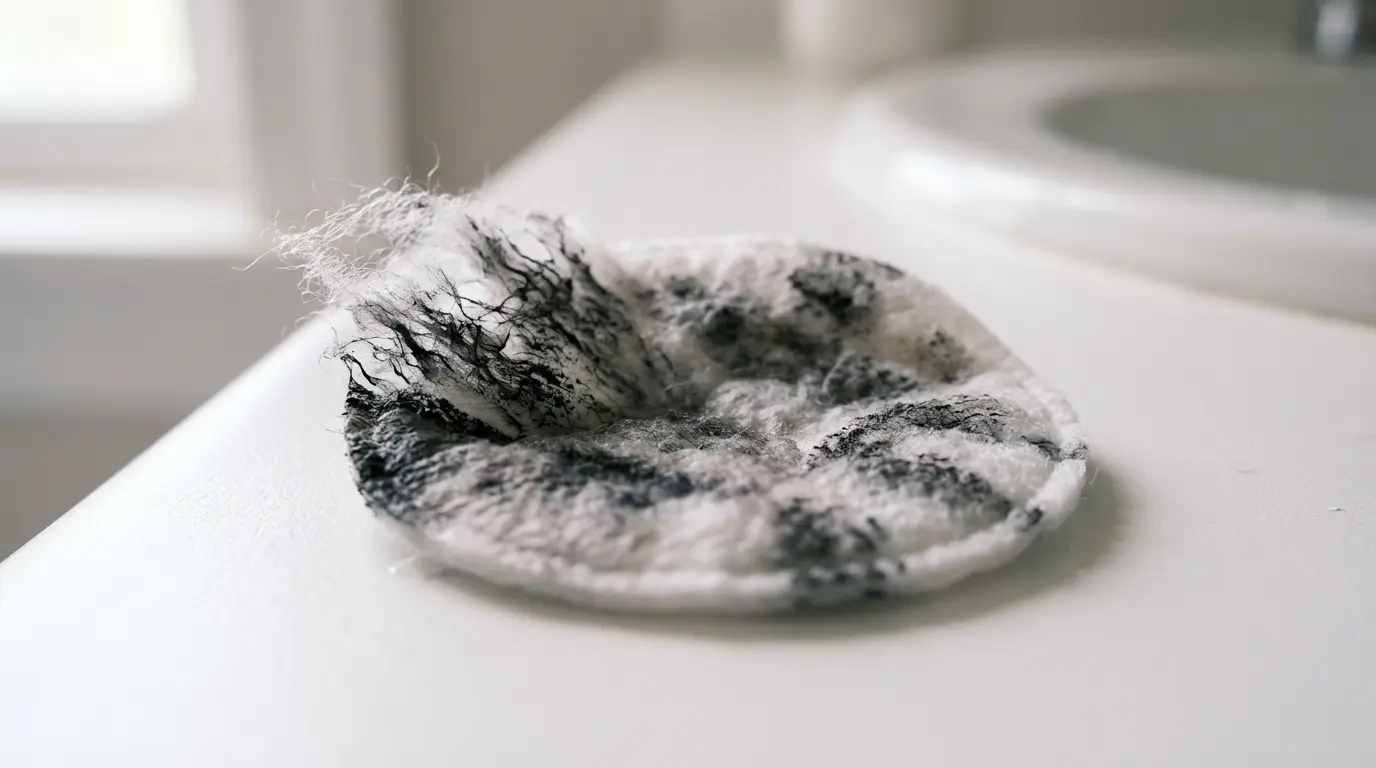
Repeated dragging across thin-skinned areas — the eyelid and periocular tissue especially — causes micro-tears and low-level abrasion to delicate keratinocytes, accelerating micro-inflammation in a zone that is already among the most barrier-fragile on the face. This is not merely uncomfortable; it is measurable tissue stress layered on top of the surfactant exposure already underway.
Cotton pads soaked in leave-on micellar water introduce a third complication. Because these formulas are designed to be wiped rather than rinsed, residual surfactants are often left sitting directly on the skin barrier with no rinsing step to clear them. An evaluation of leave-on surfactants and barrier integrity notes this residue as a distinct mechanism of ongoing barrier disruption, separate from the acute effect of a rinse-off cleanser. Combined with the physical rubbing required to lift waterproof pigment, ongoing surfactant residue and friction together create an environment well suited to chronic barrier impairment.
Oil-Based Cleansing and Emulsification: The Lipid-First Solution
The more coherent approach follows a simple principle: like dissolves like. Non-polar, lipophilic solvents — plant oils, synthetic esters, mineral oil — dissolve hydrophobic film-formers on contact, without requiring the mechanical friction or lipid-stripping surfactants that cause so much of the damage above.
What makes modern cleansing oils and balms rinse cleanly, rather than leaving a greasy film, is emulsification. These formulas typically integrate non-ionic, mild emulsifiers such as polyglyceryl esters, which allow the dissolved makeup and oil to bind with water and rinse away completely once the product meets the sink.
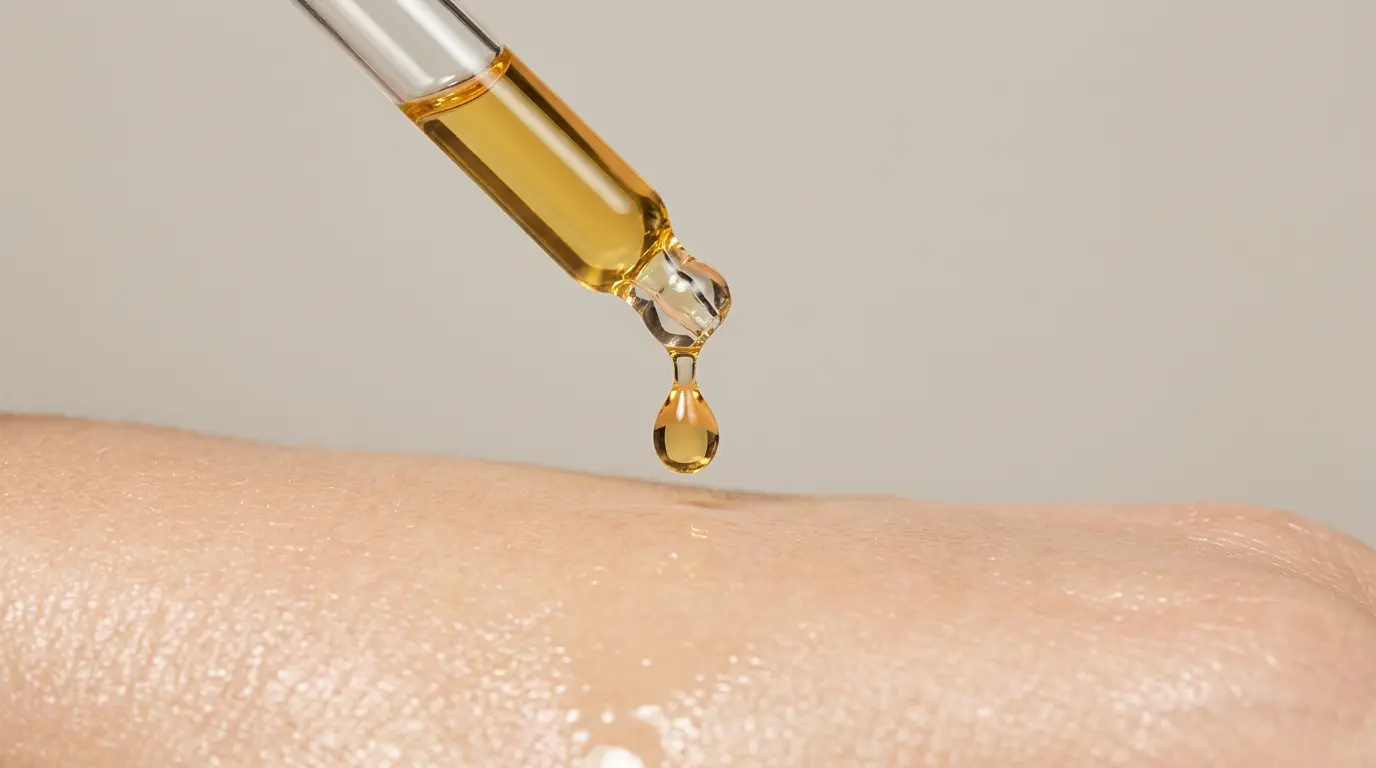
The barrier-relevant advantage is specificity: oil cleansing removes water-resistant polymers while leaving the intercellular lipid lamellae largely undisturbed, maintaining baseline hydration and reducing the TEWL increases associated with surfactant-heavy routines. Supporting structural skin recovery while still accommodating daily coverage is discussed further in Skin Barrier Repair Makeup. Evidence indicates this lipid-first approach addresses the actual chemistry of waterproof formulas, rather than working against it.
A Barrier-Safe Protocol for Removing Waterproof Makeup
Apply an oil-based cleanser or balm directly to dry skin using dry hands, then gently massage for 30 to 60 seconds. This contact time gives the solvent room to break down the polymer network before any water enters the equation.
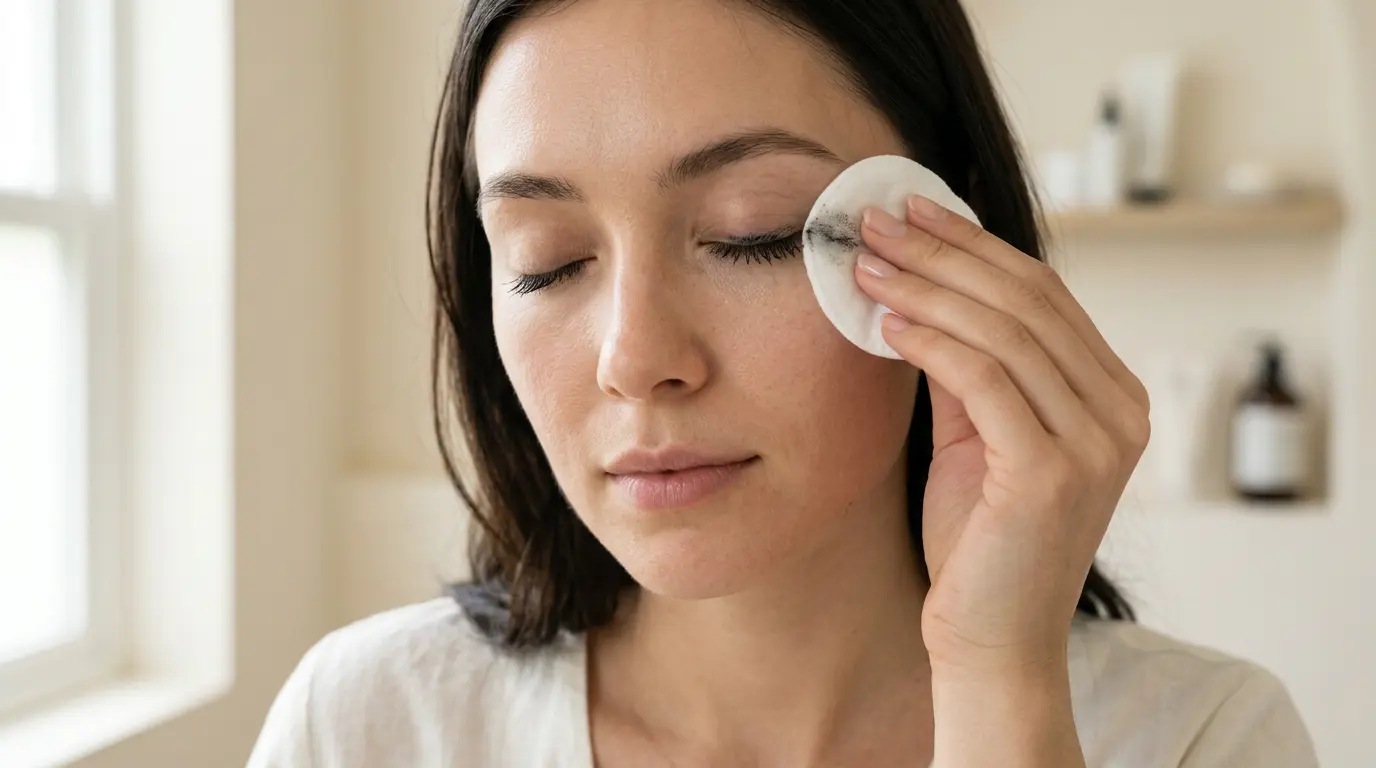
Eye makeup deserves dedicated attention rather than the same treatment as the rest of the face. Press a saturated oil-based pad against closed eyelids for 10 to 15 seconds, allowing the solvent to dissolve mascara resins before gently wiping down — this single pause removes much of the need for repeated dragging.
Emulsify with lukewarm water before rinsing away. Hot water should be avoided here; it further solubilizes and strips essential epidermal lipids, undoing some of the protective advantage of the oil step. If a double cleanse feels necessary, follow with a mild, non-foaming, low-surfactant water cleanser, checking that no surfactant residue is left behind on the skin.
FAQ
Is double cleansing necessary every time I wear makeup?
Only if you wear long-wearing, water-resistant formulas, high-silicone primers, or physical sunscreens. A single, well-formulated emulsifying oil or balm cleanser is often sufficient to remove light, water-soluble makeup without needing a second surfactant step that could over-cleanse the skin.
Why does my skin feel tight and squeaky clean after removing makeup?
That “squeaky clean” sensation is a clinical sign of barrier impairment, not cleanliness. It indicates that your cleanser has stripped away essential intercellular lipids and natural moisturizing factors, leaving stratum corneum proteins dehydrated and tight.
Are micellar waters bad for the skin barrier?
Micellar waters are not inherently bad, but using them with cotton pads creates friction damage. Additionally, leaving micellar surfactants on the skin without rinsing can cause mild, ongoing barrier disruption for sensitive or compromise-prone skin types.
Can oil cleansing clog pores if I have acne-prone skin?
Not when using rinse-off cleansing oils formulated with light esters or non-comedogenic oils and proper emulsifiers. Because the oil is emulsified and rinsed off completely with water, it lifts sebum and waterproof makeup from the follicle without leaving heavy residue behind.