

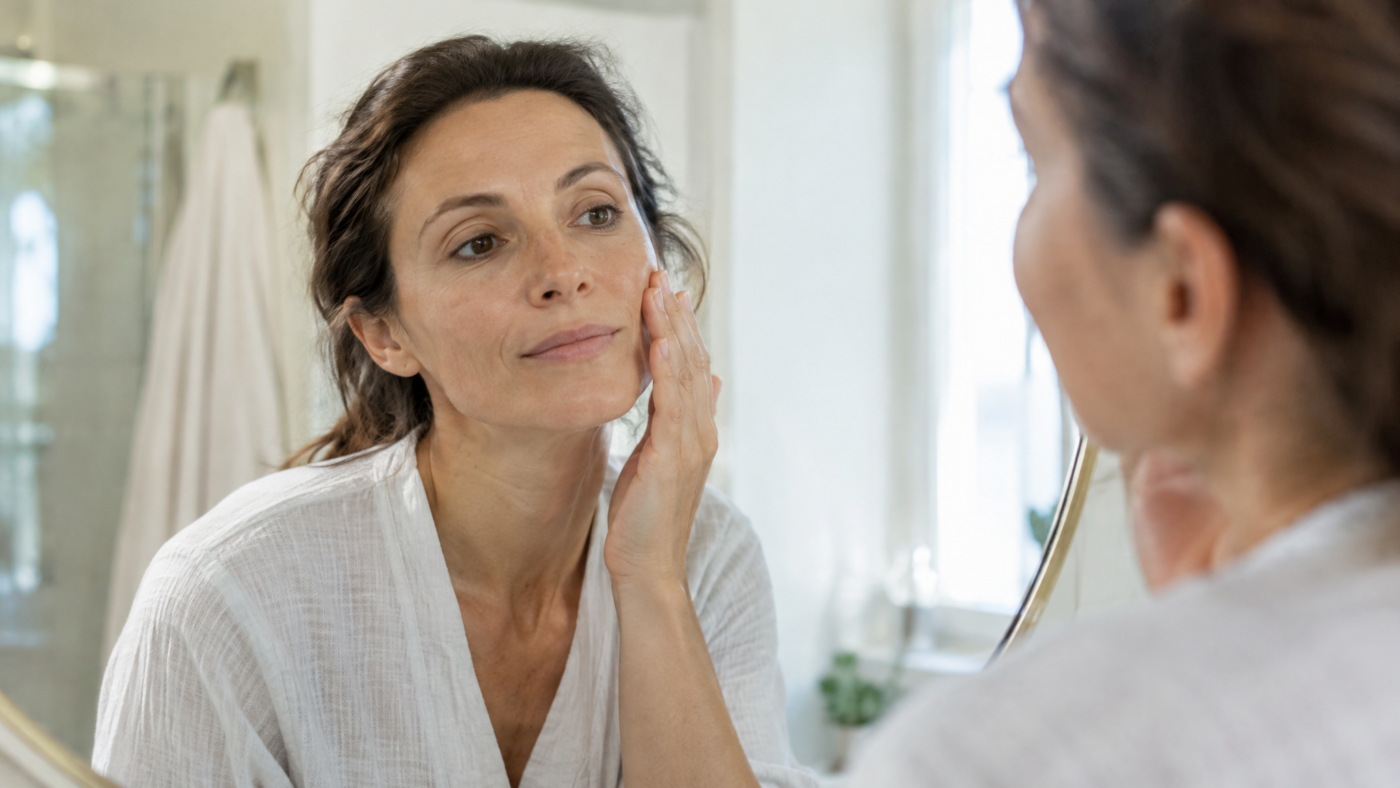
It often starts on an ordinary morning. The bathroom light is a little too bright, and there they are: fine vertical lines around the lips that were not so noticeable last year. The complexion looks tired, even after a full night’s sleep. For many women who smoke, or used to, this moment brings a quiet worry about the smoking effects on skin.
The worry is understandable, and it deserves a calm, honest answer. Smoking is linked with changes in how skin looks and behaves, but the story is not black and white. This article explains what research shows, what is still uncertain, and what can realistically help.
Smoking Effects on Skin: How the Look of the Skin Changes
Skin is a living organ. It renews itself, repairs itself and depends on a steady supply of oxygen and nutrients. Tobacco smoke appears to interfere with several of these processes at once.
Does smoking cause wrinkles?
Does smoking cause wrinkles? Most studies link smoking with earlier and more pronounced facial lines, especially around the mouth and eyes. Some dermatology papers even describe a “smoker’s face”: a lined, slightly grey or sallow look. Not every study agrees on how big the effect is, and many non-smokers have deep lines too.
Most of this evidence is observational. It shows that wrinkles and smoking tend to appear together, which is not quite the same as proving that smoking is the only cause. Repeated lip pursing may add some creasing around the mouth, but laboratory findings suggest that changes inside the skin play a part as well. That is where collagen comes in.
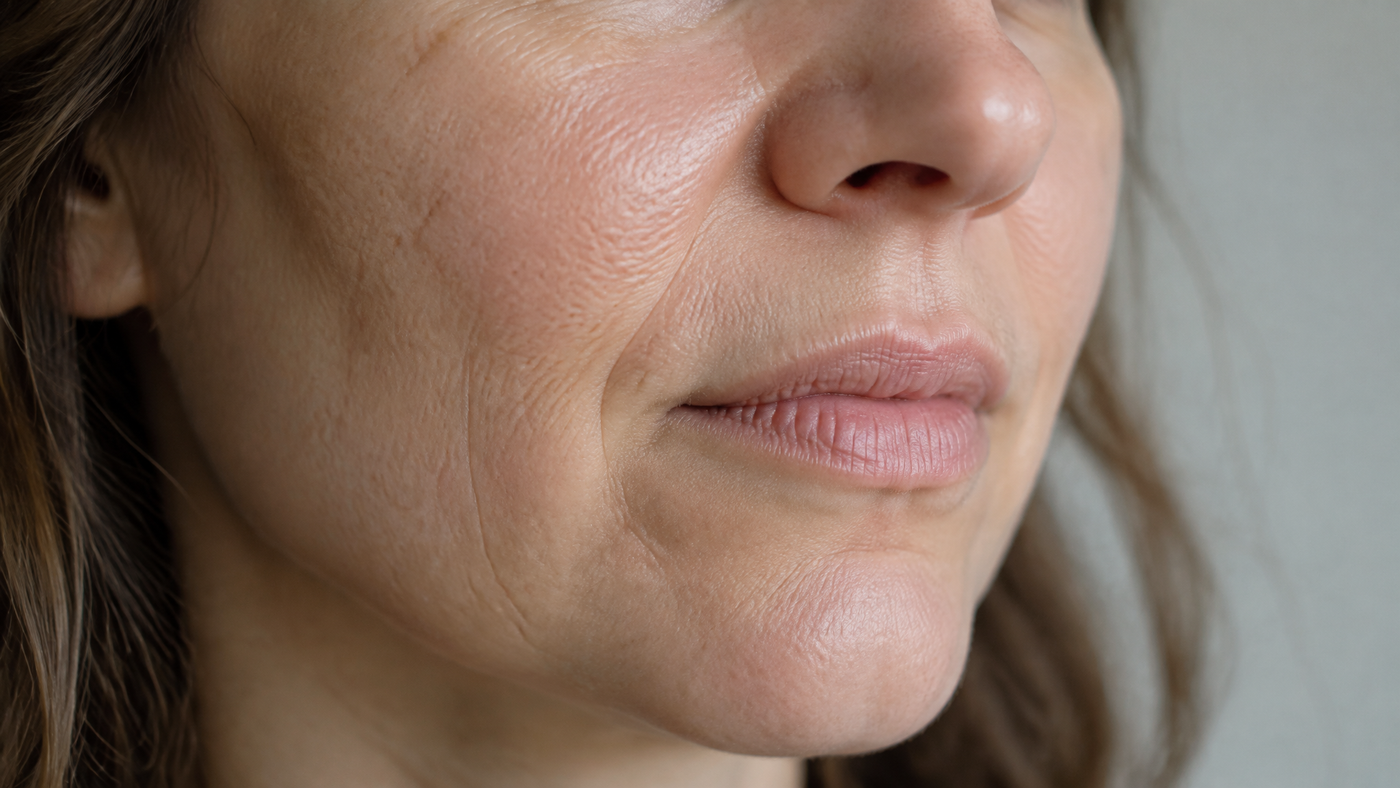
Common visible signs
- Fine lines around the lips and eyes
- A dull skin tone, sometimes with a greyish or yellowish cast
- Reduced skin elasticity, so skin bounces back more slowly
- A rougher, uneven texture
- Dryness and lower skin hydration
These signs overlap with ordinary ageing, which is why they are easy to miss at first. Over the years, the pattern can become more visible.
Smoking and Collagen: What Happens Inside the Skin
Collagen is the main structural protein in the dermis, the layer beneath the surface. It keeps skin firm and smooth. The skin constantly breaks down old collagen and builds new, a cycle known as collagen turnover.
What the 2002 study found
When it comes to smoking and collagen, one of the most cited pieces of research is a 2002 study by Knuutinen and colleagues in the British Journal of Dermatology. The team compared 47 current smokers with 51 people who had never smoked, all from northern Finland. They measured markers of collagen production in fluid taken from a small suction blister on the upper inner arm, a part of the body that is usually protected from the sun.
The synthesis of type I and type III collagen, the two types that give skin much of its strength, was lower in smokers by 18% and 22%. The smokers’ samples also showed higher levels of MMP-8, an enzyme that helps break collagen down, and lower levels of an enzyme blocker (TIMP-1) that helps keep that breakdown in check. In plain words, the balance between building and breaking down seemed to tilt the wrong way.
An important nuance
These are biological markers measured once, in one specific group of people. They show a pattern, not a promise. The study cannot tell how any single woman’s skin will age.
Genetics, skin type, sun exposure, diet, sleep and stress all matter too. Two women with the same smoking history can look quite different. Research suggests these factors can add up, but how much each one counts varies from person to person.
Smoking, Skin Aging and Oxidative Stress
Collagen is only one part of the picture when it comes to smoking effects on skin. Tobacco smoke contains thousands of chemicals, and many of them produce free radicals, unstable molecules that can damage cells. When the skin’s own antioxidant defences cannot keep up, the result is oxidative stress. You can read more about oxidative stress and skin aging in a separate guide.
Oxidative stress is thought to harm the skin’s support structure and may add to the earlier-than-expected changes often called premature aging. The details are still being studied, and the size of the effect in everyday life is hard to measure.
Blood Flow, Oxygen and Skin Tone
Healthy skin has a fine network of tiny blood vessels. They bring oxygen and nutrients in and carry waste away. When this supply is reduced, the complexion may look paler, greyer or duller, although blood flow is only one of several things that shape skin tone.
Nicotine and other components: not the same thing
It is tempting to blame everything on nicotine, but smoke is a mixture, and its parts act in different ways:
- Nicotine narrows small blood vessels (vasoconstriction), which temporarily reduces blood flow, including in the skin.
- Carbon monoxide binds to haemoglobin in the blood and lowers how much oxygen the blood can carry. This happens independently of nicotine.
- Other chemicals and free radicals may irritate and damage blood vessel walls and surrounding tissue over time.
So the skin may receive less blood, and the blood it does receive may carry less oxygen. These effects arrive by different routes, which is why nicotine alone is not the full explanation.
To go deeper into this topic, see this guide on skin microcirculation and blood flow.
Smoking and Wound Healing
Healing is a demanding job. It needs oxygen, new blood vessels, fresh collagen and a working immune response. Smoking and wound healing are linked because smoke can affect several of these steps.
Surgical research has long associated smoking with a higher risk of wound complications, such as infection and slow or incomplete healing. For this reason, surgeons usually advise stopping smoking before an operation and during recovery. Anyone planning a cosmetic or medical procedure should ask the treating doctor for timing that fits their situation.
Skincare Ingredients That May Help
Skincare cannot cancel out the effects of smoking or restore collagen that has been lost. Some ingredients do have reasonable evidence for protecting the skin and supporting its look and comfort, though the strength of that evidence differs from one ingredient to the next. Results also depend on the formula, the concentration and how consistently a product is used, so two products with the same ingredient on the label will not necessarily perform alike.
Sunscreen (SPF)
Ultraviolet light breaks down collagen and adds its own oxidative stress. A broad-spectrum sunscreen with SPF 30 or higher, used daily, is the most dependable way to limit further sun-related ageing. It protects against new damage; it does not repair old damage.
Vitamin C
Vitamin C is an antioxidant, and the body also needs it to make collagen. On the skin, a stable formulation can help neutralise free radicals and may support a brighter look. Evidence for visible results is more modest than the marketing suggests, and stronger products can irritate sensitive skin.
Retinoids
Retinoids are vitamin A derivatives. Among topical ingredients, they have some of the strongest evidence for softening fine lines, rough texture and uneven tone in sun-aged skin. The best-studied is prescription tretinoin; over-the-counter retinol is gentler and has been studied less. Retinoids can cause dryness and redness, and they are not recommended during pregnancy. Always consult with a healthcare professional before starting new treatments.
Niacinamide
Niacinamide, a form of vitamin B3, helps the skin barrier hold on to water and may calm redness and uneven tone. It is generally well tolerated and combines easily with other products. It supports comfort and resilience rather than rebuilding lost structure.
Hyaluronic acid
Hyaluronic acid attracts and holds moisture in the outer layers of the skin. This can temporarily soften the look of dryness and fine lines and help with skin hydration. It does not rebuild lost collagen.
Gentle basics
A mild cleanser and a good moisturiser protect the skin barrier, the outer layer that keeps water in and irritants out. Harsh scrubs and aggressive “detox” products can weaken it, so simple and consistent usually works better. For practical steps, see this guide to building a simple skincare routine. Whatever the label promises, no mask, juice or patch can detoxify the body or undo smoking-related damage.
Myth Check: Can an Expensive Cream Repair Smoking Damage?
It is a common hope that one luxury product can undo years of smoking. Price alone does not decide results. Good skincare can improve hydration, texture and some visible signs of ageing, and a few ingredients reach beyond the surface. In a small controlled study, prescription tretinoin increased collagen formation in the dermis of sun-damaged skin, and a recent review of randomised trials links it with improvement in both fine and coarse wrinkles.
The limits matter, though. That research was done on sun-damaged skin, not on smokers’ skin specifically, and the strongest evidence belongs to prescription products rather than ordinary creams. Skincare cannot reliably reverse all the long-term structural effects linked with smoking. A simple routine with daily sunscreen, a suitable retinoid, an antioxidant and a good moisturiser will often do more than a costly jar with a beautiful label.
Does Quitting Smoking Improve Skin?
Does quitting smoking improve skin? Possibly in some ways, but the research on this is thinner than many articles suggest. There is no reliable, specific timeline for when skin will look different, and results vary from person to person. What is well established is that quitting benefits the heart, lungs and overall health, and it ends the daily exposure to smoke chemicals.

What may improve
Some changes are functional, which means they can respond when the conditions improve:
- Oxygen delivery: Carbon monoxide from smoke no longer builds up in the blood, and without nicotine the small blood vessels are no longer repeatedly narrowed.
- Complexion: Some people notice a fresher, less grey tone as circulation recovers, though how much and how soon is individual.
- Healing: Better oxygen supply gives wounds and surgical sites a better chance of healing without complications.
- Further damage: New exposure to smoke-related free radicals stops, so this source of oxidative stress no longer adds to the load.
What may not fully reverse
Structural changes are different. Deep lines that have set over many years and collagen that was lost long ago may not come back, and no cream is likely to change that. The same goes for old scars, long-standing pigmentation and the effects of decades of sun exposure.
Professional treatments may help with some of these concerns. They need an individual assessment by a qualified doctor or dermatologist.
This is not a reason to feel discouraged. Quitting is worthwhile even if some lines stay, because it protects the skin from further smoke exposure and, far more importantly, protects health.
Why Prevention Matters
After years of smoking, changes in collagen balance, circulation and healing capacity may add up quietly. The earlier the exposure stops, the more there is to protect. Every smoke-free year gives the skin a better environment to do the repair work it is still able to do.
Skin health is also a long game, shaped by sun habits, sleep, food, stress and daily care. For a calm, realistic overview, see a broader look at skin longevity.
Frequently Asked Questions
How soon will my skin look better after I quit?
There is no reliable timeline. Some people notice a fresher complexion fairly early, others see little change, and changes in lines and texture are slower and harder to predict. Sun protection and gentle care can support the process.
Do vaping and nicotine replacement affect the skin in the same way as smoking?
No, they are not the same. Cigarette smoke delivers nicotine together with carbon monoxide and a large number of chemicals created by burning tobacco. Vaping does not burn tobacco, but it is not risk-free, and long-term evidence about its effects on skin is still limited. Nicotine replacement products such as patches, gum and lozenges contain nicotine but none of the other toxic substances in smoke. The US Centers for Disease Control and Prevention describes them as much safer than continuing to smoke, and they can help people quit. A doctor or pharmacist can help choose the right option, especially in pregnancy or with heart conditions.
Do smokers need a different skincare routine?
Not necessarily. The basics are the same for everyone: daily SPF, a gentle cleanser, a moisturiser and, if suitable, a retinoid or antioxidant. A dermatologist can tailor the choice to your skin and any sensitivities.
Sources
- Knuutinen A, Kokkonen N, Risteli J, et al. Smoking affects collagen synthesis and extracellular matrix turnover in human skin. Br J Dermatol. 2002;146(4):588-594. PubMed
- Wollina U. Smoking and the Skin. Skinmed. 2017;15(3):197-202. PubMed
- Griffiths CE, Russman AN, Majmudar G, Singer RS, Hamilton TA, Voorhees JJ. Restoration of collagen formation in photodamaged human skin by tretinoin (retinoic acid). N Engl J Med. 1993;329(8):530-535. NEJM
- Huang H-Y, Lee LT-J. Tretinoin for photodamaged facial skin: systematic review and meta-analysis of randomized controlled trials. Dermatol Pract Concept. 2025;15(4):e20255172. PMC
- Milosheska D, Roškar R. Use of retinoids in topical antiaging treatments: a focused review of clinical evidence for conventional and nanoformulations. Adv Ther. 2022;39(12):5351-5375. PMC
- Centers for Disease Control and Prevention. Quit smoking medicines are much safer than smoking (Tips From Former Smokers). CDC