

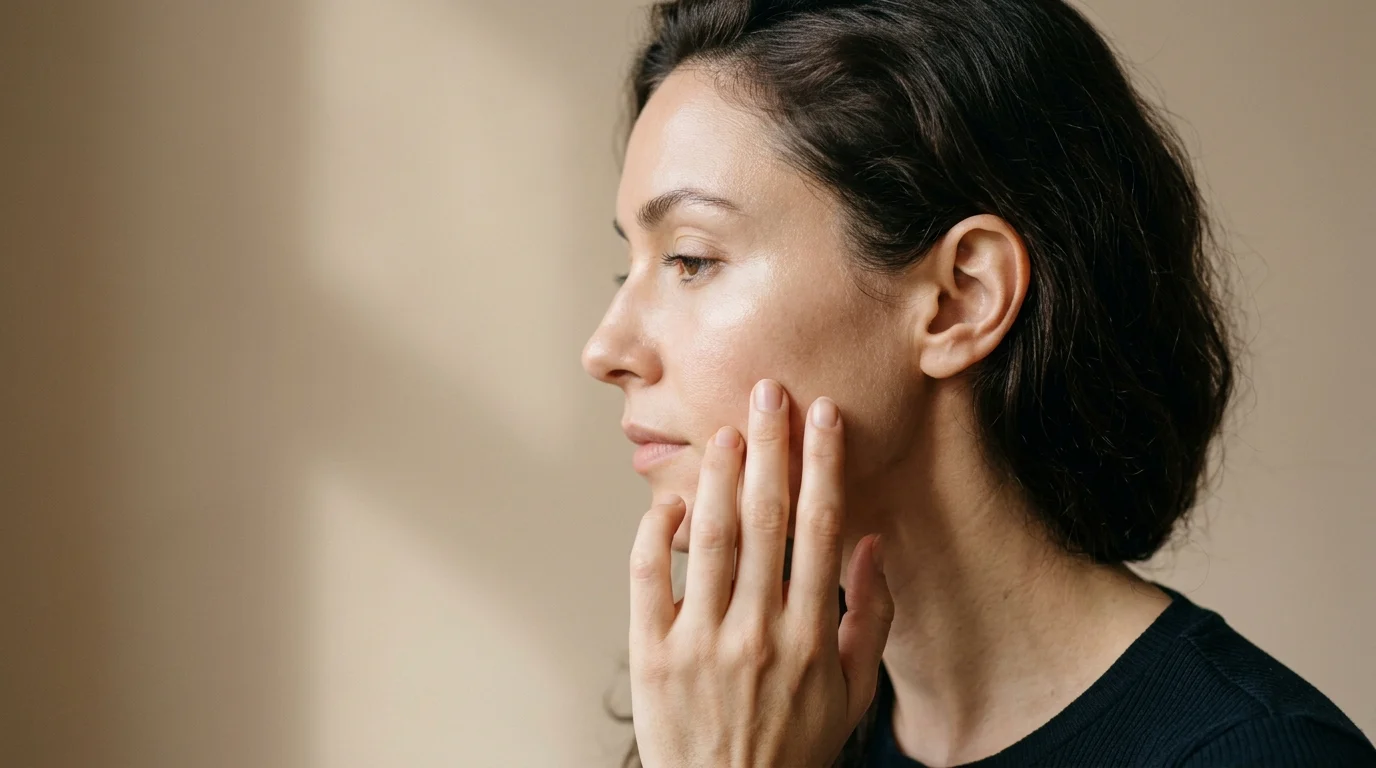
She washes her face twice a day. She removes every trace of makeup before bed, double-cleansing on the nights she remembers reading about it. Her routine is disciplined, her products are well-reviewed, and yet her skin tells a different story — a low hum of breakouts along the jaw, patches of redness that flare without warning, a tightness that no serum quite resolves. She has tried subtracting products. She has tried adding them. Nothing holds.
The assumption underneath her routine is that bacteria are the problem. The more plausible explanation is the opposite: she has spent years disrupting the bacteria her skin actually needs. This is where the makeup microbiome enters the conversation — not as a marketing slogan, but as a clinically observable variable in how daily beauty products interact with the living ecosystem on the skin’s surface. Get this relationship wrong, and no new product will fix what the routine itself is producing.
Your Skin Microbiome: The Hidden Layer of Healthy Skin
Healthy skin is not sterile skin. The surface of the face hosts billions of microorganisms — bacteria, fungi, mites, viruses — coexisting in a balance that regulates inflammation, defends against pathogens, and helps maintain barrier integrity. When that balance holds, the skin behaves. When it tips, the skin reacts.
The clinical term for that tipping point is dysbiosis: not an infection, but an imbalance. Research on skin microbiome and barrier function increasingly frames sensitivity, persistent acne, and chronic redness less as bacterial problems and more as ecosystem problems. A healthy skin surface depends on microbial diversity and proportion — many species coexisting in stable relative numbers. When that diversity narrows or specific populations expand disproportionately, the result is often increased sensitivity, inflammation, and a barrier that no longer regulates itself efficiently.
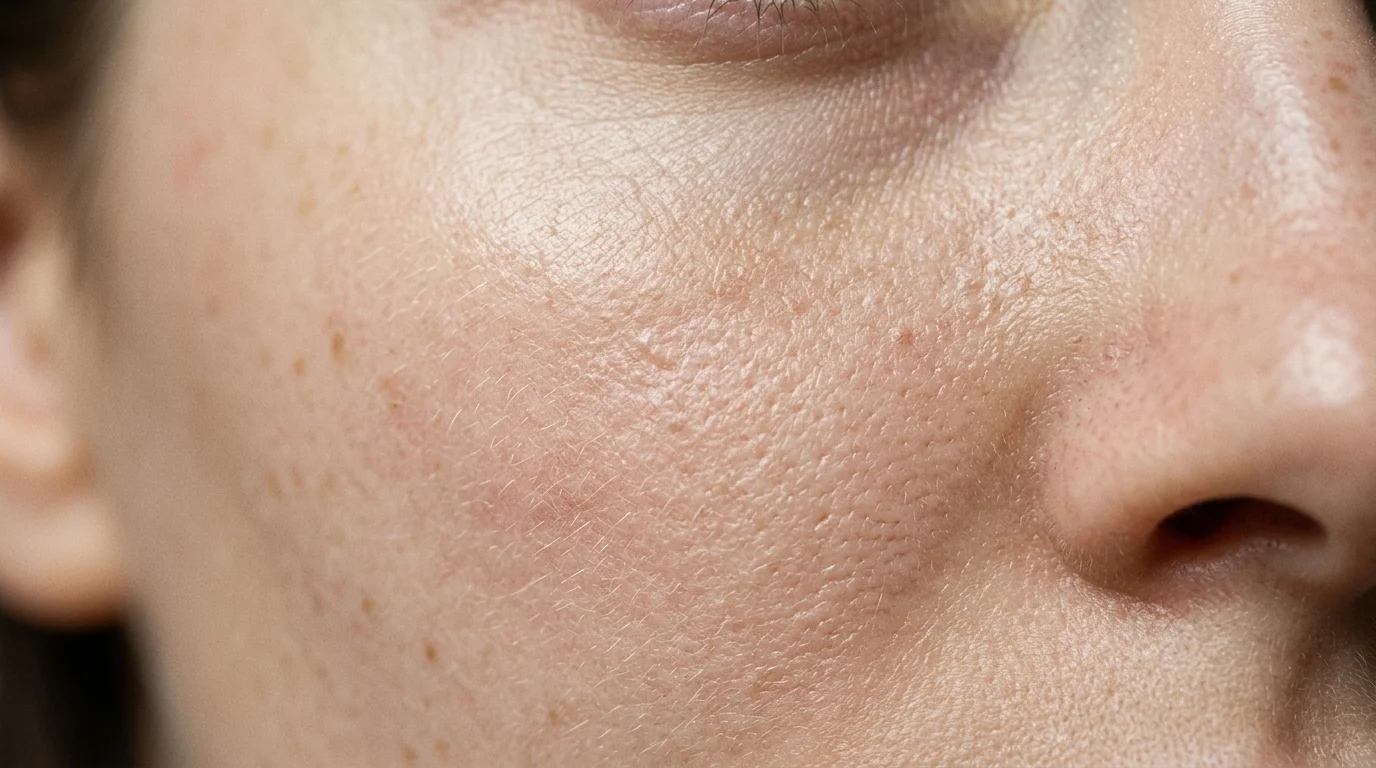
This reframes the entire goal of a skincare routine. The objective is not to eliminate microbes but to keep the right ones in the right proportions — which is precisely how microbiome skincare supports skin resilience rather than fighting against it.
Can Makeup Disrupt Your Skin Microbiome?
Makeup is not the enemy of the skin ecosystem. The interaction between skin microbiome makeup use and dysbiosis is more specific than that — it depends on formulation weight, wear duration, preservative chemistry, and how thoroughly products are removed at the end of the day.
Heavier, more occlusive foundations can subtly alter the skin surface environment — affecting moisture retention, sebum distribution, and the localized conditions in which different microorganisms live. Over long wear, these shifts can favor some microbial populations over others. Clinical data on makeup formulations and skin microbiome suggests this matters more than most users realize, particularly with extended wear. The relationship between foundation and microbiome health is essentially a question of how long the skin surface is held in an altered state before it is allowed to reset.
Preservative systems add another layer. Broad-spectrum antimicrobial preservatives in cosmetics skin contact does not discriminate between harmful and beneficial microorganisms — they suppress what they encounter. This is not an argument against preservatives, which are necessary to keep products safe, but a reason to think about cumulative exposure across an entire routine.
Incomplete removal compounds everything. Residual occlusive makeup ingredients sitting on the skin overnight extend the period of altered surface conditions, giving dysbiosis a longer runway. The issue is rarely the product in isolation; it is the interaction between makeup and skin barrier conditions across hours and weeks. This is also why product layering mistakes can compromise skin balance in ways that are easy to misread as a skincare failure rather than a microbiome one.
Makeup Brushes, Beauty Sponges, and the Bacterial Transfer Problem
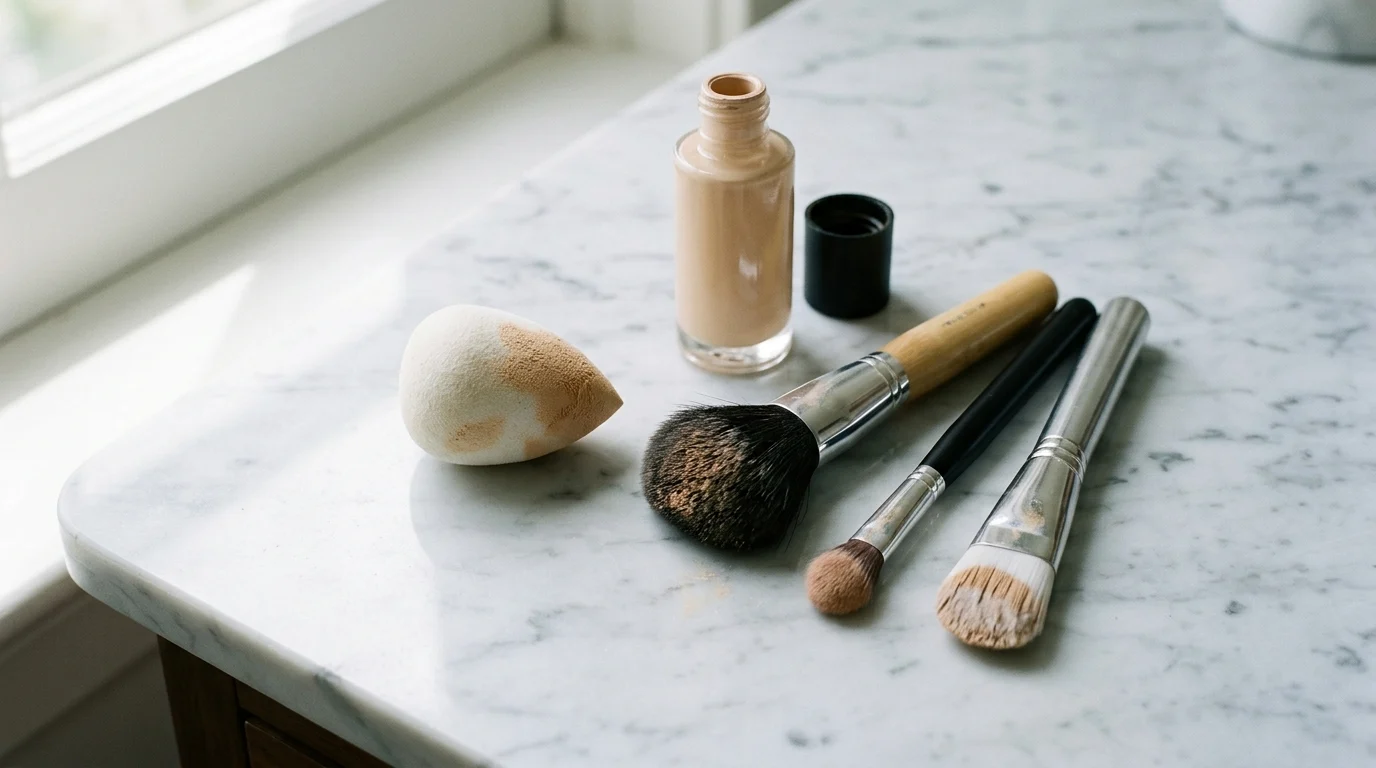
The tool hygiene gap is one of the most underexamined variables in modern beauty routines. Clinical findings on makeup tools and bacterial transfer show that contaminated applicators are a meaningful and underreported source of skin dysbiosis, sensitivity flares, and breakouts.
Damp sponges are the clearest case. Moisture, warmth, organic residue from foundation and skin oils — the conditions inside a used beauty sponge are an excellent culture environment for bacterial and fungal growth. Each application then redistributes that microbial load across the face, repeatedly, day after day. The conversation about makeup brushes bacteria and beauty sponge hygiene skin impact is not aesthetic fussiness. It is microbiome practice.
The practical implications are unglamorous but worth stating plainly:
- Beauty sponges should be cleaned after every use or replaced on a weekly basis.
- Brushes used with liquid or cream products carry a higher contamination risk than dry-use brushes and need more frequent washing.
- Single-use applicators are a microbiome-safer alternative for foundation application, particularly during breakouts.
- Storing damp tools in closed containers — drawers, makeup bags, zipped pouches — accelerates microbial growth significantly.
None of this requires perfection. It requires recognizing that the tool is part of the formula.
Why Over-Cleansing Can Be Worse Than Makeup
The instinctive response to makeup-related breakouts is to escalate: more cleansing, stronger actives, hotter water, a second wash for good measure. The skin tightens, feels clean, and the assumption is that progress has been made. The microbiome reads it differently.
Over cleansing skin damage works through a predictable sequence. Aggressive surfactants strip the acid mantle, raising surface pH into a range where beneficial bacteria struggle and opportunistic species do not. Lipid loss compromises the barrier those beneficial microbes inhabit. A weakened barrier means faster water loss, greater sensitivity, and a more reactive inflammatory response — the exact symptoms the cleansing was meant to solve.

The argument here is not against cleanliness. It is a physics-of-the-skin argument: the surface is a structured environment, and dismantling it twice a day has consequences. A simpler approach is often more effective, which is why a minimalist skincare routine supports the skin microbiome better than a maximalist one.
Acne and the Microbiome: Why Killing Bacteria Is Not the Answer
Acne is increasingly understood not as a bacterial overpopulation problem but as a microbial composition problem. Research on the acne microbiome and microbial dysbiosis points to the overgrowth of specific Cutibacterium acnes strains relative to other, more protective species — not the presence of C. acnes itself, which lives on essentially all human skin.
Heavier occlusive foundations contribute to this by altering the local sebum and moisture environment in ways that favor those particular strains. Aggressive post-breakout routines — stripping, drying, disinfecting — then remove the protective species that would otherwise hold the dominant strains in check. The makeup and acne microbiome relationship is essentially this loop: occlusion creates the conditions, over-cleansing removes the counterweight, and the imbalance deepens.
A useful analogy: an overgrown garden is not restored by pulling up every plant. It is restored by re-establishing the conditions in which the right plants outcompete the wrong ones. Skin is not different.
The Difference Between Probiotics, Prebiotics, and Postbiotics in Beauty
Microbiome-related ingredients are often grouped together in marketing, but they function differently on the skin. Understanding the distinction clarifies what a product can realistically deliver.
- Probiotics in skincare refer to live microorganisms applied topically. Their use in cosmetics remains limited because maintaining live cultures stable, viable, and safe within a finished formula is technically demanding — most products labeled “probiotic” do not contain active live organisms at point of use.
- Prebiotics skincare ingredients are substrates — typically sugars, fibers, or plant-derived compounds — that support the environment in which beneficial microorganisms can thrive. They do not introduce bacteria; they feed the ones already present.
- Postbiotics cosmetics use the beneficial compounds produced by microorganisms — fermentation byproducts, peptides, lipids, and metabolites — rather than the organisms themselves. They bypass the stability problem of live cultures while still delivering microbiome-relevant activity.
For most users, prebiotic and postbiotic formulations are the more reliable category — supported by clearer formulation science and more consistent in-product performance.
Microbiome-Friendly Makeup: What the Next Generation of Beauty Looks Like
A more interesting formulation philosophy is emerging, quietly, beneath the “clean beauty” marketing of the last decade. It is not built on eliminating microorganisms but on supporting the conditions in which the skin’s own ecosystem stabilizes. Microbiome friendly makeup tends to share a recognizable ingredient logic:
- Niacinamide — regulates sebum and supports the barrier without disrupting microbial populations.
- Ceramides — replenish the lipid matrix that beneficial bacteria need as habitat.
- Glycerin — a humectant that maintains hydration without shifting surface pH.
- Squalane — a lightweight lipid close to the skin’s own sebum profile, well tolerated across skin types.
- Prebiotics in skincare — substrates that selectively feed beneficial microorganisms rather than indiscriminately killing them.
- Postbiotics cosmetics — the functional outputs of beneficial bacteria, delivered directly to bypass the live-culture problem.
This is the intelligent evolution beyond marketing-led “clean” claims: formulation that treats beauty products and skin bacteria as collaborators rather than adversaries. The point is not to add another product, but to rethink the criteria for the ones already in rotation.
A note on the squeaky-clean myth. The tight, stripped feeling after washing is not a marker of purity or proper cleansing. It is a signal of barrier disruption and microbial loss — the acid mantle compromised, lipids removed, beneficial bacteria displaced. Healthy skin does not feel clean in the sterile sense. It feels comfortable, supple, and unbothered. If skin squeaks after cleansing, the cleanser is doing too much.
If persistent skin sensitivity, breakouts, or redness do not respond to routine adjustments, consult a dermatologist — microbiome dysbiosis can sometimes indicate underlying conditions that benefit from clinical assessment.
The reframing matters because it changes what counts as a solution. A new active, a stronger cleanser, a more aggressive treatment — these are the responses of a routine that still views the skin as a surface to be corrected. A skin ecosystem beauty approach views it as an environment to be maintained. The difference shows up over months, not days, in skin that stops reacting to everything.
FAQs
Can wearing foundation every day damage your skin microbiome?
Daily foundation wear is not inherently damaging. The variables that matter are formulation weight, total hours of wear, and how thoroughly the product is removed. Lightweight, breathable formulas removed properly each evening sit comfortably within a healthy routine; heavier occlusive foundations worn fourteen hours and incompletely cleansed are a different proposition.
How often should makeup brushes and sponges be cleaned to protect skin health?
Beauty sponges need washing after every use, or replacement on a weekly basis at minimum. Brushes used with liquid or cream products should be washed weekly. Dry-use brushes — powder, blush, bronzer — can be cleaned every two to three weeks. Damp tools should never be stored in closed containers.
What skincare ingredients are most compatible with a healthy skin microbiome?
Niacinamide, ceramides, glycerin, squalane, and well-formulated prebiotics and postbiotics are among the most microbiome-compatible actives currently available. They support the conditions beneficial bacteria require without the broad antimicrobial action that characterizes more aggressive ingredients.