

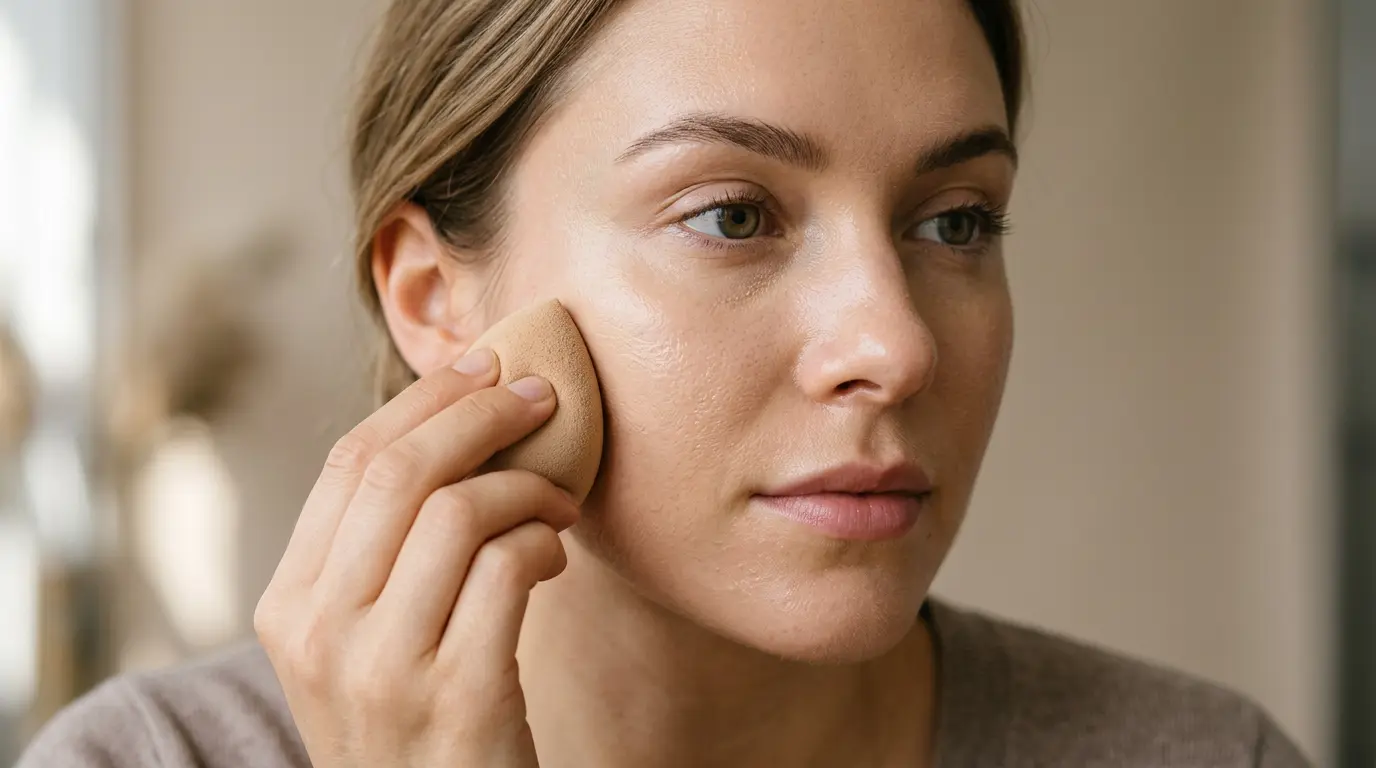
Few concepts in modern cosmetic chemistry trigger as much anxiety as the word “nano.” Online clean beauty forums frequently frame ultra-fine minerals as invisible, bio-accumulative toxins capable of slipping quietly into the bloodstream. But dermal toxicology paints a far quieter, more reassuring picture. The reality of nanoparticles in makeup and mineral pigment skin safety boils down to a fundamental physical question: can microscopic particles actually pass through the stratum corneum?
Why Brands Particle-Size Minerals in the First Place
Traditional, non-nano Titanium Dioxide (TiO2) and Zinc Oxide (ZnO) are physically opaque. On the skin, they leave a heavy, chalky white cast that rendered early mineral foundations and sunscreens unwearable for many skin tones.
Milling these minerals down to the nanoscale, typically between 1 and 100 nanometers, changes their optical behaviour. At this size, the particles scatter visible light less while still absorbing and reflecting ultraviolet radiation, which is the entire point of a physical sunscreen.
The result is transparent, weightless coverage in fluid foundations, tinted moisturizers, and mineral SPFs, without sacrificing broad-spectrum protection. Particle reduction, in other words, is an aesthetic and functional engineering choice. It is not a cheap shortcut taken to cut corners.

The Stratum Corneum Barrier: Physics vs. Fear
Human skin’s outermost layer, the stratum corneum, operates on a “bricks and mortar” model. Corneocytes, the flattened dead skin cells that make up the bricks, are bound together by dense lipid lamellae that act as mortar. Together, this structure restricts pass-through to extremely small, lipophilic molecules, which solid mineral particles are not.
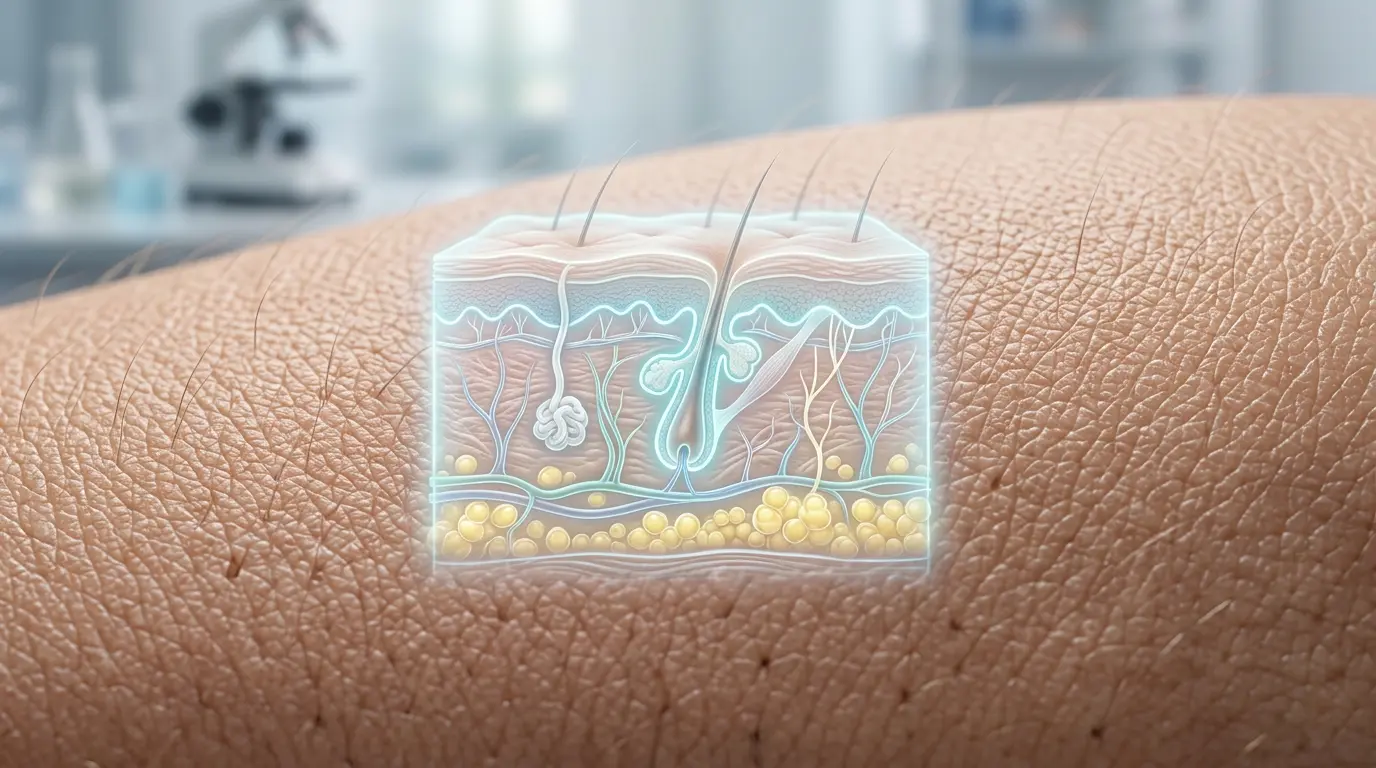
Human clinical and ex vivo skin penetration studies on dermal absorption of TiO2 and ZnO consistently show that nano-sized mineral particles remain overwhelmingly confined to the outermost dead layer of skin and the upper follicular openings. A broader review of nanoparticle interaction with the stratum corneum reaches the same conclusion: penetration into viable tissue is minimal under normal use conditions.
Particles do not migrate into viable epidermal layers or systemic circulation under typical topical application. Small does not mean infinitely penetrative. The architecture of intact skin is doing exactly the job it evolved to do, blocking solid, insoluble particles at the surface.
Understanding how mineral pigments fit into broader formulation choices and consumer safety debates is covered in more depth in Makeup Ingredients to Avoid.
What Happens on Compromised or Flexed Skin?
One of the most common questions raised in clean beauty discourse involves movement: does flexing a wrist or repeatedly expressing facial muscles create microscopic openings that let nanoparticles through? Research suggests mechanical movement, such as wrist flexing or facial expressions, does not push nanoparticles through the stratum corneum into deeper dermal tissue.
The compromised-skin scenario is more nuanced but ultimately reassuring in the same direction. Studies assessing nanoparticle absorption on sunburned, psoriatic, or shaved skin show minimal to no systemic uptake, even when the upper barrier has been disrupted. A study evaluating nanoparticle penetration through barrier-compromised skin found that insoluble mineral particles tend to aggregate at the surface rather than entering capillaries below.
This is the real distinction worth holding onto: topically applied mineral particles stay on the outside, whereas soluble chemical UV filters behave very differently in terms of systemic absorption. The performance and safety trade-offs between physical minerals and synthetic filters are explored further in Clean Makeup vs. Traditional Makeup.
Inhalation vs. Dermal Application: The Real Risk Variable
None of this means nanoparticles are risk-free in every context. While dermal application of nano-minerals is remarkably safe, inhaling loose, dry nanoparticles, such as those found in loose mineral powders or aerosolized spray sunscreens, presents an entirely different physiological mechanism.
In the lungs, deep alveolar deposition of insoluble dust can trigger localized inflammation and oxidative stress with prolonged occupational or heavy consumer exposure. This is a respiratory concern, not a dermal one, and the two should not be conflated the way they often are online.
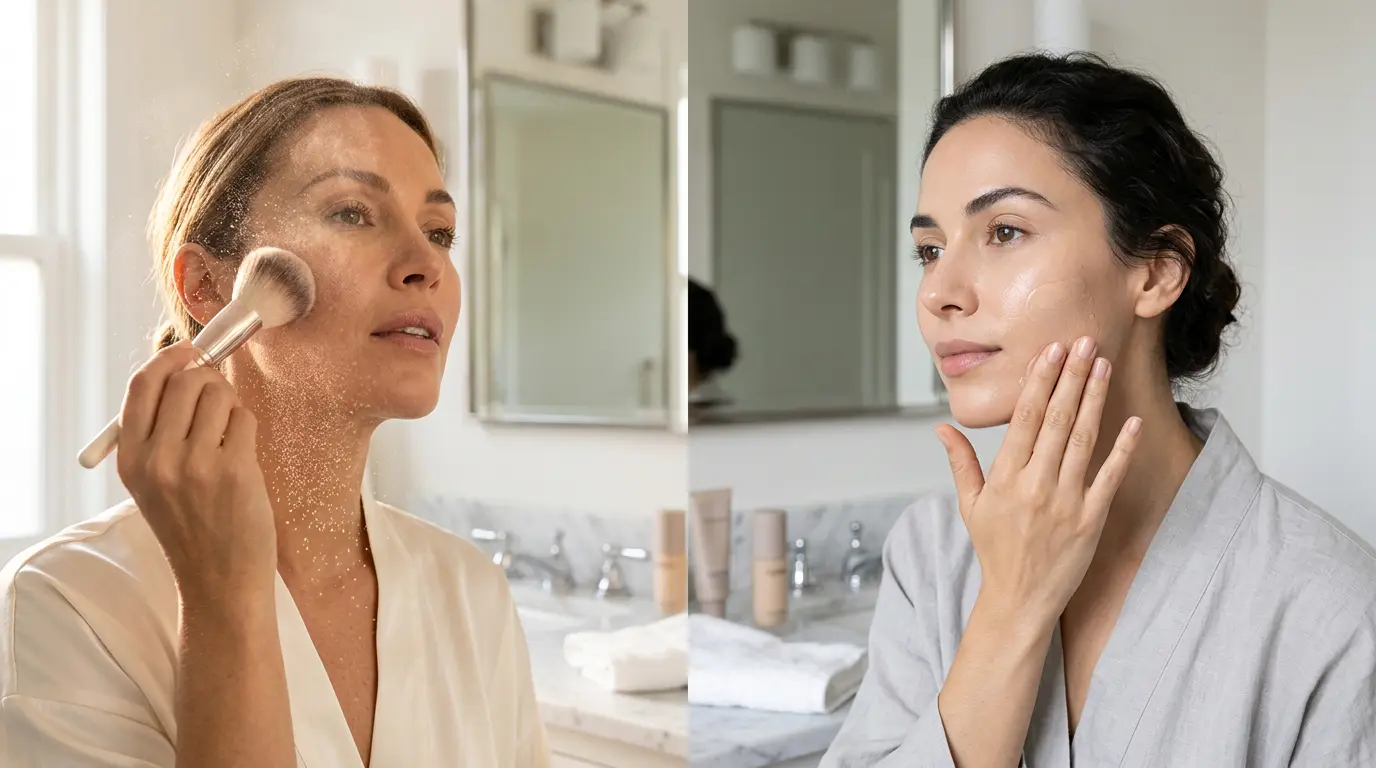
Regulatory bodies, including the EU Scientific Committee on Consumer Safety, distinguish sharply between liquid emulsions such as foundations and creams, and inhalable loose powder or spray formats. Liquid and pressed cream makeup carry essentially zero inhalation risk. Scrutiny belongs strictly on loose powders and aerosols, where airborne particles can actually reach the lungs.
Regulatory Oversight and How to Read Mineral Labels
Consumer literacy helps here more than fear does. In the European Union and UK, cosmetic regulations mandate that any ingredient containing nanomaterials be explicitly stated on the INCI list with the word “[nano]” following the ingredient name, such as Titanium Dioxide [nano].
Scientific safety evaluations by the SCCS and FDA confirm that coated nano-minerals, often stabilized with silica, alumina, or dimethicone, prevent photocatalytic reactivity and help maintain skin stability. These coatings are a meaningful part of why modern formulations perform so differently from raw, uncoated mineral powders of decades past.
The practical guidance is simple. If you prefer liquid or cream makeup, the presence of nano-minerals offers superior texture without compromising skin barrier integrity. Reading for the “[nano]” label is less about avoidance and more about informed choice.
FAQ
Can nanoparticles in makeup enter my bloodstream?
No. Extensive dermatological and toxicological research demonstrates that nano-sized Titanium Dioxide and Zinc Oxide do not penetrate beyond the surface stratum corneum of intact human skin. They remain on the outer dead layer and are washed away during regular cleansing.
Are non-nano mineral cosmetics safer than nano mineral cosmetics?
Formulations using non-nano minerals are not inherently safer for topical use, because neither particle size penetrates healthy skin. Non-nano pigments simply feature larger particle sizes, which are safer in loose powder or spray formats to prevent lung inhalation, but they offer similar dermal safety when used in liquid creams.
Do nanoparticles in foundation cause free radical skin damage?
In modern cosmetic formulations, mineral nanoparticles are routinely coated with inert substances like silica or triethoxycaprylylsilane. These protective coatings neutralize photocatalytic activity, preventing the formation of reactive oxygen species on the skin’s surface.
Should I avoid loose mineral powders that contain nano-ingredients?
Yes, as a precautionary step. While topical contact with nanoparticles is safe, inhaling fine loose dust into the lungs should be minimized. Opt for pressed powders, liquid foundations, or cream formulas when using products formulated with ultra-fine mineral pigments.