

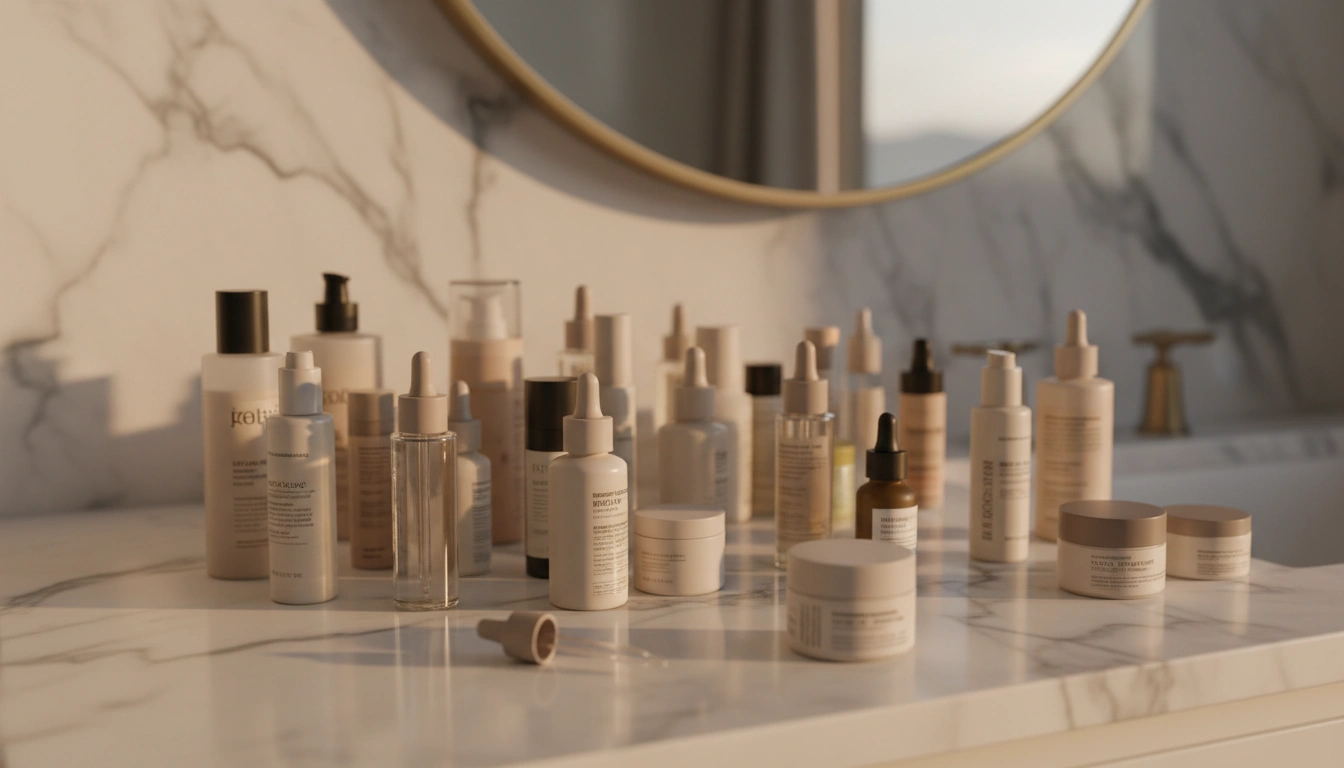
It is Tuesday evening. The bathroom counter looks like a small apothecary — three serums, a toner, two essences, a retinol, a peptide cream, a barrier balm, and somewhere behind the mirror, an exfoliating acid that promised glass skin in fourteen days. The face staring back, however, is tight. A little red around the nose. Strangely dull, despite everything being applied in the “correct” order. The routine has grown. The skin has not improved.
This quiet moment of doubt is where the conversation about skin fasting begins. Not as another trend to chase, but as a gentle pause. A way to listen to what the skin has been trying to say underneath all those layers.
What Skin Fasting Actually Means
Skin fasting is the practice of stripping a routine back to its absolute essentials — sometimes just water and sunscreen, sometimes a single mild cleanser and a basic moisturiser — for a defined window of time. The idea is simple. When products are paused, the skin gets a chance to recalibrate its own natural processes: oil production, microbiome balance, and repair.
It is not about abandoning skincare forever. It is about giving the skin space to remember what it can do on its own.
Where the Idea Comes From
The concept gained traction in Japan, where minimalist beauty philosophies have long valued restraint over excess. In Western beauty culture, where more has often been sold as better, the idea feels almost rebellious. And yet, dermatologists have quietly been recommending versions of it for years — usually after a patient walks in with inflamed, compromised skin from doing too much.
The Real Reason Your Skin Feels Tired
Modern routines often include five to twelve products applied twice daily. Acids, retinoids, vitamin C, peptides, exfoliating toners — many of them active, many of them powerful. Used together without intention, they can quietly undermine each other.
Skincare burnout is real. It shows up as stinging when applying products that never used to sting. As small bumps that were not there before. As a complexion that looks dehydrated no matter how much hyaluronic acid is layered on top.

Signs the Skin Is Asking for a Break
- Persistent redness or warmth across the cheeks
- Tightness immediately after cleansing
- Flaking patches that no moisturiser seems to fix
- Breakouts in unusual places, particularly along the jaw or temples
- A stinging or tingling sensation from products previously tolerated
- Dull, uneven tone despite using brightening actives
These are often signs of over exfoliation or a disrupted moisture barrier — not signs that the routine needs another product to fix it.
The Science of Skin Barrier Recovery
The skin barrier, also called the stratum corneum, is the outermost layer. Think of it as a brick wall: corneocytes are the bricks, lipids (ceramides, cholesterol, fatty acids) are the mortar. When that mortar is stripped away by harsh cleansers, frequent acids, or too many actives, water escapes and irritants get in.
Skin barrier recovery takes time. Research suggests that a damaged barrier needs anywhere from two to six weeks to fully rebuild, depending on the extent of the damage and the person’s age. During that window, the skin is more reactive, more dehydrated, and more prone to inflammation.
This is precisely why doing less, for a short period, often works better than adding another repair serum to an already overwhelmed face.
What Happens During a Skin Fast
Without constant intervention, sebum production tends to normalise. The microbiome — the community of beneficial bacteria living on the skin — begins to rebalance. Natural exfoliation cycles resume their own rhythm. The skin’s pH, often pushed acidic or alkaline by layered products, drifts back toward its healthy range of around 4.7 to 5.5.
How to Begin a Skin Fast Gently
There is no single correct way. Some people choose a full reset for three to seven days. Others prefer a softer version — keeping only a cleanser, a simple moisturiser, and sunscreen — for two to four weeks. The goal is observation, not deprivation.
A Simple Framework
- Days 1–3: Pause all actives. Use a non-foaming, pH-balanced cleanser once a day in the evening. Rinse with water in the morning.
- Days 4–7: Add a basic, fragrance-free moisturiser if the skin feels tight. Continue daily SPF — sun protection is not optional, even during a fast.
- Week 2 onward: Slowly reintroduce one product at a time, waiting three to five days between each, to identify what truly helps and what was simply taking up space on the shelf.
For those building a foundation from scratch, a thoughtful approach to a beginner’s skincare routine can help frame what to bring back first.
What to Keep, Even While Fasting
Sunscreen stays. Always. UV damage does not pause because the rest of the routine has. A gentle cleanser stays too — the skin still encounters pollution, sebum, and environmental debris every day. Everything else is negotiable.
Scientifically Backed Ingredients to Reintroduce First
When the fast ends and ingredients start returning, the focus should be on supporting the barrier rather than pushing the skin harder. A few well-studied molecules consistently earn their place.
Niacinamide
A form of vitamin B3, niacinamide strengthens the barrier by stimulating ceramide synthesis. Clinical studies show it reduces transepidermal water loss, calms redness, and helps regulate sebum. Concentrations between 2% and 5% are well tolerated by most skin types. For a closer look at how it compares to other brightening actives, the discussion around niacinamide or vitamin C is worth reading.
Hyaluronic Acid
A humectant that binds water within the upper layers of the skin, hyaluronic acid does not repair the barrier directly, but it hydrates the environment in which repair happens. Look for formulas with varied molecular weights for deeper hydration.
Ceramides
These lipids make up roughly half of the barrier’s structure. Topical ceramides — particularly Ceramide NP, AP, and EOP — have been shown to restore barrier function in compromised skin within days of consistent use.
To give your skin the extra support it needs to recover, explore Quietdose for gentle, barrier-focused products designed to keep your skin calm, balanced, and resilient.
Panthenol (Provitamin B5)
Anti-inflammatory and deeply hydrating, panthenol soothes irritation and supports wound healing. It is one of the gentlest ingredients to reintroduce after a fast.
Centella Asiatica
Rich in madecassoside and asiaticoside, this botanical has well-documented calming and barrier-supporting effects. It pairs beautifully with niacinamide.
Always consult with a healthcare professional before starting new treatments, particularly if the skin shows persistent irritation, signs of infection, or an underlying condition such as rosacea or eczema.
Expert Tip and a Myth Worth Debunking
The Tip
If reintroducing a product causes any stinging that lasts longer than thirty seconds, that product is not the right fit for the current state of the skin. Stinging is not “the actives working.” It is the skin asking to be left alone a little longer.
The Myth
There is a persistent belief that skin “gets used to” products and stops responding, so they must constantly be swapped out or layered. The skin does not develop tolerance the way the gut does to caffeine. What often feels like a product “no longer working” is usually a barrier that has been quietly damaged by the routine itself. Pulling back, rather than piling on, is almost always the answer.
Slow Beauty Skincare and the Minimalist Shift
Skin fasting sits within a broader movement toward slow beauty skincare — an approach that values consistency, patience, and ingredient literacy over novelty. It echoes the principles of minimalist skincare: fewer products, better chosen, used with intention.

This shift is not about austerity. It is about discernment. A well-edited routine of four products that genuinely suit the skin will almost always outperform a twelve-step routine assembled from viral recommendations. Those curious about building this kind of pared-back approach may appreciate exploring a minimalist skincare routine as a starting point.
Who Benefits Most from Skin Fasting
- Those with reactive, sensitised, or recently irritated skin
- Anyone who has been layering multiple actives without a clear strategy
- Skin that has plateaued — looking neither worse nor better despite ongoing effort
- People returning to skincare after a stressful period, illness, or travel
- Anyone simply curious about what their skin looks like underneath the routine
Who Should Approach With Care
Skin with active acne under treatment, post-procedure skin, or conditions like severe rosacea or perioral dermatitis should not be left without prescribed support. In those cases, fasting from non-essential products may still be helpful, but medical treatments should continue under guidance.
What to Expect Along the Way
The first few days can feel uncomfortable. The skin may look slightly worse before it looks better — a small flare, a touch of dryness, a feeling of “bareness.” This is often part of the process as the skin clears out residue and recalibrates.
By the end of the second week, most people notice that redness has calmed. Texture feels smoother under the fingertips. The complexion looks less tired, even without highlighter or glow drops. The skin starts to behave like skin again.
Frequently Asked Questions
How long should a skin fast last?
For most people, three to seven days of full minimalism is enough to notice a difference, followed by a slow, mindful reintroduction over two to four weeks. Severely irritated skin may benefit from a longer pause, ideally under professional guidance.
Can sunscreen really be used during a skin fast?
Yes — and it should be. Sunscreen is non-negotiable. UV exposure damages the barrier and accelerates ageing, both of which work against the entire point of fasting. Choose a gentle, mineral-based formula if the skin feels reactive.
Will skin fasting cause breakouts?
Sometimes, briefly. As the skin rebalances, congestion that was being masked by actives may surface. This usually settles within one to two weeks. If breakouts worsen significantly or become painful, that is a sign to consult a professional rather than push through.