

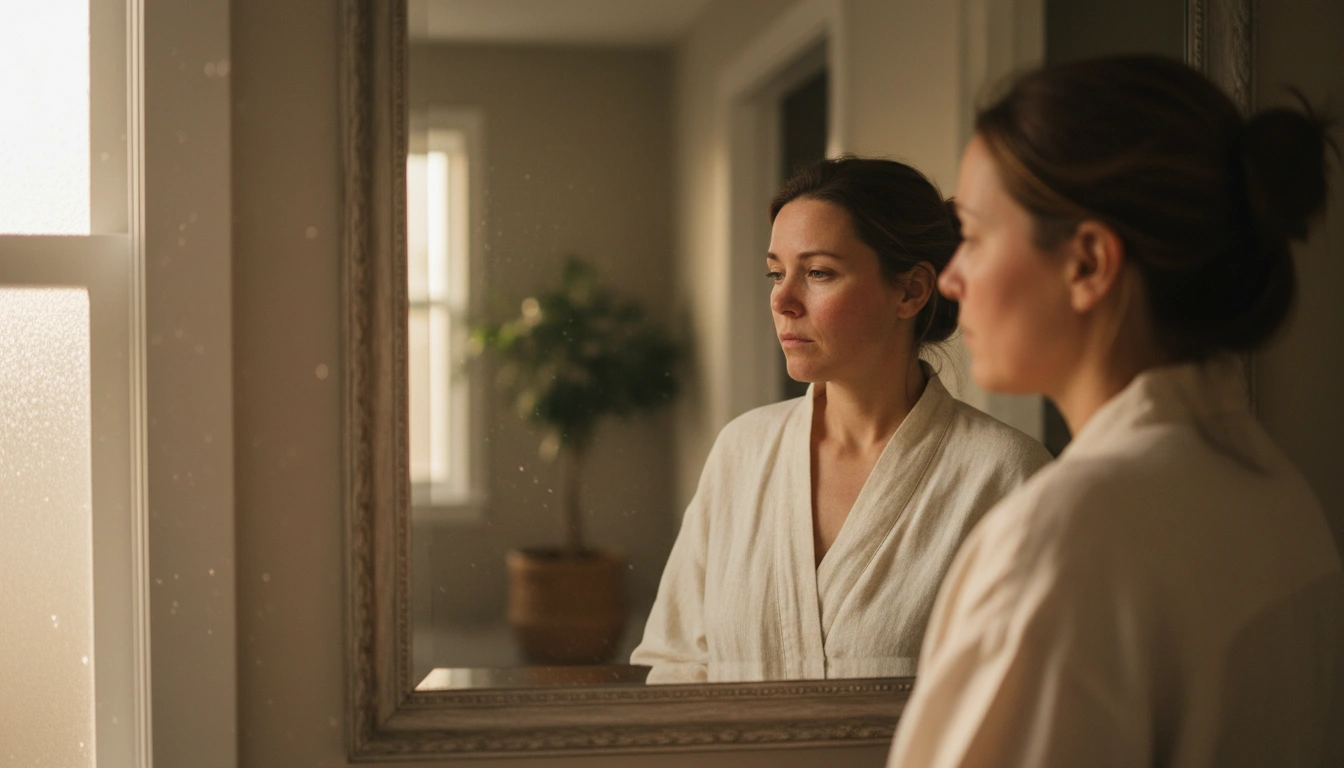
It’s nearly 8 a.m. The kettle is whistling, the phone is buzzing, and somewhere between brushing teeth and finding matching socks, a woman catches her reflection in the hallway mirror. Her skin looks flushed, her jaw feels tight, and the thought of pressing powder onto already-irritated cheeks makes her wince. She reaches for her usual compact anyway, because that’s the routine. By lunchtime, her face feels itchy, her temples throb, and she can’t quite explain why everything feels like too much.
This quiet kind of overwhelm is more common than most beauty conversations admit. And the makeup sitting on the vanity often plays a bigger role than expected. For skin that’s already on high alert, switching to talc-free makeup can feel like the difference between wearing a wool sweater and slipping into soft cotton.
The Overstimulated Face: More Than Just Sensitive Skin
An overstimulated face isn’t only about redness or a few dry patches. It’s a whole-body story showing up on the cheeks. When the overstimulated nervous system is running on adrenaline, cortisol stays elevated, the skin barrier weakens, and even gentle products can suddenly feel harsh.
The skin and the nervous system share the same embryonic origin. That’s why a stressful week often shows up as flushing, breakouts, or stinging sensations. The face becomes a mirror of inner tension.
Signs Your Skin Is Asking for Less
- Burning or tingling after applying products that used to feel fine
- Patches of redness that come and go without obvious cause
- A heavy, suffocating feeling under makeup by midday
- Itchiness around the nose, eyes, or jawline
- Dullness that no amount of highlighter seems to fix
What Talc Actually Does on Reactive Skin
Talc is a soft mineral used for decades in powders, blushes, and foundations to create that silky, blurring finish. On calm skin, it often goes unnoticed. On reactive, depleted, or inflamed skin, it can behave very differently.
Talc is highly absorbent. It pulls moisture from the surface of the skin, which can feel pleasant for an hour but slowly leaves the barrier thirsty. For a face already struggling with sensitivity, this added dryness can amplify tightness and that prickly, “my skin doesn’t fit” feeling so many women describe.
There’s also the texture question. Talc particles are flat and platelike, which is why they glide so smoothly. But on irritated skin, they can settle into micro-cracks in the barrier and physically rub against tiny inflamed areas throughout the day.
Why Talc-Free Powder Makeup Feels Calmer
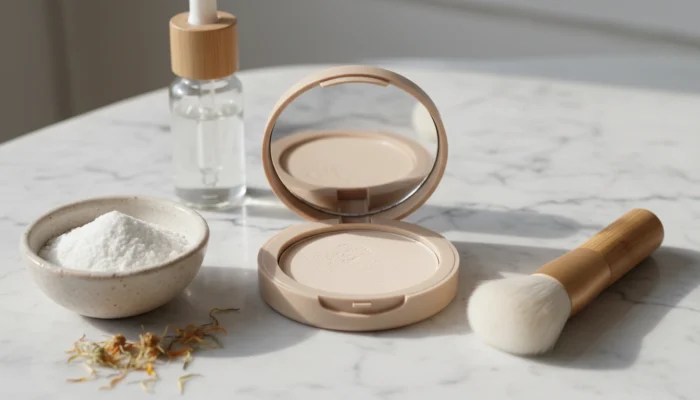
Talc free powder makeup usually leans on alternatives like rice starch, arrowroot, tapioca, silica, or mica blended with skin-loving botanicals. These ingredients tend to sit lighter, breathe better, and often carry their own soothing qualities.
Many women notice the difference within the first few applications. The face feels less “coated” and more like itself. There’s room for the skin to function, which matters enormously when the nervous system is already overloaded.
The Connection Between Makeup and the Nervous System
Sensory input matters more than the beauty industry often acknowledges. Tight waistbands, scratchy tags, loud rooms, and yes, heavy or fragranced makeup all send signals to the brain. When too many of those signals are uncomfortable, the body stays in a low-grade fight-or-flight state.
Sensory friendly beauty products are designed with this in mind. They’re typically fragrance-free or very lightly scented with calming botanicals, have soft textures, and don’t create that “I need to wash my face right now” urge by 3 p.m.
For women navigating perimenopause, chronic stress, autoimmune flares, or simply a season of life that feels louder than usual, choosing non irritating cosmetics becomes less of a preference and more of a small act of self-regulation.
Expert Tip: The Two-Finger Test
Before committing to a new powder or foundation, swatch it on the inner forearm and gently press for ten seconds with two fingers. Wait an hour. If the area feels warm, itchy, or looks pinker than the surrounding skin, that product is likely too stimulating for a reactive face. This simple pause has saved many women from a full day of regret.
Myth: “Natural Always Means Gentle”
Plenty of natural ingredients, like essential oils, citrus extracts, or certain plant exfoliants, can be deeply irritating to compromised skin. Talc-free does not automatically equal calming. The full formula matters. Reading labels with curiosity rather than fear is one of the kindest habits a sensitive-skinned woman can build.
Scientifically Backed Ingredients That Soothe
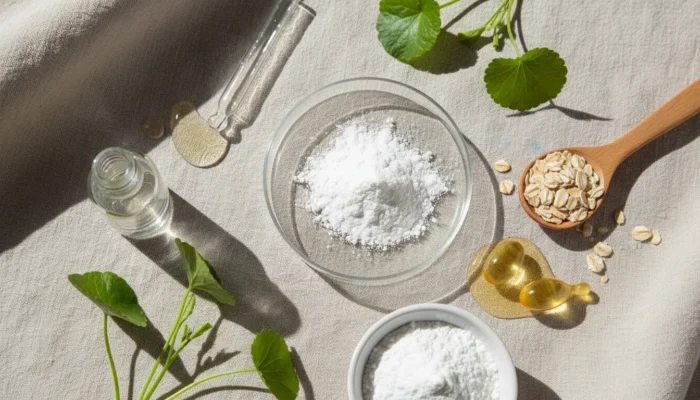
When choosing makeup for sensitive skin, the supporting ingredients in the formula often matter more than the absence of talc alone. A few that consistently earn their place in dermatology-informed products:
- Niacinamide (Vitamin B3): Strengthens the skin barrier, reduces redness, and helps regulate sebum. Studies show it improves barrier function within weeks of consistent use, making it a quiet hero for reactive skin.
- Hyaluronic Acid: A humectant that holds up to 1,000 times its weight in water. In makeup, it keeps powders and foundations from settling into fine lines and prevents that dehydrated, papery look by afternoon.
- Allantoin: A gentle skin-soother often found in formulas for eczema-prone or rosacea-prone skin. It supports cell turnover without aggravating the barrier.
- Squalane: A lightweight, biomimetic oil that mirrors the skin’s natural lipids. It melts into the complexion, helps cosmetics blend seamlessly, and reinforces moisture retention.
- Zinc Oxide: Offers calming, mildly antimicrobial properties along with sun protection. Particularly helpful for skin that flushes easily.
- Centella Asiatica (Cica): Rich in madecassoside, shown in clinical research to reduce redness and support skin repair after irritation.
- Colloidal Oatmeal: A recognized skin protectant that calms itching and reinforces a fragile barrier.
Each of these works with the skin rather than against it. They don’t demand performance from a tired complexion. They simply support what’s already there.
Always consult with a healthcare professional before starting new treatments, especially if dealing with chronic skin conditions, hormonal shifts, or medications that affect the skin barrier.
Building a Gentler Makeup Routine
A calmer face often starts with subtraction, not addition. Stripping a routine down to fewer, better-tolerated products gives the skin and nervous system room to settle.
A Soft Routine Framework
- Begin with hydrated, well-prepped skin, never powder on a dehydrated base
- Choose one main complexion product instead of layering three
- Apply with fingers or a soft brush, avoiding harsh buffing motions
- Set only the areas that truly need it, like the T-zone, rather than the entire face
- Finish with a hydrating mist to “melt” powders into the skin
For many women navigating reactive skin, exploring the difference between cream vs powder makeup can be a real turning point. Cream textures often feel more nurturing on a stressed barrier, while well-formulated talc-free powders can offer that breathable softness without the suffocation.
Talc-Free Makeup for Different Moods and Days
Skin needs shift constantly. Hormones, weather, sleep, hydration, and emotional load all influence how the face responds to makeup on any given morning.
On High-Reactivity Days
Less is genuinely more. A tinted balm, a touch of cream blush pressed in with fingertips, and a swipe of mascara is often all the skin can comfortably hold. Many women find that a no makeup look for sensitive skin becomes their most reached-for routine during flare seasons.
On Steadier Days
This is the time for slightly more coverage if desired, perhaps a serum-infused base or a light dusting of talc-free finishing powder. The goal stays the same: support, never suffocate.
On Special Occasions
Even for events, the principle holds. Glow comes from prepped, hydrated skin underneath, not from heavier products stacked on top. Choosing makeup for sensitive skin with thoughtful formulation means the face still looks polished without the post-event meltdown.
The Quiet Confidence of Choosing Less
There’s something deeply settling about looking in the mirror at the end of the day and not seeing a tired, reactive version of yourself. Talc-free, sensory-friendly makeup isn’t a magic fix. But it removes one of the constant, low-level irritants that an overstimulated face has been quietly carrying.
The skin softens. The shoulders drop. The face feels like home again.
And often, that small shift opens the door to other gentler choices, slower mornings, lighter routines, and a relationship with beauty that finally feels like care rather than performance.
Frequently Asked Questions
Is talc-free makeup better for everyone, or only for sensitive skin?
While talc is generally well tolerated by calm, resilient skin, talc-free options tend to be a kinder default for anyone dealing with redness, dryness, hormonal shifts, or an overstimulated nervous system. Many women simply feel lighter and more comfortable in talc-free formulas, regardless of skin type.
Can talc-free powder makeup still give a smooth, blurred finish?
Yes. Modern talc-free powders use ingredients like silica, rice starch, and mica to create a soft-focus effect without relying on talc. The finish often looks more skin-like and breathable, especially on mature or reactive complexions.
How can I tell if my current makeup is overstimulating my skin?
Common signs include warmth or tingling after application, increased redness throughout the day, a heavy or itchy feeling under the product, and skin that looks more irritated by evening than morning. If any of these sound familiar, switching to non-irritating cosmetics for a few weeks usually reveals a noticeable difference.