


She has tried every pharmacy staple. The ceramide moisturiser that three dermatologists recommended. The fragrance-free cleanser in the plain white bottle. The “sensitive skin” range from the brand whose television advertisements feature dermatologists in white coats. Her skin — chronically reactive, prone to redness that settles across the nose and cheeks like a low-grade grievance — still stings on application. Still flushes at the wrong moment. Still feels tight and fragile no matter how diligently she layers products. The labels say fragrance-free. The boxes say hypoallergenic. Dermatologist-tested, naturally. And yet. Then, tentatively, she tries a small niche beauty brand for sensitive skin. One that publishes its full formulation rationale online. Lists every active at its clinical concentration. Contains no fragrance compounds, no masking agents, no unnecessary film-formers. Her skin responds differently. Not dramatically. Just — differently. Quieter.
This is not an unusual story. It raises a question that deserves a more careful answer than beauty marketing typically provides: do niche beauty brands for sensitive skin offer a genuine formulation advantage, or is “niche” simply another category onto which reactive-skin consumers project assumptions of safety that may not be warranted? The answer is conditional. It depends on what a given brand actually puts into its formulas — and why. The evidence, examined honestly, is worth the attention.
What Sensitive Skin Actually Is — And Why the Label Is Misleading
The Clinical Reality of Reactive Skin
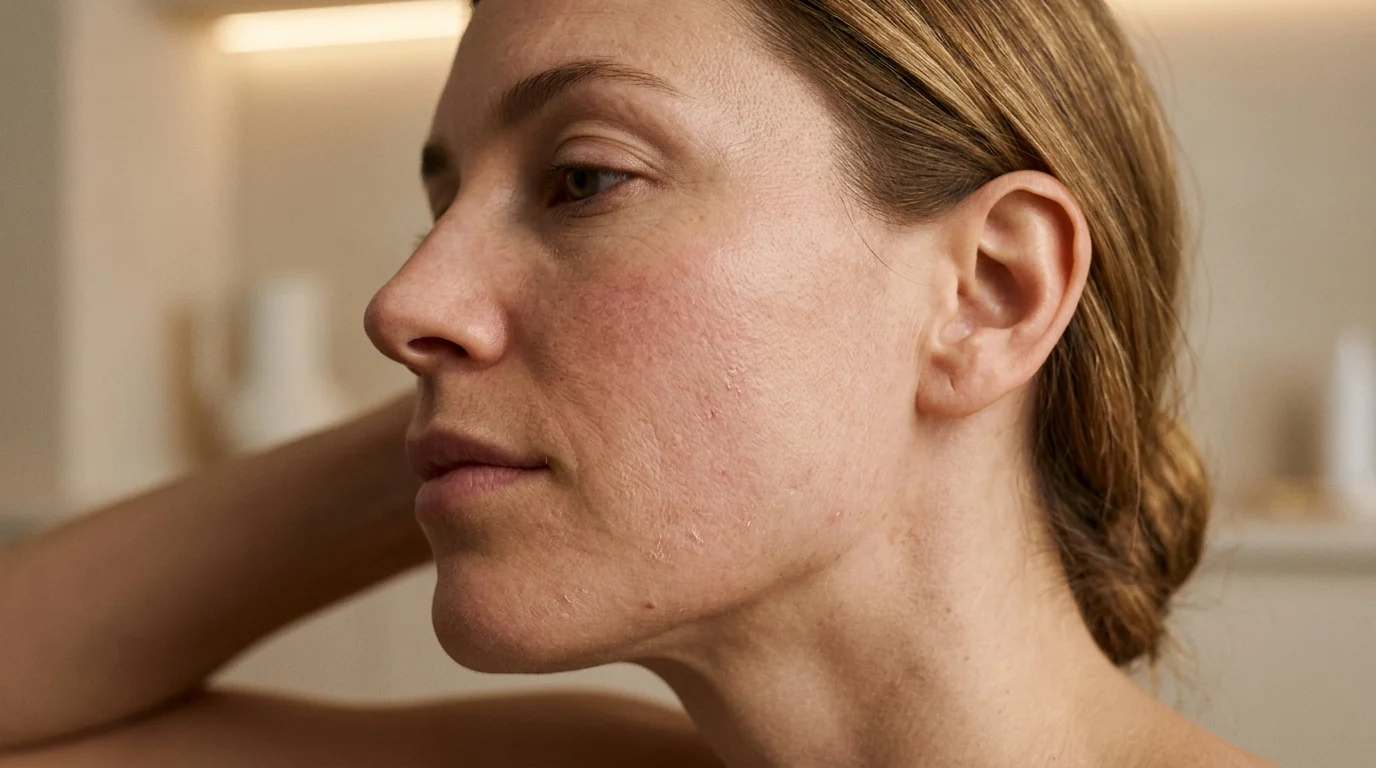
“Sensitive skin” is not a single clinical entity. It is a spectrum — a cluster of presentations united by heightened reactivity to topical products, environmental factors, or both. That spectrum includes cosmetic intolerance, rosacea, seborrhoeic dermatitis, contact dermatitis (both irritant and allergic), and perioral dermatitis, among others. What these conditions share is a tendency toward barrier compromise and an amplified response to stimuli that non-reactive skin handles without incident.
Clinical research on sensitive skin mechanisms and prevalence establishes that sensitive skin involves a measurable reduction in the skin’s capacity to tolerate and recover from external insults. The outer lipid layer — the stratum corneum — is thinner or less structurally organised than in non-reactive skin. This means that more of what the skin contacts can penetrate to nerve endings and immune cells that would, in a healthy barrier, remain largely insulated from topical exposure. Think of a brick wall: intact, it keeps out noise, weather, and disturbance. A wall with gaps lets through far more than intended. Sensitive skin, structurally, is often that wall.
Prevalence estimates suggest that between 50 and 60 percent of women and around 40 percent of men self-report sensitive skin — figures consistent with those documented in large-scale epidemiological research on sensitive skin prevalence across populations. That is not a niche cohort. It is the majority — which is precisely why “sensitive skin” as a label has become so commercially overused as to be nearly meaningless.
Why “Dermatologist-Tested” and “Hypoallergenic” Don’t Guarantee Compatibility
“Dermatologist-tested” means a product was assessed by a dermatologist. It does not specify the testing protocol, the number of subjects, the outcome criteria, or even the nature of the assessment. A single dermatologist reviewing a formula without conducting a controlled patch test study meets the technical definition of “dermatologist-tested.” The claim is a marketing signal, not a clinical guarantee.
“Hypoallergenic” has no regulatory definition in most markets, including the United States and the majority of European jurisdictions. A brand may apply it to any product, for any reason, without standardised evidence. For the sensitive skin consumer who has graduated beyond accepting label language at face value — who reads INCI lists and wants to understand what is actually in a formula — these claims are insufficient proxies for safety or compatibility. They are, at best, a starting point. Rarely more than that.
The Skin Barrier: Why Barrier-Supportive Formulation Is Central to Sensitive Skin Care
What a Compromised Barrier Looks Like in Practice
The National Eczema Association guidance on skin barrier function and sensitive skin frames barrier health as the foundational variable in managing reactive and eczema-prone skin — and with good reason. A healthy barrier keeps moisture in and environmental irritants out. When it is compromised, the reverse occurs: water escapes freely (transepidermal water loss increases), and topical agents, allergens, and microbes penetrate more readily.
In practice, a compromised barrier presents recognisably. Products that previously caused no reaction now sting or burn. Redness appears without obvious provocation and does not resolve. Skin feels persistently dry regardless of how much moisturiser is applied. Seasonal changes, central heating, and stress — none of which should ordinarily destabilise the skin surface — produce disproportionate reactions. For those managing skin barrier sensitive skin conditions, the formulas that actively replenish barrier lipids are not optional extras. They are central to any recovery strategy.
Barrier-Supportive Ingredients and Why Formula Architecture Matters
The barrier’s lipid matrix is composed primarily of ceramides, free fatty acids, and cholesterol in a roughly 1:1:1 molar ratio. When this ratio is disrupted — by harsh surfactants, over-exfoliation, or chronic inflammation — the matrix loses its structural integrity. Ceramide replenishment in topical formulas helps restore this ratio; clinical evidence supports ceramide-containing formulas for improving barrier function in both eczema and general dryness.
The distinction between humectants and barrier lipids matters here. Humectants (glycerin, hyaluronic acid, urea) draw water into the skin — useful, but incomplete. Occlusives and barrier-lipid replenishers (ceramides, fatty acids, cholesterol, squalane) actually reduce the rate at which water exits the skin. Many mass-market sensitive skin skincare brands prioritise the first mechanism without adequately addressing the second. The result: skin that feels momentarily comfortable after application but loses that comfort quickly. A formula that addresses both mechanisms is, for reactive and barrier-compromised skin, structurally superior.
Fragrance: The Most Documented Sensitive Skin Problem in Cosmetics
Fragrance is the most commonly identified contact allergen in cosmetic products — a finding supported by decades of patch test data and repeated across global dermatology literature. The California Department of Public Health data on fragrance allergens in cosmetics provides a useful overview of the regulatory and clinical dimensions. The picture is more complicated than most product labels acknowledge.
For those seeking fragrance-free niche skincare or niche skincare without fragrance, the relevant landscape breaks down as follows:
- Synthetic fragrance compounds: The most commonly identified contact allergens in cosmetics; listed as “parfum” or “fragrance” on INCI lists, often representing a blend of dozens of undisclosed molecules.
- Natural essential oils: Not inherently safer than synthetic fragrance. Lavender, citrus oils, eugenol, linalool, geraniol, and limonene are among the most documented botanical sensitizers. “Natural” does not mean non-reactive.
- Masking fragrance: Used to neutralise the inherent odour of raw ingredients — emulsifiers, preservatives, actives — without making the product smell perfumed. In several markets, masking fragrance may not require disclosure as “fragrance” on the label. It is present; it is simply invisible.
- “Unscented” vs “fragrance-free”: These are not interchangeable. Unscented products may contain masking fragrance to achieve their neutral smell. Fragrance-free, properly applied, means no added fragrance of any kind — including masking agents.
- Niche brands formulating specifically for sensitive skin are, as a general principle, more likely to eliminate all fragrance categories — including masking fragrance — than brands formulating for broad mass appeal where a pleasant scent drives purchase decisions.
Fragrance molecules can trigger two distinct reaction types: irritant contact reactions, which are direct, non-immune-mediated responses to barrier stress; and allergic contact dermatitis, which is immune-mediated sensitization that typically worsens with repeated low-level exposure. The second is particularly relevant to sensitive skin consumers who use the same fragrance-containing products daily and wonder why their skin becomes progressively more reactive over time. The answer is often cumulative sensitization.
Are Niche Beauty Brands for Sensitive Skin Actually Better? The Conditional Answer
Where Niche Has a Structural Advantage
The case for niche beauty brands for sensitive skin is not sentimental. It is structural. A niche brand founded around sensitive or reactive skin as its primary formulation brief — rather than as an afterthought line extension — tends to make different decisions from the beginning: shorter ingredient lists, no fragrance by philosophy rather than as a label strategy, published concentration data, and preservative systems chosen for skin compatibility rather than cost efficiency.
The EADV clinical guidelines on sensitive skin and contact dermatitis management recommend fragrance-free formulas, minimal and well-tolerated preservative systems, and barrier-supportive ingredients as the evidence-based standard of care for reactive and contact-reactive skin. These are not niche preferences. They are the clinical criteria — and they are the criteria that brands formulating with genuine sensitivity expertise are more likely to meet consistently.
Clean niche skincare for sensitive skin and hypoallergenic niche beauty brands with transparent formulation practices tend to publish their ingredient rationale, list actives with concentrations, and make fragrance-free status a founding philosophy — not a marketing repositioning.
Where Niche Does Not Automatically Win
The counter-argument deserves equal weight. Niche does not equal safe by default. A small brand with a compelling founder narrative and elegant minimalist packaging may still contain sensitising botanicals, actives at concentrations inappropriate for reactive skin, or inadequate preservation that creates microbial risk. The evaluation standard must be formula composition — not brand category, not aesthetic, not price point.
Red flags in any skincare brand — niche vs pharmacy skincare for sensitive skin, the comparison applies equally across both:
- Natural essential oils appearing in the top half of the INCI list (higher concentration = higher sensitisation risk)
- High-concentration acids without disclosed pH or buffering information
- Jar packaging for products containing active ingredients (repeated air and finger exposure degrades actives and introduces microbial contamination)
- Vague “botanical complex” or “proprietary blend” claims without individual ingredient specification
- Preservative-free claims presented as a benefit without explanation of how microbial safety is maintained
- Alcohol denat. high in the INCI list — a significant barrier disruptor in leave-on formulas
The Microbiome Advantage
Emerging science adds another dimension to the niche brand conversation. Research on skin microbiome disruption and sensitive skin reactivity links microbiome dysbiosis — disruption of the protective microbial ecosystem that inhabits the skin surface — to heightened reactivity and sensitivity. Certain preservatives, high-concentration surfactants, and actives at excessive doses can alter the balance of protective microorganisms that ordinarily help modulate skin immunity and barrier integrity.
For those managing niche brands for eczema-prone skin or persistent redness, microbiome compatibility is not a wellness concept — it is a formulation consideration with clinical backing. Niche brands with an explicit microbiome-aware approach — avoiding broad-spectrum antimicrobials where unnecessary, selecting microbiome-compatible preservatives, prioritising barrier-supportive base formulas — tend to produce products that are less likely to compound the dysbiosis underlying many reactive presentations. Indie skincare for redness with this philosophy is worth identifying and distinguishing from brands that simply use microbiome as a marketing term without altering their formulation approach.
Five Niche Brands With a Genuine Sensitive Skin Formulation Philosophy
Noble Panacea
Noble Panacea’s patented OSMV™ (Organic Single Molecule Vessel) delivery technology controls the rate at which active ingredients are released at the skin surface. For reactive skin, this matters: concentration spikes at the skin surface are a recognised trigger for irritation in sensitised individuals. Controlled delivery maintains efficacy while reducing the likelihood of an acute response. The range is fragrance-free throughout. Noble Panacea reviewed for sensitive skin compatibility and delivery technology.
Typology Paris
Typology’s concentration transparency model is one of the more practically useful things a brand can offer a sensitive skin consumer. Published percentages allow evaluation of active ingredient load before purchase — eliminating the guesswork of whether “contains niacinamide” means 2% or 12%. Fragrance-free is a founding principle, not a product sub-range. Minimal ingredient skincare with clear rationale. Typology Paris reviewed for ingredient transparency and sensitive skin formulation.
Gallinée
Founded by a pharmacist with a background in microbiome research, Gallinée formulates explicitly around supporting the skin’s microbial ecosystem. The brand’s pH focus — products formulated at a skin-surface-compatible pH — is directly relevant to sensitive skin, where barrier and microbiome health are interdependent. The range is formulated to low fragrance levels, with ingredient selection guided by compatibility with the skin’s microbial environment rather than sensory appeal. Gallinée reviewed for microbiome-supportive formulation and sensitive skin compatibility.
MÁDARA Cosmetics
MÁDARA draws on Northern European botanical actives — adapted plants with demonstrated bioactive profiles — at clinically considered concentrations, with organic certification and a formulation philosophy that generally limits the use of ingredients with well-documented sensitisation potential. For sensitive skin consumers seeking effective botanical skincare without the essential oil sensitisation risk that botanical ranges often carry, MÁDARA’s approach offers a more carefully curated alternative. MÁDARA Cosmetics reviewed for botanical formulation and sensitive skin suitability.
OIO Lab
OIO Lab applies a biotechnology-first formulation philosophy: biotechnology-derived actives with high tolerability profiles, short and purposeful ingredient lists, and an explicit commitment to avoiding unnecessary sensitisers. For reactive skin that wants evidence-backed actives — peptides, ferments, bio-identical ingredients — with a reduced reliance on fragrance compounds, high-concentration plant extracts, and other ingredients with established sensitisation profiles, OIO Lab represents a sensitive skin formulation approach grounded in science rather than aesthetics. OIO Lab reviewed for biotech formulation and sensitive skin ingredient philosophy.
How to Evaluate Any Brand for Sensitive Skin — The Formula-First Framework
Brand category provides a starting hypothesis. Formula composition provides the answer. When choosing the best skincare for reactive skin, these are the criteria that actually matter:
- Check INCI for fragrance compounds: Look for “parfum,” “fragrance,” “aroma,” and individual essential oil names (lavandula angustifolia, citrus aurantifolia, eugenol, linalool, limonene, geraniol). Any of these in a leave-on product warrants caution.
- Assess the preservative system: Phenoxyethanol and ethylhexylglycerin are among the best-tolerated options. Formaldehyde-releasing preservatives (DMDM hydantoin, imidazolidinyl urea, quaternium-15) carry higher sensitisation risk, particularly with repeated exposure.
- Evaluate active ingredient concentration: For reactive skin, lower concentrations introduced gradually are more tolerable than high-dose formulas used immediately. A brand that discloses percentages earns trust — and enables informed decision-making.
- Look for barrier-supportive ingredients: Ceramides (NP, AP, EOP), fatty acids (linoleic, palmitic), cholesterol, niacinamide (at 4–5% for reactive skin rather than 10%+), panthenol, and beta-glucan are all clinically relevant choices.
- Assess packaging for active stability: Actives — particularly those relevant to sensitive skin formulation — degrade with air and light exposure. Airless pumps and opaque packaging signal that the brand understands stability, not just aesthetics.
- Prioritise brands that publish formulation rationale: Transparency is not merely a marketing posture. It signals accountability — and it gives the reactive-skin consumer the information needed to make a genuinely informed choice.
Myth: Natural = Safer for Sensitive Skin The assumption that botanical or “natural” ingredients are inherently gentler than synthetic ones for reactive skin does not hold up under clinical scrutiny. Natural essential oils — lavender, bergamot, rose, citrus — are among the most documented contact allergens in cosmetic dermatology. Linalool, limonene, and geraniol (all naturally occurring fragrance components) appear consistently in patch test allergen series. Synthetically derived ingredients, when well-formulated, stability-tested, and used at appropriate concentrations, are often significantly more predictable in their tolerability profile for reactive skin than their botanical equivalents. The relevant question is never “natural or synthetic?” It is: “what does this ingredient do to barrier function and immune sensitisation thresholds — and at what concentration?”
If sensitive skin reactions are persistent, widespread, or accompanied by symptoms such as swelling, hives, or significant discomfort, consult a dermatologist or allergist — patch testing can identify specific sensitisers that may not be apparent from label review alone.
Frequently Asked Questions
Are niche skincare brands always safer for sensitive skin than pharmacy brands?
No. Niche brands that formulate specifically for reactive skin tend to make better formulation decisions by design — shorter ingredient lists, no fragrance, microbiome-compatible preservatives. But “niche” is a market category, not a safety certification. A pharmacy brand with a genuinely minimal, fragrance-free, barrier-supportive formula can outperform a niche brand that relies on sensitising botanicals and vague “clean” positioning. Evaluate the formula, not the brand story.
How do I know if a niche skincare brand is genuinely formulated for reactive skin?
Look for published ingredient rationale, disclosed active concentrations, fragrance-free status that includes masking fragrance, a well-tolerated preservative system, and barrier-supportive base ingredients. Brands that address the INCI list with transparency — rather than leading with aesthetic or narrative — are more likely to have made their formulation decisions from a position of knowledge rather than marketing convenience.
What ingredients should sensitive skin always avoid regardless of brand?
Fragrance (parfum, aroma, essential oils in leave-on formulas), alcohol denat. high in the INCI list, formaldehyde-releasing preservatives, high-concentration exfoliating acids without pH guidance, and any ingredient listed as “botanical complex” without individual specification. These are consistent sensitisation risks across brand categories — niche, pharmacy, prestige, or indie.