

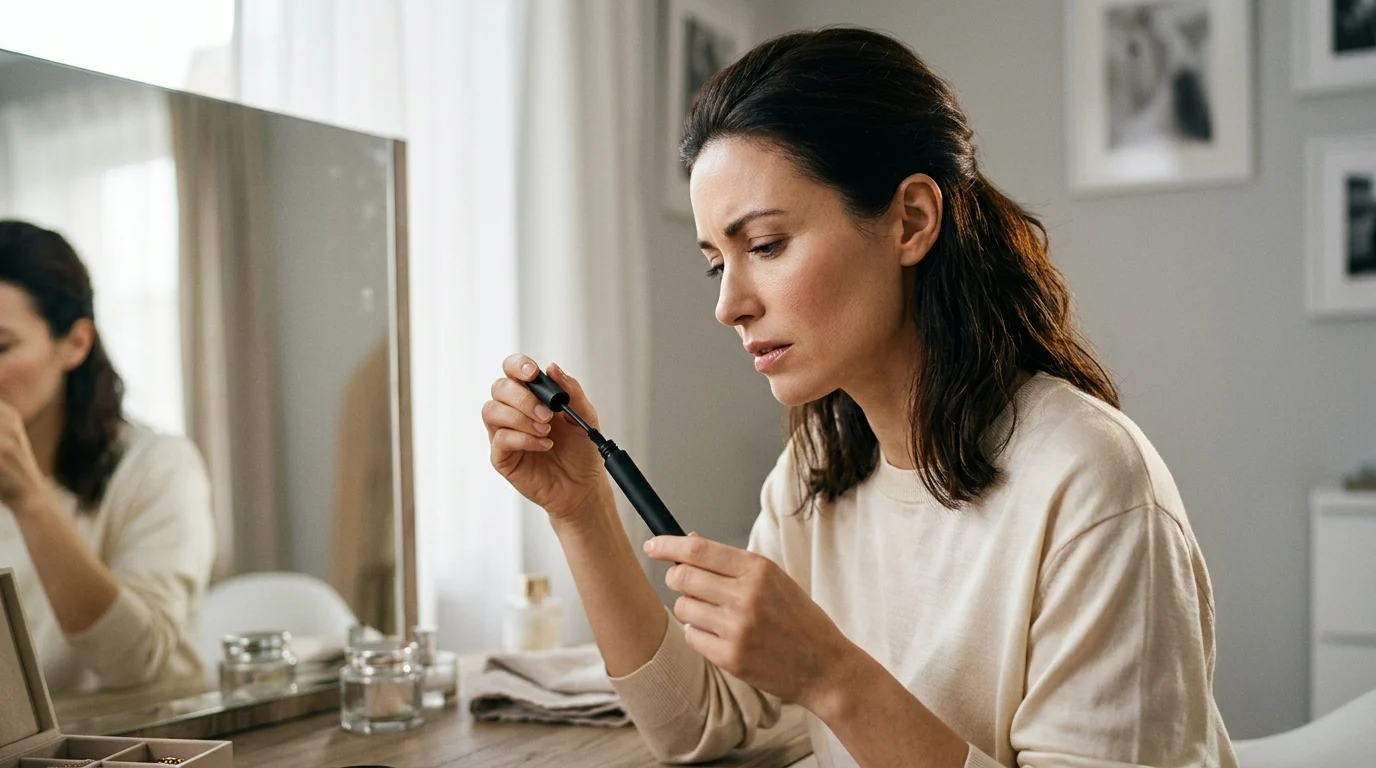
Her eye had been red and irritated for nearly two weeks before she finally saw an ophthalmologist. The diagnosis was a bacterial eye infection — uncomfortable, persistent, and entirely preventable. The likely culprit? A mascara she had owned for just over a year. She had not used it every day, which is precisely why she had held onto it. The tube was still more than half full. What she did not realize was that low use does not mean low contamination. It means the same product had been opened, used, resealed, and stored — repeatedly — for fourteen months, long past any point at which its preservative system could protect her. She had not run out of mascara. She had run out of a product that was still safe to use.
This is the reality of expired makeup that most people misunderstand. Expiration in cosmetics is not a bureaucratic label exercise. It reflects genuine chemical and microbiological changes that occur inside a formula over time — changes that carry very different levels of risk depending on the product category, where it is applied on the body, what it contains, and how it has been stored. A mascara three months past its PAO is a categorically different safety concern than a pressed powder eyeshadow sitting in a drawer for two years. Understanding the difference is not alarmist. It is simply accurate.
What “Expired” Actually Means in Makeup Chemistry
Most cosmetic packaging carries a small symbol that looks like an open cream jar with a number inside it — “12M,” “6M,” “24M.” This is the PAO symbol, which stands for Period After Opening. According to Michigan State University guidance on cosmetic expiration and the PAO symbol, the number indicates how many months a product is considered safe and stable after it has been opened — not after it was manufactured. A product sitting sealed on a warehouse shelf for eighteen months is a different equation entirely from the same product opened and used daily for six months.
Think of preservatives in makeup the way you think of preservatives in packaged food. They are the agents that keep the formula safe between the moment it is produced and the moment it is finally used up. Remove them, exhaust them, or overwhelm them — and the clock accelerates. Cosmetic preservative systems, which typically include compounds like parabens, phenoxyethanol, or benzyl alcohol, are designed to suppress the growth of bacteria, fungi, and yeast within the formula for a defined period. They are not permanent shields. They have a functional lifespan.
Two distinct types of degradation can occur in an aging formula, and they are not the same thing. Chemical degradation means the formula itself changes — pigments oxidize, oils go rancid, emulsions separate, fragrance notes shift. This is generally cosmetically unpleasant but not necessarily dangerous. Microbiological degradation means the product has become a hospitable environment for microbial growth. This is the actual safety risk. Both can happen independently.
A foundation can smell off and look separated without being bacterially contaminated. Conversely, a mascara can look and smell perfectly normal while hosting a microbial load its preservative system can no longer control. To understand how preservative systems in clean and conventional makeup affect shelf life and safety, it helps to recognize that “natural” or preservative-free formulas are not inherently safer — they may actually have shorter and less predictable stability windows.
The Contamination Mechanism: What Actually Happens Inside Old Makeup
Picture a dish sponge left damp on a kitchen counter. Warmth, moisture, and organic material create conditions where microbial populations can establish and multiply quickly. A liquid foundation, a mascara tube, a pot of gel eyeliner — these share more with that sponge than most people would prefer to consider. The contamination pathway is straightforward: an applicator contacts the skin or mucosa, picks up microorganisms present on that surface, returns to the product, and the cycle repeats. Every single application.
The preservative system fights this accumulation. In a well-formulated product used within its PAO, the preservatives suppress any introduced microorganisms before they can establish a foothold. But preservative capacity is finite. Repeated introduction of environmental microorganisms over months can gradually overwhelm it — particularly in warm, humid storage conditions that accelerate both microbial growth and preservative breakdown.
Once the preservative system can no longer function effectively, microbial colonization may proceed inside the formula unchecked. According to clinical guidance on makeup expiration and microbial contamination risk, this is the point at which a cosmetic product transitions from a cosmetic concern to a genuine health concern.
The implications can extend beyond surface-level skin reactions. How makeup products interact with the skin microbiome and what contaminated products do to that ecosystem is an emerging area of cosmetic science — and it reinforces what dermatologists have observed clinically: introducing foreign microbial populations to the skin may disrupt its natural balance, potentially triggering inflammation, breakouts, and sensitization that looks indistinguishable from an allergic reaction.
Eye Makeup: Why This Category Carries the Highest Risk
Mascara, liquid eyeliner, and gel eyeliner occupy a different tier of risk from every other product in a makeup bag. The reasons are compounding. First, they are applied in direct proximity to the mucosal tissue of the eye — a uniquely vulnerable surface with minimal barrier protection against bacterial infiltration. Second, the applicator mechanism of mascara creates near-ideal conditions for microbial accumulation: a wand that is inserted into a sealed, moist, pigment-rich tube, then dragged across the eye’s surface, then reinserted into the tube.
Think of it as reusing the same straw in a shared drink, every day, for months on end. The contamination that enters that tube does not leave it. Each use introduces new microorganisms into an environment that grows progressively less equipped to neutralize them.
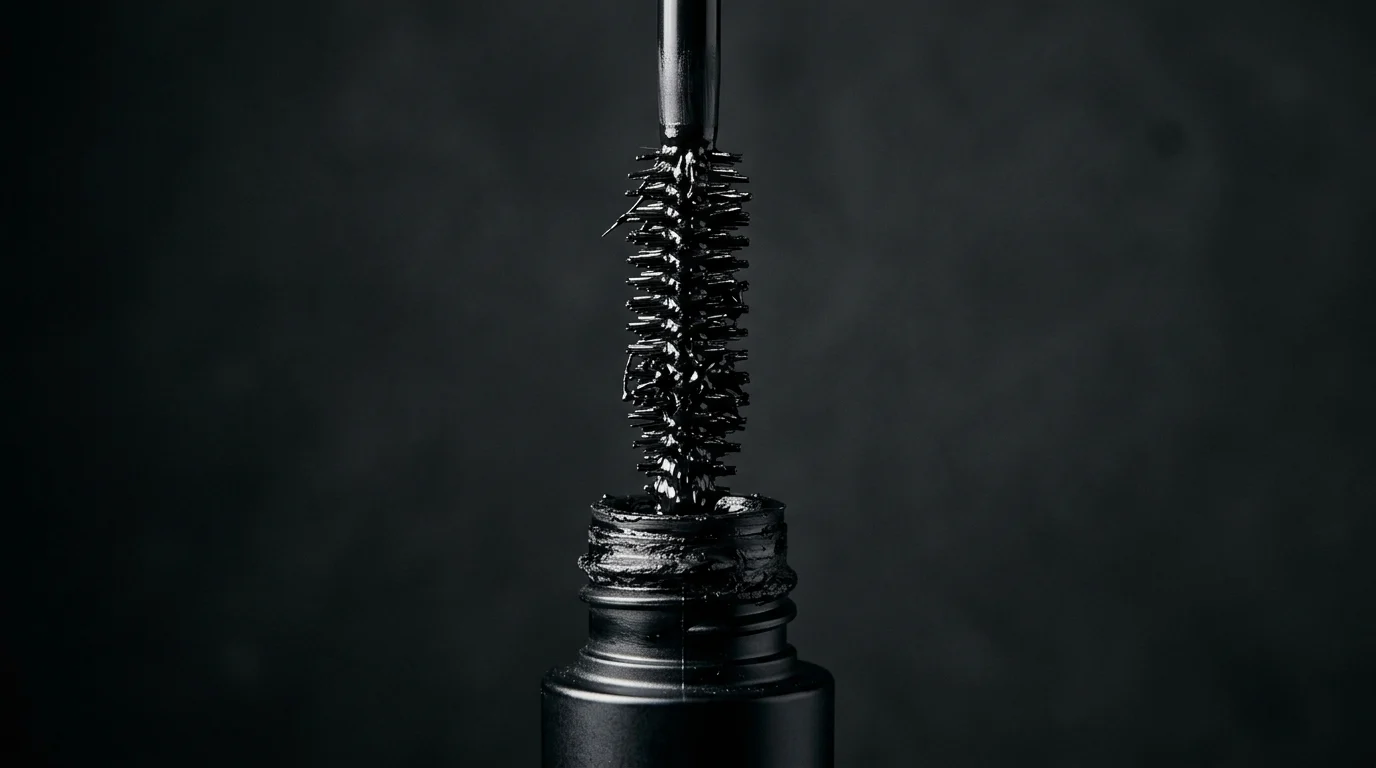
The AAD dermatologist recommendations on replacing makeup and sunscreen are consistent with American Academy of Ophthalmology safety guidance on eye makeup: the three-month PAO for mascara is not a conservative estimate designed to sell more product. It is clinically supported guidance based on the contamination dynamics of the applicator mechanism. Eye makeup expiry timelines exist for a reason, and this is the category where flexibility is generally associated with increased risk.
- Mascara: Replace after approximately three months of use, even if product remains
- Liquid eyeliner (tube with wand): Replace after approximately three months — the same applicator contamination dynamic applies
- Gel eyeliner (pot): Replace every 3–6 months; it is generally recommended to use a clean brush rather than fingers directly in the pot
- Pencil eyeliner: Longer usable life — regular sharpening physically removes the contaminated outer layer; 1–2 years is considered reasonable if sharpened consistently before each use
- Powder eye shadow: Lower contamination risk because dry environments do not support microbial growth the same way wet formulas do; replacing every 1–2 years is typically advised, or sooner if texture becomes noticeably chalky, patchy, or unusual
If you develop redness, swelling, stinging, or eye irritation after using any makeup product — expired or not — discontinue use immediately and consult a dermatologist or ophthalmologist.
Foundation: What Changes When It Expires
Foundation expiration involves both tracks of degradation simultaneously. How long does foundation last depends primarily on its formulation type: water-based liquid foundations provide the moisture and organic content that microbial populations need to establish, making them the highest-risk foundation format. Powder formulas, by contrast, deny microorganisms the moisture they require to thrive — which is why their makeup shelf life is meaningfully longer.
- Liquid foundation (water-based): Generally 6–12 months after opening; formulas with higher water content are typically best replaced at the shorter end of this window
- Oil-based or silicone-heavy liquid foundation: Up to 12 months — lower water activity reduces but does not eliminate contamination risk
- Powder foundation and pressed powder: 12–24 months — dry formula significantly limits microbial growth potential
- Cushion foundations: Generally best replaced at 6 months — the sponge applicator acts as a contamination reservoir that the product’s PAO alone does not account for
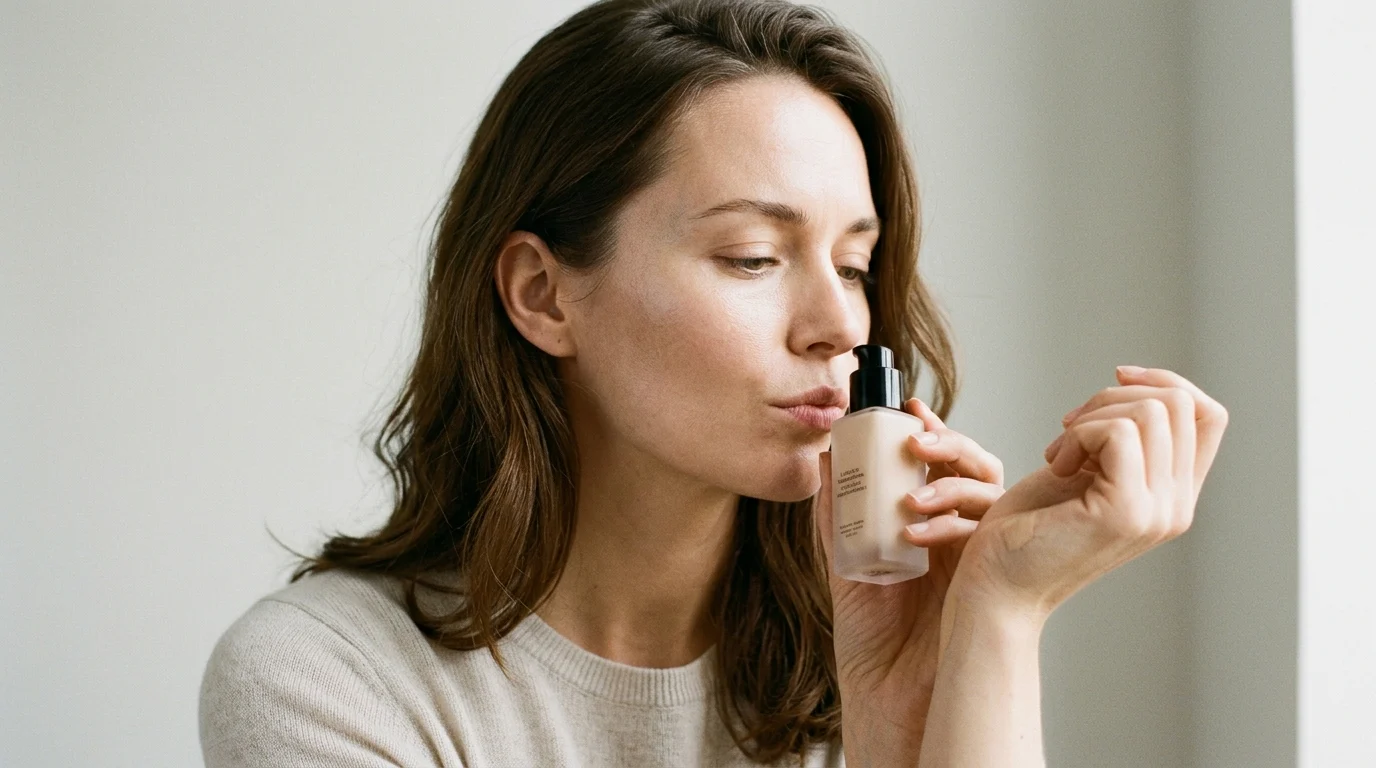
Beyond the PAO date, sensory signals can indicate degradation independently. Separation in a liquid foundation that does not re-emulsify with shaking suggests the emulsion has broken down — a chemical degradation issue. A color shift toward orange or grey tones points to pigment oxidation. An unusual or sour smell may indicate both chemical and potential microbial change.
None of these signals should be dismissed because the formula still looks “mostly fine.” This is particularly relevant because sensitive skin is particularly reactive to contaminated or expired foundation formulas — a reaction that may be mistaken for general sensitivity rather than traced back to the product’s condition.
Lipstick and Lip Products: Lower Risk, But Not Zero
Expired lipstick safety is a more nuanced conversation than expired mascara safety. The lip environment is generally less hospitable to the specific pathogens that cause serious infections — particularly those that target ocular tissue. That said, lip products are not exempt from degradation. Their oil components can oxidize and go rancid, their wax structures may change texture over time, and direct mouth contact creates a consistent contamination pathway.
- Lipstick: Typically 12–24 months — lower water content significantly limits microbial contamination risk, but oxidation can alter smell, taste, and texture; a waxy, crayon-like smell is a reliable signal of rancidity
- Lip gloss: Generally 6–12 months — higher oil content accelerates rancidity; wand applicators create a similar contamination dynamic to mascara, though at a lower pathogen risk level
- Lip liner: Up to 2 years if sharpened regularly — the same principle as pencil eyeliner; sharpening removes the surface layer where contamination tends to concentrate
A lip product that smells rancid or tastes unusually bitter or off is generally best discarded regardless of where it sits on the PAO timeline. Rancid oils applied repeatedly to the lips and ingested in small amounts represent an unnecessary exposure, and rancidity indicates the formula has degraded beyond its intended state.
Makeup Expiration at a Glance: Recommended Replacement Intervals
The following table summarizes the general replacement timelines discussed throughout this article. These are evidence-informed guidelines, not fixed rules — storage conditions, formula type, and visible or sensory changes may all warrant earlier replacement.
| Product | Recommended Replacement After Opening | Primary Risk |
|---|---|---|
| Mascara | ~3 months | Microbial contamination (high) |
| Liquid eyeliner (wand) | ~3 months | Microbial contamination (high) |
| Gel eyeliner (pot) | 3–6 months | Microbial contamination (moderate–high) |
| Pencil eyeliner | 1–2 years (if sharpened regularly) | Lower risk with regular sharpening |
| Liquid foundation (water-based) | 6–12 months | Microbial contamination + oxidation |
| Cushion foundation | ~6 months | Sponge applicator contamination |
| Powder foundation / pressed powder | 12–24 months | Primarily cosmetic degradation |
| Lip gloss | 6–12 months | Rancidity + wand contamination |
| Lipstick | 12–24 months | Oxidation and rancidity |
| Lip liner | Up to 2 years (if sharpened regularly) | Lower risk with regular sharpening |
| Powder eye shadow / blush | 1–2 years | Primarily cosmetic degradation |
The Regulatory Reality: What Labels Don’t Tell You
There is a gap between what consumers expect cosmetic labeling to tell them and what it is legally required to say. Per the FDA’s position on cosmetic shelf life and expiration dating, cosmetics sold in the United States are not legally required to carry expiration dates — with a narrow exception for OTC drug-cosmetics such as SPF products, acne treatments, and anti-dandruff shampoos, which are regulated differently. For the majority of makeup products, makeup expiration dates are not a legal requirement. They are a function of voluntary industry practice and stability testing.
This is not a loophole. It reflects the reality that shelf life varies too significantly across product categories, formulations, and storage conditions to support a single universal labeling standard. The PAO symbol is the primary consumer-facing tool — and even that is not universally mandated in all markets.
What this means practically is that consumers carry significant responsibility for their own expiration tracking. A simple habit helps: when a new product is opened for the first time, write the opening date on the packaging with a fine permanent marker. A foundation opened in March with a 12M PAO should be assessed for replacement by the following March — regardless of how much product remains.
How Storage Conditions Accelerate or Slow Expiration
PAO guidelines are not calculated in a vacuum. They assume reasonable storage conditions — broadly understood as cool, stable temperatures, away from direct light and humidity. Real-world storage conditions frequently deviate from this, and the deviation matters. Heat accelerates both chemical oxidation and microbial growth. Humidity can exhaust preservative systems faster. Light degrades pigments and destabilizes certain preservative compounds.
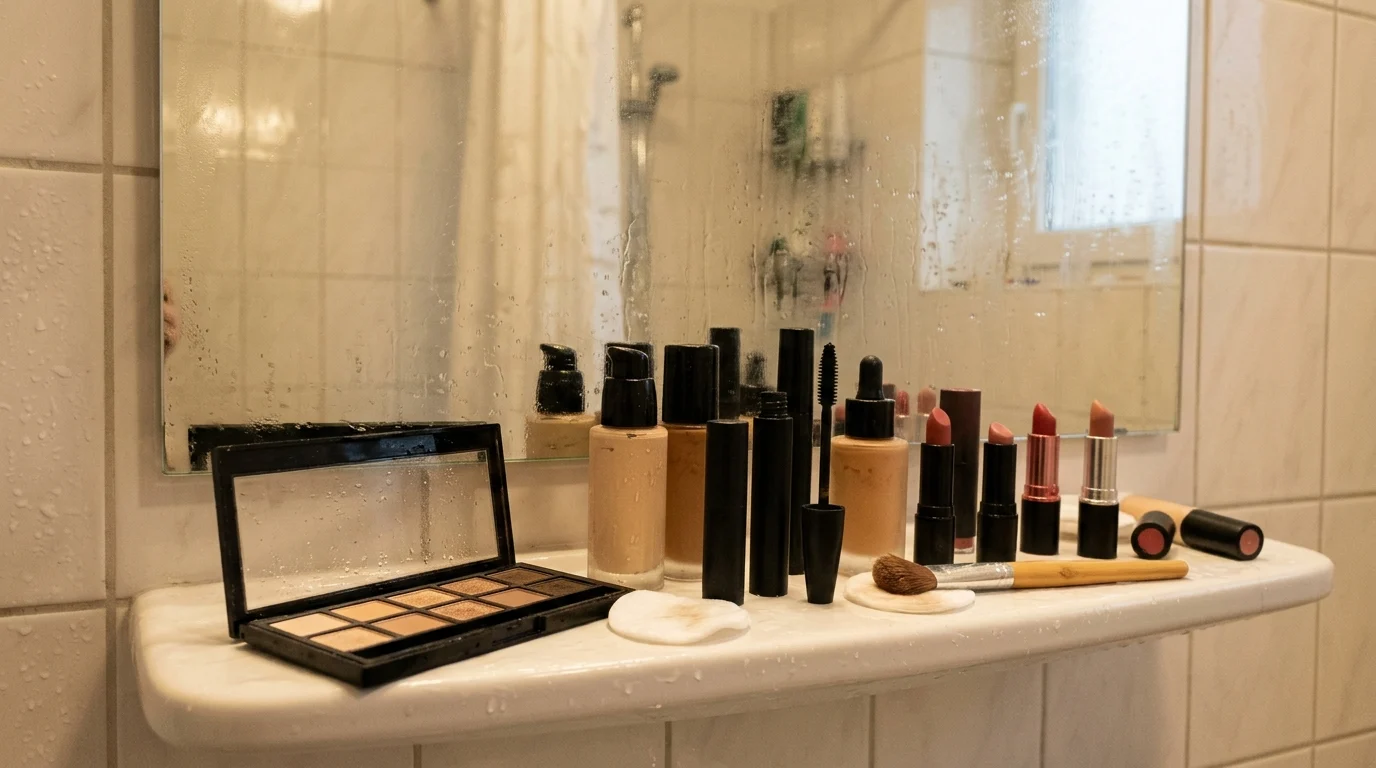
- Bathroom storage: High humidity and temperature fluctuation make this one of the less ideal locations for makeup — particularly liquid products; preservative exhaustion may happen faster here
- Direct sunlight: Can oxidize pigments and destabilize preservatives significantly faster than shade storage; keeping products away from windowsills is generally advisable
- Warm car or bag left in heat: Elevated temperatures can speed up microbial growth in any formula with water content; a foundation left in a hot car in summer may degrade meaningfully in a single day
- Cool, dry, dark storage: May significantly extend usable life within the PAO window; a dedicated makeup drawer away from bathroom humidity is a practical improvement
If a product has been stored in poor conditions — a hot car, a steamy bathroom, direct sun — it is reasonable to treat its effective PAO as shorter than printed, not longer.
How to Tell If Makeup Has Gone Off — Before You Look at a Date
The PAO is a guideline, not a guarantee. Products can degrade before their PAO expires under poor storage conditions, and well-stored products in dry formats may remain usable slightly beyond their PAO without significant safety risk. Sensory assessment is therefore a valuable secondary check — one that requires no chemistry background to perform.
- Separation in liquid products that does not re-emulsify with shaking — the emulsion structure may have broken down
- Unusual or rancid smell — particularly in lip products, oil-heavy formulas, or anything that previously had a neutral or pleasant scent; rancidity in oils has a distinctive sour or waxy-crayon quality
- Color shift — foundation moving toward orange or grey tones can indicate pigment oxidation; this is a chemical signal, not merely a cosmetic one
- Texture change — gumminess, unexpected graininess, or unusual drag on application that was not present when the product was new
- Skin reactions — stinging, redness, persistent breakouts, or inflammation that a product did not previously cause; old makeup skin reactions are frequently attributed to general sensitivity when the product’s own condition may be the variable that has changed
The “Low Use” Myth — Corrected
One of the most persistent misconceptions about makeup expiration dates is that infrequent use extends a product’s safe life. It does not. Contamination generally accumulates with each application event — not with the volume of product used. A mascara opened and applied once a week for a year has been exposed to as many contamination cycles as one used more frequently. The amount of product dispensed per application is largely irrelevant to how much microbial material has entered the tube over time. Frequency of use does not reset the contamination clock. A half-full mascara at fourteen months is not inherently safer than an almost-empty mascara at three months. In microbiological terms, it may be considerably less safe.
Frequently Asked Questions
Can expired mascara really cause an eye infection?
Yes — and the evidence is not theoretical. Bacterial contamination in post-PAO mascara is well-documented in clinical literature and ophthalmology practice. The wand applicator mechanism introduces microorganisms into the tube with every use, and once the preservative system is exhausted, those populations may grow unchecked. Common culprits include Staphylococcus and Pseudomonas species — both associated with conjunctivitis, keratitis, and more serious ocular infections. The mascara expiry date of approximately three months exists precisely because of this dynamic.
How do I know if my foundation has expired if there is no date on it?
Check the packaging for the PAO symbol — the open-jar icon with a number and “M.” If you recorded the opening date on the bottle when you first used it, calculate forward from there. If you did not, use your best recall and cross-reference it with the sensory signals above: smell, texture, color, and how your skin responds after application. If any of those have changed noticeably, erring toward replacement is generally the more cautious approach. If the product has been stored in a bathroom or any warm, humid environment, it is reasonable to apply a shorter effective PAO than the one printed.
Is it safe to use expired powder products like eyeshadow or blush?
Powder products are typically the most forgiving category in terms of microbial contamination risk, because the absence of water makes them a poor environment for bacterial and fungal growth. The primary degradation concern is cosmetic — pigment shift, texture change, diminished payoff. That said, eye makeup expiry considerations still apply to powder eye shadows when they are applied close to the mucosal tissue, particularly with wet application techniques that introduce moisture into the formula. Replacing powder eye products every 1–2 years is generally advisable, and discarding any powder product that has changed noticeably in texture or smell is recommended regardless of age.
Final Thoughts
The conversation around expired makeup is often reduced to two unhelpful extremes — either blind reassurance that old products are perfectly fine, or sweeping alarmism that treats every post-PAO item as a hazard. The reality sits between those positions. Risk is real, but it is not uniform. A mascara used beyond three months carries genuinely different stakes than a powder blush that has been sitting in a drawer for eighteen months. Product category, formula type, applicator mechanism, proximity to mucosa, and storage conditions all shape the actual level of concern.
The PAO symbol is the most practical tool available to consumers, but it only works if it is used. Writing an opening date on new products takes seconds and removes the guesswork entirely. Pairing that habit with regular sensory checks — smell, texture, color, and skin response — gives a reasonably complete picture of whether a product is still performing as intended or has crossed into degradation territory.
The practical takeaway is straightforward: prioritize replacement timelines most strictly for anything applied near the eyes, give liquid and water-based formulas less latitude than powders, and treat storage conditions as a variable that can meaningfully accelerate or slow the clock. A considered approach to how long to keep makeup does not require discarding half a collection on a schedule. It requires knowing which products carry the highest consequence when kept too long — and acting accordingly.