


She spent £85 on a facial oil. The bottle was dark amber, hand-sealed with a cork stopper. The brand story spoke of a founder who had foraged botanicals through Scandinavian forests and reformulated for years before launch. A respected beauty publication had given it four stars. Within a week of daily use, her rosacea — previously quiet for months — flared badly. When she finally read the INCI list, fragrant essential oils appeared in positions four and five. There was no UV-protective packaging. The formula had no listed preservative system despite containing plant hydrosols. The brand was indie. The aesthetic was immaculate. The formula was not good. The distinction matters enormously when you are navigating the growing world of good niche skincare brands — because the market is now large enough to contain both genuinely excellent formulation-led products and beautifully packaged ones that lead with story rather than science. Separating the two requires a specific, replicable framework. That framework is what follows.
Why “Niche” Is No Longer a Quality Guarantee
The Niche Market Has Matured — and Become More Complex
A decade ago, choosing a niche or indie skincare brand over a mass-market conglomerate product felt like a reasonable proxy for quality. Smaller brands, the logic went, were more ingredient-focused, less profit-driven, more willing to innovate. That logic held often enough to become an assumption.
It is no longer reliable. The niche skincare category now contains Nobel Prize-winning chemist-founded brands with proprietary delivery technologies alongside white-label bases dressed in minimal packaging and charged at premium prices. “Indie” is a business model descriptor, not a formulation quality signal. A brand can be genuinely independent and brilliantly formulated. It can equally be genuinely independent and dermatologically irresponsible.
This is not a criticism of the category. It is a call to apply the same evaluation rigour to niche brands that increasingly ingredient-literate consumers are applying to mass-market luxury. The tools exist. The information is accessible. The framework is straightforward once you know what to look for.
The Story Is Not the Science
A compelling brand narrative has real value — it creates emotional connection, communicates sourcing ethos, and signals founder commitment. The best niche skincare brands carry both a strong story and serious formulation depth. These qualities are not mutually exclusive.
The problem arises when the story substitutes for the science. Recognising this pattern is its own skill. Watch for vague ingredient language — “our signature botanical blend,” “a proprietary complex of nature’s finest actives” — without specific ingredient names or concentrations. Watch for heavy emphasis on the founder’s personal skin journey without any articulated formulation rationale. Watch for press coverage that describes how a product smells and feels without a single sentence about what the active ingredients are doing and at what concentration.
Story without formulation substance is packaging. Elegant, persuasive packaging — but not skincare that is doing meaningful work on the skin.
The Regulatory Baseline: What EU Compliance Actually Tells You
EU Cosmetic Regulation as the Minimum Standard
Any cosmetic product legally sold in the EU — and in the UK, which largely mirrors EU standards post-Brexit — must comply with EU cosmetics legislation and the regulatory framework governing skincare products. EU Regulation 1223/2009 is not a voluntary guideline. It is a legally binding framework that mandates a qualified cosmetic safety assessment before market entry, complete INCI ingredient disclosure in descending order of concentration, a designated responsible person accountable for product compliance, and adherence to a prohibited and restricted substance list updated by the European Commission.
The Cosmetics Europe overview of the Cosmetic Products Regulation outlines what this means for brands operating across EU markets. For a practical breakdown of obligations, the compliance guide to EU Cosmetic Regulation 1223/2009 covers product safety file requirements and labeling obligations in accessible terms.
The practical implication: a brand legally selling into the EU has cleared a meaningful safety and transparency baseline. The product has been assessed by a qualified safety evaluator. The INCI list is legally required to be accurate. This is the floor — not the ceiling of quality.
What EU Compliance Does Not Guarantee
EU compliance confirms that a product is safe for general use as formulated. It does not confirm that the hero active ingredient is present at a concentration sufficient to produce the claimed skin effect. It does not confirm that the brand has conducted stability testing beyond the minimum required to clear safety assessment. It does not validate marketing claims about efficacy.
A product can be fully EU-compliant with 0.01% of its headline ingredient — enough to appear on the INCI list, not enough to do what the brand implies. Compliance is necessary. It is not sufficient for quality evaluation.
The INCI List: Your Most Reliable Evaluation Tool
How to Read an INCI List for Quality Signals
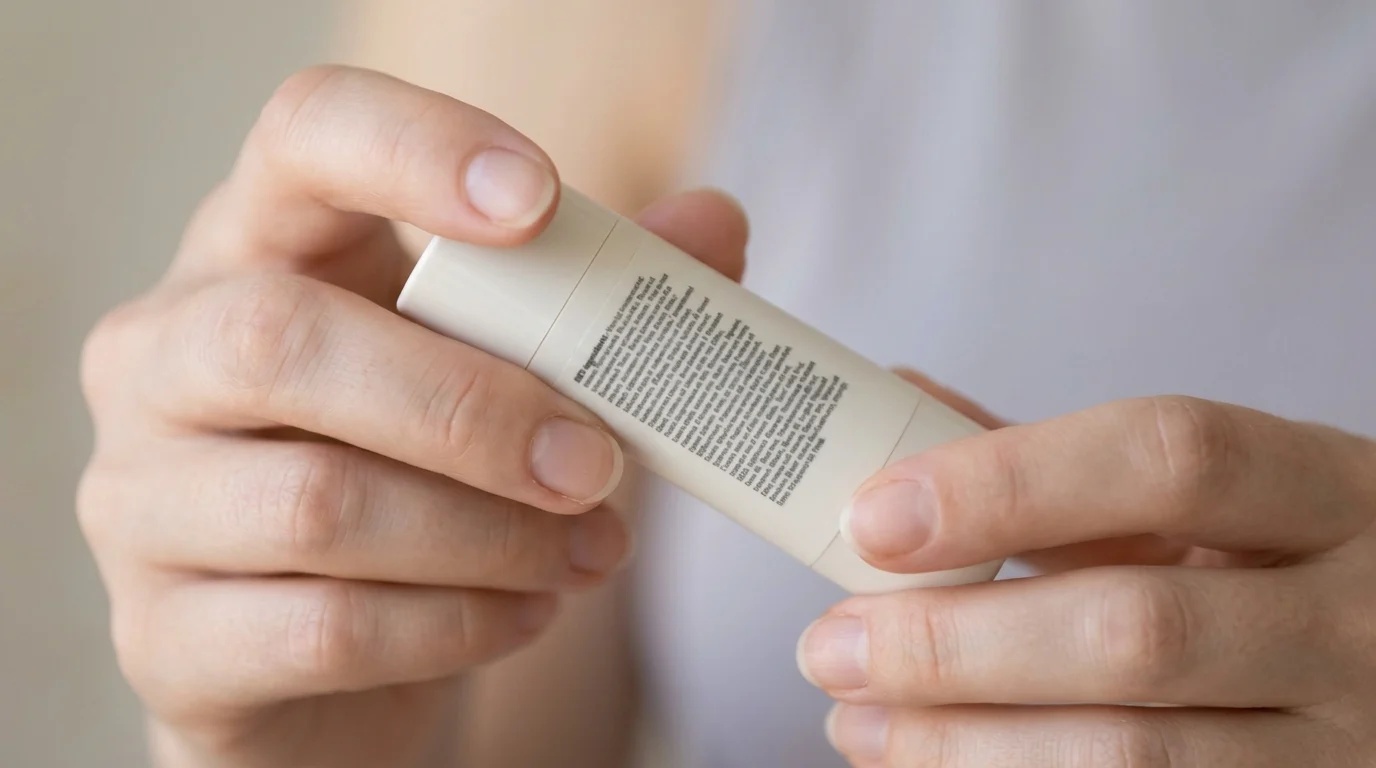
The INCI list is governed by the European Commission’s cosmetics legislation and ingredient labeling requirements, which make it legally required to be both accurate and ordered by concentration — descending from highest to lowest. Any ingredient present at 1% or below may appear in any order after that threshold, but everything above 1% must be listed in true descending sequence.
This makes the INCI list one of the most reliable tools available to an informed consumer evaluating a skincare product. More reliable than brand copy. More reliable than press features. More reliable than founder interviews. Once you know how to read it, you can reconstruct the basic architecture of any formula.
A useful mental map for reading INCI lists:
- Top 5 ingredients: The formula’s primary architecture — typically water, humectants, emollients, and film-formers. These are present in the largest proportions and determine the product’s base texture, skin feel, and moisture-delivery framework.
- Middle section: Actives at meaningful functional concentrations — peptides, niacinamide, retinoids, acids, antioxidants. If a brand’s hero active appears here, it is likely present at a working percentage.
- Bottom 10% of the list: Typically preservatives, fragrance compounds, and trace actives. Ingredients here are present in very small quantities — effective for preservation or scent, but not as functional actives.
Red Flags in an INCI List
These are not automatic disqualifiers, but each warrants a closer look before purchasing:
- Fragrant essential oils — Lavandula angustifolia, Citrus aurantifolia, Pelargonium graveolens — appearing in the first half of the INCI list, indicating high concentration and elevated sensitisation risk
- “Parfum” or “fragrance” listed without any further constituent disclosure, particularly in products marketed for sensitive or reactive skin
- The brand’s headline active ingredient appearing in the final quarter of a long INCI list — a cosmetic-level presence, not a clinical one
- A “preservative-free” claim on a water-containing formula with no explanation of the alternative preservation strategy used
- Jar packaging for active-ingredient formulas — particularly vitamin C, retinoids, or peptides — where repeated air and finger exposure accelerates oxidation and contamination
- Vague “extract blend” or “botanical complex” without the individual constituent ingredients specified by INCI name
What the Best Niche Skincare Brands Actually Invest In
Formulation Chemistry Depth

Formulation chemistry is the discipline that determines how active ingredients are combined, stabilised, delivered to their target tissue, and preserved safely over a product’s shelf life. According to the American Chemical Society overview of formulation chemistry, this field integrates materials science, physical chemistry, and application engineering — it is considerably more complex than ingredient selection alone.
Think of it as cooking at a molecular level. The individual ingredients are not the only variable. The ratios, the order of combination, the temperature at which ingredients are introduced, the pH of the final formula, and the container that product lives in — all of these determine whether what reaches your skin actually performs as intended. A formulator who understands formulation chemistry principles and their application to cosmetic products makes different decisions at every stage of development than one who sources a white-label base and adds a hero ingredient, a scent, and a label.
The practical signal: genuinely formulation-led niche brands are willing — often eager — to discuss why they made specific choices. Not just what ingredients they use, but why they chose that emulsifier system, why the formula is pH 5.5, why they use an airless pump. That level of explanation is not standard in the industry. When a brand offers it unprompted, pay attention.
Packaging as a Stability Signal
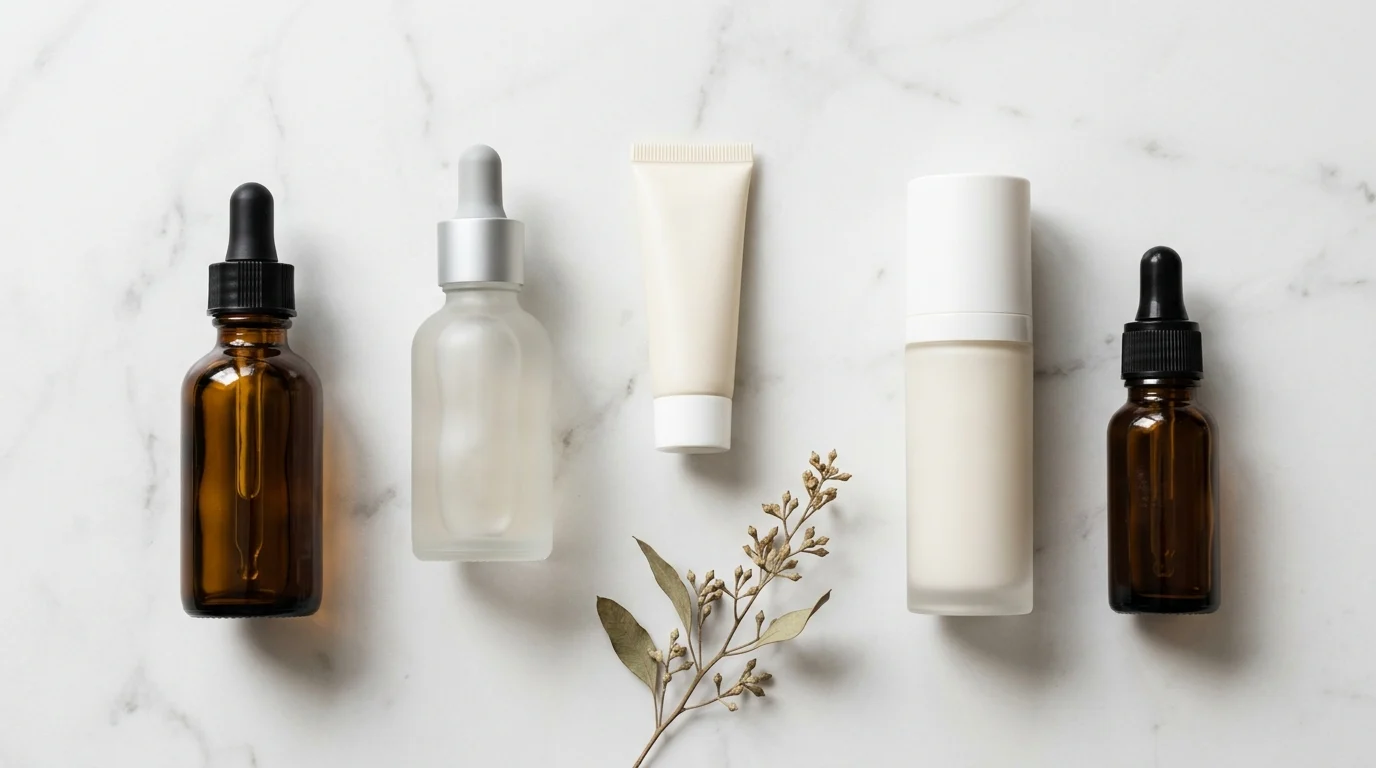
Packaging is formulation science made visible. Vitamin C derivatives in a clear glass bottle are degrading from the moment they meet light. Retinoids in unprotected, opaque-adjacent packaging lose potency over the product’s shelf life. Airless pumps, dark glass, and opaque tubes are not premium aesthetic choices — they are investments in active ingredient integrity.
When a niche brand chooses airless pump dispensing for a vitamin C serum, or dark amber glass for a retinol oil, it signals that the formulator understands oxidation chemistry and has made packaging decisions accordingly. When a brand uses clear glass or decorative open-top jars for active-rich formulas, it signals that aesthetics took priority over chemistry. Packaging tells a precise story about what the brand actually knows.
Transparency as a Trust Architecture
The best independent skincare brands publish what others do not: exact active ingredient concentrations, formulation rationale documents, sourcing philosophy with named suppliers, and the specific protocols used for safety and stability testing. This transparency is not simply a values statement. It is a competitive signal.
Brands confident in their niche skincare formulation standards publish the detail because the detail supports the price point. Brands relying primarily on narrative and aesthetic tend to keep formulation specifics vague — because the specifics would invite comparisons they cannot win. Transparency is not charity. It is confidence.
Good Niche Skincare Brands: Eleven That Meet the Standard
NUORI reviewed for freshness formulation philosophy and active ingredient integrity — NUORI’s founding premise is that freshness is a functional quality, not a marketing concept. Products are manufactured in small batches at controlled intervals and carry production dates on packaging — a model specifically designed to reduce the gap between manufacture and consumer use. For vitamin-rich and antioxidant formulas, this production approach represents a meaningful stability investment, not a branding exercise.
Haeckels reviewed for marine bioactive formulation and sustainability credentials — Haeckels sources marine bioactives traceable to specific coastal ecosystems on the Kent coast, with a genuine sustainability architecture governing harvest and supply. The formulation approach prioritises bioactive specificity over broad-spectrum botanical blending — a distinction that reflects genuine niche skincare ingredient quality thinking.
OIO Lab reviewed for biotech formulation and ingredient transparency — OIO Lab uses biotechnology-derived actives to improve the bioavailability of ingredients that perform inconsistently in conventional extraction. The brand publishes formulation rationale and maintains a clean, minimal INCI architecture — a rare combination of indie brand transparency and active delivery sophistication.
Evolve Organic Beauty reviewed for certified organic formulation and small-batch production standards — Certified organic status with handmade small-batch production provides third-party ingredient origin verification that self-reported “natural” claims cannot. Evolve’s formulation investment is visible in the specificity of its botanical sourcing and its consistent ECOCERT compliance across the range.
MÁDARA Cosmetics reviewed for Nordic botanical formulation and organic certification standards — MÁDARA has a long track record in the European natural skincare market, with ECOCERT organic certification and a formulation approach built around cold-climate botanical actives with demonstrated bioactivity. Longevity in a regulated market is itself a quality signal for clean niche beauty standards.
Gallinée reviewed for microbiome-first formulation and pharmacist-led brand science — Founded by a pharmacist with a PhD in skin microbiome science, Gallinée publishes its prebiotic and postbiotic formulation rationale and formulates around skin surface pH compatibility. The founder’s specific scientific contribution to the formula is articulated, not implied — a rare and meaningful quality signal.
Rowse Beauty reviewed for barrier-first formulation and clinical active selection — Rowse is designed specifically for skin that has been over-treated — sensitised by aggressive acid regimens, compromised by over-exfoliation, or depleted by retinoid misuse. Its barrier-first formulation framework reflects a clinically informed understanding of what disrupted skin needs structurally, not just symptomatically.
Typology Paris reviewed for ingredient concentration transparency and formulation accessibility — Typology Paris was built on a founding principle that consumers deserve to know exactly what percentage of each active they are applying. Published concentrations across the entire range allow independent consumer evaluation — and make Typology one of the most accessible entry points into how to evaluate niche skincare.
Noble Panacea reviewed for delivery technology and founder formulation credentials — Founded by Nobel Prize-winning chemist Sir Fraser Stoddart, Noble Panacea’s proprietary OSMV™ technology offers time-release active delivery at a molecular level. The formulation investment is visible in both the science and the packaging — and the founder’s specific contribution to the technology is publicly documented.
Vintner’s Daughter reviewed for botanical bioavailability and formulation development depth — Vintner’s Daughter operates on multi-year product development cycles and uses biofermentation to increase the bioavailability of botanical actives that would otherwise remain at the skin’s surface. The brand’s formulation investment per product is among the most thoroughly documented in niche skincare — and the long development timeline reflects formulation chemistry rigour, not slow branding.
Aesop reviewed for formulation philosophy and niche-to-luxury brand evolution — Aesop’s inclusion here is deliberate: it is an example of a niche brand that has scaled considerably without fully abandoning its distinctive botanical formulation philosophy, though its positioning has shifted firmly toward luxury retail. Worth evaluating on its own INCI merits rather than on reputation — which is, of course, the point of the entire framework above.
A Pre-Purchase Evaluation Framework for Any Niche Skincare Brand
Apply this sequence before purchasing any niche skincare product — regardless of brand story, price point, or press coverage:
- Step 1 — Verify regulatory compliance: Is the brand legally selling into the EU or UK market? Is the INCI list complete, properly formatted, and in descending order? Absence of a properly structured INCI list on an EU-sold product is an immediate red flag.
- Step 2 — Read the INCI list before the brand copy: Where does the hero active appear? Are fragrant essential oils or “parfum” present, and where in the list do they sit?
- Step 3 — Evaluate packaging for stability investment: Is the formula protected from light, air, and oxidation? Does the packaging choice match the chemistry of the actives inside?
- Step 4 — Look for published concentrations or formulation rationale: Does the brand explain why it made the choices it made — not just what ingredients it uses, but at what level and why?
- Step 5 — Assess the preservative system: Is the product adequately preserved for its water content? If the brand claims “preservative-free” on a water-containing formula, is there an explanation of the alternative system used?
- Step 6 — Look for third-party validation: ECOCERT, COSMOS, or dermatologist-supervised clinical testing with specified methodologies carry weight. Self-reported “dermatologist-approved” claims without a named protocol do not.
- Step 7 — Evaluate founder or formulator credentials: Is there a named cosmetic chemist, pharmacist, or dermatologist with a specific documented contribution to the formula? A founder’s personal skin story is not a formulation credential.
A note on minimal ingredient lists: The assumption that shorter INCI lists always indicate better formulation is one of the more persistent myths in niche skincare. A short INCI list can reflect genuine formulation clarity and intentionality — every ingredient present for a specific reason, nothing redundant. It can equally reflect a simple base with no meaningful active investment. The quality of a minimal formula depends entirely on what is in it and at what concentration. Shortness alone tells you nothing. What matters is what the short list actually contains.
Always patch test new niche skincare products before full application, particularly if your skin is reactive — even well-formulated products can contain individual sensitizers that vary by skin history, and no evaluation framework substitutes for testing on your own skin.
FAQs
How do I know if a niche skincare brand is genuinely formulation-led or just well-branded? Read the INCI list before reading any brand copy. Check where the hero active appears in the list, whether the packaging protects active stability, and whether the brand publishes concentrations or formulation rationale. A well-branded product tells you how it makes you feel. A formulation-led product tells you what it is doing and why — in the formula itself, not just in the marketing.
Does EU cosmetic regulation guarantee a niche skincare product is effective? No. EU Regulation 1223/2009 guarantees that a product is safe for general use as formulated and that the INCI list is legally accurate. It does not validate efficacy claims, require active ingredient concentrations to be functional, or mandate stability testing beyond the minimum needed for safety assessment. Compliance is a safety floor. Effectiveness requires a separate evaluation.
What is the single most important thing to check before buying a niche skincare product? Read the full INCI list and locate the position of the hero active. If the ingredient the brand is built around appears in the final quarter of a long list, it is present at trace — not functional — concentration. That one check will tell you more about a formula’s genuine quality than any amount of press coverage or founder storytelling.