


Founded by former Calvin Klein creative director Francisco Costa, Costa Brazil has established a distinct positioning within prestige body care by introducing indigenous South American flora to global luxury retail. However, conducting a rigorous costa brazil review requires looking beyond custom brushed-aluminum packaging and olfactory storytelling to analyze the underlying cosmetic chemistry. The brand’s emphasis on amazonian ingredients skincare relies heavily on rare botanical oils and resins, such as Pracaxi, Breu Branco, and Kaya. Evaluating how these tropical lipids interact with human stratum corneum architecture clarifies whether Costa Brazil delivers superior barrier repair or primarily sensory prestige.
The Core Trio: Pracaxi Oil, Breu Branco, and Kaya Lipid Chemistry
Costa Brazil’s formulations are built around what the brand calls its Jungle Complex, a trio of ingredients that reads more like a botany syllabus than a standard beauty ingredient deck. Pracaxi seed oil features exceptional concentrations of behenic acid, a long-chain saturated fatty acid that enhances lipid barrier integrity and limits trans-epidermal water loss. Dermatological research suggests this fatty acid density is what separates Pracaxi from more conventional carrier oils used in mass-market body lotions.
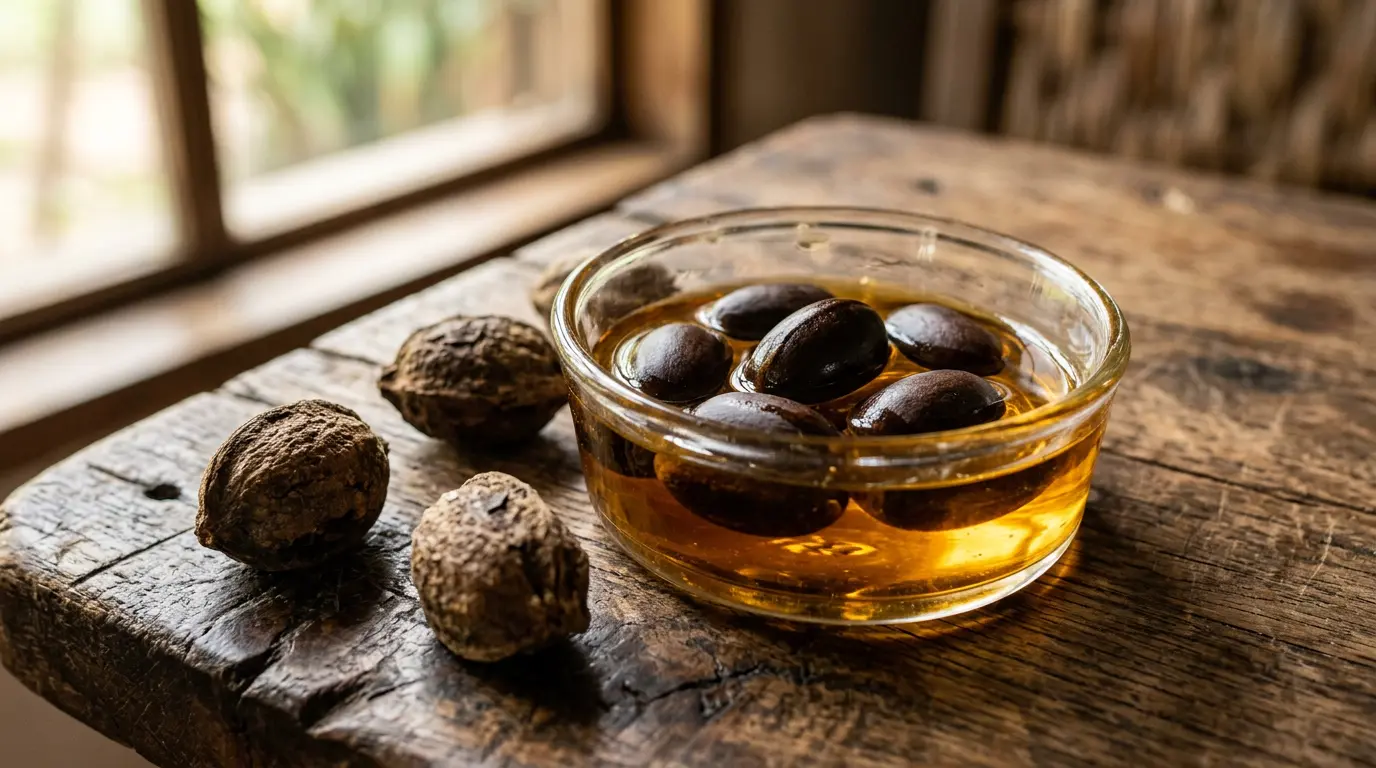
Breu Branco, an aromatic resin harvested from the Protium heptaphyllum tree, contains volatile monoterpenes and triterpenes known in ethnobotanical studies for soothing topical irritation. Its inclusion is as much about scent architecture as it is about function, though the resin’s bioactive compounds are not purely decorative. A PubMed study on Pracaxi oil’s lipid composition and fatty acid profile confirms the barrier-relevant chemistry behind the seed oil specifically, rather than the resin.

Kaya oil rounds out the trio, providing a balanced ratio of essential linoleic acid and oleic acid that supplies vital lipids supporting intercellular matrix cohesion in dry or compromised body skin. Understanding how bio-regional raw materials fit into modern formulation frameworks is explored in Ingredient Philosophy Skincare. The pairing of a saturated fatty acid workhorse with two unsaturated, more fluid oils is a reasonably sound lipid strategy on paper.
Fatty Acid Profiles and Barrier Repair: How Amazonian Lipids Perform
Unlike lightweight synthetic esters, native South American plant oils offer complex triglyceride structures that mimic the natural hydrophobic film of the stratum corneum. This matters because skin barrier repair depends less on hydration in the water sense and more on rebuilding an intact lipid matrix between corneocytes. Lipid profile analysis indicates that oils with a broader mix of chain lengths tend to integrate more convincingly with existing skin lipids than single-note synthetic substitutes.
The high concentration of behenic and lignoceric acids in cold-pressed Amazonian seed oils creates a protective occlusive layer without leaving an excessively heavy residue, at least when formulated in reasonable concentrations. A PMC study on plant oils, fatty acid composition, and epidermal barrier recovery supports the general premise that fatty acid chain length and saturation influence how effectively a topical oil restores barrier function. Comparing cold-pressed botanical oil performance across organic brand architectures is detailed in Evolve Organic Beauty Review.
That said, while high-oleic oils can occasionally disrupt skin barrier structure when used neat, Costa Brazil balances its oil blends to ensure optimal fatty acid fluidity and skin absorption. This is a formulation detail worth crediting; not every brand leaning on “pure” botanical oils accounts for the fact that unsaturated oils in isolation can sometimes destabilize rather than reinforce the lipid barrier.
Formulation Elegance vs Prestige Pricing: What You Are Paying For
Costa Brazil formulas rely on sophisticated fast-absorbing oil bases that utilize squalane and lightweight esters to improve spreadability and user compliance. This is not a minor point. A barrier-supporting oil that sits greasy on skin for twenty minutes will simply get used less often, undermining whatever lipid chemistry sits behind it.
While the raw material sourcing for sustainably harvested Amazonian resins carries legitimate supply chain costs, a significant portion of the retail price supports custom packaging design, fragrance profiling, and prestige branding. Clinical evidence demonstrates that vehicle formulation, not just active concentration, meaningfully affects how a topical lipid performs on skin, according to a JAAD Reviews clinical analysis on topical lipid vehicles, sensory aesthetics, and barrier mechanics. That vehicle engineering is real value, even if it is not the value being marketed on the label.
Potential considerations for sensitive skin types include the presence of natural resin volatiles and aromatic botanical extracts, which can present sensitization risks for reactive individuals. Evaluating high-concentration botanical oil blends and luxury performance claims is examined in Vintner’s Daughter Active Botanical Serum Review, a useful comparison point for readers weighing whether concentrated plant chemistry justifies a premium price tag.
Who Should Invest in Costa Brazil Body Care?
Ideal candidates for this line include individuals with chronic dry body skin, mild barrier damage, or elevated aesthetic preferences who want fast-absorbing lipid replenishment paired with a distinct woody, resinous aroma. These are consumers who value the ritual of application as much as the outcome, and for them, the sensory dimension is not a distraction from efficacy but part of what makes the routine sustainable.

Less ideal candidates are consumers with fragrance-sensitive skin or active contact dermatitis who require clinical, unfragranced barrier repair creams free from aromatic resins. Breu Branco’s volatile compounds, however pleasant, are still botanical irritant candidates for reactive skin types.
Then there are value-conscious buyers: those who must weigh whether the combination of rare Amazonian lipids and luxury packaging justifies paying a significant premium over standard botanical body oils. For this group, the fatty acid science is genuinely sound, but it is not exclusive to Costa Brazil’s specific formulations at this price point.
The Final Verdict: Does Amazonian Innovation Justify the Cost?
Costa Brazil introduces genuinely valuable, lipid-rich Amazonian bioactives like Pracaxi and Kaya to a body care market often dominated by basic mineral oil or simple shea butter bases. That alone distinguishes the brand from a large share of its luxury competitors, many of which lean on marketing language rather than distinctive raw material sourcing.
The brand successfully combines barrier-supporting fatty acid profiles with exceptional cosmetic elegance and sustainable sourcing principles, and the lipid chemistry behind Pracaxi in particular holds up under scrutiny. However, consumers should recognize that paying top-tier prices secures an elevated sensory ritual and sustainable luxury design alongside solid, but fundamentally non-miraculous, dermatological barrier support. It is good body oil chemistry, not a departure from the laws of lipid science.
FAQ
Is Costa Brazil body oil good for sensitive skin?
While Pracaxi and Kaya oils are deeply nourishing for dry skin, Costa Brazil formulas contain natural Breu resin and aromatic plant extracts. Individuals with severe fragrance sensitivities or active contact dermatitis should perform a patch test before full body application.
What is Pracaxi oil and why is it used in skincare?
Pracaxi oil is extracted from the seeds of the Pentaclethra macroloba tree native to the Amazon. It is prized in cosmetic chemistry for its extremely high concentration of behenic acid, which helps restore the skin barrier and lock in hydration.
How does Costa Brazil source its Amazonian ingredients sustainably?
The brand collaborates directly with local Amazonian communities and conservation organizations to harvest wild-grown ingredients like Breu resin and Kaya nuts, ensuring fair trade practices and preventing deforestation.
Can I use Costa Brazil body oil on my face?
While the oils are high-quality, body oil formulas are often richer and contain aromatic resins intended for thicker body skin. Facial skin prone to congestion may react to heavier lipid blends, so using dedicated facial treatments is generally recommended.