

The Psychology of Lipstick Colors: What Exhausted Women Are Really Reaching For
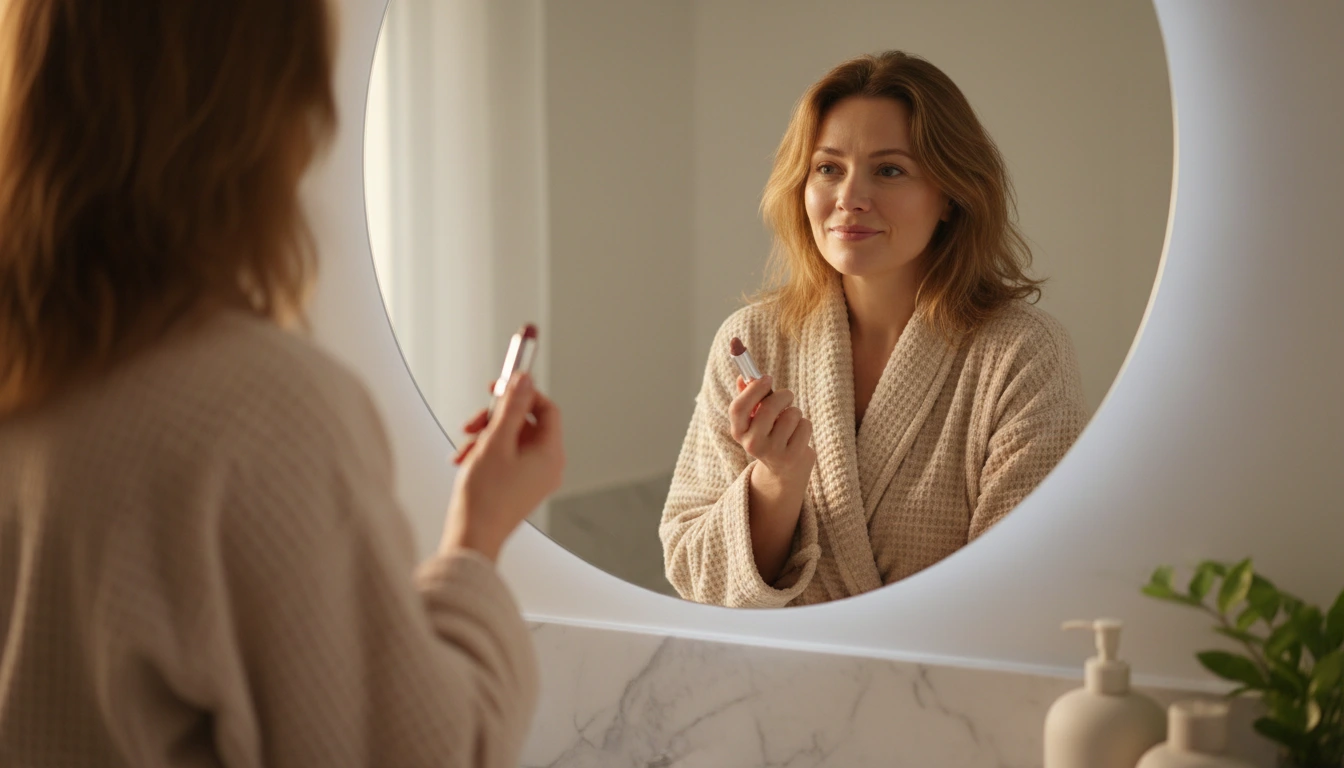
It’s 7:42 a.m. The coffee is lukewarm. There’s a missed call from school, an unread email from the boss, and a basket of laundry watching from the corner like an unfinished thought. She stands in front of the mirror, eyes a little puffy, and her hand hovers over the lipstick drawer. She doesn’t reach for the bold red today. She picks up the soft, dusty rose — the one that feels like a deep breath.
That tiny choice is rarely random. The psychology of lipstick colors runs much deeper than trend cycles or seasonal palettes. For exhausted women, lipstick often becomes a quiet form of self-regulation — a way of telling the nervous system, gently, that everything is going to be okay.
Why Lipstick Becomes a Comfort Ritual
A swipe of color is one of the fastest beauty gestures a woman can make. It takes seconds. It requires no mirror gymnastics, no brushes, no setting sprays. And yet, the emotional payoff can be surprisingly large.
When energy is low, the brain craves small, controllable wins. Choosing a lipstick is exactly that — a micro-decision with an instant visual reward. It’s makeup and mood working together in the simplest possible way.
The Two-Second Mood Shift
Color enters the eyes and reaches the limbic system — the emotional center of the brain — almost immediately. Warm shades can signal aliveness. Cool shades can signal calm. Nudes can signal “I’m here, but softly.” This is why lipstick color psychology isn’t fluff; it’s a real interaction between pigment, perception, and feeling.
The Psychology of Lipstick Colors, Shade by Shade
Every shade carries a quiet message. Tired women tend to gravitate toward specific families of color depending on what their nervous system is asking for that day. Some days it’s protection. Some days it’s permission to be seen.
Soft Pinks and Dusty Roses — The “I Need Gentleness” Shades
- Associated with warmth, safety, and nurturing energy
- Mimic the skin’s natural flush, which the brain reads as “healthy and rested”
- Often chosen on emotionally heavy days because they feel non-demanding
These are the shades women reach for when they want to look cared for — not impressive. They pair beautifully with soft beauty aesthetics, where the goal is to look like yourself on a really good Sunday.
Nudes and “My Lips But Better” — The Invisible Armor
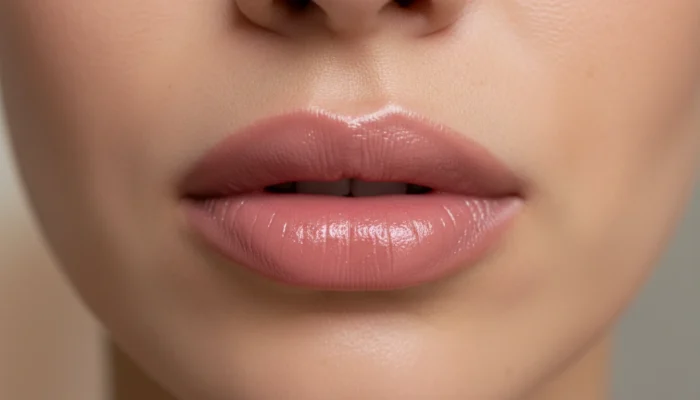
Nude lipstick is often misunderstood as boring. In reality, it’s strategic. A well-chosen nude says, “I’m composed. I’m fine. Please don’t ask too many questions.” It’s the lipstick of meetings, school pickups, and days when energy is precious.
If you love the bare-skin feeling, you may also enjoy the philosophy behind a minimalist makeup routine — same energy, less effort.
Berries, Plums, and Mauves — The Grounding Shades
- Cool undertones with depth, often described as “calming makeup shades”
- Create a sense of structure on the face without aggressive contrast
- Popular among women who want presence without performance
Berry tones are like a weighted blanket for the face. They feel intentional, but never loud.
Reds — The Reclaiming Shade
Red lipstick rarely shows up on the most exhausted days. It tends to appear on the days a woman decides to push back against the tiredness. Red is not always confidence — sometimes it’s defiance. Sometimes it’s “I haven’t slept, but I refuse to disappear today.”
Corals and Peaches — The “I Want to Feel Alive” Shades
Warm corals stimulate a sense of energy and friendliness. They’re often chosen in spring and early summer, or on mornings when a woman is trying to coax her own mood upward. They flatter most skin tones and lift the face without harsh contrast.
Emotional Beauty Choices Are Not Vanity
There’s an old, tired idea that caring about lipstick is shallow. The truth is much kinder. Emotional beauty choices are a quiet form of communication — with the self, and with the world. A lipstick can be a boundary, a reset, a small act of self-respect on a hard day.
Many women describe a “lipstick exhale” — that moment after applying color when the shoulders drop slightly and the day feels a little more manageable. That’s not imagination. That’s ritual at work.
The Mirror Moment Matters
Looking at one’s own face with intention — even for ten seconds — is a form of grounding. Add color, and the brain registers care. Add a soft press of the lips together, and there’s a tiny tactile reset. Small things. Big effect.
Scientifically Backed Ingredients in Modern Lipsticks
The exhausted skin barrier is often dehydrated, sensitive, and easily irritated. Modern lipstick formulas have become much more thoughtful about this. Here are some dermatology-friendly ingredients worth knowing.
Hyaluronic Acid
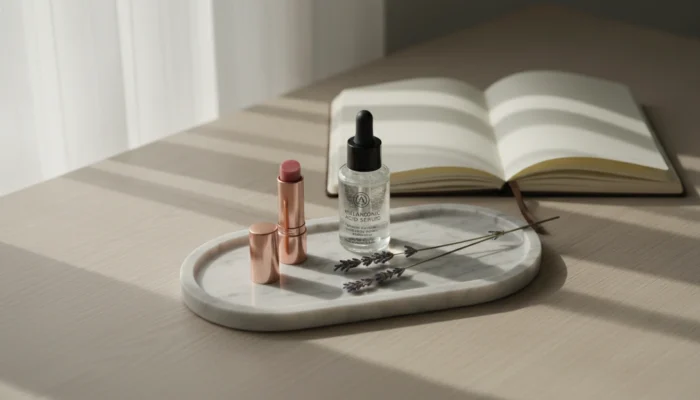
Hyaluronic acid is a humectant — meaning it draws water into the upper layers of the lip skin. Lips don’t have oil glands, so they dehydrate faster than the rest of the face. Hyaluronic acid helps plump the lip surface and reduce that tight, papery feeling that tired skin often has.
Niacinamide
Niacinamide (a form of vitamin B3) supports the skin barrier and helps calm redness. On the lips, it can ease irritation from frequent reapplication, weather exposure, or pigment-heavy formulas. It’s a gentle multitasker — exactly what overworked skin needs.
Squalane
Squalane mimics the skin’s natural lipids, which means it sinks in beautifully without feeling greasy. It softens the surface of the lips and helps pigment glide more evenly. For mature or dry lips, it’s a quiet hero.
Ceramides
Ceramides reinforce the lipid layer of the skin. On the lips, they reduce moisture loss and protect against environmental stress — wind, central heating, long flights, long days. They’re particularly valuable in winter formulas.
Vitamin E (Tocopherol)
An antioxidant that helps protect lip skin from oxidative stress and supports softness. It also extends the shelf life of natural oils in the formula, which matters for clean beauty lovers.
Always consult with a healthcare professional before starting new treatments, especially if you have allergies, lip dermatitis, or are pregnant or breastfeeding.
For more on ingredient-conscious beauty, this guide on clean ingredients in cosmetics is a gentle starting point.
Calming Makeup Shades for Stressful Seasons
During seasons of stress — postpartum months, grief, burnout, hormonal shifts — many women instinctively pare back their makeup. The bright colors stay in the drawer. The neutrals come forward. This isn’t a loss of identity. It’s the nervous system asking for less stimulation.
- Muted rose for everyday wear
- Warm beige-pink for “I don’t want to think about my face today”
- Soft mauve for grounded, low-energy elegance
- Tinted lip balm for the days when even lipstick feels like too much
Pairing these with a lightweight base can keep the whole look in harmony. A tinted moisturiser instead of full foundation often complements these softer lip tones beautifully.
Expert Tip and a Common Myth, Gently Debunked
Expert Tip
Before applying any lipstick — especially matte formulas — press a small amount of plain lip balm into the lips, then blot. This creates a soft, hydrated canvas without making the lipstick slide. The color sits more evenly, and the lips stay comfortable for hours.
Myth: “Dark lipsticks age the face.”
Not quite. What ages the face is dryness, harsh lip liner that doesn’t match the lipstick, and formulas that settle into fine lines. A creamy plum or berry on well-hydrated lips can look incredibly elegant at any age. The shade isn’t the problem — the texture and prep are.
How to Build a Lipstick Wardrobe That Supports Your Mood
Think of lipstick the way you might think of a small capsule wardrobe. A few thoughtful pieces will serve better than a drawer full of impulse buys.
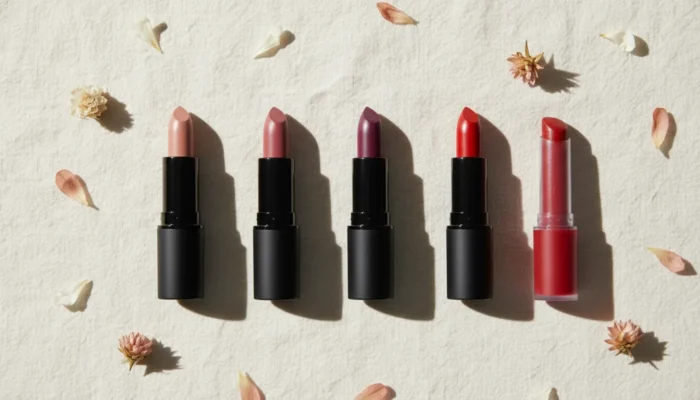
- One soft nude — for invisible-armor days
- One dusty rose — for gentle, low-effort polish
- One mauve or berry — for grounded presence
- One red — for reclaiming days
- One tinted balm — for the truly tired mornings
That’s it. Five shades can carry a woman through most emotional weather.
Soft Beauty Aesthetics and the Return to Gentleness
The recent rise of soft beauty aesthetics — diffused skin, blurred lips, barely-there color — isn’t only a trend. It reflects a cultural exhale. Women are tired of performing. They want makeup that feels like rest, not armor.
This is why “your lips but better” formulas, balm-lipstick hybrids, and second-skin textures keep growing in popularity. They honor the face instead of covering it.
Frequently Asked Questions
1. Does lipstick color really affect mood?
Yes, in subtle but real ways. Color enters the brain through the visual system and influences emotional perception. A shade that feels right can create a small, genuine mood lift — especially when paired with a calming morning ritual.
2. What lipstick shade is most flattering on tired days?
A warm dusty rose or a soft mauve tends to flatter most skin tones without demanding energy. These shades add quiet color to the face and counterbalance dullness without looking overdone.
3. Are hydrating lipsticks better than matte ones?
Not necessarily — it depends on the lips and the day. Hydrating formulas are gentler for dry or sensitive lips, while matte formulas with modern conditioning ingredients (like squalane or hyaluronic acid) can be very comfortable too. The key is prep and barrier care.