

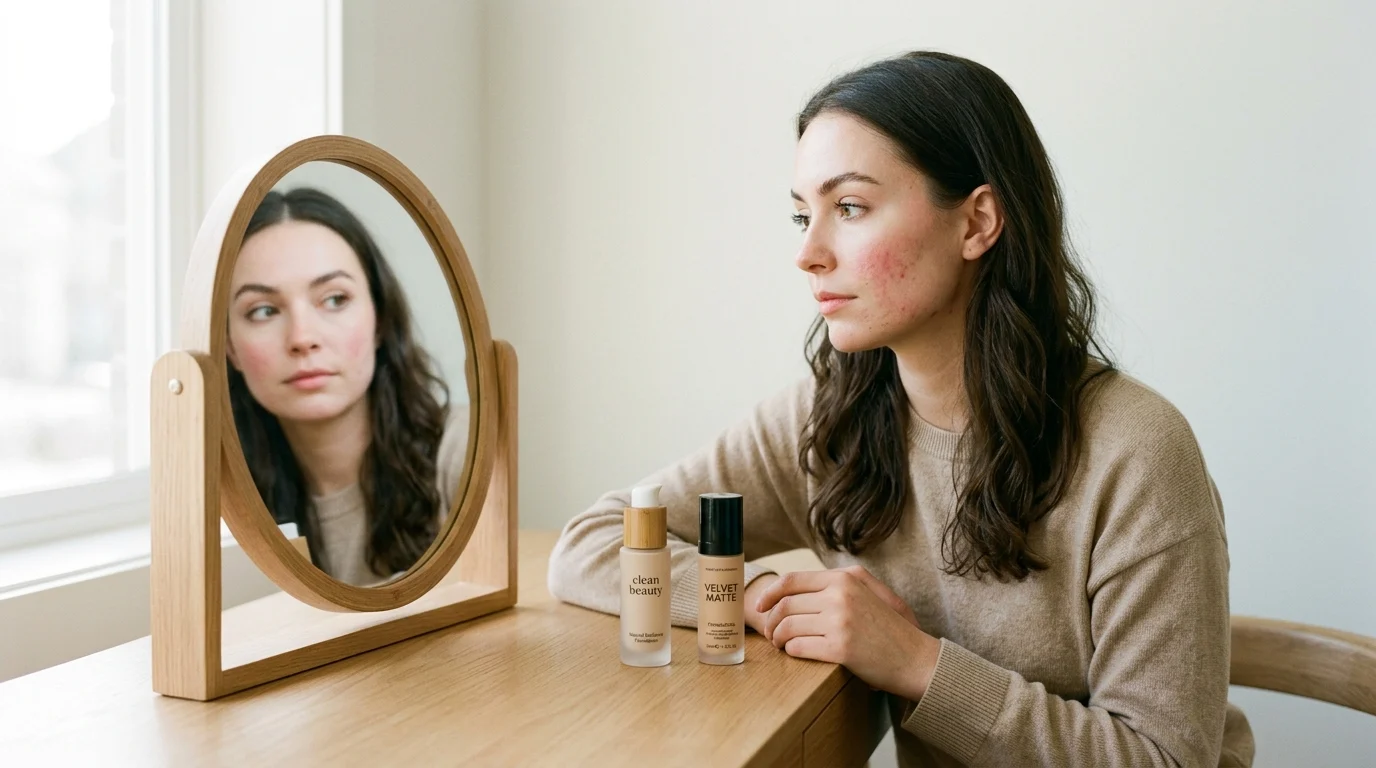
She had spent two weeks researching her new foundation. The old one — a mid-range, well-reviewed formula — had left her cheeks flushed and tight by noon. So she switched: a premium “clean” alternative, free from parabens, synthetic fragrance, and a small glossary of other flagged ingredients. Within ten days, the redness was back. Different product. Same skin response.
The answer, it turned out, had nothing to do with which ingredients were natural and which were synthetic. It came down to which formula her specific skin barrier could actually tolerate — and why that distinction matters far more than any “free from” claim on the packaging. The question of makeup ingredients to avoid is more nuanced than ingredient blacklists suggest. This is not a fear list. It is a framework for understanding why certain formulas cause problems for certain skin types — and why formula tolerance is the more useful concept to reach for.
Irritation vs. Allergy: Why the Difference Matters
Not all skin reactions are created equal — and conflating them leads to poor decisions about cosmetic formulas. Clinically, two distinct mechanisms produce what most people broadly call “skin sensitivity”: irritant contact dermatitis (ICD) and allergic contact dermatitis (ACD).
Irritant contact dermatitis is a direct, physical response to cumulative stress on the skin’s protective surface. Think of it as wearing a stiff new shoe every single day: the skin breaks down not because it is allergic to leather, but because it is worn down by repeated friction. With ICD, concentration and frequency of exposure are the decisive variables. Any ingredient — natural or synthetic — can theoretically cause ICD if skin resilience is already diminished and the exposure is persistent.
Allergic contact dermatitis operates differently. It involves the immune system. After an initial exposure to a sensitizing molecule, the immune system quietly builds a response. Then, sometimes years later, a subsequent exposure — even to trace amounts — triggers a reaction. The ring you wore for a decade suddenly causes a rash. That is ACD. Once sensitization occurs, it does not resolve; the immune system remembers.
Research on the mechanism of irritant and allergic contact dermatitis confirms that the two conditions require different management strategies. For ICD, the goal is reducing cumulative barrier stress. For ACD, the goal is identifying and eliminating the specific sensitizing molecule. Treating them as identical — which most “ingredients to avoid” content does — produces guidance that is only partially useful.
This distinction is reinforced by recent dermatological research examining cosmetic-related dermatitis — including irritant contact dermatitis, allergic contact dermatitis, and ingredient sensitization across real-world product use. That body of work, reflected in pharmaceutical research by Saïdani (2025) at the University of Clermont Auvergne, highlights that skin reactions are rarely caused by a single ingredient acting in isolation. They are typically the result of repeated exposure, the concentration of an ingredient in a given formula, and the cumulative condition of the skin’s moisture barrier at the time of exposure. This is the framing that should underpin any honest conversation about why clean beauty labels do not guarantee skin compatibility.
Fragrance: The Most Documented Cosmetic Sensitizer
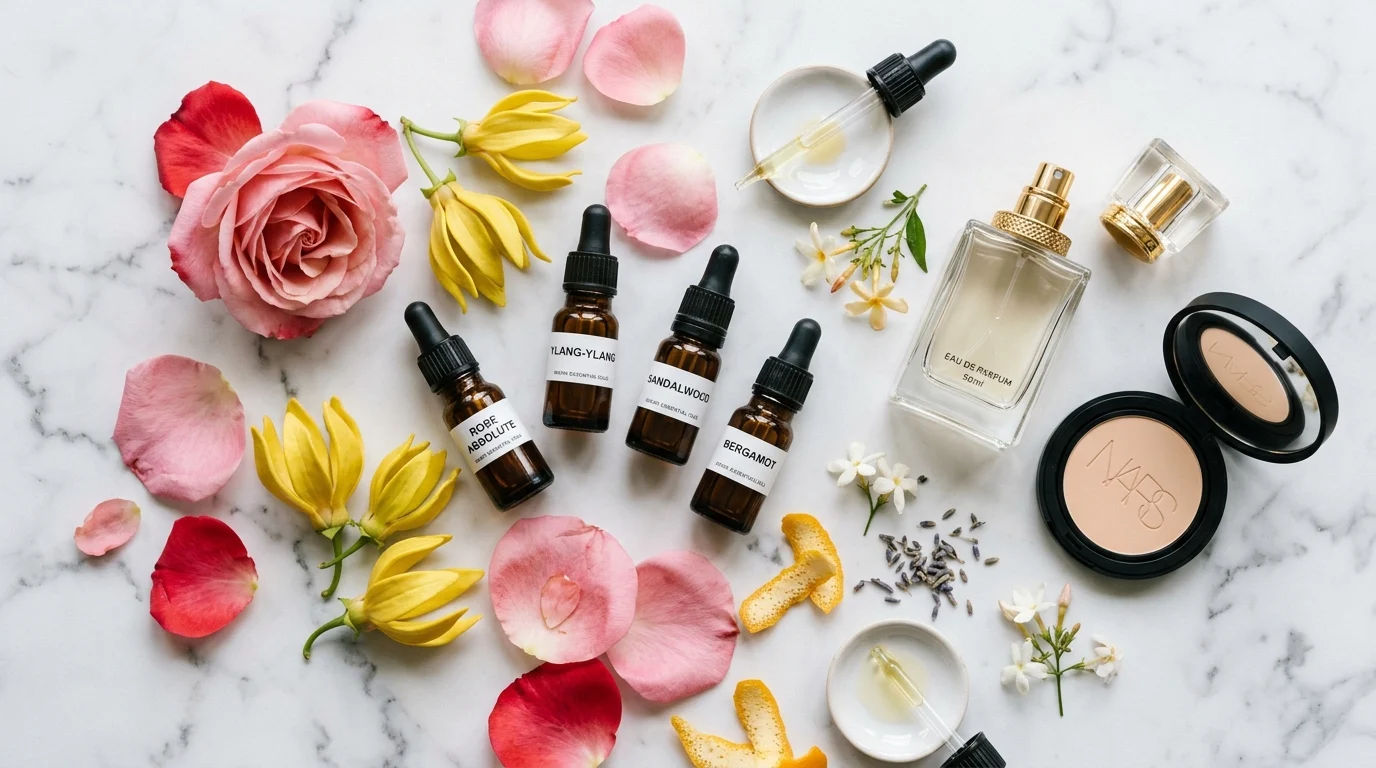
If there is one category that earns its place on a watchlist for reactive skin, it is fragrance. Not because it is inherently harmful — most people tolerate fragranced products without incident — but because it is consistently identified in clinical literature as one of the leading triggers of cosmetic-related contact dermatitis.
The detail that catches many consumers off guard: natural fragrance is not a safer alternative. Clinical data on fragrance sensitization in cosmetic products confirms that both synthetic fragrance compounds and natural essential oils carry sensitization potential. Rose absolute, ylang ylang, linalool, limonene — these are naturally derived molecules with established allergenic profiles. The “natural” designation does not reduce sensitization risk. It simply changes which molecules are responsible.
Who carries the highest individual risk? Those with:
- Rosacea-prone or chronically reactive skin
- A pre-existing compromised moisture barrier (eczema, perioral dermatitis)
- A history of cosmetic reactions that previously went unidentified
- Atopic dermatitis — where reduced epidermal protection increases permeability to sensitizing molecules
For these skin profiles, fragrance-free formulas meaningfully reduce cumulative exposure to known sensitizers. For skin that tolerates fragrance without issue, there is no clinical mandate to eliminate it. The operative word, always, is individual. For those actively navigating this, choosing makeup formulas for sensitive and reactive skin requires looking beyond a single ingredient category.
Alcohol in Cosmetics: Not All Alcohols Are Equal
The word “alcohol” on an INCI list is one of the most misread signals in beauty. It covers a chemically diverse family of compounds — some of which are barrier-stripping at high concentrations, and others that actively support skin hydration and texture.
The Distinction That Changes Everything
Volatile alcohols — alcohol denat. (denatured alcohol) and ethanol — evaporate quickly on skin contact. This is precisely why formulators use them: they create lightweight textures, sheer finishes, and rapid absorption in serums, setting sprays, and liquid foundations. At low concentrations in a well-hydrated, intact barrier, the effect is minimal. At high concentrations, applied repeatedly to dry or compromised skin, volatile alcohols can increase transepidermal water loss and reduce the skin surface’s natural resistance — making it more reactive over time.
Fatty alcohols — cetyl alcohol, stearyl alcohol, cetearyl alcohol — are emollients. They improve texture, soften feel, and reinforce the lipid matrix that keeps the skin surface intact. Finding “cetyl alcohol” on a label is not a red flag; it is typically a sign of a well-constructed emulsion.
- Volatile alcohols (alcohol denat., ethanol): can be drying at high concentrations on compromised or dry skin; less of a concern in low-concentration or mixed formulas
- Fatty alcohols (cetyl alcohol, stearyl alcohol, cetearyl alcohol): emollient, surface-compatible, and generally well-tolerated
- The real variable: concentration and your skin’s current condition — not the presence of “alcohol” anywhere on the INCI list
A formula listing alcohol denat. as a fifth or sixth ingredient sits in a very different risk category than one where it appears second. Position on the INCI list is a concentration proxy — and it matters.
Preservatives: Why “Preservative-Free” Is Not a Safety Signal
Preservatives in cosmetics are not optional. They exist to prevent microbial contamination — bacteria, mould, and yeast — in water-containing formulas. A foundation without an effective preservative system can become more vulnerable to microbial contamination, especially in water-based formulas used repeatedly over weeks. Preservatives are a necessary part of responsible cosmetic formulation; the more productive question is whether the chosen system is appropriate, well-tested, and matched to the product type.
The clinical picture on preservatives is measured, not alarming. Certain preservative systems — notably some formaldehyde-releasing agents (like DMDM hydantoin) and, to a lesser extent, certain parabens in sensitized individuals — can trigger reactions in people with a pre-existing sensitization history. This is not a population-wide danger. It is individual immune reactivity operating in a small subset of users.
The honest formulation question is always one of balance: a well-chosen, appropriate preservative system at tested concentrations presents a far smaller risk than an inadequately preserved product contaminated after two weeks of use. “Preservative-free” labelling, where it appears on water-based products, often signals either a short shelf life, a reliance on high alcohol content, or — in less scrupulous cases — insufficient protection.
For a grounded reading of these claims, how to evaluate clean ingredient claims in cosmetics offers a useful starting framework. The question is never “does this formula contain a preservative?” It is: “is the preservative system appropriate, well-tested, and used at levels that balance safety and efficacy?”
Makeup Ingredients to Avoid: Why Certain Formulas Trigger Skin Irritation
The Saïdani (2025) pharmaceutical research on cosmetic-related dermatitis offers a clinically important reframe: skin irritation from makeup is almost never about one offending ingredient. It is a convergence of factors — and the skin’s cumulative defense condition sits at the centre of all of them.
Four categories consistently appear in the clinical record of cosmetic irritation:
- Fragrance and perfume compounds: both synthetic molecules and natural essential oils carry sensitization potential; the risk is individual and cumulative, not universal
- Volatile alcohol-based formulas: barrier stress occurs under specific conditions — high concentration, frequent use, already-compromised skin; the ingredient alone is not the full story
- Harsh removal routines: the makeup itself is sometimes exonerated by a closer look at removal — abrasive cleansing, hot water, and repeated rubbing disrupt surface integrity more than many formulas do
- Certain preservative systems: individual sensitization in a minority of users; not a categorical harm, but worth identifying through patch testing in reactive skin profiles
The editorial reframe from the research is precise and worth holding: the more useful question is not “is this ingredient natural or synthetic?” but “does this formula — applied at this frequency, removed in this way — support my skin barrier, or does it repeatedly stress it?” Barrier disruption, over time, is the mechanism that converts tolerability into reactivity. A formula your skin managed for years can become a source of cosmetic ingredients irritation once the barrier has been weakened by another variable — illness, climate change, a new actives routine, stress.
If a cosmetic product causes persistent redness, burning, or breakouts, discontinue use and consult a dermatologist — patch testing can identify specific sensitizers and prevent repeated barrier damage.
Heavy Occlusive Formulas: When Coverage Becomes a Barrier Problem
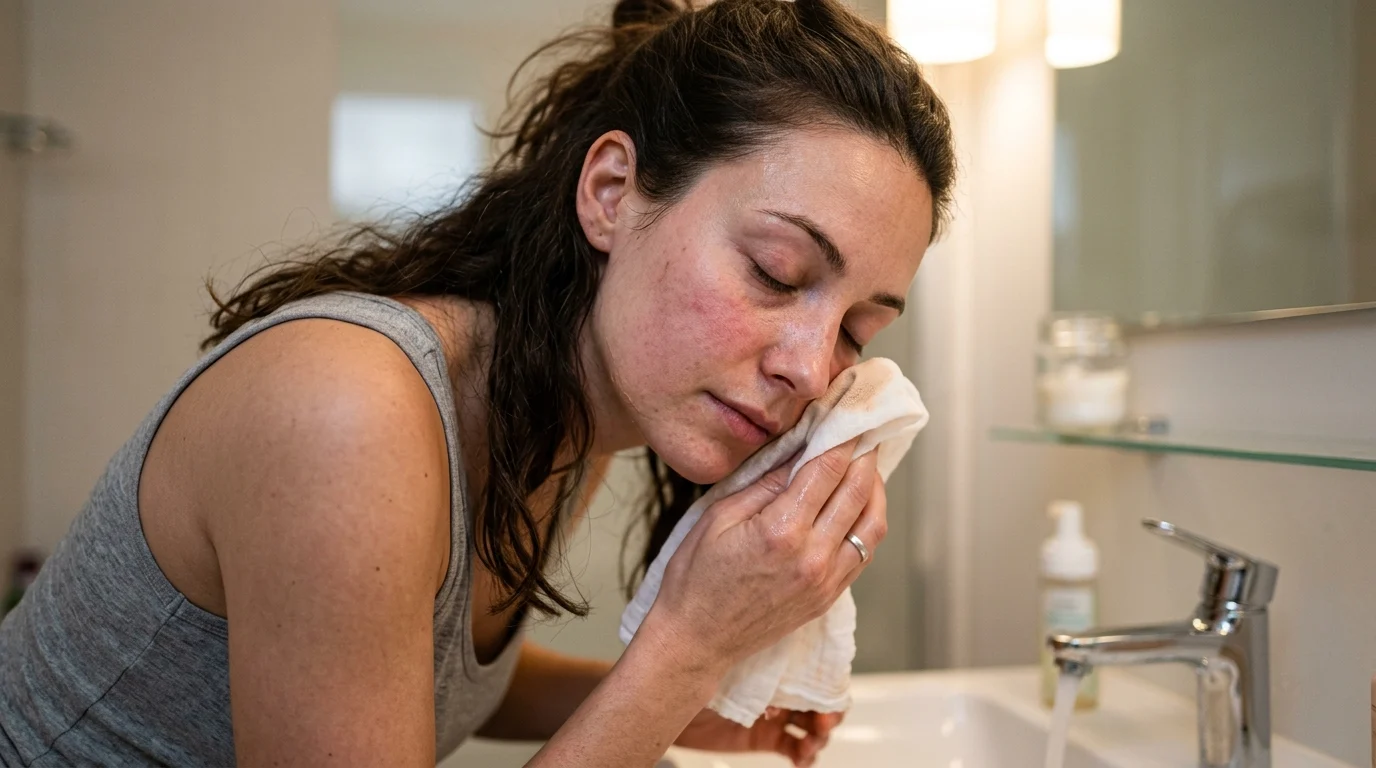
Occlusive ingredients are not villains. In dermatology, occlusion is a therapeutic tool — petrolatum, mineral oil, and certain silicones are used intentionally to support barrier repair by reducing transepidermal water loss. The problem is not occlusion as a mechanism. It is daily, prolonged facial occlusion without adequate recovery.
Full-coverage, long-wear foundations — particularly silicone-heavy or wax-based formulas — create a sealed microenvironment on the skin surface during wear. Over extended hours, this alters local oxygen exchange, raises humidity against the skin, and can shift the slightly acidic pH that the skin microbiome depends on for stability. For most people wearing makeup for a standard workday, this is a manageable exposure. For skin already dealing with barrier compromise, rosacea, or microbiome imbalance, daily heavy occlusion without thorough removal and adequate rest becomes a pattern of cumulative stress.
The practical implication is not “avoid full-coverage formulas.” It is: consider wear duration. Prioritize thorough, gentle removal each evening. Allow the skin surface genuine recovery time between heavy-coverage applications. The formula is rarely the sole variable — the usage pattern shapes the outcome.
The “Free From” Label Trap: What Clean Beauty Often Gets Wrong
A “free from” label is a marketing statement, not a dermatological guarantee. Fragrance-free does not mean reaction-free — a formula without added fragrance may still contain essential oils, botanical extracts, or preservatives with sensitization potential. Paraben-free does not mean better-preserved. Alcohol-free does not mean barrier-supportive. Each claim removes one variable while leaving the formulation complexity largely intact.
The deeper issue with clean beauty ingredients messaging is that it inverts the relevant question. Safety and tolerability are not determined by the presence or absence of a handful of flagged molecules. They are determined by the overall formulation — its pH, its concentration ratios, the integrity of its preservation system, how it interacts with the skin’s surface environment, and how it was tested. A well-designed synthetic formula, built with barrier compatibility in mind, may outperform a “natural” alternative on every measure of tolerability.
Hypoallergenic makeup claims sit in a similarly grey zone — there is no regulatory standard for that designation in most markets. It signals intent, not clinical validation. The same applies to free from cosmetic labels broadly: they tell you what a product excludes, not what it does for your skin.
The real question — and the more empowering one — is not “does this contain a flagged ingredient?” It is “was this formula designed with skin barrier function in mind, and does my skin’s current condition allow it to tolerate this?” For a clearer read on what rigorous formulation transparency actually looks like, the real meaning of transparency in cosmetic formulation offers a grounded perspective.
Myth vs. Reality The INCI list does not tell you whether a product will irritate your skin. What matters is the concentration of each ingredient, the overall formulation context, your skin barrier condition, and your individual sensitization history. No list of “ingredients to avoid” can replace understanding your own skin’s tolerance patterns — and no “free from” label can do that work for you.
Frequently Asked Questions
Is fragrance in makeup always bad for sensitive skin?
No. Fragrance is the most documented cosmetic sensitizer, but “sensitizer” does not mean universally harmful. Many people with sensitive skin tolerate fragranced products without any reaction. The risk is individual — it depends on your sensitization history, the integrity of your skin barrier, and the concentration of fragrance compounds in a given formula. For rosacea-prone or barrier-compromised skin, fragrance-free formulas reduce cumulative exposure to known sensitizers. For everyone else, it is a case-by-case assessment, not a categorical rule.
Should I avoid all products containing alcohol?
Not at all — and this is one of the most persistent misreadings of INCI lists. Fatty alcohols like cetyl and stearyl alcohol are emollients that actively support the skin barrier; they are not a concern. Volatile alcohols like alcohol denat. deserve more attention at high concentrations on dry or compromised skin, but their presence at lower levels in a well-formulated product is unlikely to cause harm. Read the ingredient position on the label, consider your skin’s current condition, and resist the reflex to avoid any formula that includes the word “alcohol.”
How do I know if a makeup ingredient is causing my skin reaction?
Elimination alone is rarely enough — the number of variables in a typical routine makes self-diagnosis unreliable. A dermatologist-administered patch test is the most accurate method for identifying specific sensitizers, particularly for suspected allergic contact dermatitis. For irritant reactions, a structured elimination approach — removing one product at a time and allowing the barrier to recover — can help identify the likely source. When redness, burning, or persistent breakouts follow a new product introduction, discontinuing it promptly and consulting a dermatologist is always the right call.
Pingback: Comedogenic Makeup Ingredients: Which Ones Actually Clog Pores? - Denyva
Pingback: Makeup Allergy Skin Reaction: Why Products You Loved Suddenly Cause Flare-Ups - Denyva