


The comedogenic scale shows up everywhere — Reddit threads, ingredient-checker apps, influencer explainers — and it is treated as if it were a medical verdict. Yet the science behind those tidy 0–5 numbers is decades old, was collected largely on rabbit ears, and is far messier than any app suggests. Understanding comedogenic makeup ingredients and the real behaviour of pore clogging cosmetics means letting go of the idea that a single rating can predict what a finished product will do to your face. The truth is more nuanced — and, once you have it, considerably more useful than a colour-coded chart.
Where the Comedogenic Scale Actually Comes From
The concept has a specific origin. In 1972, dermatologists Albert Kligman and Otto Mills coined the term “acne cosmetica” to describe breakouts they linked to certain cosmetic ingredients rather than to ordinary acne. It was a genuinely useful observation at the time, and it set off a line of research into which substances might be responsible.

Kligman and Kwong later refined the rabbit ear model in 1979 as a standardised assay, and in 1984 Fulton and colleagues published the landmark study in the Journal of the American Academy of Dermatology that categorised common cosmetic ingredients using this method. That paper is, more than any other, the source of the numbers still circulating online.
Here is the part the apps tend to omit. Those ratings came from rabbit ear skin, tested with pure, undiluted ingredients, under controlled lab conditions that bear little resemblance to how a foundation or primer actually sits on a human face. The scale you screenshot from an ingredient checker is, in essence, a historical artifact — a research tool from another era, not a validated consumer safety instrument. Treating it as the latter is where most of the confusion begins.
The Problem With Testing on Rabbit Ears
The rabbit ear assay had a practical logic: rabbit follicular tissue reacts quickly and visibly, which makes it convenient for screening. But that same reactivity is the flaw. Rabbit ear follicles respond to substances that human facial skin either tolerates comfortably or clears on its own, which means the model tends to overstate risk.
Evidence indicates this produces a steady stream of false positives. Ingredients flagged as strongly comedogenic in rabbits are frequently well-tolerated in clinical human use, especially at the concentrations actually found in cosmetics. A 2025 review in JAAD Reviews revisits exactly this gap between animal findings and human outcomes.
There is a second, quieter problem: the method was never tightly standardised. Research has shown that results vary meaningfully between laboratories, so the same ingredient can read as comedogenic in one lab and unremarkable in another. Think of it like judging whether a person would react badly to a bee sting by watching a species with entirely different immune architecture — the direction of the effect may be right, but the magnitude and specificity are not. None of this makes the original work worthless. It was a real step forward in the 1970s. The mistake is applying its raw results uncritically to modern formulations and human skin.
Concentration and Formulation Change Everything
The original assays tested ingredients neat — at 100% concentration. No commercial product asks you to smear pure isopropyl myristate or lanolin onto your cheeks. That single fact should reframe how much weight any raw rating deserves.
Inside a finished emulsion, an ingredient is diluted, buffered by everything around it, and carried in a vehicle — a gel, a cream, an oil-in-water base — that changes how it behaves once it reaches the follicle. Research on formulation effects, including work summarised in a 2021 paper indexed in PMC, points to the same conclusion: the delivery system matters as much as the ingredient.
Contact time is another overlooked variable. A “comedogenic” ingredient in a cleanser that leaves your skin within thirty seconds presents a negligible risk next to the same ingredient parked in a leave-on foundation for twelve hours. Formulation interactions cut both ways, too — some combinations push an ingredient deeper into the follicular canal, others hold it back at the surface.
The practical implication is blunt. Running a foundation’s ingredient list through an online comedogenic checker treats a carefully balanced emulsion as though it were a pile of isolated chemicals. It is not, and the method is not reliable.
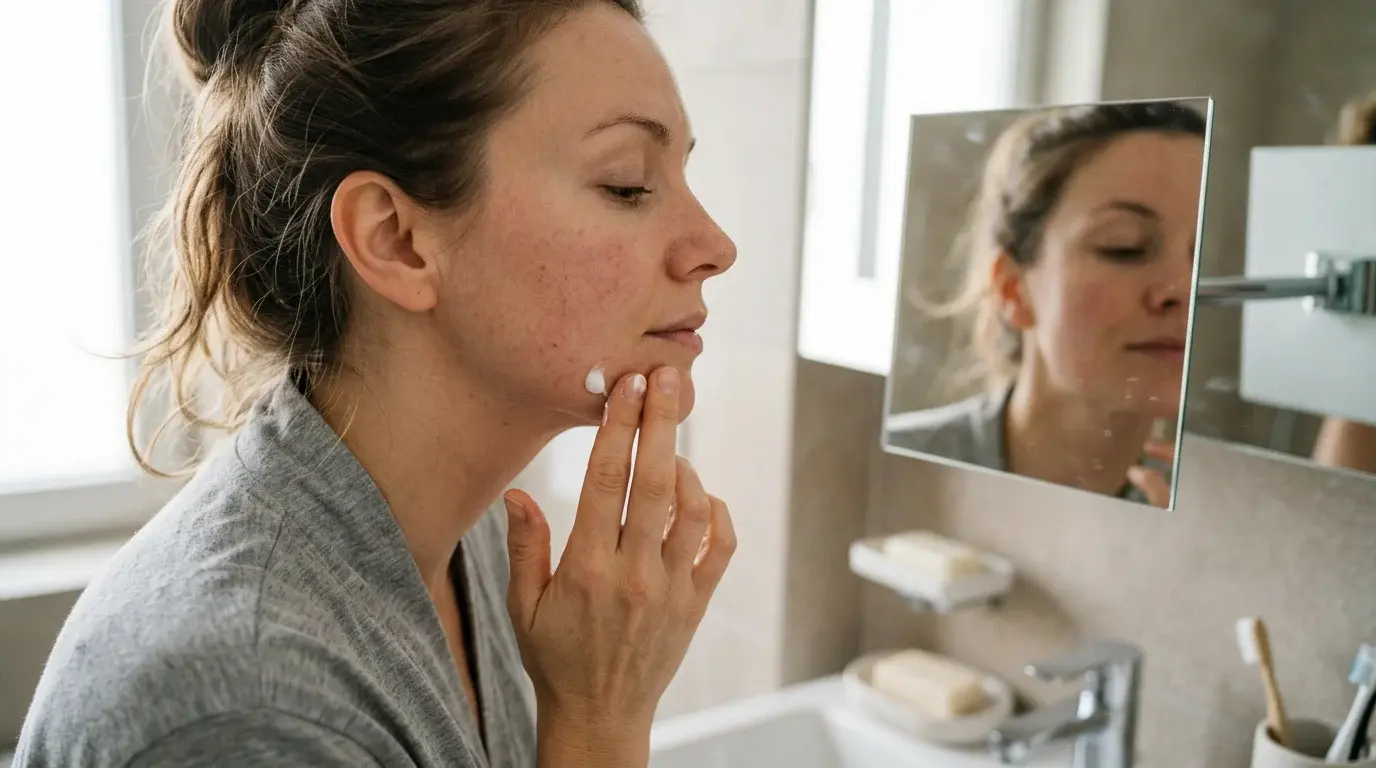
Ingredients Worth Paying Attention To — With Appropriate Nuance
None of this means every ingredient is equally innocent. Some do carry more consistent evidence of comedogenic potential, particularly in people already prone to congestion — and it is worth knowing which ones.
Isopropyl myristate and its cousin isopropyl isostearate are synthetic esters that also act as penetration enhancers. Evidence suggests they can migrate into follicular canals and contribute to hyperkeratinisation at higher concentrations, and a human clinical study places them among the more consistently flagged ingredients across both animal and human observation. Lanolin and its acetylated derivatives have likewise been flagged repeatedly, and some dermatological writing still counsels caution for acne-prone skin — though, again, concentration and formulation are significant modifiers.
Coconut oil is the internet’s favourite villain. The early assay data does support a high rating, and some people genuinely break out when they use it as a pure facial oil. But a trace amount in a rinse-off cleanser is a different clinical proposition entirely from slathering it on neat.
Frame these as ingredients worth monitoring in your own context, not universal bans — and remember the earlier point holds: the finished formulation matters more than any single ingredient’s raw score. The broader challenge of interpreting makeup ingredient labels — including the irritation vs. allergy distinction — is covered in detail in Makeup Ingredients to Avoid.
What “Non-Comedogenic” on a Label Actually Means
This is where consumer literacy earns its keep. In the United States, the FDA does not regulate the term “non-comedogenic.” There is no official definition, no mandated testing protocol, and no approval a product must pass before printing the word on its packaging.
Some brands do the work — internal or third-party human panel testing, often over about 28 days with dermatological assessment. Others simply add the phrase. From the label alone, you cannot tell which is which, which makes the claim less informative than most shoppers assume.
It also helps to separate two words that often get treated as synonyms. “Non-comedogenic” and “oil-free” are not the same thing. A product can be entirely oil-free and still contain heavy waxes, synthetic esters, or occlusive agents that congestion-prone skin dislikes — while some lightweight oils are perfectly well-tolerated, even by acne-prone types.
So the honest read on “non-comedogenic” is this: it signals formulation intent, not a guaranteed clinical result. A useful signal, worth noticing — but not a promise you should rely on in place of your own experience.
A More Useful Framework for Acne-Prone Skin
If the ingredient list is a weak predictor, what should you actually do? Start by prioritising how a finished product behaves on your skin over what its label lists. Introduce one product at a time, and if congestion builds consistently over four to six weeks, that product is your likely culprit — whatever the checker said.
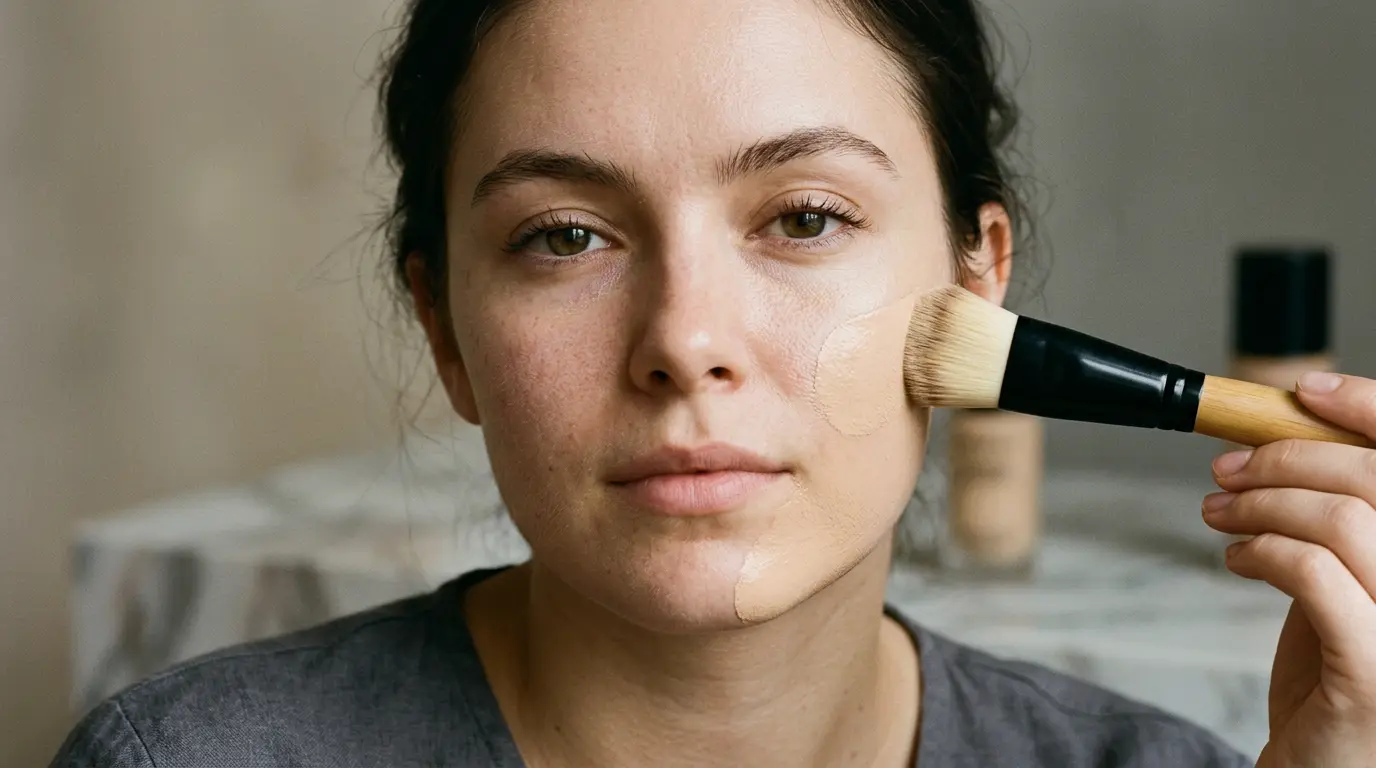
Patch test somewhere that reflects reality. The jawline and forehead tend to predict how the rest of your face will respond; the inner arm tells you almost nothing about follicular behaviour. Pay attention, too, to position on the INCI list — ingredients near the top are present in the highest concentrations, so a “comedogenic” ingredient sitting fifteenth in a water-based formula carries far less risk than the same one listed third in an oil-based one.
Apply your strictest scrutiny to leave-on products with the longest contact time — foundations, primers, heavy moisturisers — rather than cleansers or toners. And accept that individual variability is real without treating it as an excuse: hormones, microbiome, and barrier integrity all shape how your follicles respond, so an ingredient that reliably breaks out one person may do nothing to another.
If a product simply is not integrating with your skin or the other layers in your routine — causing texture, separation, or congestion — it is worth asking whether formulation compatibility is the issue, as explored in Makeup Pilling: Why Your Makeup Separates and How to Fix It.
FAQ
Are online comedogenic ingredient checkers accurate?
Largely, no — at least not in the way most people use them. These tools draw on the original Kligman and Fulton rabbit ear data, which tested pure ingredients at concentrations no commercial product would ever use. They can point you toward ingredients worth monitoring, but treating a 3/5 rating as a definitive “this will clog your pores” verdict misrepresents the science underneath it.
Is coconut oil definitely comedogenic?
Early assay data rates it as high-comedogenic, and for some people with congestion-prone skin it does cause breakouts when used as a facial oil. But in a finished formulation at low concentration, the same caveat applies: the rating came from conditions very different from normal cosmetic use. If coconut oil has historically congested your skin, avoid it — if you have used coconut-containing products without trouble, the rating alone is not a reason to change course.
Should I only buy “non-comedogenic” labelled products if I have acne-prone skin?
The label is worth looking for, since it at least signals that the brand considered the issue while formulating. But it is not a guarantee, because the term is unregulated. The more reliable approach is personal observation: using one product consistently over four to six weeks, while keeping your other variables stable, tells you far more than any label can.
Which makeup product types are most likely to cause congestion?
Leave-on, film-forming products with heavy emollient or occlusive bases — certain foundations, primers, and heavy-coverage concealers — carry the most risk for congestion-prone skin. High-silicone bases can also trap sebum if skin is not thoroughly cleansed at day’s end. Rinse-off products, by contrast, pose minimal comedogenic risk regardless of their ingredient ratings.