

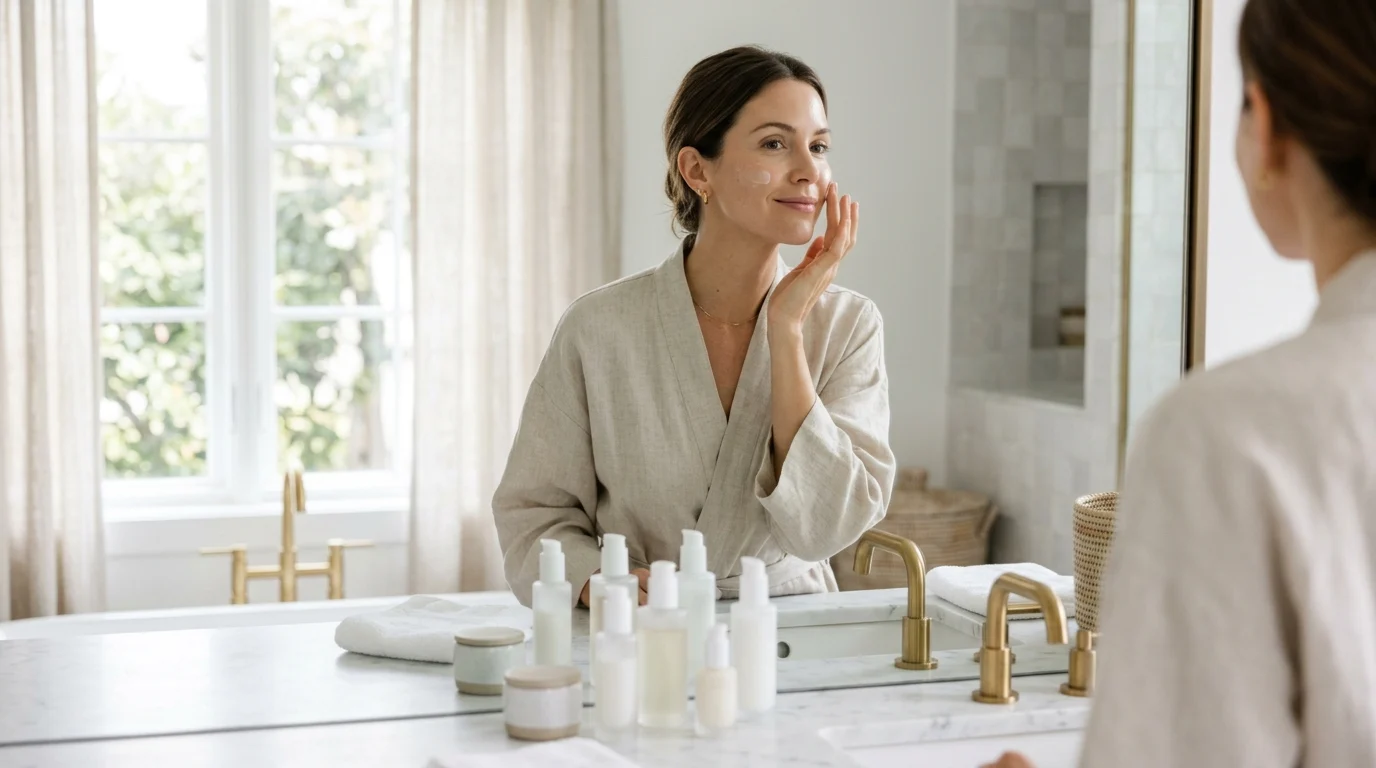
She has the vitamin C serum, the collagen peptide supplement, the gym membership, and the Sunday morning routine that costs more than most people’s weekly grocery bill. And yet — the skin looks tired by Thursday. Energy dips by mid-afternoon. Resilience, physical and aesthetic, feels inconsistent at best. The investment is real. The return is not matching it. The missing variable is rarely another product. It is almost always the structure, timing, and regularity of what is already in place. This is precisely where wellness rituals — not wellness products — earn their distinction. An evidence-based wellness routine does not demand more effort. It demands better alignment: with biology, with behavioral science, and with the body’s own internal schedule.
This article applies a science-led lens to the daily habits that carry the strongest research backing for skin health, energy, and physiological resilience — and explains not just what to do, but why the timing and consistency of these habits matter as much as the habits themselves.
Why Consistency Beats Intensity: The Neuroscience of Wellness Habits
Most people approach wellness the way they approach a new year: with intensity, novelty, and an elaborate plan. The behavioral science tells a different story. Sustainable habit formation is not about willpower or motivation — it is about the progressive reduction of cognitive friction through repetition. The basal ganglia, a cluster of structures deep in the brain involved in procedural learning, encodes repeated behaviors into automatic sequences. The more a behavior is repeated in the same context, the less conscious effort it requires.
Think of it as a path worn through grass. The first time you walk across a field, you push through the resistance of uncut ground. Walk the same route twenty times, and the path begins to form. Walk it two hundred times, and you barely notice you are walking — the route becomes the default. According to the behavioral science of habit formation and why consistency determines outcomes, this neurological encoding operates through a three-part loop: cue, routine, reward. The cue triggers the behavior; the routine is the behavior itself; the reward reinforces the neural pathway.
Applied to skin health, this means that a daily SPF application or an evening barrier moisturizer is not simply a cosmetic action — it is a behavioral system. The goal of daily wellness habits is not heroic individual effort. It is progressive automaticity: behaviors that become low-friction through repetition, compounding their benefits over weeks and months rather than delivering a single result. This is also why the slow beauty movement reflects the same principle of cumulative wellness habit consistency — it is not a trend; it is applied behavioral science.
Circadian Timing: Why When You Do Something Matters as Much as What You Do
The body does not operate on a flat, uniform schedule. It runs on a precise internal clock — a 24-hour biological cycle that governs everything from hormone secretion and immune function to cellular repair and skin barrier activity. This is the circadian rhythm: not a metaphor, but a measurable molecular system present in nearly every cell type in the body.

Think of it as a biological factory with different shifts. The morning shift handles alertness, cortisol production, and immune surveillance. The night shift is reserved for maintenance: barrier repair, ceramide synthesis, collagen production, and cellular turnover. As the Cleveland Clinic overview of circadian rhythm and its role in health and skin function establishes, disruptions to this cycle — irregular sleep timing, late-night light exposure, shift work — measurably impair the body’s ability to execute these repair processes efficiently.
The NIH fact sheet on circadian rhythms and their biological functions details how gene expression itself follows circadian patterns — meaning that certain biological functions are only optimally active during specific windows. For skin specifically:
- Morning: Cortisol peaks (supporting alertness, but suppressing cellular repair). This is the optimal window for UV protection application and antioxidant support.
- Midday: Oxidative stress from UV exposure peaks. Barrier integrity is at a relative low point.
- Evening and night: Skin barrier permeability increases; ceramide production and collagen synthesis are prioritized. This is the optimal window for occlusive and barrier-supportive skincare.
Circadian rhythm wellness means aligning morning wellness rituals with the morning biological phase and evening habits with the nocturnal repair phase. The same SPF applied at night has no UV protective function. The same barrier moisturizer applied in the morning, when barrier function is stronger, has less impact than when applied during the evening window. Timing is not supplementary — it is mechanistically significant.
Sleep as a Non-Negotiable Wellness Ritual
No category of evidence-based wellness routine is as well-documented — or as routinely underestimated — as sleep. During sleep, particularly in the early hours of the night when deep slow-wave sleep dominates, growth hormone secretion peaks. Growth hormone plays an important role in tissue repair and regeneration, supporting processes involved in skin cell renewal — though collagen synthesis during sleep is governed by multiple coordinated pathways, not growth hormone alone. The body is not merely resting — it is running a dedicated maintenance cycle.

Think of nocturnal skin repair as a maintenance crew that only works when the building is quiet. Disrupting the quiet — whether through insufficient sleep duration, fragmented sleep, or irregular sleep timing — disrupts the repair. According to research on sleep and skin health repair processes, sleep deprivation measurably increases transepidermal water loss (TEWL), impairs barrier function recovery, and reduces skin’s capacity to recover from UV-induced stress. Sleep debt also raises cortisol levels chronically — and sustained cortisol elevation has direct consequences for inflammatory skin conditions.
For more on the dermatological consequences of insufficient rest, what sleep deprivation does to skin health and why nocturnal repair matters provides a well-structured overview. And for those whose sleep quality is a limiting factor, magnesium as a sleep-supportive and skin-repair wellness habit examines one of the better-evidenced nutritional supports for sleep quality and skin repair.
The practical implication: sleep and skin health rituals are inseparable. Consistent sleep onset timing — not just sleep duration — reinforces circadian alignment and protects the nocturnal biological window. A regular 10:30 pm sleep onset repeated nightly produces different biological outcomes than seven hours taken at inconsistent times.
Movement as a Daily Wellness Ritual: The Microcirculation and Inflammation Case
Exercise is often discussed in wellness contexts in terms of aesthetics or weight. The more relevant case for skin and systemic health is circulatory and inflammatory. Consistent moderate aerobic movement — the kind represented by a daily walk, a steady cycling session, or 30 minutes of moderate exertion — produces measurably improved skin microcirculation: the network of capillaries that delivers oxygen and nutrients to the dermis and removes metabolic waste products.

The evidence on movement and systemic inflammatory biomarkers is directionally consistent: many studies associate sustained aerobic exercise with reductions in circulating inflammatory markers including CRP (C-reactive protein) and IL-6, though the magnitude of response varies across populations and individual health status. Since chronic low-grade inflammation is a documented driver of accelerated skin aging — including collagen degradation and barrier compromise — the skin relevance of anti-aging daily habits centred on movement is biologically grounded. The epistemological caveat: the timeline for visible skin changes from movement habits is individually variable and dependent on baseline inflammation levels and skin type. The mechanism is established; the visible outcome timeline is not uniform.
Improved insulin sensitivity from regular movement also reduces advanced glycation end products (AGEs) — sugar-derived compounds that cross-link collagen fibers and contribute to skin stiffness and dullness. This is a mechanism with solid biochemical grounding. For a focused review of the walking-specific evidence, the evidence behind walking as a daily skin health wellness ritual covers the microcirculation and inflammatory case in accessible detail. The walking wellness ritual — specifically its daily frequency rather than occasional intensity — is where the evidence sits most clearly.
Hydration Rituals: What the Evidence Actually Supports
Few wellness claims are repeated more confidently — and supported more poorly — than “drink more water for better skin.” The honest evidence position is more nuanced. Adequate daily hydration is essential for global physiological function: kidney filtration, thermoregulation, and cellular metabolism all depend on sufficient fluid intake. In clinically dehydrated individuals, skin turgor and appearance do measurably improve with rehydration. But the evidence that increasing water intake beyond adequate levels produces visible skin improvement in already well-hydrated individuals is limited and inconsistent.
The stronger evidence for hydration wellness habits and skin sits in two places:
- Barrier function and topical occlusion: Skin hydration is primarily governed by the integrity of the stratum corneum lipid matrix — ceramides, cholesterol, and fatty acids — not by water volume consumed. For most people, topical barrier support has a more direct effect on skin hydration than simply increasing water intake beyond already adequate levels — though adequate fluid intake remains a necessary baseline, not an optional one.
- Dietary essential fatty acids: Omega-3 and omega-6 fatty acid intake has better evidence for supporting skin barrier function and reducing TEWL than water volume. The mechanism — incorporation into skin cell membranes and lipid bilayer support — is well-characterized.
For a clear-eyed review of what the evidence does and does not support, what the evidence actually says about hydration and skin health separates the well-evidenced from the plausible-but-unconfirmed. Adequate fluid intake remains a sound baseline health habit. It is simply not the primary driver of skin hydration that wellness marketing implies.
Stress Regulation as a Wellness Ritual: Emerging Evidence and Biological Plausibility
The relationship between psychological stress and skin condition is not anecdotal — it has a documented biological mechanism. Cortisol, the primary stress hormone, suppresses ceramide and hyaluronic acid synthesis in keratinocytes, increases sebum production via androgen stimulation, and amplifies the activity of pro-inflammatory cytokines including TNF-α and IL-1β. Each of these effects has measurable consequences: compromised barrier function, increased sebaceous activity, and a pro-inflammatory skin environment that exacerbates conditions including acne, rosacea, and eczema.
This cortisol-skin pathway is biologically established. What requires more careful framing is the clinical evidence that specific stress-reduction practices — breathwork, meditation, time in nature, progressive muscle relaxation — produce quantifiable improvements in skin outcomes. Here, the epistemological rule applies. According to emerging research on mind-body interventions and skin health outcomes, the directional signal is promising: studies show associations between mindfulness-based interventions and improved inflammatory skin condition management. But many of these studies are small, and the methodological rigor varies. The Taylor and Francis behavioral medicine journal on psychodermatological research reflects a growing but still maturing field.
The practical position: stress regulation as a daily wellness habit is biologically justified through the cortisol-skin mechanism, even where specific practice effects on skin remain incompletely quantified. The evidence does not yet specify that ten minutes of box breathing will reduce rosacea flares — but the downstream biology of chronic cortisol elevation on skin is not in question.
Lifestyle Medicine: The Clinical Framework Behind Evidence-Based Wellness
What distinguishes evidence-based wellness routines from wellness industry messaging is a clinical framework. The American College of Lifestyle Medicine on evidence-based daily health habits defines lifestyle medicine as the application of evidence-based behavioral interventions — sleep, nutrition, physical activity, stress management, social connection, and avoidance of risky substances — to prevent and manage chronic conditions. This is not spa philosophy. It is an increasingly recognized clinical discipline supported by a growing body of research, with its own training standards and evidence-based therapeutic applications.
Its six pillars map directly onto skin-relevant biology:
- Sleep: Nocturnal repair, growth hormone release, barrier recovery
- Nutrition: Fatty acid supply for membrane integrity, antioxidant status, glycemic load and AGE formation
- Physical activity: Microcirculation, inflammatory biomarker reduction, insulin sensitivity
- Stress management: Cortisol regulation, inflammatory cytokine modulation
- Avoidance of risky substances: Smoking and excess alcohol have well-documented dermal consequences including impaired microcirculation and accelerated collagen degradation
- Social connection: Emerging evidence links social isolation with elevated inflammatory markers — a pathway with plausible skin relevance, though clinical data specific to dermatological outcomes is limited
This framework is why how the slow beauty movement aligns with lifestyle medicine’s evidence-based approach to daily health habits represents more than an aesthetic preference — it reflects the clinical evidence that cumulative, low-intensity, consistent behaviors produce more durable outcomes than acute, high-effort interventions. Lifestyle medicine skin outcomes are not the product of dramatic action. They are the product of biological accumulation.
Building a Personal Wellness Ritual Framework: Principles Over Prescriptions
The most common failure mode in wellness is substituting complexity for consistency. The evidence does not support elaborate routines — it supports repeated, biologically-timed, minimum-effective-dose behaviors that accumulate over months. Below are evidence-informed principles for building a personal framework:
- Anchor habits to existing behaviors (habit stacking): The most reliable wellness rituals attach to existing cues — SPF application after morning moisturizer, barrier cream after brushing teeth at night, a short walk after the morning coffee. The cue already exists; the new behavior simply follows it.
- Align habits to biological timing: Morning routines for UV protection, antioxidant support, and cortisol-aligned activity. Evening routines for barrier repair, occlusive care, and sleep onset preparation.
- Prioritize sleep onset consistency over duration alone: Regular sleep timing reinforces circadian alignment and nocturnal repair windows more reliably than irregular periods of longer sleep. The same seven hours taken at a consistent time each night produces different biological outcomes than seven hours taken at variable times.
- Choose movement frequency over intensity: Thirty minutes of daily moderate movement — a brisk walk, a steady cycle — produces more sustained circulatory and inflammatory benefit than occasional intense sessions separated by days of inactivity. The chronic inflammation case is built on frequency, not peak exertion.
- Apply the minimum effective dose principle: The simplest sustainable version of a habit consistently executed produces greater cumulative benefit than an elaborate version that is periodically abandoned. Behavioral sustainability is itself a health variable — not a concession to laziness, but a recognition that adherence determines outcomes more than design.
A note on morning ritual complexity: Wellness culture has built a significant mythology around the elaborate morning routine — the 90-minute sequence of journaling, cold exposure, targeted supplementation, and layered skincare. The behavioral and dermatological evidence does not support this framing. What produces outcomes is repetition and biological alignment, not duration or sophistication. A five-minute morning routine performed every day for a year — SPF applied consistently, consistent wake time, a ten-minute walk — produces measurably different outcomes than an elaborate weekend ritual practiced sporadically. Complexity is not the variable. Consistency and timing are.
Always consult with a healthcare professional before making significant changes to sleep, exercise, or supplementation habits, particularly if you have an existing health condition — lifestyle medicine interventions are most effective when personalized to individual health status.
FAQs
Which single wellness ritual has the strongest evidence for skin health benefits?
Sleep is among the lifestyle factors with the strongest evidence for supporting skin health — specifically consistent sleep timing and sufficient deep sleep duration. The nocturnal biological window governs barrier repair, ceramide synthesis, and tissue repair processes that topical products cannot replicate. Even the most advanced skincare routine cannot fully compensate for the biological effects of chronic sleep disruption.
How long does it take for daily wellness habits to produce visible skin changes?
This depends significantly on baseline, habit type, and individual biology. Sleep quality improvements and stress reduction can show measurable effects on inflammatory skin conditions within two to four weeks. Microcirculation and barrier function improvements from consistent movement and barrier-supportive skincare typically show noticeable change over six to twelve weeks. The longer horizon — collagen density, skin resilience, pigmentation evenness — operates on a three-to-six month timeline. There are no shortcuts here; the biology is cumulative.
Does morning or evening matter more for wellness rituals affecting skin?
Neither is universally more important — they serve different biological functions and are not substitutable. Morning rituals matter for UV protection, oxidative stress defense, and cortisol-aligned behaviors. Evening rituals matter for barrier repair, sleep onset support, and alignment with the nocturnal repair window. A complete evidence-based wellness routine addresses both phases. Optimizing one while neglecting the other is like staffing the morning factory shift and leaving the night maintenance crew empty.