


Skincare conversations tend to fixate on serums and active ingredients, while the mechanics of how a person actually breathes go unexamined. Yet the connection between mouth breathing and skin health is grounded in measurable vascular and respiratory biology, not viral aesthetics. Oral breathing bypasses the sinus cavities entirely, which matters more than it sounds—those cavities manufacture a gas that dermal microvessels depend on for adequate perfusion. Understanding nasal breathing skin oxygenation and nitric oxide synthesis helps separate what respiratory re-education can genuinely do for the skin from what “mewing” communities have exaggerated into folklore.
The Sinus Nitric Oxide Factory: How Nasal Breathing Fuels Dermal Microcirculation
The paranasal sinuses are not passive air chambers. They continuously generate high concentrations of nitric oxide through constitutive nitric oxide synthase enzymes lining the sinus epithelium. This is a dedicated biochemical process, present regardless of whether a person is thinking about their breathing at all.
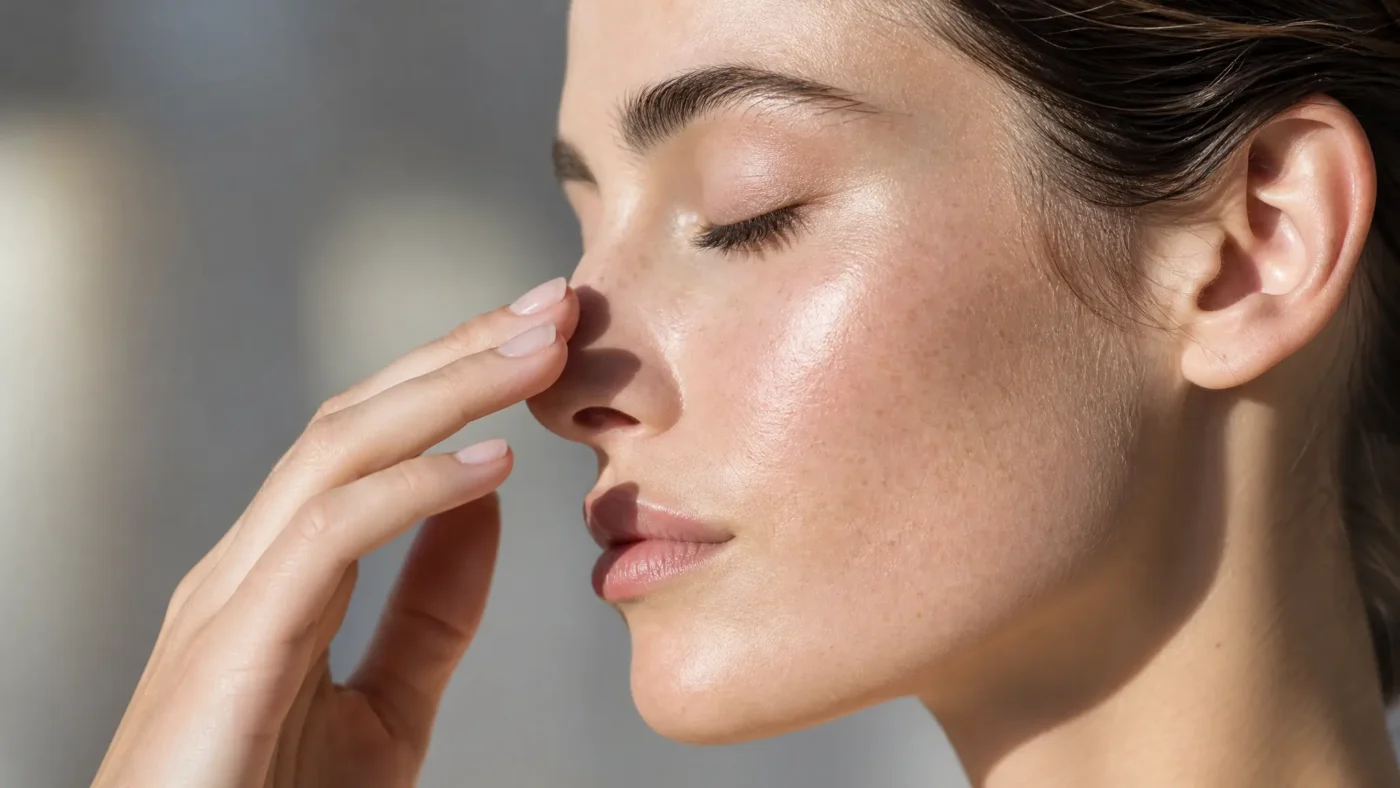
When air moves through the nose rather than the mouth, it carries that nitric oxide down into the lungs. There, according to a PubMed study on nasal nitric oxide production and sinus enzymatic pathways, the gas acts as an airborne signaling molecule that enhances pulmonary oxygen uptake and promotes systemic vasodilation. Mouth breathing simply skips this step—the air arrives at the lungs without ever collecting the nasal NO payload.
Systemic and localized nitric oxide delivery is what keeps endothelial tissue functional. It regulates the rate at which capillaries dilate and constrict, and it governs how efficiently nutrients reach dermal tissue. Understanding how blood flow dynamics and capillary responsiveness regulate skin radiance is detailed in Skin Microcirculation, and it is this microvascular chain—not a mystical “energy,” as some wellness content implies—that links breathing route to complexion.
Oxygenation, Tissue Perfusion, and the “Glow” Fallacy
“Glow” is a marketing word, but there is a physiological process underneath it worth taking seriously. Clinical trials comparing breathing modes have found that nasal respiration increases transcutaneous oxygen levels by approximately 10 percent compared to oral breathing, according to a PubMed clinical trial on nasal versus oral breathing and transcutaneous oxygen tension (tcPO2). That is not a dramatic figure, but tissue oxygenation operates on thin margins, and small shifts compound over weeks of chronic breathing patterns.
Reduced tissue oxygenation under habitual oral breathing appears to alter dermal metabolic turnover. Cellular repair processes slow, and the visible result is often described—somewhat imprecisely—as a dull or tired complexion. This is a plausible mechanistic pathway, though individual variation in baseline vascular health and skin type means the effect is not uniform across every face.
It is worth noting that mouth breathing is not simply “less air.” It often delivers larger volumes more quickly, particularly during exertion or sleep-disordered breathing. But volume is not the same as utility—oral breathing lacks the resistance and gaseous composition needed to optimize peripheral microvascular oxygen release. Evaluating how intentional respiratory techniques enhance tissue oxygen delivery and cellular vitality is explored in Breathwork Skin Benefits.
Craniofacial Structure, Muscle Tone, and Lower-Face Sagging
The structural claims around mouth breathing are where internet discourse tends to outrun the evidence, so they deserve careful handling. Chronic mouth breathing alters resting tongue posture, and a PMC study on oral breathing posture and craniofacial development documents how this lowers the hyoid bone and disengages the buccinator and masseter muscle networks that would otherwise stay active during nasal breathing.
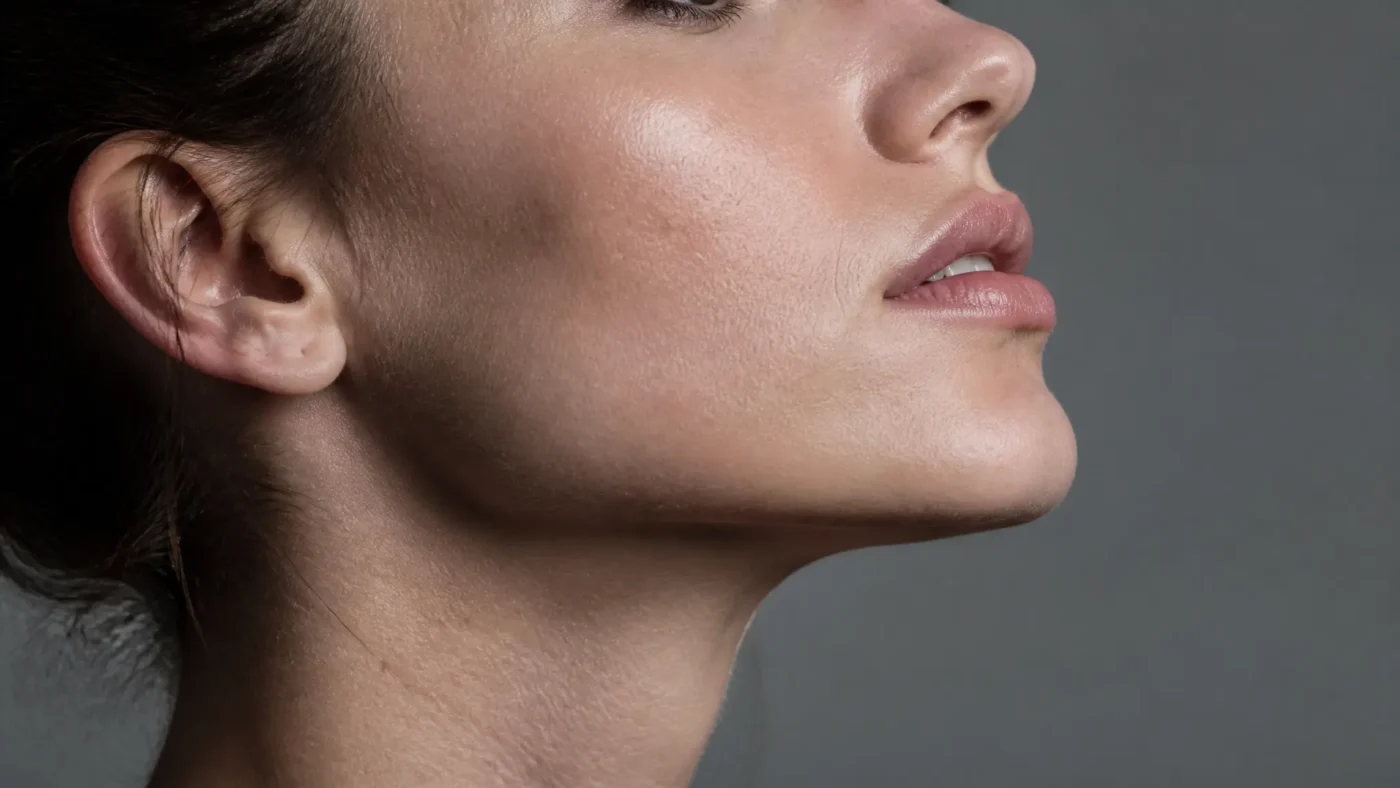
Over time, this altered muscular engagement is associated with elongation of the lower facial third, a less defined jawline, and earlier soft-tissue sagging in that region. The mechanism here is muscular disuse and postural drift, not bone reshaping happening in real time.
This is the point where scepticism becomes necessary. Viral “mewing” claims suggest adult facial bones can be substantially reshaped through tongue posture alone. Clinical evidence indicates something more modest: in adults, structural shifts are largely confined to muscular tone and postural soft-tissue alignment, not skeletal remodeling. Growing children are a different physiological case entirely, and conflating the two groups is where much of the online confidence collapses.
Dehydration and Vagal Dysregulation: The Barrier and Stress Connection
Airflow direction has a direct, almost mechanical effect on skin barrier function around the mouth. Constant airflow over the oral cavity increases localized transepidermal water loss and lowers skin capacitance, according to a JAAD Reviews analysis on oral airflow and perioral barrier compromise. The lower face becomes chronically drier and more prone to irritation as a result.
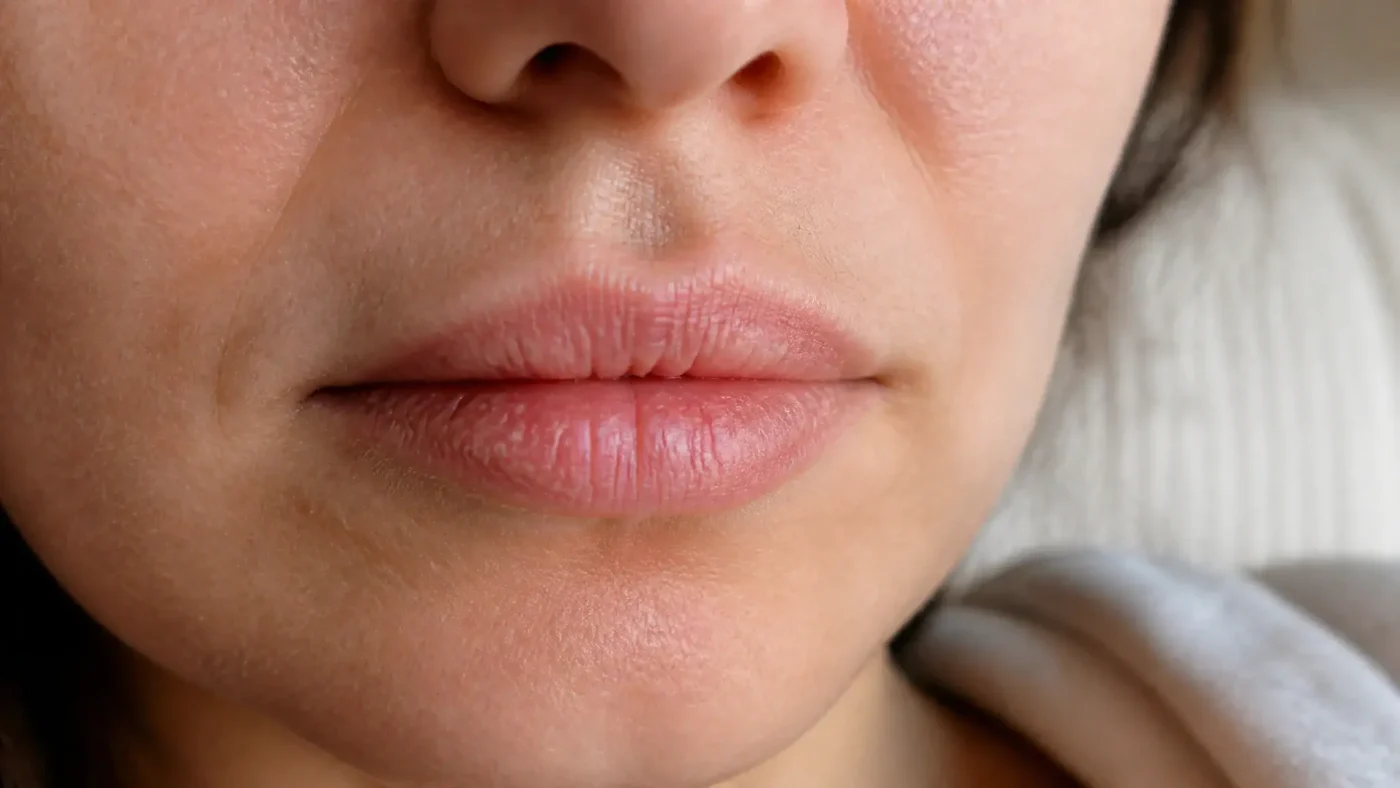
The same analysis links oral breathing to sympathetic nervous system dominance—elevated cortisol, and the kind of low-grade, sub-clinical inflammation that does not show up as a rash but shows up as reactivity. This is not an abstract stress narrative; it is a documented autonomic shift tied specifically to breathing route.
Nasal breathing, by contrast, stimulates the vagus nerve, encouraging parasympathetic recovery and lowering systemic stress markers. Examining how autonomic nervous system regulation and stress reduction shield skin integrity is detailed in Vagus Nerve and Skin Health. The barrier and the nervous system, in this sense, are not separate stories—they are the same one.
The Final Verdict: Is Retraining Your Breathing Worth It for Your Skin?
Switching from habitual mouth breathing to nasal breathing produces measurable physiological benefits: increased transcutaneous oxygenation, better-optimized nitric oxide signaling, and reduced perioral moisture loss. None of these are speculative—they trace back to the mechanisms outlined above.
What breathing retraining is not, however, is a substitute for sunscreen, active dermatological treatments, or structural clinical procedures where those are genuinely warranted. It belongs in the category of foundational habit, not intervention. Anyone expecting it to replace a retinoid or a filler appointment is setting up for disappointment.
Practicing consistent nasal breathing across the day and through sleep supports long-term facial microcirculation, perioral barrier stability, and parasympathetic balance. That is a reasonable, evidence-backed claim—modest in scope, but real in effect.
FAQ
Does mouth breathing while sleeping really change your skin overnight?
Overnight mouth breathing does not alter permanent facial structure in a single night, but it rapidly increases perioral moisture loss and causes dry, dehydrated skin around the mouth upon waking.
Can adults change their facial structure by switching to nasal breathing?
While growing children experience significant craniofacial bone adaptations from nasal breathing, adults primarily experience improved facial muscle tone, reduced fluid retention, and corrected soft-tissue posture rather than bone remodeling.
How does mouth taping at night affect skin health?
Mouth taping forces nasal breathing during sleep, preserving paranasal nitric oxide inhalation, preventing perioral TEWL, and reducing morning facial puffiness, provided there are no nasal airway obstructions.
Is “mewing” a scientifically proven skincare technique?
“Mewing” (proper resting tongue posture against the roof of the mouth) helps engage facial muscles and support jawline posture, but claims that it radically reverses structural skin aging or replaces medical procedures lack rigorous clinical trial backing.