


She is 43. She eats reasonably well, moves her body a few times a week, and has maintained a consistent skincare routine for years. And yet — her skin looks older than it should. It is dull despite hydration. The firmness she had at 36 is retreating faster than expected. There is a low-grade redness that sits at her cheeks and jawline, never dramatic enough to name, but never fully gone. Her dermatologist finds no specific condition. There is no rosacea diagnosis, no diagnosed eczema. Her skin is not broken. But it is under sustained biological pressure that no serum, no moisturizer, and no in-clinic treatment has been able to fully resolve — because its source is systemic. What she is experiencing is the cumulative effect of chronic inflammation and skin health operating in opposition: a low-grade, persistent inflammatory state that is silently accelerating biological aging through multiple well-documented pathways, including collagen degradation via enzyme activation, barrier disruption via immune signaling molecules, microbiome dysregulation via the gut-skin axis, and the compounding mechanism known as inflammaging. Understanding these pathways does not just explain what is happening — it changes what an effective skin longevity strategy actually looks like.
What Chronic Inflammation Actually Is — And Why It Is Different From a Skin Rash
Acute vs. Chronic: The Emergency Team That Never Leaves
Inflammation is not inherently a problem. In its acute form — the redness, warmth, and swelling that follows a cut, an infection, or a sprained ankle — it is the body’s emergency response team: targeted, appropriately proportioned, and self-limiting. The team arrives, does its work, and stands down. The damage is repaired. This is inflammation functioning exactly as it should.
Chronic inflammation is a different category entirely. It is the emergency team that never fully leaves the building. The acute response does not resolve cleanly; instead, a low-level inflammatory signal persists — maintained by stress, poor sleep, dietary pattern, gut dysbiosis, or accumulated cellular damage — and the immune system remains in a state of sustained, low-grade activation. As outlined in the PMC clinical review on low-grade systemic inflammation and its biological consequences, this chronic state produces measurable molecular damage even in the complete absence of obvious symptoms.
The primary agents of this damage are cytokines — signaling molecules that coordinate the immune response. Think of them as the radio signals the emergency team uses to call in reinforcements and direct activity. In acute inflammation, cytokine signals are appropriate and time-limited. In chronic inflammation, those signals remain elevated — and prolonged cytokine activity begins damaging the tissues the immune system was designed to protect. Key pro-inflammatory cytokines — IL-1, IL-6, TNF-α — are measurable in the bloodstream through biomarkers like CRP (C-reactive protein). A person can carry meaningfully elevated CRP for years with no obvious symptoms while significant cellular damage accumulates.
Why Low-Grade Inflammation Is Harder to Address Than Visible Skin Conditions
Acute skin inflammation announces itself. Hives, swelling, a wound site — these have a clear source, a clear location, a beginning and an end. Chronic low-grade inflammation produces no equivalent signal. It does not present as a condition. It presents as drift — a gradual shift in skin quality that appears to be aging but is in fact accelerated aging driven by sustained molecular activity operating below the threshold of clinical diagnosis.
This is why topical intervention alone cannot fully address it. The source is not at the skin’s surface. No matter how effective a barrier cream or an antioxidant serum may be at the epidermal level, it cannot alter the circulating inflammatory environment being maintained by sleep debt, dietary pattern, cortisol load, or gut permeability. Anti-inflammatory skincare is a meaningful contribution — not a root solution.
How Chronic Inflammation and Skin Health Are Connected: The Cellular Mechanisms
Inflammaging and Collagen Degradation
Inflammaging is the term used to describe the slow accumulation of inflammatory damage that drives biological aging — a low-grade fire that never fully extinguishes. It is not an acute event. It is the cumulative result of years of sustained, subclinical inflammatory activity progressively eroding cellular architecture. The research on inflammaging and its role in skin aging and collagen degradation identifies this as one of the primary biological engines behind age-related skin changes that go beyond what sun exposure alone can account for.
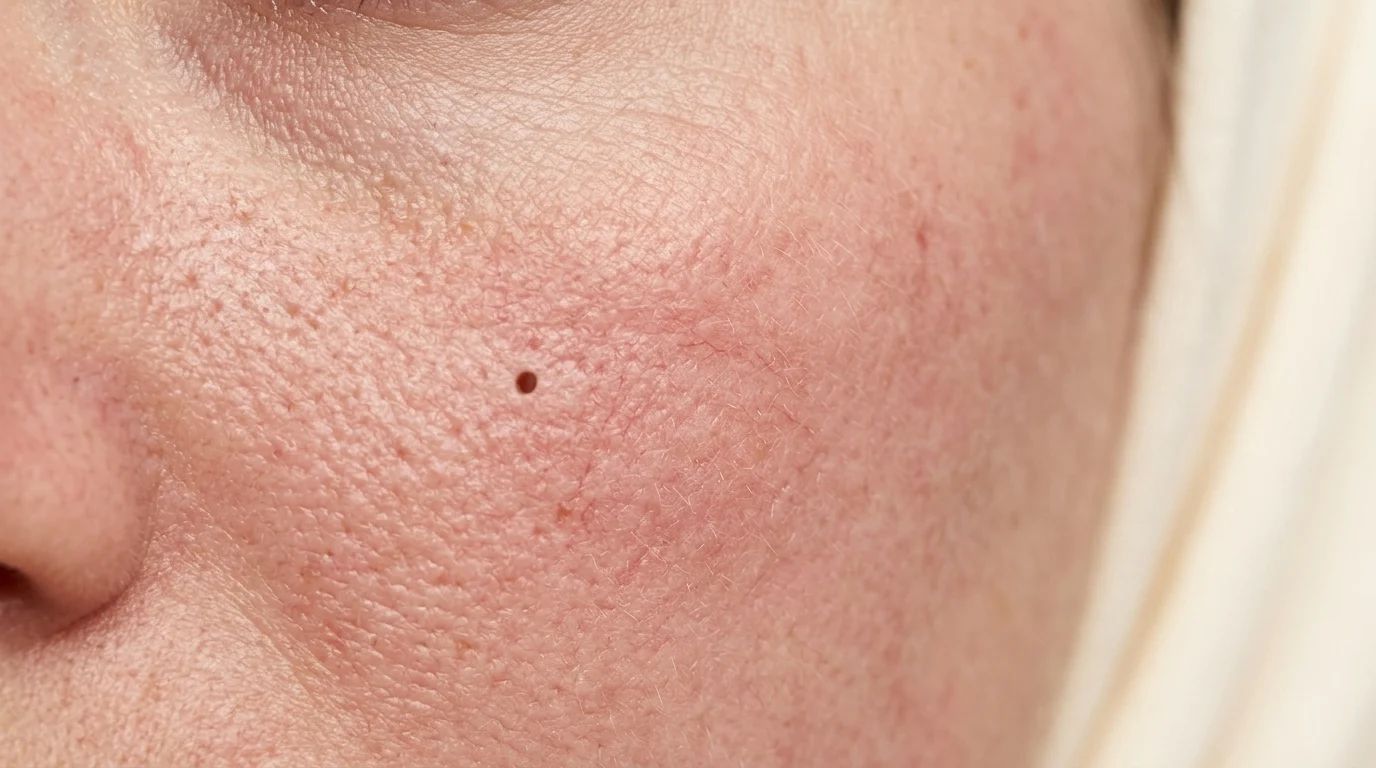
The mechanism operates on two fronts simultaneously. First: persistently elevated pro-inflammatory cytokines activate a class of enzymes called matrix metalloproteinases — MMPs. If collagen is the steel framework of a building, MMPs are the rust that dissolves it. They are produced by the body and are useful in controlled quantities for normal tissue remodeling. But in a chronically inflamed environment, MMP activity becomes disproportionate — breaking down collagen and elastin in the dermis faster than the body can replace them.
Second: chronic inflammation impairs fibroblast function. Fibroblasts are the cells responsible for manufacturing new collagen. Under sustained inflammatory signaling, their synthetic capacity decreases. The result is a double deficit — accelerated breakdown and reduced replenishment — that compounds over years into measurable structural changes: loss of facial volume, deepening of static lines, reduced skin elasticity and bounce. Understanding how chronic inflammation drives the biological aging processes that underlie visible skin changes reframes what anti-aging actually requires at a mechanistic level. Inflammaging is well-established as a concept and mechanism; the precise degree to which any individual’s specific inflammatory inputs translate to skin-visible outcomes depends on genetic background, skin type, and cumulative exposure history.
Barrier Disruption via Cytokine Activity
The skin barrier — the stratum corneum — functions as the body’s outermost interface with the environment. Its integrity depends on an organized lipid matrix, largely composed of ceramides, that seals the spaces between skin cells. This is not passive structure. It is actively maintained by lipid synthesis machinery within the skin.
Pro-inflammatory cytokines — particularly IL-1, IL-6, and TNF-α — directly interfere with that machinery. When these signals are chronically elevated, ceramide production is reduced. Transepidermal water loss (TEWL) increases. The barrier becomes more permeable to irritants, allergens, and environmental insults — which then trigger further localized inflammatory responses. The cycle amplifies itself: chronic systemic inflammation weakens the barrier, and a weakened barrier increases the inflammatory load on the skin. This mechanism is well-established at the molecular level. The specific clinical contribution of systemic inflammation versus local topical stressors to any individual’s barrier status requires case-by-case assessment rather than universal prediction.
The Gut-Skin Axis: Where Intestinal Inflammation Becomes Skin Inflammation
How the Gut Communicates With Skin
The gut lining, when functioning correctly, operates as a highly selective barrier — a well-maintained wall that allows nutrients and beneficial molecules to pass into the bloodstream while keeping inflammatory compounds and bacterial products on the other side. When intestinal permeability increases — a state sometimes called “leaky gut” — gaps develop in that wall. Molecules that should remain contained in the intestinal space begin crossing into systemic circulation. Among the most inflammatory of these are LPS molecules — lipopolysaccharides, which are fragments of bacterial cell walls. When LPS enters the bloodstream, it triggers a systemic inflammatory alert that the immune system cannot distinguish from a genuine bacterial threat.
The research on the gut-skin axis and intestinal inflammation in skin health identifies multiple contributors to increased intestinal permeability: chronic psychological stress, dietary patterns high in ultra-processed foods, antibiotic exposure, and dysbiosis — an imbalance in the gut microbiome where inflammatory bacterial strains outcompete beneficial ones. The resulting systemic inflammation is not localized. It reaches every tissue — including skin. A fuller examination of how the gut-skin axis connects intestinal health to chronic skin inflammation and aging reveals just how bidirectional and consequential this relationship is.
What This Means for Skin Conditions
The gut-skin connection is not theoretical. Clinical associations between gut microbiome health and skin conditions are documented, though the strength of evidence varies by condition. The rosacea-gut microbiome relationship has a reasonable evidence base — small intestinal bacterial overgrowth (SIBO) is statistically overrepresented in rosacea patients. The atopic eczema-gut dysbiosis connection has meaningful mechanistic and epidemiological support. The association between gut health and acne inflammatory severity is directionally supported by research, though causal mechanisms require further establishment.
The connection between gut-origin systemic inflammation and accelerated photoaging — cumulative oxidative and structural skin damage — is biologically coherent and increasingly supported by emerging data, but the specific causal magnitude in human skin requires more targeted research to quantify with confidence.
The Lifestyle Drivers of Chronic Skin Inflammation
Cortisol and the Stress-Inflammation Cycle

Psychological stress does not stay in the mind. The HPA axis — the hypothalamic-pituitary-adrenal system — translates psychological threat into a hormonal cascade, with cortisol as its primary output. In short bursts, cortisol is anti-inflammatory and adaptive. In chronic elevation — maintained by sustained work pressure, relational stress, financial anxiety, or sleep disruption — it becomes pro-inflammatory through a specific molecular pathway.
Chronically elevated cortisol upregulates NF-κB, a master transcription factor that functions like the central switchboard for inflammatory gene activation. When NF-κB is persistently turned on, pro-inflammatory cytokine production is sustained. Additionally, cortisol disrupts the skin barrier by increasing sebum production and altering the lipid composition of the stratum corneum. The details of how chronic cortisol elevation drives skin inflammation and barrier degradation underscore why stress management is not a lifestyle luxury — it is a skin biology input. The cortisol-inflammation mechanism is well-established; the degree to which stress reduction specifically produces measurable skin-visible outcomes varies individually and is an area of active research.
Sleep Deprivation and Inflammatory Marker Elevation
Sleep is not passive rest. It is the primary window for cellular repair, cytokine regulation, and systemic inflammatory clearance. Even modest, chronic sleep restriction — consistently sleeping six hours instead of eight — measurably elevates circulating CRP and IL-6. This elevated inflammatory state is biologically indistinguishable from other chronic inflammation drivers when viewed from the skin’s perspective.
The nocturnal repair window also supports the skin’s own regenerative processes — cell turnover, barrier lipid synthesis, and growth factor activity all peak during deep sleep. Chronic sleep insufficiency compresses this window, compounding the inflammatory input with reduced repair capacity. Supporting sleep quality through evidence-informed approaches — including understanding how magnesium supports sleep quality and reduces the inflammatory burden on skin overnight — is a biologically coherent strategy, though the specific magnitude of skin benefit from magnesium supplementation specifically requires more targeted clinical data.
Dietary Patterns and Systemic Inflammatory Load
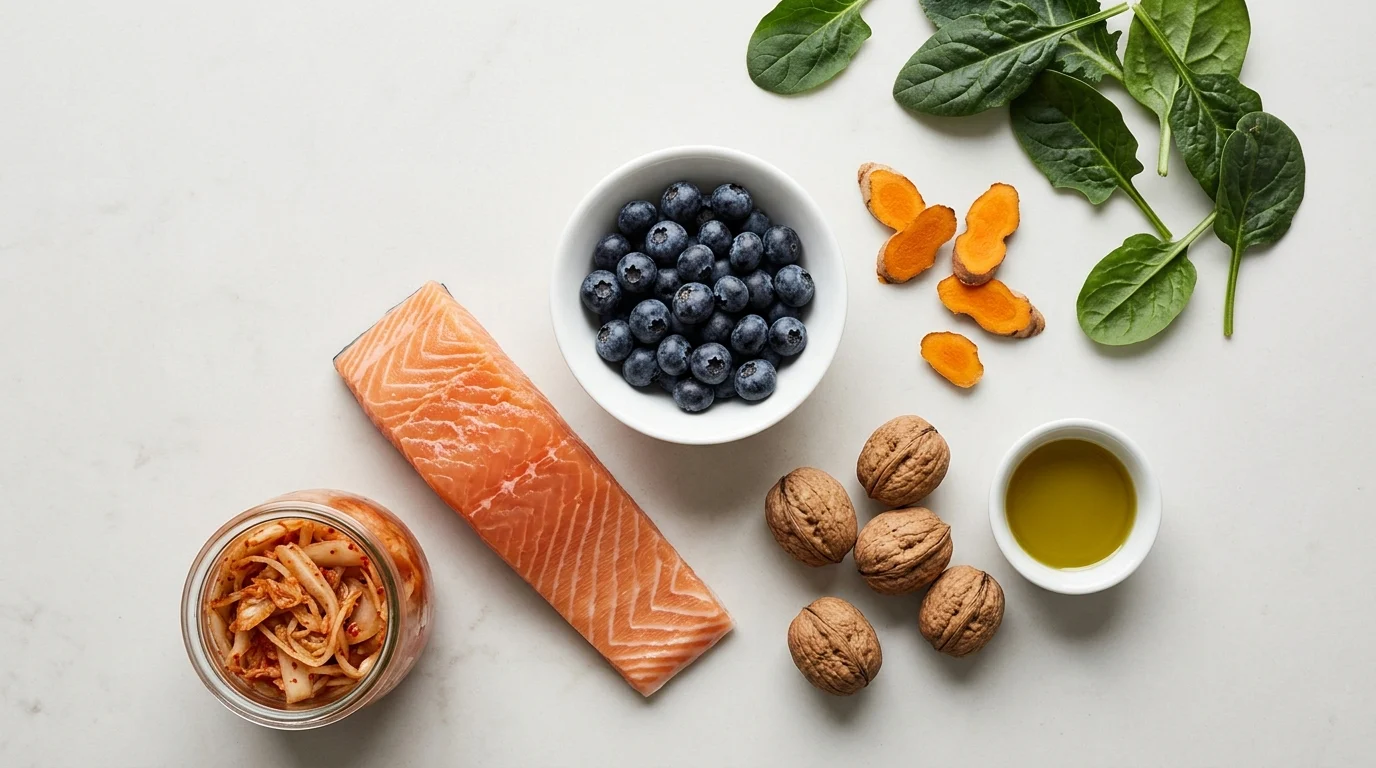
No single food causes or cures chronic inflammation. But dietary pattern — the aggregate effect of habitual eating over years — is consistently associated with systemic inflammatory marker levels in epidemiological research. Diets high in refined carbohydrates, trans fats, and ultra-processed foods correlate with elevated CRP and IL-6. Diets rich in omega-3 fatty acids, polyphenols, and fermented foods correlate with lower inflammatory biomarkers.
There is also the glycation-inflammation intersection. Advanced glycation end-products (AGEs) — formed when sugars bond to proteins under heat — accumulate in skin collagen, making it stiffer and more susceptible to MMP degradation while triggering localized inflammatory responses. The association between dietary pattern and systemic inflammatory markers is well-supported in the literature. The direct causal relationship between specific food choices and skin-visible inflammatory outcomes — independent of other variables — requires more skin-focused interventional research to establish quantitatively.
What Measurably Reduces Chronic Inflammation Burden
The recent research on anti-inflammatory approaches and their relevance to skin health outcomes reflects a field moving toward integrated lifestyle intervention rather than single-ingredient solutions. The following inputs have meaningful evidence behind them — with the epistemological precision each warrants:
- Consistent aerobic movement at moderate intensity (Zone 2): Measurably reduces circulating inflammatory markers with sustained practice. The anti-inflammatory effect of regular aerobic exercise is among the best-established interventions in the literature.
- Dietary pattern shift toward anti-inflammatory foods: Omega-3 fatty acids, polyphenol-rich vegetables, fruit, and fermented foods are associated with reduced inflammatory biomarkers. The specific magnitude of skin-visible benefit is variable and not yet precisely quantifiable in isolation.
- Sleep quality optimization: Reduces CRP and IL-6 elevation — well-established at the systemic level. The skin benefit pathway is biologically coherent; the exact contribution requires more skin-outcome-specific research.
- Chronic stress reduction: Reduces cortisol-driven NF-κB activity — mechanism well-established. Clinical skin outcomes from stress intervention specifically are an emerging area of investigation.
- Gut microbiome support: Dietary fiber, fermented foods, and reduction of ultra-processed food intake are associated with reduced intestinal permeability and lower systemic inflammatory signaling. Gut-to-skin outcome translation is directionally supported but requires further specificity.
- Barrier-supportive topical skincare: Ceramide replenishment reduces the local inflammatory input from barrier compromise. This is well-established at the topical level and represents one area where skincare directly interrupts an inflammatory cycle rather than simply masking its effects.
Skincare Ingredients With Anti-Inflammatory Evidence
Topical skincare cannot resolve systemic chronic inflammation — but the right ingredients can reduce the local inflammatory burden at the skin’s surface, support barrier function, and interrupt localized cytokine activity. The following have meaningful evidence:
- Niacinamide: Reduces pro-inflammatory cytokine release in keratinocytes and supports ceramide synthesis — well-documented across multiple clinical investigations.
- Azelaic acid: Reduces inflammatory mediators involved in rosacea and acne; clinical evidence is well-established for both conditions at appropriate concentrations (10–20%).
- Colloidal oatmeal: Reduces IL-1 and TNF-α activity in skin; clinically established for atopic and reactive skin and recognized by the FDA as a skin protectant.
- Centella asiatica (Cica): Exhibits anti-inflammatory and wound-healing activity, with a reasonable evidence base particularly for sensitive and barrier-compromised skin.
- Green tea extract (EGCG): Antioxidant and NF-κB inhibitory activity are research-supported; the optimal concentration required in cosmetic formulations for clinical skin effect remains under continued investigation.
A Note on Topical Skincare and Its Limits
Skin aging is frequently framed as a topical problem with a topical solution. It is not. Chronic low-grade inflammation is a systemic biological state — maintained by sleep quality, dietary pattern, stress load, and gut health — that no topical product can fully compensate for. The finest niacinamide serum in the world cannot offset years of elevated CRP. Anti-inflammatory skincare works most effectively as a complement to a low-inflammatory lifestyle — not as a substitute for one. Addressing the inputs matters as much as addressing the surface.
If chronic skin inflammation, persistent redness, or inflammatory skin conditions do not respond to lifestyle and skincare adjustments, consult a dermatologist — some inflammatory skin conditions have specific clinical drivers that require diagnosis and targeted treatment beyond lifestyle management.
Frequently Asked Questions
How do I know if chronic inflammation is affecting my skin?
There is no single visible sign. The indicators tend to be cumulative: skin aging faster than chronological age, persistent low-grade redness that has no identified trigger, barrier reactivity that does not resolve with consistent skincare, and dullness that hydration does not correct. A dermatologist can also assess systemic inflammatory markers — CRP, IL-6 — through blood work, which provides more objective data than appearance alone.
Can dietary changes actually reduce skin inflammation visibly?
The association between anti-inflammatory dietary patterns and reduced systemic inflammatory markers is well-supported. Whether those reductions translate to visible skin improvement — and on what timeline — varies significantly between individuals, depending on baseline inflammatory load, genetics, and concurrent lifestyle factors. Dietary change is one meaningful input in a multi-variable equation, not a standalone skin treatment.
What is the fastest way to reduce chronic inflammation in skin?
There is no single fastest lever — because chronic inflammation is maintained by multiple inputs simultaneously. The most clinically coherent approach is to address the highest-load driver first: if sleep is severely disrupted, prioritizing sleep quality delivers measurable inflammatory marker reduction relatively quickly. If stress is the dominant driver, targeted stress reduction has documented systemic effects. Combining improved sleep, dietary pattern, movement, and barrier-supportive skincare produces the most meaningful cumulative reduction — none of these act instantaneously, but the compounding biology works in the same direction they do.