

How to Choose the Right Concealer for Your Skin Tone
The concealer is sitting in the drawer — bought in a hurry, tested on the back of the hand in the shop, and now sitting unused because it looks slightly off on the face. Too pink. Too orange. Too light. Too heavy. It is one of the most common makeup frustrations, and it happens to almost everyone at some point.
Finding the right concealer for your skin tone is not complicated once you understand a few key principles. Undertone, coverage, finish, and formula all play a role — and once those pieces click into place, choosing a concealer becomes genuinely straightforward. This guide walks through everything needed to find the right concealer for your skin tone and actually use it with confidence.
—
Why Skin Tone and Undertone Are Not the Same Thing

This is where most concealer mistakes begin. Skin tone — fair, light, medium, tan, deep — is what you see on the surface. Undertone is the subtle hue beneath the skin that does not change regardless of sun exposure or season. It is the reason two people with the same skin tone can look completely different in the same concealer shade.
There are three undertone categories:
- Cool undertones — pink, red, or bluish hues beneath the skin. Veins on the wrist appear blue or purple.
- Warm undertones — yellow, peachy, or golden hues. Veins appear green.
- Neutral undertones — a mix of both cool and warm. Veins appear blue-green.
Knowing your undertone is the single most important step in learning how to choose the right concealer for your skin tone. A concealer that matches your depth but clashes with your undertone will always look slightly wrong — no matter how well it is blended.
A Quick Way to Identify Your Undertone
- Look at the inside of your wrist in natural daylight
- Check the colour of your veins — blue/purple = cool, green = warm, blue-green = neutral
- Think about which jewellery flatters you more — silver tends to suit cool undertones, gold suits warm
- Consider how your skin reacts to sun — burning easily suggests cool, tanning easily suggests warm
—
How to Choose the Right Concealer for Your Skin Tone — A Step-by-Step Guide
Once undertone is established, the process of how to choose a concealer for your skin tone becomes much more logical. The next step is deciding what the concealer needs to do — because different concerns call for different shades and formulas.
For Under-Eye Circles
Under-eye circles are one of the most common reasons people reach for concealer. The key here is colour correction before coverage — or choosing a concealer shade that neutralises the discolouration rather than simply covering it.
- Blue or purple circles (common in fair to medium skin) — choose a concealer with a peach or salmon undertone to neutralise
- Brown circles (common in medium to deep skin) — choose a concealer with an orange or terracotta undertone to counteract
- Red or pink circles — choose a concealer with a green or yellow undertone to balance
The concealer shade for under the eyes is often one to two shades lighter than the foundation shade — this brightens the area and creates the appearance of more rest and openness. This is the basis of the bright concealer look that has become so popular — a bright concealer placed under the eye, blended softly, lifts the entire face.
For Blemishes and Redness
When covering blemishes, the goal is to match the concealer as closely as possible to the skin tone — not lighter. A concealer that is too light will highlight the blemish rather than hide it. Look for a shade that disappears into the skin when blended.
- For red blemishes — a green colour corrector underneath, then a skin-match concealer on top
- For post-blemish marks (brown or purple) — a peach or orange corrector, then skin-match concealer
- For general redness — a yellow-toned concealer that neutralises without looking heavy
For Hyperpigmentation and Dark Spots
Hyperpigmentation requires a slightly different approach. The discolouration is often deeper and more concentrated, so a higher-coverage formula is usually needed. The shade should still match the skin tone closely — going too light will create a patchy, uneven result.
For those choosing the right concealer for dark skin, this is particularly important. Many concealer ranges historically lacked depth in their shade offerings, but this has improved significantly. Look for brands that offer a wide range of deep shades with warm, neutral, and cool undertone options — and always swatch on the jawline or cheek, not the hand.
—
What Is the Right Concealer Shade — By Skin Tone
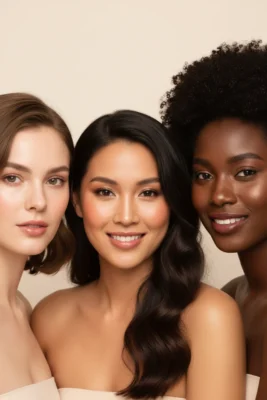
Understanding what is the right concealer shade for each skin tone removes a lot of the guesswork. Here is a general guide:
Fair Skin
- Under eyes: one to two shades lighter than skin tone, with a peach or neutral undertone
- Blemishes: exact skin match, cool or neutral undertone
- Avoid: anything too pink (looks ashy) or too yellow (looks muddy)
Light to Medium Skin
- Under eyes: one shade lighter, peach or golden undertone depending on your base undertone
- Blemishes: exact skin match, warm or neutral undertone
- Avoid: shades with too much grey or pink — they tend to look unnatural in this range
Medium to Tan Skin
- Under eyes: peach to light orange undertone to counteract darkness
- Blemishes: warm-toned skin match — avoid anything with pink or red
- Avoid: shades that pull too light or too ashy — they create a stark contrast
Deep and Dark Skin
- Under eyes: orange or terracotta undertone to neutralise deep circles, then a skin-match shade on top
- Blemishes: exact skin match with a warm undertone
- Avoid: anything with grey or cool undertones — these tend to look ashy on deeper skin tones
- When choosing the right concealer for dark skin, always test on the inner wrist or jawline — never the back of the hand, which is often a different tone
—
How to Buy the Right Concealer for Your Skin Tone
Knowing how to buy the right concealer for your skin tone in practice — whether in a shop or online — requires a slightly different approach than most people use.
In Store
- Always swatch on the jawline or cheek — not the hand or wrist
- Step outside or into natural light to check the shade — shop lighting is often warm and misleading
- Blend the swatch — a concealer that disappears when blended is the right one
- Test two or three shades side by side before deciding
Online
- Use the brand’s shade finder tool if available
- Read reviews from people with a similar skin tone and undertone
- Look for brands with a good return or exchange policy — online shade matching is genuinely difficult
- Check swatches on multiple skin tones in the product photos, not just the lightest shades
When trying to find the right concealer for your skin tone online, community reviews and beauty forums are often more reliable than brand descriptions alone. Real-skin swatches from people with similar colouring are invaluable.
—
Scientifically Backed Ingredients to Look for in a Concealer

A well-formulated concealer does more than cover — it can actively support skin health with continued use. These are the ingredients worth looking for.
Hyaluronic Acid
Hyaluronic acid is a humectant that draws moisture to the skin’s surface. In a concealer formula, it prevents the product from settling into fine lines or dry patches — a common issue under the eyes. It keeps the skin plump and comfortable throughout the day, making the concealer look more natural and less cakey.
Niacinamide
Niacinamide (Vitamin B3) has well-documented anti-inflammatory properties and helps regulate melanin production over time. In a concealer used regularly over hyperpigmentation or post-blemish marks, niacinamide can gradually reduce the discolouration it is covering — making it a genuinely useful ingredient for long-term skin improvement.
Vitamin C (Ascorbic Acid)
Vitamin C is one of the most researched brightening ingredients in dermatology. It inhibits melanin synthesis, which means it actively works against the formation of dark spots and hyperpigmentation. A concealer containing a stable form of Vitamin C — such as ascorbyl glucoside or sodium ascorbyl phosphate — can brighten the under-eye area with consistent use.
Peptides
Peptides are short chains of amino acids that signal the skin to produce collagen. In a concealer, particularly one used under the eyes, peptides support skin firmness and reduce the appearance of fine lines over time. They are particularly valuable in concealers marketed for mature skin.
Caffeine
Caffeine is a vasoconstrictor — it temporarily reduces the appearance of puffiness and dark circles by constricting blood vessels beneath the skin. In an under-eye concealer, caffeine provides an immediate visual improvement while also reducing fluid retention in the delicate under-eye area.
Always consult with a healthcare professional before starting new treatments, especially if you have a diagnosed skin condition such as eczema, rosacea, or contact dermatitis that may be aggravated by certain makeup formulations or ingredients.
—
Expert Tip — And a Myth Worth Debunking
💡 Expert Tip
Apply concealer after foundation, not before. Foundation will cover a significant portion of what you were planning to conceal — meaning you need far less concealer, and the result looks more natural. Use a small, flat brush or your ring finger to press (not drag) the concealer into place. Pressing rather than swiping prevents disturbing the foundation underneath and gives a more seamless finish.
🚫 Common Myth: “A Lighter Concealer Always Brightens”
Going too light with concealer — particularly under the eyes — does not brighten. It creates a grey, ashy, or chalky cast, especially in photographs. A bright concealer look is achieved not by going dramatically lighter, but by choosing a shade that is one to two tones lighter with the correct warm or peach undertone. The undertone does the brightening work — not the lightness of the shade alone.
—
Which Concealer Is Best for My Skin Tone — A Quick Reference
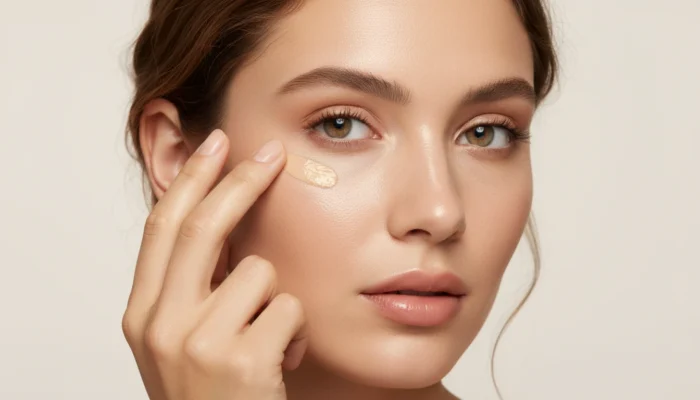
When asking which concealer is best for my skin tone or what color concealer for my skin tone, the answer always comes back to the same two factors: depth match and undertone match. Here is a quick summary:
- Fair + cool undertone: light shade, pink-neutral undertone for blemishes; peach-light for under eyes
- Fair + warm undertone: light shade, yellow-neutral for blemishes; peach for under eyes
- Medium + cool undertone: medium shade, neutral-cool for blemishes; peach-salmon for under eyes
- Medium + warm undertone: medium shade, warm-golden for blemishes; peach-golden for under eyes
- Deep + warm undertone: deep shade, warm-golden for blemishes; orange-terracotta for under eyes
- Deep + neutral undertone: deep shade, neutral-warm for blemishes; deep peach for under eyes
Understanding right concealer for my skin tone is ultimately about learning to read your own skin — and that knowledge, once gained, makes every future makeup purchase easier and more confident.
—
Frequently Asked Questions
What color concealer should I use for my skin tone?
The colour of your concealer depends on both your skin depth and your undertone. For blemishes, match your concealer as closely as possible to your skin tone — warm undertones suit yellow or golden shades, cool undertones suit pink-neutral shades. For under-eye circles, go one to two shades lighter with a peach or orange undertone to neutralise darkness. The undertone match matters more than the depth alone.
How do I find the right concealer shade if I am shopping online?
Start by identifying your undertone — cool, warm, or neutral — and your general skin depth. Use the brand’s shade finder if available, and read reviews from people with a similar skin tone. Look for swatches photographed on a range of skin tones, not just the lightest shades. If possible, choose a brand with a flexible return or exchange policy, as online shade matching always carries some uncertainty.
Should concealer be lighter or the same shade as my foundation?
It depends on where you are applying it. For blemishes and redness, the concealer should match your foundation shade exactly — going lighter will highlight rather than hide. For under the eyes, one to two shades lighter with a warm or peach undertone creates the brightening effect most people are looking for. Avoid going more than two shades lighter, as this creates an unnatural, chalky result.