

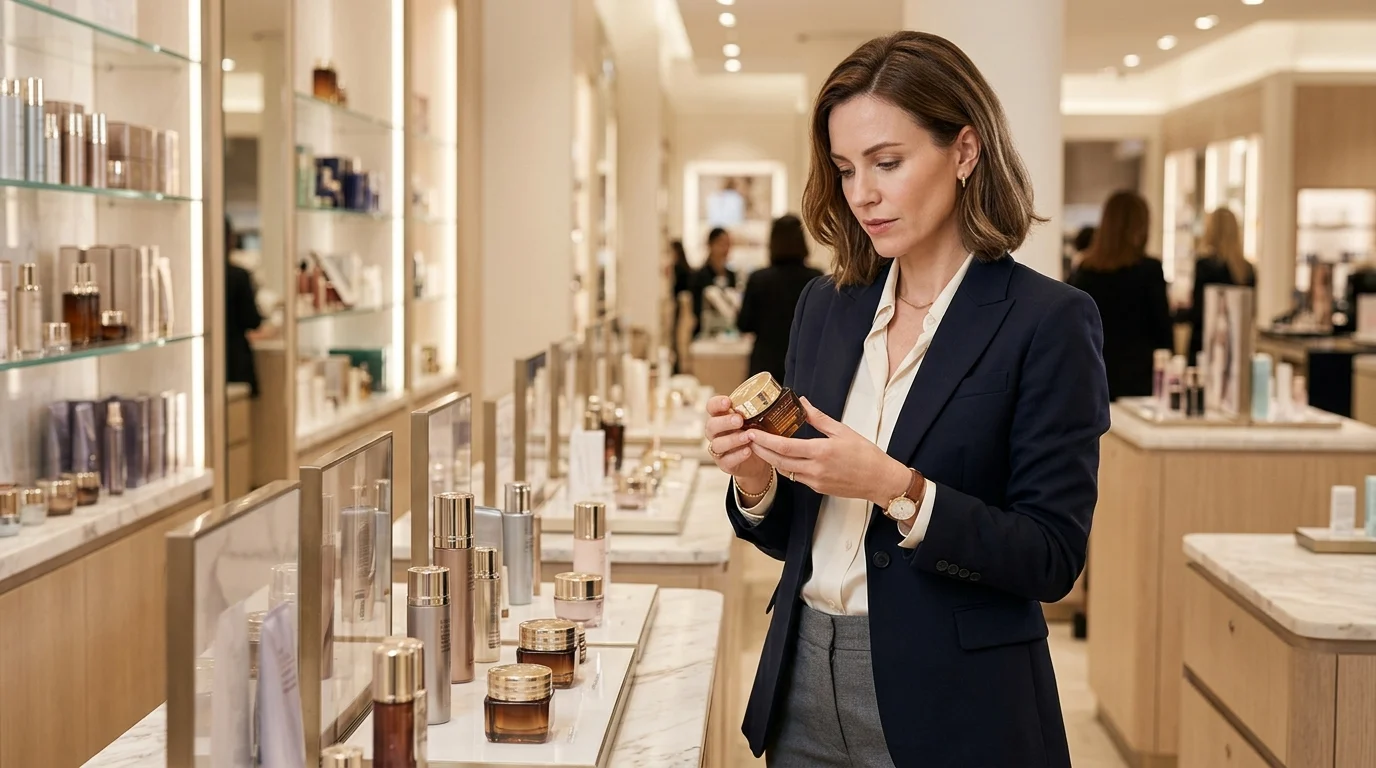
Picture a woman standing at a department store counter, holding a 50ml cream from a legacy luxury house. The price is more than her monthly grocery bill. She turns it over, scans the INCI list — and recognizes it. Mineral oil. Glycerin. A film-forming polymer. A trace of something with a proprietary name that appears in the brand’s advertising but nowhere in the clinical literature. She sets it down. Not with disdain, but with clarity. Because somewhere in the past two years, she stopped paying for a formula and started paying for a counter, a campaign, and a glass jar that weighs more than its contents. That quiet moment of reckoning is happening across a significant and growing segment of beauty consumers — and European niche skincare brands are the direct beneficiary of that shift.
This is not about minimalism as an aesthetic or “clean beauty” as a moral stance. It is about a structural reorientation in how skin-educated consumers evaluate product value. The brands gaining their attention are not necessarily cheaper. They are simply doing something different: competing on formulation quality, ingredient transparency, and scientific credibility rather than prestige packaging, heritage marketing, and aspirational retail environments.
The Ingredient Literacy Shift: Why Prestige Is No Longer Enough
The traditional beauty hierarchy depended on a particular kind of asymmetry: brands knew what was in their products; consumers largely did not. That asymmetry is dissolving. INCI decoding tools, cosmetic chemistry communities, and dermatologist-run platforms have made ingredient literacy accessible in a way that was unimaginable a decade ago. A consumer who can identify the difference between a 0.1% retinol and a 1% retinol, who understands what a humectant does versus an occlusive, has fundamentally recalibrated what she expects from a formula. Proprietary complexes and branded molecule names that don’t survive scrutiny no longer close the sale.
Critically, the sources these consumers trust are changing. Research on shifting consumer trust in beauty and skincare points to a meaningful divergence: consumers are moving toward clinically credible voices and away from aspirational brand authority reinforced by paid media. The magazine spread featuring a celebrity and a cream no longer closes the sale the way it once did.
At the same time, the shifting balance between marketing investment and formulation quality is increasingly visible at the luxury tier. Legacy houses have historically invested heavily in branding, retail experience, and advertising, while formulation innovation has often evolved more gradually. When consumers begin evaluating products on what is inside the jar rather than the story surrounding it, that allocation becomes a liability. European niche brands, building without the overhead of flagship counters and global campaigns, have been quietly redirecting spend into ingredient quality, formulation research, and direct consumer education. For the ingredient-literate buyer, that is a compelling competitive proposition.
The question of niche skincare vs luxury beauty is, at its core, a question about where value is being created — and where it is merely being performed.
The concepts explored throughout this article are not new. The principles underpinning modern formulation — barrier biology, skin physiology, ingredient stability, cosmetic chemistry, and microbiome science — have been developed over decades through peer-reviewed research, clinical dermatology, and academic biochemistry. What has changed is accessibility: both to the science itself, and to the brands built around it. Today’s leading European niche brands are not, for the most part, pioneering entirely new discoveries. They are applying established scientific knowledge with greater precision, transparency, and consumer-facing honesty than the mainstream market has historically demanded. That distinction matters when evaluating whether a brand’s claims are grounded in evidence — or simply well-packaged.
What European Niche Brands Actually Do Differently
The differences between European niche and legacy luxury formulation are not always dramatic. But they are consistent enough to constitute a pattern — and that pattern reflects a distinct philosophy.
From a dermatological perspective on effective skincare formulation, what matters is ingredient selection, concentration, and delivery — not brand heritage or retail positioning. The best European niche brands tend to excel precisely here. A few structural tendencies distinguish them:
- Shorter, more purposeful ingredient lists. Fewer ingredients means each one carries more formulation weight — and less room to hide behind fillers, fragrance, or decorative actives present at sub-therapeutic concentrations.
- Concentration and delivery transparency. Several indie skincare brands in Europe publish the percentage of key actives, a practice almost unheard of in luxury beauty. This is not just a marketing gesture — it changes the accountability dynamic entirely.
- Barrier-first and microbiome-aware formulation. European niche is disproportionately represented in this space, incorporating prebiotic, postbiotic, and pH-conscious formulation that supports the skin’s own regulatory systems rather than overriding them.
- Traceable, sustainable ingredient sourcing. Many of the best European skincare brands operate with supply chains short enough to communicate ingredient provenance — not as a branding exercise but as a formulation standard.
- Direct-to-consumer models that reinvest in formula. Without the margin requirements of department store retail, many indie skincare brands Europe can allocate meaningfully more per unit into raw ingredient quality.
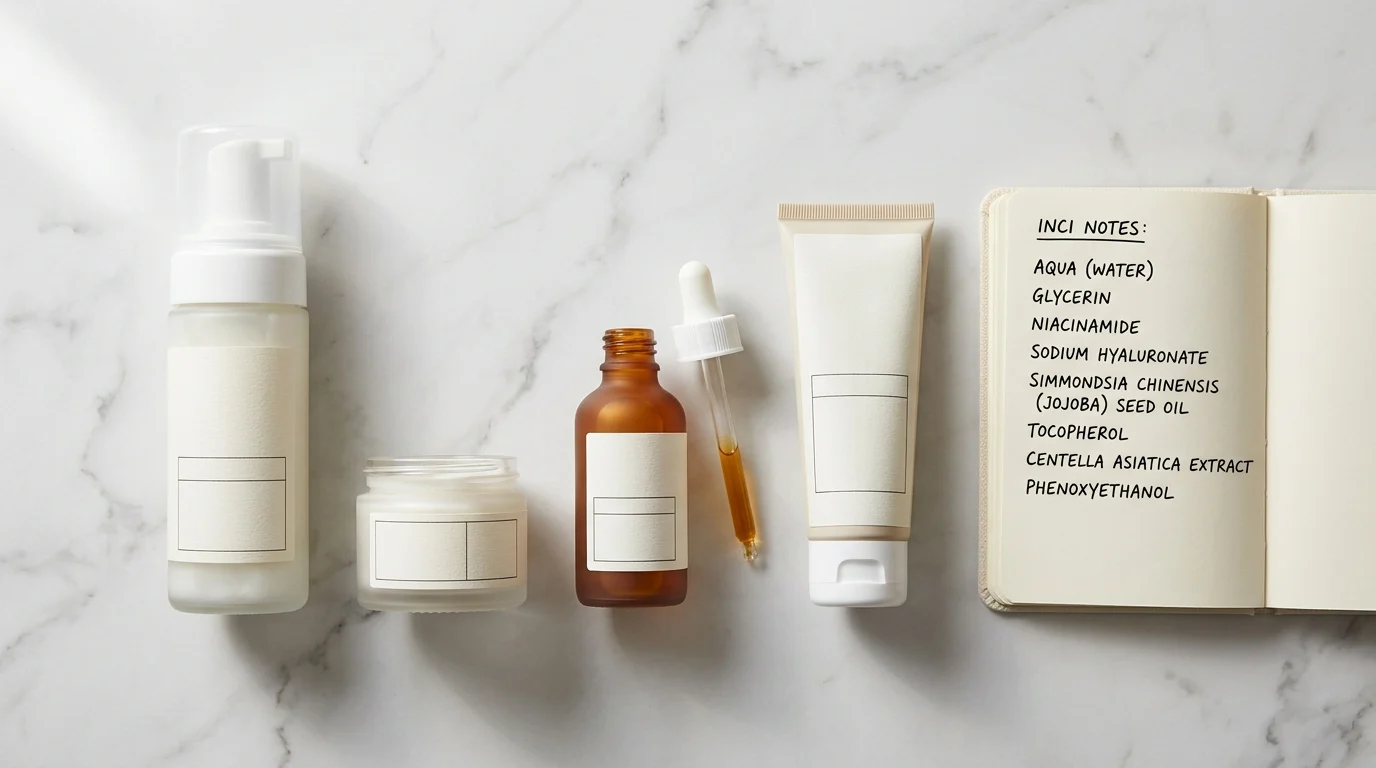
European consumer expectations around ingredient transparency have structurally shaped this market. Regulatory environments and increasingly vocal consumer pressure in France, the UK, and Scandinavia have made ingredient origin communication a baseline expectation — not a differentiator. European niche brands have been trained by their home markets to communicate more, not less.
The Science Behind Why Formulation Depth Matters More Than Price
Price point and formulation quality are genuinely uncorrelated at the luxury tier of the market. A $450 cream is not four times better formulated than a $110 cream from a rigorous indie brand. The price reflects margin structure, not clinical investment. Understanding why formulation depth matters requires looking at what skin science actually tells us.

Emerging research on microbiome-informed skincare formulation positions the skin barrier not as a passive surface to be moisturized, but as a dynamic ecosystem with its own regulatory intelligence. Products that disrupt microbial balance through unnecessary fragrance, high-pH surfactants, or preservative overloading may generate short-term sensorial results. Over time, however, that disruption can compromise barrier function in ways that are difficult to reverse. This is not a fringe position — it is supported by a growing body of peer-reviewed evidence.
Supporting clinical findings on microbiome diversity and skin health reinforce the argument that formulation decisions at the microbial level have measurable consequences — and that brands which integrate this science produce more skin-compatible products over time. Further research on barrier-microbiome interactions continues to build the scientific case for barrier-first formulation as a primary — not supplementary — design principle.
This is where microbiome skincare Europe and barrier-first skincare brands are not simply trend language. They reflect a genuine area of clinical advance. European niche brands have been faster to translate this research into commercially available products than most luxury houses — whose product development cycles are long and, by institutional design, resistant to rapid change. This positions formulation-led skincare as science-forward, not merely aesthetically differentiated from its prestige competitors.
European Niche Brands Worth Knowing: A Curated Overview
What follows is not a review roundup. It is an editorial map of the formulation angles that make certain brands worth understanding — not just purchasing.
- Typology Paris — Built on ingredient minimalism and radical concentration transparency, Typology makes the formula the entire proposition. No fragrance, no filler, no ambiguity about what percentage of the active you are actually applying.
- Gallinée — One of the original pioneers in microbiome-first skincare formulation, Gallinée integrates prebiotics, probiotics, and lactic acid at pH levels calibrated to support rather than disrupt the skin’s microbial ecosystem. The science came before the aesthetic.
- OIO Lab — A biotech-led approach to clean formulation, using fermentation-derived actives and biotechnology to improve bioavailability. The brand operates at the intersection of clean beauty Europe and advanced delivery science.
- Twelve Beauty — Botanical precision for sensitive skin, with a formulation philosophy that prioritizes compatibility over concentration. A Chanel skincare alternative for those whose skin reacts to fragrance-heavy luxury formulas.
- Haeckels — Marine bioactive sourcing combined with genuinely sustainable formulation and minimal packaging. The ingredient provenance here is not a claim — it is a supply chain commitment.
- Rowse Beauty — A rigorous barrier-first formulation brand with clinically informed actives and a texture philosophy that prioritizes skin tolerance. A considered La Mer alternative skincare option for barrier-compromised skin that doesn’t require legacy pricing.
- Evolve Organic Beauty — Certified organic actives delivered within genuinely performance-led formulation. Evolve consistently demonstrates that sustainable European beauty does not require a performance compromise.
- Nuori — A freshness-based formulation philosophy with time-controlled production batches designed to ensure actives are at peak potency at the point of application. The concept is scientifically sound and largely unique to this brand.
- Noble Panacea — Time-release delivery technology at a clinical level, using patented organic supramolecular chemistry to control active release into the skin. Among science-backed niche skincare offerings at the premium tier, it stands apart on delivery mechanism alone.
- BioVelvet — A recovery-focused formulation built around peptide science, with a particular emphasis on skin resilience and post-procedural support. Thoughtfully concentrated and clinically referenced.
- Augustinus Bader — The TFC8 peptide complex is rooted in decades of wound-healing research from Professor Bader’s academic work. The price is significant, but the formulation rationale exists and is documented — which sets it apart from most ingredient-led beauty brands at this price point.
Why Sustainability and Ingredient Origin Matter to the Niche Consumer
Sustainable European beauty is not a niche brand marketing strategy. It is a reflection of a cultural context in which ingredient traceability has become a baseline consumer expectation — not a premium signal. How ingredient origin labeling is reshaping consumer trust in Europe is already visible in the food sector, and it is migrating, with force, into cosmetics.
European niche brands operating in this environment have internalized a fundamental formulation discipline: if you cannot explain where an ingredient comes from, why it is there, and what it does at the concentration used, it probably should not be in the formula. That discipline shapes both what goes into the product and how it is communicated. It is precisely this openness that distinguishes these brands from legacy luxury houses — which have historically treated formulation as proprietary and communication as aspirational.
The result is a consumer relationship built on accountability rather than mystique. For a segment that has outgrown mystique, that is a significant competitive advantage.
Is Niche Skincare Actually Better — or Just More Expensive in a Different Way?
This is the question that deserves an honest answer, and the answer is: it depends entirely on the brand, and it requires evaluation rather than assumption.

Niche does not automatically mean better formulated. A small European brand with beautiful packaging and a compelling founder story can still have a mediocre formula. The ingredient list tells the truth regardless of the brand’s size, origin, or positioning. Indie skincare brands Europe are not exempt from the same scrutiny that should be applied to a Chanel skincare alternative or any other product at any price point.
What the best European niche brands do offer — structurally, not universally — is a higher probability of formulation intentionality. Brands that have built without the safety net of heritage prestige tend to compete harder on what is actually in the product, because they have less else to offer. That competitive pressure produces, on average, more focused formulas. But average is not a guarantee, and clinical insights on what makes skincare actually work are clear: ingredient concentration, delivery mechanism, and skin compatibility matter — not brand size, country of origin, or retail channel.
How skincare consumers are changing where they seek expertise suggests that the next evolution of the ingredient-literate consumer is not blind loyalty to niche — it is applied critical thinking, regardless of tier. European niche brands are winning right now because they have been more transparent, more science-aligned, and more formulation-honest than their luxury counterparts. The moment that changes, they will be held to exactly the same standard.
A higher price point does not signal a superior formula. At the luxury tier, pricing reflects advertising budgets, retailer margin requirements, packaging costs, and brand positioning investment — not the quality or concentration of what is actually inside the jar. A $400 cream and a $90 serum from a rigorous independent brand may share more ingredient DNA than the price gap implies. The INCI list is not glamorous, but it is the most honest thing on the packaging. Myth: Price = Formulation Quality. The reality is more complicated — and more useful to know.
Always patch test new skincare products regardless of brand tier, and consult a dermatologist if you have a diagnosed skin condition before introducing new active ingredients into your routine.
Are European niche skincare brands actually better than luxury brands like La Mer or Chanel?
Not categorically — but many are better formulated for their price point. The gap between a legacy luxury formula and a rigorous indie brand formula is often narrower than the price gap suggests. What European niche brands offer is greater formulation transparency, which allows you to evaluate the product rather than trust the brand. That is a meaningful advantage.
What makes a niche skincare brand worth the price?
Concentration transparency, a purposeful ingredient list, and a demonstrable connection between the formula and the skin science it claims to address. A brand that publishes active percentages, formulates without unnecessary fragrance, and can explain the mechanism of action of its key ingredients is worth investigating. One that leans entirely on proprietary names and aspirational imagery deserves more scrutiny.
How do I find European niche skincare brands that suit my skin type?
Start with formulation philosophy rather than product category. Barrier-compromised or sensitive skin benefits from brands with a microbiome-aware, fragrance-free approach — Gallinée, Rowse Beauty, and Twelve Beauty are strong starting points. For oily or acne-prone skin, concentration-transparent brands like Typology Paris allow precise active control. Read the full ingredient list, check the pH where relevant, and patch test before committing.