

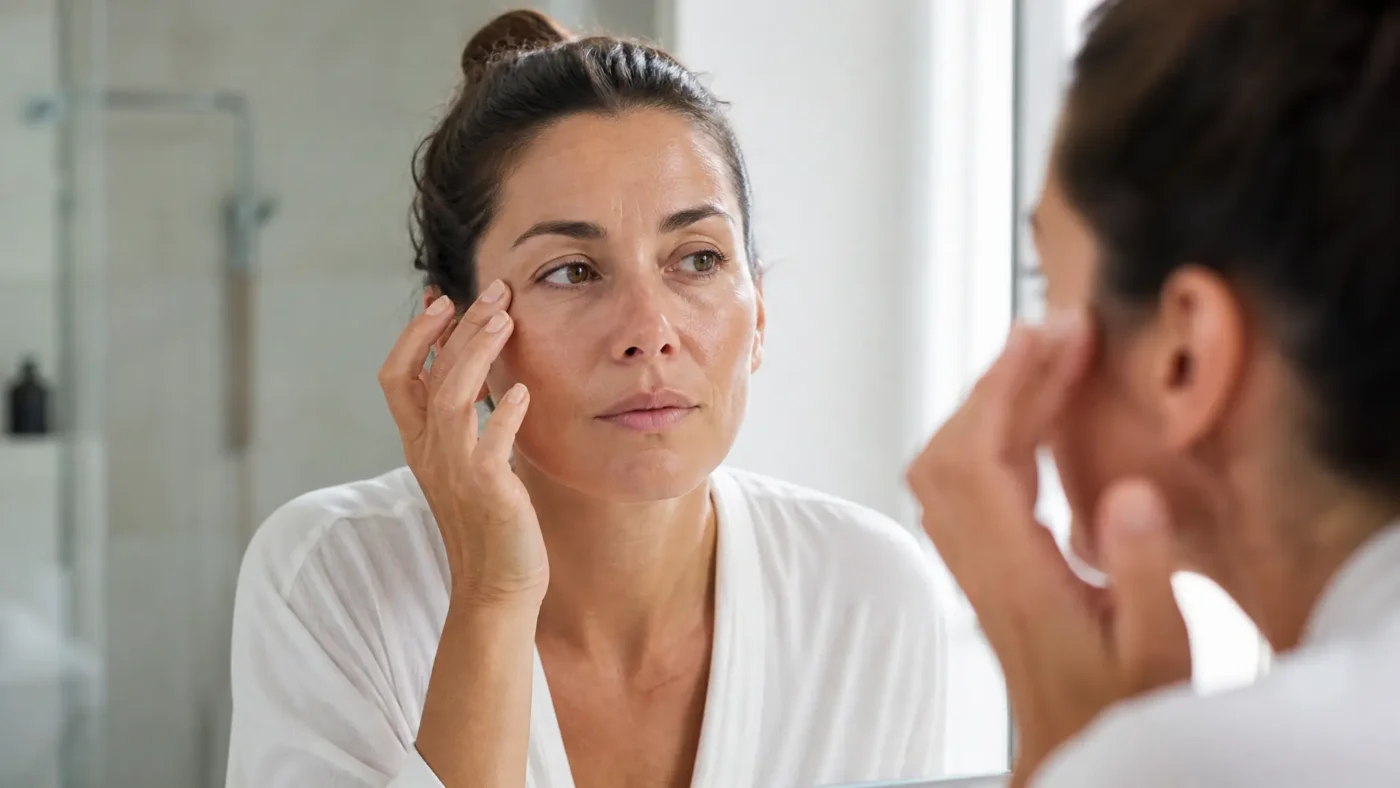
Picture someone who eats reasonably well, drinks enough water, and follows a solid skincare routine — cleanser, serum, sunscreen, the works. And yet, in the mirror, their skin looks duller than it should, with fine lines that seem to have shown up ahead of schedule. If this sounds familiar, the missing piece might not be a product at all. It might be something happening far below the surface, in a process researchers call inflammaging skin — a slow, body-wide inflammatory state that quietly erodes skin structure over years. The short answer: some of the most significant drivers of visible aging don’t originate in the skin itself, but in the immune system’s low simmer that never quite switches off.
What Is Inflammaging, and Why Does It Matter for Your Skin?
The term “inflammaging” is a blend of “inflammation” and “aging,” and it was popularized through the original research defining inflammaging, which described how chronic, low-level immune activity accumulates as people age and contributes to a wide range of age-related conditions. Skin, as the body’s largest organ, is not exempt.
Understanding low-grade inflammation aging requires letting go of the usual image of inflammation — swelling, heat, redness. This version is quieter. It doesn’t announce itself with a rash or a fever. Instead, it hums along in the background for years, barely noticeable, while still doing damage.
This is fundamentally different from acute inflammation, which is the kind everyone recognizes: a cut that reddens and heals, a pimple that flares and resolves. Acute inflammation has a job, does it, and clocks out. Chronic low-grade inflammation, by contrast, never clocks out. It’s less like a fire alarm and more like a faucet left slightly dripping — not dramatic in any single moment, but costly over time.
Among the inflammaging causes researchers point to are aging immune cells, accumulated cellular debris, and long-term exposure to environmental stressors. None of these produce an obvious symptom day to day. Their effects only become visible when you look at skin structure over years rather than days — which is precisely why so many people are caught off guard.
From Cytokines to Collagen: The Cellular Chain Reaction
To understand how this internal process becomes an external one, it helps to meet cytokines. Think of cytokines as text messages sent between immune cells — small chemical signals that say “inflammation here” or “send reinforcements.” In acute inflammation, these messages are sent, received, and then stop. In chronic low-grade inflammation, the messages keep going out, quietly, for years.
This constant signaling feeds directly into cytokines and collagen breakdown. Persistent cytokine activity keeps certain immune cells, called macrophages, in a semi-activated state. According to research on inflammaging’s role in skin aging, these macrophages release enzymes known as matrix metalloproteinases.
Matrix metalloproteinases skin enzymes function like molecular scissors. Their normal job is to trim and remodel old collagen so new collagen can be built in its place — a healthy, ongoing renovation. But under chronic inflammatory pressure, these enzymes are produced in excess, and the cutting outpaces the rebuilding. Collagen and elastin, the proteins that give skin its firmness and bounce, get broken down faster than they’re replaced.
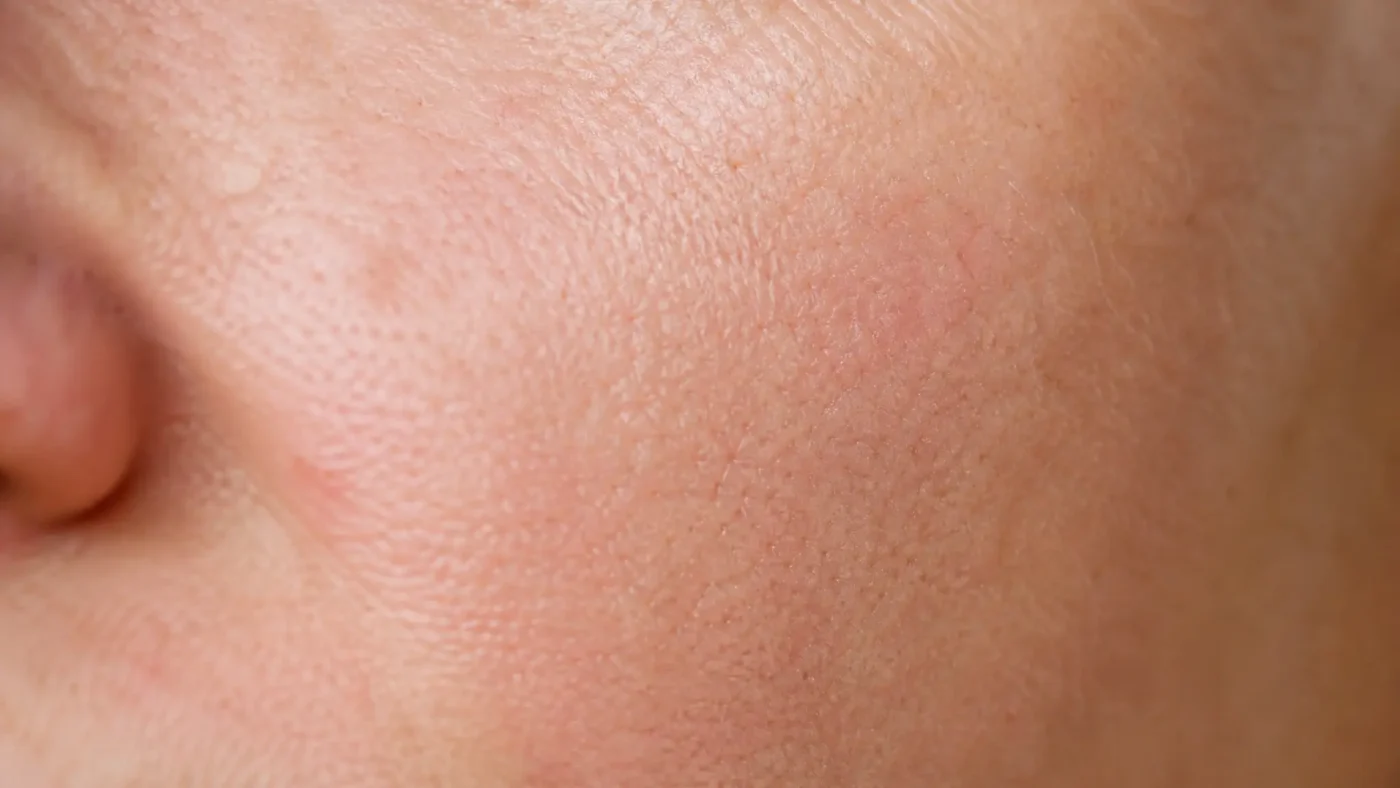
This is a slow, cumulative process, not a single dramatic event. Nobody wakes up one morning missing 20% of their collagen. Instead, the loss happens in small, unnoticed increments across years, which is exactly why sagging and fine lines can feel like they “appeared overnight” — the damage was gradual, but the perception of it wasn’t.
What Triggers Inflammaging in the First Place?
Inflammaging rarely has one cause. It tends to build from several everyday sources stacking on top of each other:
- Chronic psychological stress: sustained cortisol elevation disrupts normal immune signaling, part of what’s known as the stress-to-skin inflammation pathway.
- Cumulative UV exposure: sun damage generates free radicals, contributing to oxidative stress and inflammaging by keeping immune cells persistently activated.
- Poor sleep quality and circadian disruption: the body does much of its anti-inflammatory repair work during deep sleep, and consistently shortchanging it removes that recovery window.
- Diets high in refined sugar and processed fat: these patterns are associated with elevated systemic inflammatory signaling over time.
- Gut microbiome imbalances: an increasingly studied area, with research suggesting gut bacteria composition influences the body’s overall inflammatory tone.

None of these triggers act alone in most people. Usually it’s an overlapping combination — a stressful stretch of poor sleep, sun exposure without much sun protection, and a diet leaning heavily on convenience foods — that pushes the inflammatory baseline upward. And because each factor’s contribution is modest on its own, it’s easy to underestimate the combined effect until it shows up as visible skin change.
Inflammaging vs. Normal Aging: How to Tell the Difference
It’s worth being honest here: not all aging is inflammaging. Some collagen decline and slower cell turnover happen simply because time passes — a normal, expected biological process independent of inflammatory activity. Comparing inflammaging vs normal aging isn’t about separating “bad aging” from “good aging.” It’s about recognizing that inflammation acts as an accelerant on top of a process that was always going to happen.
This is why two people of the same age, with similar genetics even, can show noticeably different degrees of visible aging. One may be dealing with a higher inflammatory load from stress, sun exposure, or diet, while the other isn’t — and the skin reflects that difference over years, not overnight.
It’s also important to note that inflammaging isn’t something you can spot on a single day by looking in the mirror. It’s inferred through patterns — comparing skin structure and elasticity across years rather than days. The field studying skin longevity and inflammation is genuinely active right now, with researchers still working out exact mechanisms and how much each factor contributes. This is not a fully settled, neatly mapped process yet, and honest reporting on it should reflect that uncertainty rather than overstate what’s known.
Myth-busting note: Inflammaging isn’t the same as having “sensitive” or “reactive” skin. A person can have inflammaging-driven skin aging while showing no outward signs of irritation, redness, or sensitivity at all. It’s a slow, systemic process — not a visible skin type you can identify by looking at someone’s complexion on any given day.
Practical Ways to Support an Anti-Inflammaging Lifestyle
Because inflammaging is driven by lifestyle and biological factors rather than skincare alone, the most meaningful interventions tend to happen outside the bathroom cabinet — though what goes on the skin still plays a supporting role.
- Prioritize consistent, quality sleep: aim for a regular schedule that supports the body’s natural repair and anti-inflammatory cycles, rather than occasional catch-up sleep.
- Manage chronic stress through sustainable practices: a daily walk, breathing exercises, or therapy tend to matter more than an occasional spa day.
- Incorporate anti-inflammatory skincare: ingredients like niacinamide and antioxidants can help support the skin barrier locally, alongside daily broad-spectrum sun protection, which remains non-negotiable.
- Support gut health: fiber-rich, minimally processed foods appear to support a more favorable inflammatory tone over time.
- Limit excessive sun exposure: of all the triggers discussed, this remains one of the most controllable.

None of this replaces the value of good skincare — it simply reframes it. Rather than treating skincare as the entire strategy, it becomes one layer within a broader approach. This is part of the thinking behind the modern approach to skin longevity, which looks past surface-level anti-aging toward the root biological processes driving visible change.
Frequently Asked Questions
Can inflammaging be reversed, or only slowed down?
Current research suggests inflammaging is more manageable than reversible. Once collagen and elastin have broken down significantly, restoring them fully is difficult. But slowing the inflammatory processes driving further breakdown — through sleep, stress management, diet, and sun protection — appears to meaningfully change the trajectory going forward.
Does inflammaging affect everyone at the same rate?
No, and this is part of what makes it tricky to generalize about. Genetics, environment, chronic stress levels, and even gut health all seem to influence how quickly inflammaging progresses. Two siblings with similar genetics can age quite differently if their lifestyles diverge substantially.
Are anti-inflammatory supplements enough to address inflammaging on their own?
Unlikely, based on what’s currently understood. Supplements may offer modest support, but inflammaging appears to respond most to consistent lifestyle factors — sleep, stress regulation, diet, sun protection — working together rather than any single pill or ingredient carrying the load alone.