


It’s 7:14 a.m. The mirror reflects something unfamiliar — softer cheekbones, heavier eyelids, a jawline that seems to have melted overnight. The coffee hasn’t kicked in yet, and concealer suddenly feels like the only ally in sight. This quiet morning moment is shared by countless women, and it has very little to do with sleep quality or hydration alone.
Behind that puffy reflection lives a quiet, hardworking network: the lymphatic system. When it slows down, the face holds onto fluid, waste, and inflammation. When it flows well, skin looks lifted, luminous, and awake. Drainage, in many ways, has become the new detox — gentler, smarter, and deeply rooted in how the body actually works.
Why the Lymphatic System Deserves a Spot in Every Skincare Ritual
The lymphatic system is a delicate network of vessels and nodes that moves fluid, immune cells, and metabolic waste away from tissues. Unlike the circulatory system, it has no central pump. It relies on movement, breath, muscle contraction, and gentle external stimulation to keep flowing.
When this flow stagnates, especially overnight, the face becomes a holding zone. Fluid settles around the eyes, cheeks, and jaw. Skin can look dull, congested, or slightly swollen. Supporting healthy lymph flow skin health is one of the most underrated steps in modern facial care.
What Slows Lymph Flow Down
- Prolonged stress and shallow breathing
- High-sodium dinners and late-night meals
- Alcohol, especially close to bedtime
- Hormonal fluctuations across the cycle
- Sedentary days and tight neck/shoulder posture
- Poor sleep position or unsupportive pillows
Chronic stress, in particular, plays a quiet but powerful role here. The nervous system and the lymphatic system are deeply connected, which is why restoring your skin’s resilience after stress often begins with calming the body, not layering more products.
Morning Face Puffiness Causes: What’s Really Happening Overnight
Face swelling after sleep isn’t a flaw. It’s biology. While lying horizontally for seven or eight hours, gravity stops helping fluid drain downward. Combined with slower circulation, hormonal shifts, and any inflammation from the day before, the face becomes a soft, fluid-filled canvas by morning.
Common morning face puffiness causes include:
- Sleeping flat without head elevation
- Salty or processed foods the night before
- Dehydration (yes, too little water makes puffiness worse)
- Alcohol and sugar disrupting fluid balance
- Allergies and sinus congestion
- Crying, screen fatigue, or overstimulation late in the evening
That last one matters more than it sounds. The link between overstimulation and skin health shows up clearly in the morning mirror — tired nervous system, tired face.
Lymphatic Drainage Face Benefits Worth Knowing
The relationship between puffiness and lymphatic drainage is direct and observable. Gentle, consistent stimulation of lymphatic pathways helps move stagnant fluid toward the nodes, where it’s filtered and recirculated. The face, in return, looks more sculpted and rested.
What Regular Drainage Can Support
- Reduced morning puffiness around the eyes and jawline
- A naturally lifted, more sculpted facial contour
- Brighter, more even skin tone
- Calmer-looking skin during breakouts or sensitivity flares
- Better absorption of serums and treatments
- A softer, more relaxed expression overall
This isn’t about chasing perfection. It’s about helping the skin do what it already wants to do — release, refresh, and renew. The principles align beautifully with the slow beauty movement, where ritual matters as much as result.
A Gentle Facial Lymphatic Massage Routine for Mornings
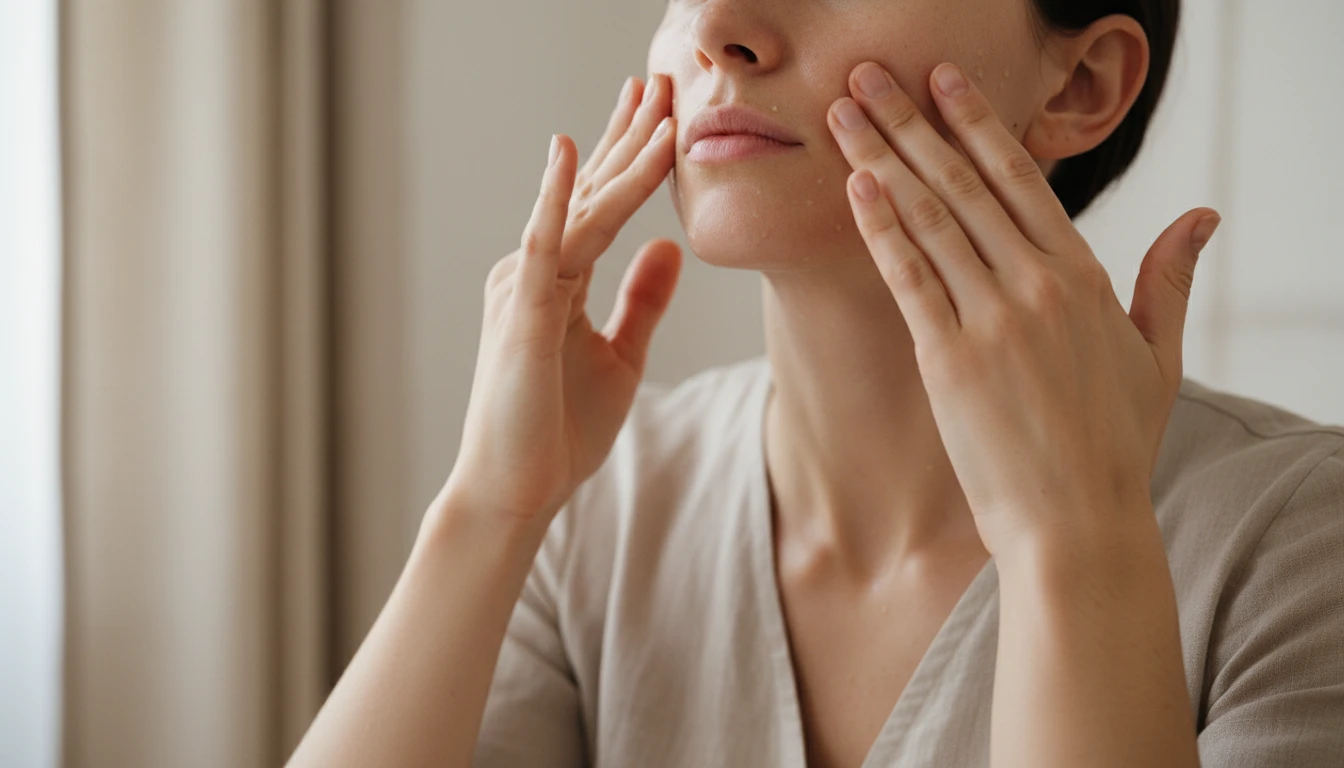
A facial lymphatic massage routine doesn’t need to be long or complicated. Five to seven minutes is enough to make a visible difference. The pressure should always be feather-light — think of moving silk, not kneading dough. Lymph vessels sit just beneath the skin, so heavy pressure works against the goal.
Step-by-Step Morning Flow
- Open the drainage pathways first. Place fingertips above the collarbones and pump gently 10 times. This signals the system to receive flow.
- Glide down the neck. Use flat fingers to sweep from behind the ears down to the collarbones, 8–10 times each side.
- Sweep the jaw and cheeks. Starting at the chin, glide outward toward the ears, then down the neck.
- Soften the under-eye area. Using ring fingers, tap gently from the inner corner outward, then sweep down toward the ears.
- Finish at the forehead. Sweep from the center outward toward the temples, then down the sides of the neck.
A few drops of facial oil or a hydrating serum help the hands glide without pulling. This is also a beautiful moment to slow the breath — long exhales support both nervous system regulation and lymph flow.
Gua Sha Lymphatic Drainage: A Quiet Powerhouse
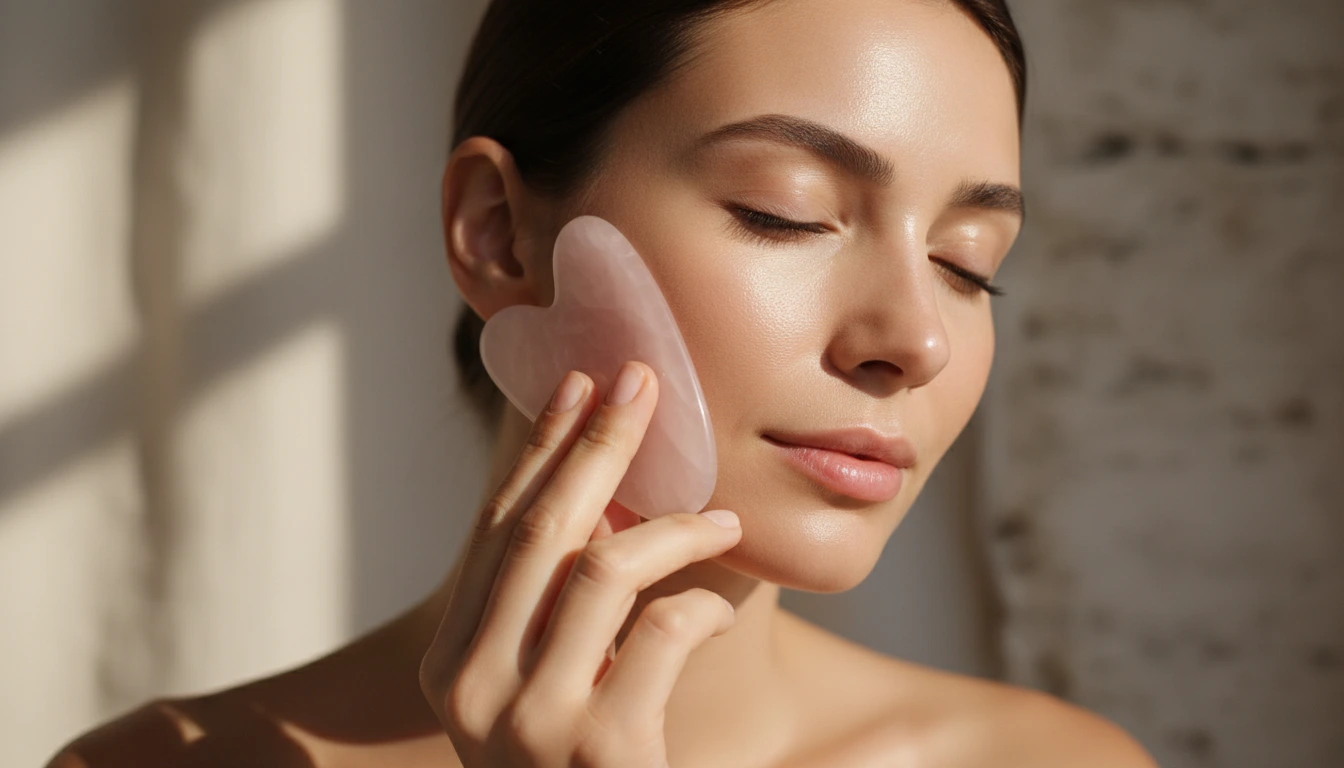
Gua sha lymphatic drainage has earned its place in modern skincare for good reason. The tool’s flat edge allows for broader, more even sweeps along the contours of the face and neck. Used with light pressure and at a low angle (around 15 degrees), gua sha encourages fluid movement while gently releasing tension held in the jaw, cheeks, and brow.
The key is consistency, not intensity. A few minutes daily will always outperform an aggressive session once a week.
Expert Tip and a Myth Worth Releasing
Expert Tip
Practice lymphatic massage on slightly damp skin with a nourishing oil, and always begin at the neck — never the face. Opening the drainage pathways first is what allows the rest of the work to actually move somewhere. Without that step, fluid simply shifts around without truly leaving.
Myth Debunked
The idea that “harder pressure equals better results” is one of the most persistent myths in facial massage. The lymphatic system lives just beneath the skin’s surface. Deep pressure compresses the vessels and can actually slow drainage. Gentle, rhythmic, repetitive movement is what truly supports flow.
Always consult with a healthcare professional before starting new treatments, especially in cases of pregnancy, recent facial procedures, active infections, thyroid concerns, or any condition affecting the lymphatic or circulatory system.
Scientifically Backed Ingredients That Support Drainage and Skin Health

Topical care can beautifully complement manual techniques. Certain ingredients have been studied for their ability to support microcirculation, reduce inflammation, and strengthen the skin’s structural integrity — all relevant to a face that drains well and recovers easily.
Niacinamide (Vitamin B3)
Niacinamide supports the skin barrier, reduces redness, and helps regulate sebum. Dermatological research links it to improved barrier lipid synthesis and reduced trans-epidermal water loss, which means less puffiness from inflammation and stronger skin overall. A vital ally for skin barrier repair.
Hyaluronic Acid
Hyaluronic acid binds water within the skin, supporting plumpness without causing fluid retention. When paired with lymphatic massage, it helps maintain hydration in the right layers — deep within the dermis, rather than pooling beneath the eyes.
Caffeine
Topical caffeine constricts surface blood vessels temporarily and is widely studied for reducing the appearance of puffiness and dark circles. It’s particularly effective in under-eye formulations applied with gentle tapping motions.
Peptides
Signal peptides support collagen synthesis and skin firmness. Firmer skin holds its contours better and is less prone to looking swollen or heavy in the morning. This becomes especially relevant when looking at stress and collagen loss together.
Centella Asiatica (Cica)
Centella is rich in madecassoside and asiaticoside, compounds shown to calm inflammation and support microcirculation. It’s a gentle anchor ingredient for reactive or stressed skin.
Antioxidants (Vitamin C, Green Tea, Resveratrol)
Antioxidants neutralize oxidative stress from pollution, UV, and screens. Less oxidative damage means less inflammation, which means less swelling. They pair especially well with strategies for protecting skin in the age of blue light.
Lifestyle Habits That Quietly Multiply the Results
Drainage isn’t only a morning ritual. It’s a way of caring for the body all day long. Small habits compound beautifully over time.
- Sleep with the head slightly elevated
- Hydrate steadily throughout the day, not all at once
- Reduce sodium in evening meals
- Move the body daily — even a 15-minute walk supports lymph flow
- Practice deep diaphragmatic breathing
- Limit late-night screen time to protect the nervous system
- Choose clean, well-formulated products
The connection between wellness and skin health is no longer a wellness-world whisper. It’s a principle backed by both clinical research and daily practice. Choosing clean ingredients also reduces the inflammatory load the lymphatic system has to process.
When Makeup Becomes Part of the Ritual
On mornings when puffiness lingers despite every effort, makeup can become a soft, supportive layer rather than a mask. The goal isn’t to hide the face — it’s to honor it.
A lightweight base often works better than full coverage on puffy days. Guidance on choosing between foundation vs tinted moisturiser can help match the skin’s needs that morning. For under-eye softness, learning how to choose the right concealer makes a noticeable difference. The understated, refined approach of quiet luxury makeup pairs especially well with a face that has just been drained, hydrated, and softened.
Frequently Asked Questions
1. How often should facial lymphatic drainage be done?
Daily practice, even for just 3–5 minutes in the morning, offers the most consistent results. Longer sessions of 10–15 minutes can be done a few times a week. Gentleness and consistency matter far more than duration.
2. Can lymphatic drainage replace skincare products?
No — it complements them. Massage supports circulation and absorption, while well-formulated products provide hydration, antioxidants, and barrier support. Together, they create results that neither could achieve alone.
3. Is it normal to feel slightly thirsty or need to urinate after lymphatic massage?
Yes, this is completely normal. As the lymphatic system processes fluid and waste, the body often signals a need for hydration and elimination. Drinking a glass of room-temperature water afterward supports the entire process.
A Soft Closing Thought
The face in the morning mirror is rarely a problem to be fixed. More often, it’s a quiet message from the body asking for slower mornings, deeper breaths, and gentler hands. Drainage is less about chasing a sculpted look and more about returning the face to its natural rhythm — fluid moving, skin breathing, expression softening. That is where real radiance begins.