

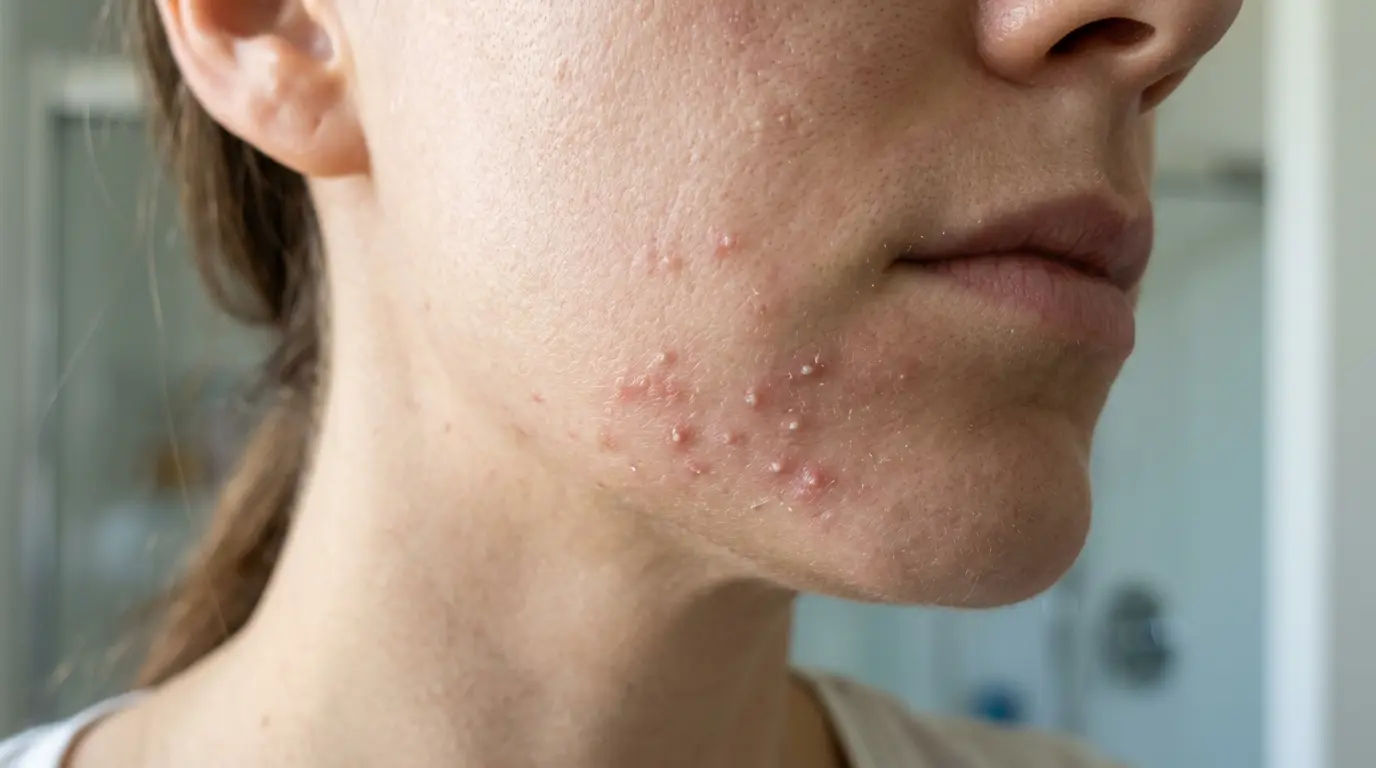
Two weeks into a new retinol routine, and there it is: a fresh cluster of bumps along the jawline that definitely was not there before. It’s late, the search bar is open, and the question is simple — is this normal, or is it time to stop? Retinol purging explained simply: it is a real, well-documented reaction where retinol accelerates your skin’s natural renewal process, temporarily pushing existing congestion to the surface faster than it would have appeared on its own. In most cases, it is temporary, predictable, and actually a sign the product is doing its job. But not always — and knowing the difference is what this article is for.
What “Purging” Actually Means at a Cellular Level
Skin is not static. The outermost layer is made of cells called keratinocytes — think of them as bricks that are constantly being made at the bottom of a wall and pushed upward until they flake off at the top. This whole process, from birth to shedding, is called cell turnover, and it normally takes several weeks.
Retinol interferes with this timeline on purpose. It speeds up the rate at which new keratinocytes are produced and changes how they mature, a process called differentiation. Research confirming retinoids accelerate skin cell turnover has been fairly consistent on this point: clinical review of retinoid effects on epidermal differentiation shows retinoids reliably shift the epidermis into a faster, more organized renewal cycle.
Here’s the part that causes the panic. Many people already have microcomedones sitting under the skin — tiny, invisible clogged pores that would eventually have surfaced anyway, just slowly, over weeks or months. When cell turnover speeds up, those existing clogs get pushed to the surface faster and more visibly, often all around the same time. It can look like a sudden breakout. It is closer to a fast-forward button on something that was already there.
The Science of Why Skin Flakes and Breaks Out Faster
Flaking is the other half of the purging picture, and it has its own mechanism. Skin cells are held together at the surface by structures called corneodesmosomes — essentially tiny anchors gluing each cell to its neighbors so they shed one at a time, unnoticed. Retinoids disrupt these anchors. Research on how retinoids break down corneodesmosomes has shown this directly: a clinical study on retinoid-induced desquamation found that this breakdown is exactly what causes the visible peeling and flaking so many new retinol users notice.
So when skin sheds in noticeable flakes rather than invisibly, that is usually a sign the retinoid is working on schedule, not a sign of harm. It looks alarming. Biologically, it’s closer to expected mechanics than malfunction.
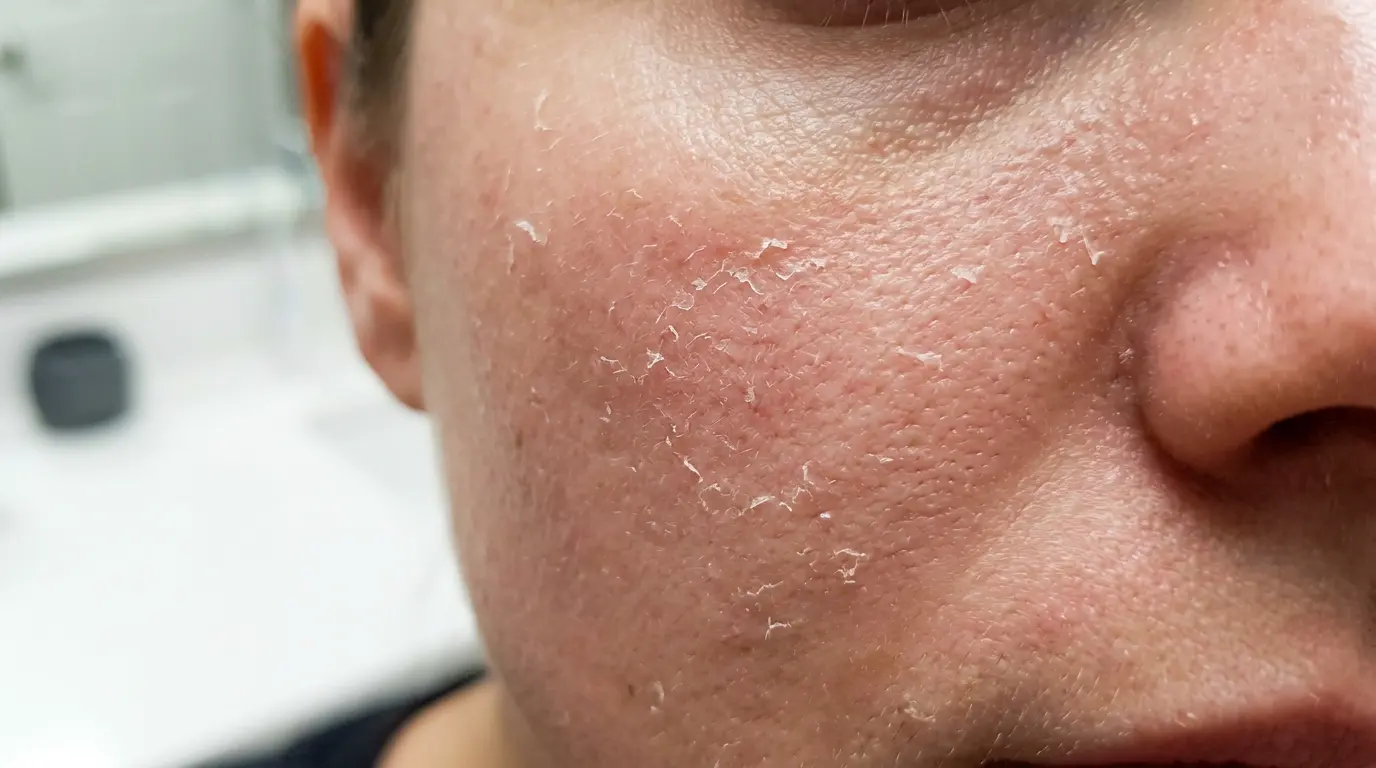
That said, not every person experiences this the same way. Retinoid skin tolerance varies quite a bit — someone with a naturally resilient barrier, oilier skin, or prior experience with exfoliating acids may sail through with mild dryness, while someone with sensitive, reactive, or already-compromised skin may react more intensely to the same concentration. Formulation strength matters too; a 1% retinol and a 0.25% retinol are not going to behave the same way on the same face.
Purging vs. Breaking Out: How to Tell the Difference
This is the question that actually matters at 1am: retinol purge vs breakout, and how to tell which one is happening. A few patterns tend to separate the two reliably.
- Location: Purging tends to show up in areas where breakouts already happen regularly. A true irritation or allergic reaction more often appears in new territory — cheeks, temples, areas that were previously clear.
- Timeline: Purging typically resolves within 2 to 6 weeks as turnover stabilizes. A bad reaction tends to get worse the longer the product is used, not better.
- Texture: Purging often looks like small, fast-resolving bumps or whiteheads. Retinol irritation vs purging shows up differently — irritation tends to bring redness, burning, swelling, or hive-like patches, not just bumps.
- Speed of onset: Purging usually appears within the first 1 to 2 weeks of starting retinol or stepping up in strength, in step with the retinization period the skin is entering.
None of these signs are perfect on their own, but together they paint a reasonably clear picture. If it fits the “already breaks out there, appeared early, calming down over time” pattern, it’s probably purging. If it fits “new spot, getting worse, feels hot or swollen,” that’s a different conversation.
How Long Does Retinol Purging Actually Last?
How long does retinol purging last is one of the most searched versions of this question, and the honest answer is: it depends on your skin’s own cycle, but there’s a reasonable range. Most purging resolves within one full turnover cycle, generally 4 to 6 weeks. If it’s still escalating well past that point, it likely isn’t purging anymore.
This adjustment window has a name: the retinization period. It refers to the gradual process of building tolerance to retinol, during which side effects like flaking, mild redness, and purging typically decrease as the skin adapts to more frequent, faster turnover. It’s a phase, not a permanent state — most people who push through it end up with a fairly boring, well-tolerated relationship with the product.
One of the more effective ways to shorten and soften this phase is not applying retinol every night from day one. Introducing it gradually, alongside rest nights for the skin barrier, gives the skin time to adjust without constant compounding stress. A skin cycling routine to ease into retinol is built around exactly this idea — spacing out active nights with recovery nights so the retinization period feels far less dramatic.

Not every new breakout on retinol is a purge. If a product has no exfoliating or cell-turnover mechanism behind it — a rich moisturizer, a facial oil, a heavy occlusive balm — a breakout it causes is very unlikely to be “purging.” It’s more likely a simple product intolerance or a comedogenic reaction to an ingredient the skin doesn’t like. Purging is a mechanism, not a catch-all excuse for any new blemish. If reactions include intense burning, swelling, or persistent redness beyond mild flaking, pause use and consult a board-certified dermatologist.
When to Worry: Signs You Should Stop or Adjust Your Routine
Most retinol journeys don’t require intervention, but some do. It’s worth knowing the actual red flags rather than guessing.
- Breakouts keep worsening past the 6-to-8-week mark with no signs of improvement or plateau.
- The skin shows signs of a compromised barrier — persistent stinging, tightness, or visible peeling well beyond normal light flaking.
- Reactions include swelling, hives, or intense burning rather than the mild irritation typically associated with adjustment.
If any of these describe what’s happening, it’s reasonable to scale back frequency, drop to a lower concentration, or pause entirely and let the barrier recover before trying again. For skin that genuinely doesn’t tolerate the adjustment phase well, even with slower reintroduction, it may be worth exploring gentle alternatives beyond traditional retinol that offer some similar benefits with a softer entry point.
There’s no prize for pushing through a reaction that keeps escalating. Skin that fights back this hard is communicating something, and the right response is usually to listen rather than override it.

Frequently Asked Questions
Can I use retinol every night while my skin is purging?
Generally, no — nightly use during an active purge tends to prolong irritation rather than speed things along. Most dermatology guidance suggests dropping to two or three nights a week until flaking and sensitivity settle, then building back up gradually as tolerance improves.
Does everyone experience purging when starting retinol?
No. Purging depends on whether microcomedones were already present beneath the surface. Someone with very little existing congestion may notice mostly dryness and flaking with little to no breakout activity, while someone prone to clogged pores may see a more visible purge.
Should I stop using retinol completely if I think I am purging?
Not necessarily. If the pattern matches typical purging — familiar breakout zones, appearing early, resolving within weeks — most guidance suggests continuing at a manageable frequency. Stopping is more appropriate when symptoms match irritation rather than purging, particularly swelling, burning, or reactions in new areas that keep intensifying.