


It’s almost midnight. The laptop glow lights up half the bedroom, the phone buzzes on the pillow, and the tablet sits propped against a pile of books. Somewhere between answering one last email and scrolling through recipes for tomorrow, your face has spent another twelve hours bathed in light from screens. This is the quiet reality behind a growing skincare concern, and it’s exactly why Protecting Skin from Blue Light has moved from niche topic to daily essential.
Blue light, known in dermatology as High Energy Visible (HEV) light, sits on the visible spectrum between roughly 380 and 500 nanometers. It comes from the sun in large doses, and in smaller, but constant, doses from phones, laptops, LED bulbs, and televisions. Your skin notices. It just doesn’t always tell you right away.
What Blue Light Actually Does to Your Skin
Dermatological research over the past decade has shown that HEV light penetrates deeper into the skin than UVB, reaching the dermis where collagen and elastin live. Once there, it triggers the production of reactive oxygen species, also known as free radicals.
Those free radicals are the troublemakers behind much of the blue light skin damage we now see in modern complexions. They contribute to:
- Oxidative stress in skin cells
- Breakdown of collagen and elastin fibers
- Hyperpigmentation, especially in medium and deeper skin tones, where HEV exposure has been linked to longer-lasting melasma
- Weakening of the skin barrier over time
- A dull, tired-looking complexion
None of this happens overnight. It’s the slow, cumulative kind of damage, the same pattern we see with sun exposure. Which is why skin protection from blue light deserves a steady, daily place in your routine, not a panic-driven one. If you’re still building the basics, a gentle starting point is this beginner’s guide to a skincare routine.
Does Blue Light Age Skin? The Honest Answer
Yes, with consistent long-term exposure, it can. HEV light contributes to premature aging through the same oxidative pathway responsible for sun-induced photoaging: free radical damage that weakens collagen, elastin, and the skin’s natural repair systems. The visible result over years can look like fine lines appearing earlier, uneven tone, and loss of bounce.
That’s not a reason to fear your phone. It’s a reason to be intentional.

How to Protect Skin from Blue Light Damage
The good news: learning to protect skin from blue light isn’t complicated. It’s about a few smart habits layered together, the same way a holistic approach treats the whole picture, not just one symptom.
1. Rethink Your Screen Habits
Use night mode after sunset. Lower screen brightness in dim rooms. Keep devices at arm’s length rather than pressed against your cheek. Small distance changes reduce exposure intensity noticeably, since light intensity drops sharply the further the source is from your skin.
2. Wear Sunscreen Indoors Too
Yes, indoors. A broad-spectrum mineral sunscreen with iron oxides is currently the most evidence-backed shield against visible light, including HEV. Tinted sunscreens almost always contain iron oxides, which is why dermatologists often recommend them for melasma-prone skin.
3. Layer Antioxidants in the Morning
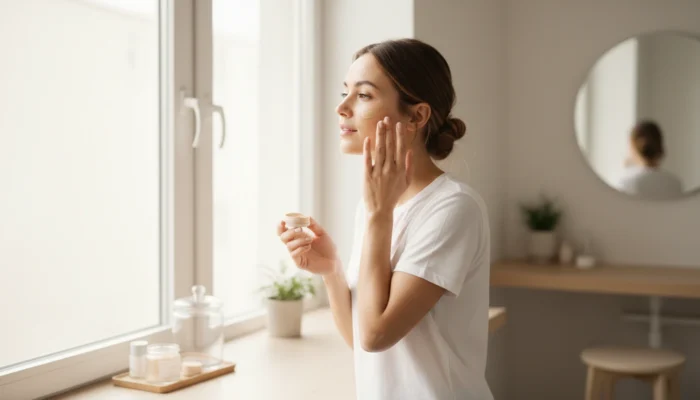
Antioxidants neutralize the free radicals blue light creates. A morning routine that pairs antioxidants with sunscreen offers stronger protection than either alone. You can see how this fits into a calm, intentional morning sequence in this morning skincare routine guide.
4. Support the Skin Barrier
A strong barrier handles environmental stress better. Hydration, ceramides, and a healthy microbiome all play a role here, something explored further in this piece on microbiome skincare.
Scientifically Backed Ingredients That Help Protect Skin from Blue Light
So what ingredient protects skin from blue light? There isn’t one magic molecule, but several with solid dermatological backing. Think of them as a team, the foundation of any thoughtful HEV light skincare routine.
Iron Oxides
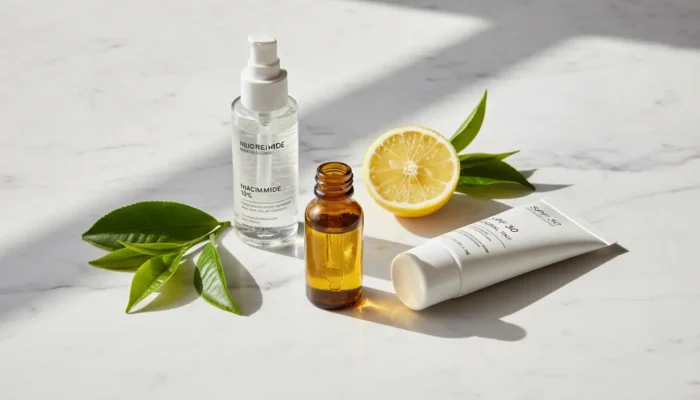
The most reliable physical defense against visible light. Found in tinted mineral sunscreens. Formulas with iron oxides have been shown to outperform untinted sunscreens in blocking HEV light.
Zinc Oxide
A mineral filter that reflects and scatters UV and a portion of visible light. Best when combined with iron oxides for fuller coverage.
Niacinamide (Vitamin B3)
Well-researched for reducing pigmentation, supporting the skin barrier, and calming inflammation, all of which counter blue light’s downstream effects.
Vitamin C and Vitamin E
Powerhouse antioxidants. Vitamin C (especially L-ascorbic acid) neutralizes free radicals and brightens; Vitamin E stabilizes it and works on lipid-based oxidative stress. Together, they’re stronger than apart.
Hyaluronic Acid
Not a direct shield, but essential. Well-hydrated skin recovers faster from environmental stress and looks visibly less fatigued.
Plant-Based Antioxidants
Green tea polyphenols, resveratrol, ferulic acid, and astaxanthin all show antioxidant activity relevant to HEV-induced oxidative stress.
Always consult with a healthcare professional before starting new treatments. If you’ve been using actives but feel results are flat, this honest read on anti-aging skincare may help recalibrate expectations.
Myth Busting: What People Get Wrong About Blue Light
Myth: Standard chemical sunscreens completely block blue light.
Most traditional chemical sunscreens are formulated for UVA and UVB. They do very little against visible light. For real blue light protection skincare, look specifically for tinted mineral formulas with iron oxides on the label. Without that, you’re filtering UV only, not the screen-glow spectrum.
Myth: Blue light only comes from screens.
The sun is the largest source of HEV by far. Indoor LED lighting contributes too. So sitting in a sunlit room without sunscreen exposes your skin to far more blue light than your phone ever will, an important nuance often missed in skincare marketing.
Is Blue Light Safe for Your Skin?
In small, occasional doses, blue light isn’t an emergency. The concern is the modern reality: hours of cumulative exposure, daily, for years. That’s where consistent HEV light skincare becomes meaningful. Think of it the way you think of UV protection, not fearful, just consistent.
For anyone with reactive or easily flushed skin, this gentler approach to managing sensitive skin pairs nicely with the principles above.
FAQ: Protecting Skin from Blue Light
How can I protect my skin from blue light if I work on a computer all day?
Apply a tinted mineral sunscreen with iron oxides every morning, layer an antioxidant serum (Vitamin C is a strong choice), keep screens at arm’s length, and lower brightness in dim rooms. Reapply sunscreen midday if you sit near a window.
What protects skin from blue light better, sunscreen or antioxidants?
Both, used together. Sunscreen (especially with iron oxides) physically blocks HEV light. Antioxidants neutralize the free radicals from any light that gets through. They work as partners, not substitutes.
How do I protect my skin from blue light at night when I’m scrolling in bed?
Sunscreen isn’t needed at night, but a barrier-supporting routine is. Hydrating ingredients, niacinamide, and antioxidants applied in the evening help your skin repair and resist oxidative stress while you sleep, even with some screen time.