

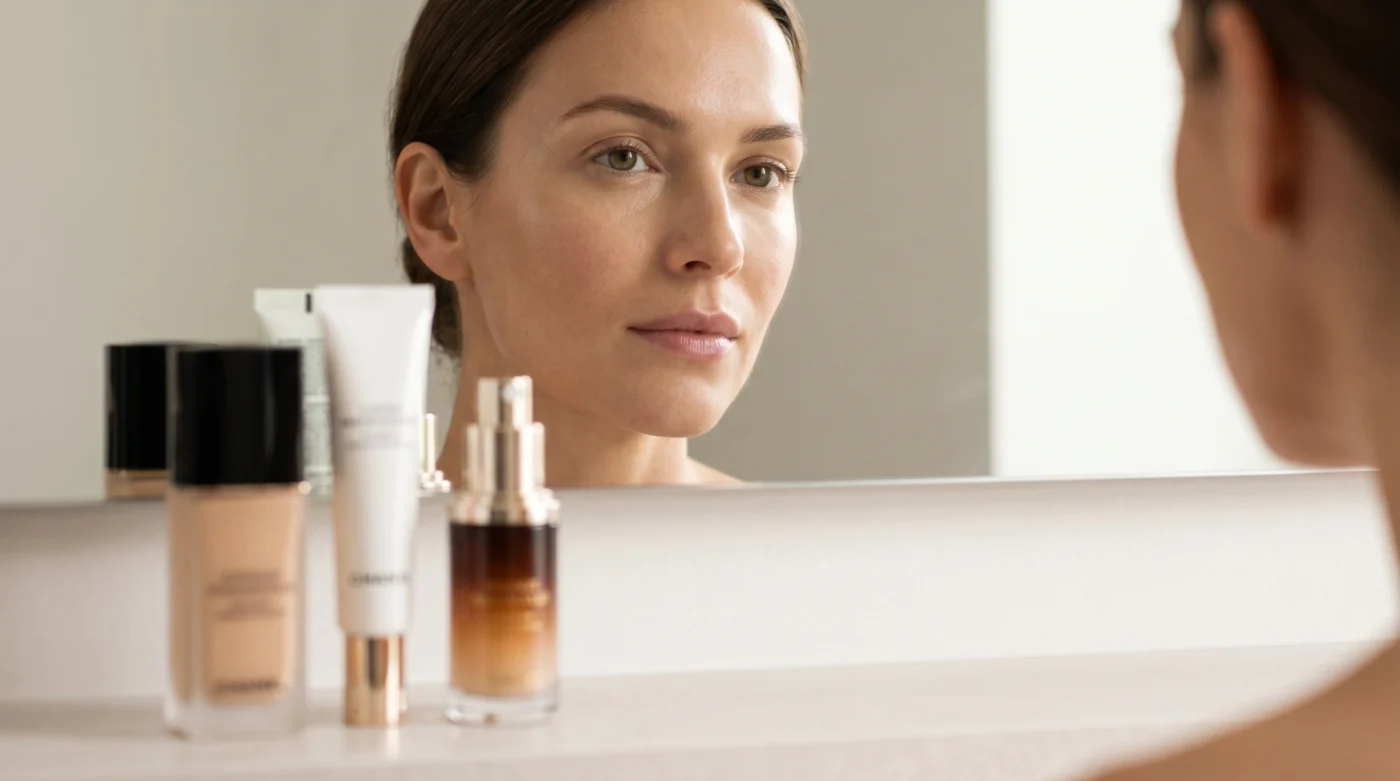
It’s 7:43 AM. You’re staring at a tired complexion in the mirror, a stubborn breakout on your chin, and a foundation tube in your hand—wondering if covering up your skin is quietly making it worse. That morning rush is exactly why skincare actives baked into your makeup have become such a relief for busy women. They let your skincare routine keep working long after you’ve clicked the cap shut and run out the door.
The good news? The science here is real. Cosmetic chemists have gotten genuinely clever about formulating pigments alongside ingredients that hydrate, calm, and strengthen the skin barrier. The not-so-good news? Marketing has gotten clever too. Not every “skincare-infused” claim holds up under a microscope.
Let’s sort through what actually earns its place in your makeup bag. Always consult with a healthcare professional before starting new treatments, especially if you’re pregnant, using prescription retinoids, or managing a skin condition.
Why Skincare Actives in Makeup Matter More Than You Think
Your face wears makeup for roughly 8 to 14 hours a day. That’s a long stretch of contact time—longer than most serums sit on your skin. When a product is formulated thoughtfully, those hours become passive treatment time instead of a slow suffocation under heavy pigment.
This is why serum-infused foundations have shifted how dermatologists think about base makeup. The right formula doesn’t just sit on top of the skin. It delivers humectants, antioxidants, and barrier-supporting lipids while you go about your day.
The Catch: Concentration and Formulation Quality
Here’s the honest part. A pinch of niacinamide in a foundation won’t replace a dedicated serum. But meaningful percentages—paired with clean, well-chosen pigments—can absolutely contribute to glowing skin tips you read about. The difference lies in formulation integrity, which is why checking for clean ingredients on the label matters as much as the marketing claim on the front.
The 5 Scientifically Backed Ingredients Worth Looking For
These are the actives with the strongest dermatological evidence when included in makeup formulas. Not every product needs all five, but spotting two or three on the INCI list is a strong signal you’ve found something worth your skin’s time.
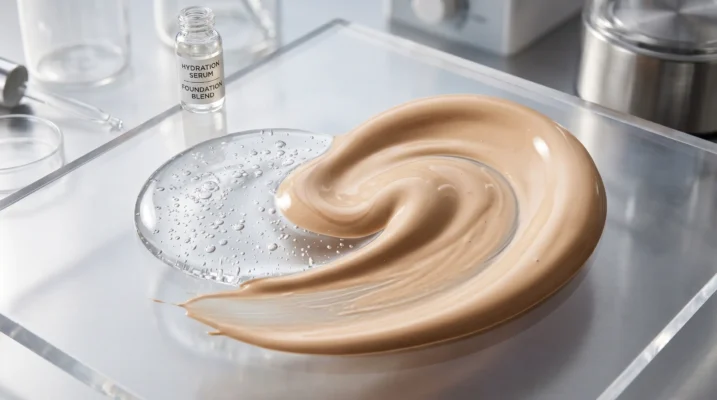
1. Niacinamide (Vitamin B3)
Niacinamide is the quiet workhorse of modern cosmetic chemistry. At concentrations between 2% and 5%, peer-reviewed studies show it reduces transepidermal water loss, calms redness, and regulates sebum production. Translation: less midday shine, fewer flare-ups, more even tone.
- Reduces hyperpigmentation by interrupting melanosome transfer to skin cells
- Strengthens the skin barrier by boosting ceramide synthesis
- Minimizes pore appearance over consistent use (4–8 weeks)
- Plays well with everything—including retinol and vitamin C, despite old myths
2. Hyaluronic Acid
This humectant holds up to 1,000 times its weight in water. In a foundation or tinted base, hyaluronic acid pulls moisture into the upper layers of the skin, which keeps makeup from clinging to dry patches or settling into fine lines. The result is that soft-focus, hydrated finish that looks like skin—not paint.
Look for formulas that list multiple molecular weights (sodium hyaluronate plus hyaluronic acid). Smaller molecules penetrate deeper; larger ones plump the surface.
3. Peptides
Peptides are short chains of amino acids that signal your skin to behave younger. Some, like Matrixyl (palmitoyl pentapeptide-4), have clinical data showing increased collagen production after 8–12 weeks of daily use. As anti aging ingredients go, they’re among the gentlest—rarely irritating, suitable for almost every skin type.
When peptides appear in primers, concealers, or foundations, they’re not a gimmick. They’re a slow, cumulative benefit that pairs beautifully with a stripped-back minimalist makeup approach.
4. Ceramides
Ceramides are lipids your skin naturally produces to hold the barrier together. When that barrier is compromised—from over-exfoliation, harsh cleansers, or simply aging—skin becomes reactive, dehydrated, and dull. Topical ceramides directly replenish what’s missing, which is why they’re foundational to skin barrier repair.

Ceramide-rich makeup is especially valuable for anyone with sensitive or compromised skin. If that sounds familiar, exploring makeup for sensitive skin formulated around ceramides can make a noticeable difference in how your face feels by the end of the day.
5. Vitamin C (Stabilized Forms)
Pure L-ascorbic acid is famously unstable, which makes it tricky in makeup. But stabilized derivatives—tetrahexyldecyl ascorbate, sodium ascorbyl phosphate, magnesium ascorbyl phosphate—hold up beautifully in pigmented formulas. They neutralize free radicals from UV exposure and pollution, the two biggest external drivers of premature aging.
A foundation with stabilized vitamin C essentially adds an antioxidant shield on top of your morning serum. It’s one of the best skincare ingredients to layer this way.
Honorable Mentions: Actives You’ll Also See
A few more ingredients deserve a quick nod, though they appear less consistently in makeup:
- Salicylic acid — Excellent acne treatment ingredient in tinted spot treatments and some concealers; dissolves oil inside pores
- Glycolic acid — Rarely in foundations (too irritating at active levels), but found in some skin-tints at low, conditioning percentages
- Retinol — Almost never in daytime makeup because of photosensitivity; save it for your PM routine
- Squalane — Mimics skin’s natural oils, ideal for dry or mature complexions
Expert Tip: Debunking the “Makeup Suffocates Skin” Myth
The myth: Wearing makeup every day damages your skin and causes breakouts.
The reality: Modern non-comedogenic formulas don’t clog pores or starve skin of oxygen (your skin doesn’t breathe through its surface—it gets oxygen from blood vessels). What actually causes problems is inadequate cleansing at night and choosing the wrong formula for your skin type. A well-formulated, active-rich foundation can be better for your skin than going bare under harsh sun and pollution.
The fix isn’t skipping makeup. It’s choosing smarter products and double-cleansing in the evening. If you’re unsure whether you need full coverage at all, comparing a foundation vs tinted moisturiser for your skin type is a useful starting point.
How to Read a Label Without a Chemistry Degree
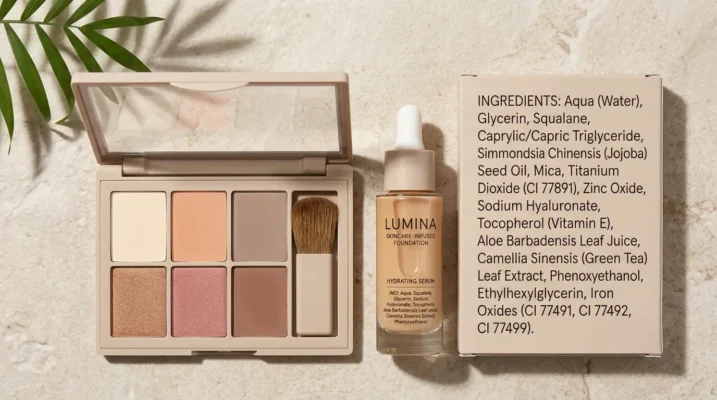
INCI lists are ordered by concentration (down to about the 1% mark). Active ingredients listed in the top half of the label are present in meaningful amounts. If niacinamide is buried near the fragrance and preservatives, it’s likely there for marketing—not effect.
A second tip: look for “encapsulated” or “time-release” technology. These delivery systems protect actives from oxidation and release them gradually onto skin throughout the day, which dramatically improves real-world performance.
Matching Actives to Your Skin Concern
- Dullness or uneven tone: Vitamin C + niacinamide
- Dryness or fine lines: Hyaluronic acid + peptides + ceramides
- Oily or breakout-prone skin: Niacinamide + salicylic acid
- Sensitive or reactive skin: Ceramides + peptides (skip acids and fragrances)
FAQ: Makeup with Skincare Actives
Can skincare-infused makeup replace my serums?
No. Concentrations in makeup are typically lower than in dedicated treatments, and the goal is complementary—not replacement. Think of it as bonus skincare layered on top of your core routine, not a shortcut around it.
Are skincare actives in makeup safe during pregnancy?
Most are, including niacinamide, hyaluronic acid, peptides, and ceramides. Avoid retinol, retinyl esters, and high-percentage salicylic acid. Always check with your OB-GYN or dermatologist before introducing new products during pregnancy or breastfeeding.
How long until I see results from active-infused makeup?
Hydration and radiance benefits are visible immediately. Barrier repair and tone improvements typically appear after 4–8 weeks of consistent daily wear. Anti-aging effects from peptides require 8–12 weeks before measurable changes show up.