

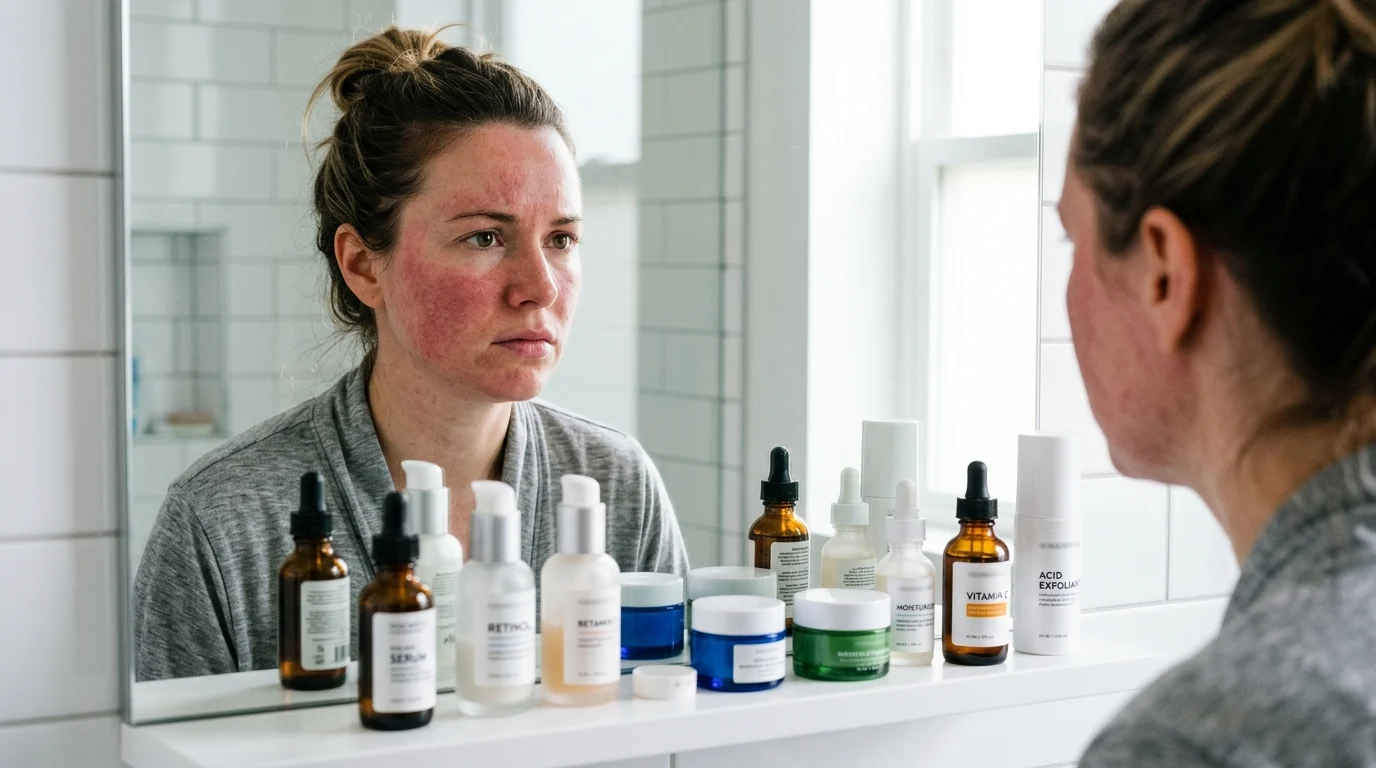
She had the shelf to prove her commitment: a retinoid applied every other night, a vitamin C serum every morning, two exfoliating acids across the week, and a glycolic toner she’d read described as “essential.” The routine was meticulous. It was also destroying her skin. Within three months, she had persistent redness she couldn’t trace, a stinging sensation whenever she applied anything, and a face that had become reactive to products — including old favourites that had worked without incident for years. This was not bad luck. It was not a sudden genetic sensitivity. It was a measurable, well-documented process called skin barrier dysfunction — and her routine may have contributed to a progressive pattern of barrier stress.
This is the part the beauty industry rarely leads with: the skincare routine itself can be the source of the problem, not the solution to it. The same actives marketed to resurface, brighten, and firm can — when misapplied — trigger a cycle of damage that accelerates the very signs of ageing they promised to prevent. Understanding why starts with understanding what the epidermal defence system actually is, and what it does when it’s working.
What Is the Skin Barrier, and Why Does It Matter So Much?
The outermost layer of the skin — the stratum corneum — is frequently described as a stack of dead cells, which makes it sound expendable. It is not. It is a tightly organised biological system responsible for maintaining hydration, regulating inflammation, and controlling what enters and exits the skin at every moment. As the foundational research on stratum corneum defensive function by dermatologist Peter Elias established, the stratum corneum is not a passive, inert layer — it is an active defensive system with metabolically dynamic properties.
Within this layer, a precise lipid matrix — composed primarily of ceramides, cholesterol, and free fatty acids — fills the spaces between skin cells like mortar between bricks. This matrix controls transepidermal water loss (TEWL), the passive evaporation of moisture through the skin. When the matrix is intact, the skin stays hydrated, regulated, and resilient. When it is not, everything changes — and it changes fast.
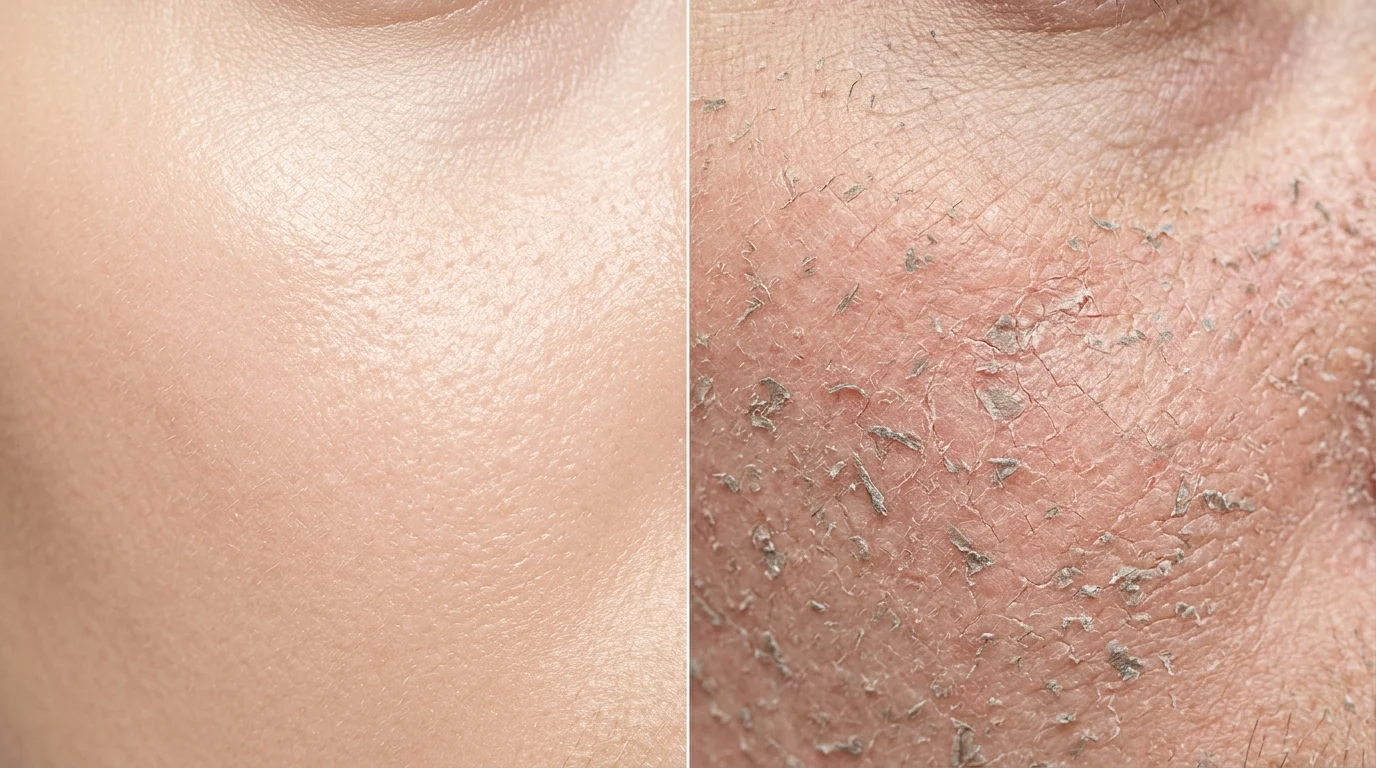
The skin barrier is not simply a protective wall; it is a dynamic biological system responsible for maintaining hydration, regulating inflammation, and controlling external stressors. Treating it as the former is precisely how it gets damaged.
Decades of research, including foundational work by dermatologist Peter Elias on the stratum corneum, helped establish the modern understanding that the skin barrier is not a passive outer layer but an active biological system involved in hydration regulation, inflammation control, and immune defence. This shift — from viewing the stratum corneum as inert to recognising it as metabolically active — fundamentally changed how dermatologists interpret skin disease, sensitivity, and the effects of topical products. It is a framework that modern cosmetic chemistry has been slow to fully absorb.
Why Your Skincare Routine May Be Damaging Your Skin Barrier
Long before the actives become the issue, the cleanser often is. Surfactant-heavy formulas — particularly those marketed around the idea of “deep clean” — do exactly what they advertise. They clean deeply, and in doing so, they extract lipids from the stratum corneum that were never meant to be removed. Research on cleansers and skin barrier impact has demonstrated that repeated exposure to harsh surfactants structurally alters the stratum corneum, increasing its permeability and triggering a low-grade inflammatory response that can persist well after cleansing ends.
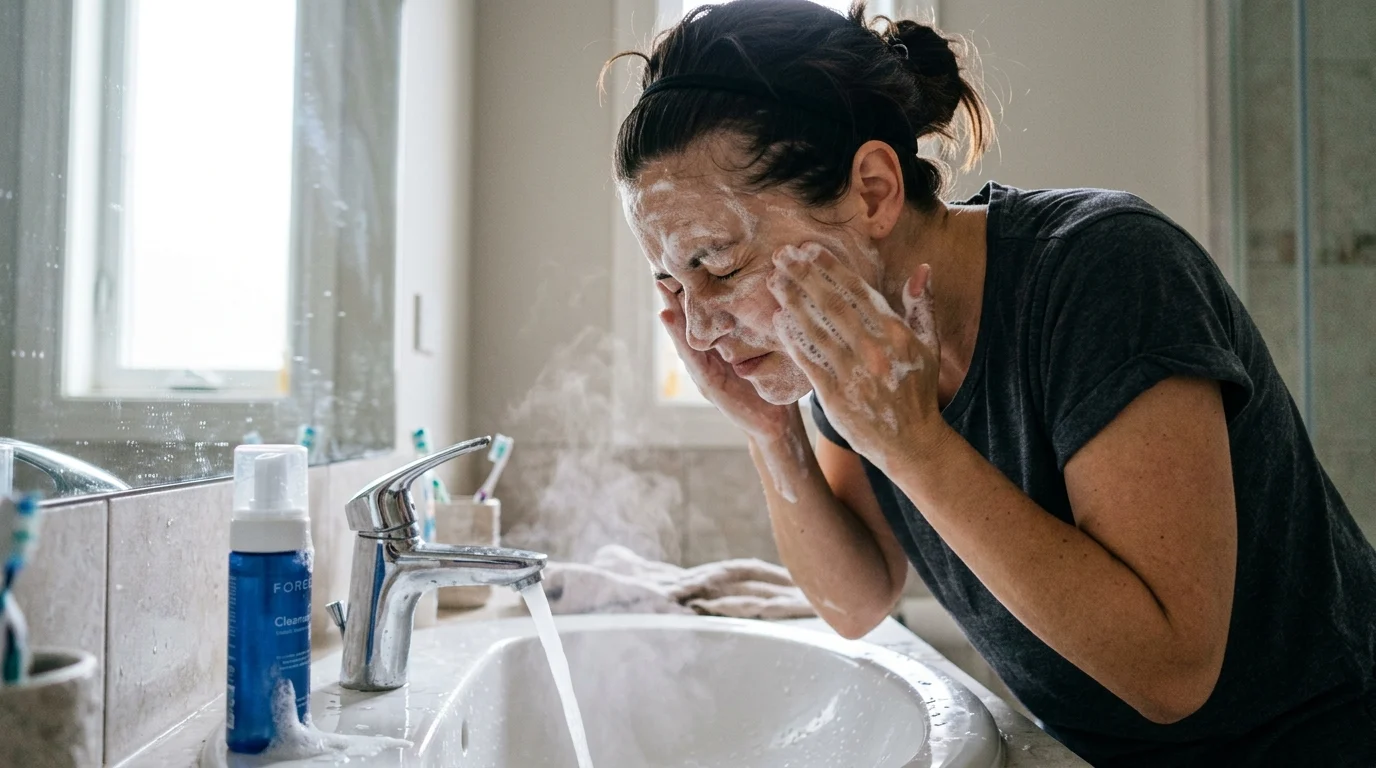
Over-cleansing skin damage is, in many ways, the most insidious contributor to a compromised skin barrier — and to the degradation of barrier integrity more broadly — because it rarely feels dramatic. The skin feels “clean” — sometimes squeaky-clean — and that sensation has been successfully marketed as desirable. But tightness after cleansing is not freshness. It is a measurable sign of lipid depletion. This damage doesn’t occur in isolation. It accumulates quietly underneath every subsequent product in the routine, making the skin increasingly vulnerable with each step.
There is also a compelling argument — backed by a growing body of clinical and anecdotal evidence — for why giving your skin a break can restore barrier function. Periodic simplification of the routine, stripping it back to the basics, gives the stratum corneum the uninterrupted time it needs to replenish its lipid matrix.
Too Many Actives Can Backfire
This is the section the ten-step routine was not built to accommodate. Exfoliating acids, retinoids, and vitamin C are not inherently harmful — this point matters and deserves clarity. The issue is almost never the ingredient itself. As dermatologist Zoe Diana Draelos has outlined in clinical research on cosmetic actives and barrier tolerance, the variables that determine whether an active irritates or performs are concentration, frequency of use, and the existing condition of the skin receiving it. An already-compromised barrier metabolises actives entirely differently from a healthy one — and that difference is not just discomfort, it is measurable damage.
The problem of too many active ingredients in skincare is one of compounding stress. Each individual acid, retinoid, or high-potency antioxidant may be within safe parameters when considered alone. Together, and applied to skin that has no recovery window built into the routine, they overwhelm the barrier’s capacity to repair itself between exposures.
Common patterns that accelerate this dysfunction include:
- Layering retinoids and exfoliating acids within the same routine without any temporal spacing or buffer
- Using actives daily that were originally formulated and tested for occasional or alternate-day use
- Introducing new actives while the skin is already visibly reactive, compounding existing irritation rather than addressing it
- Misreading early stress signals — tightness, mild stinging, increased sensitivity — as “purging” and continuing the routine regardless
The concept of skin cycling — structuring the routine so that active application nights are followed by dedicated recovery nights — exists precisely because the skin needs those intervals. Without them, the barrier cannot complete its natural repair cycle. The result is skin that looks increasingly sensitised, thin, and inflamed over time. This is why a minimalist skincare routine often outperforms a complex one — not because of any philosophical preference for simplicity, but because simplicity gives the barrier the biological conditions it needs to function.
When “It’s Not Working” Actually Means “My Barrier Can’t Tolerate This”
There is a deeply ingrained consumer instinct, amplified considerably by social media, that responds to skincare frustration by adding — adding another serum, another acid, another step that promises to fix what the last one didn’t. When a product causes stinging, redness, or increased sensitivity, the common assumption is that the formula is either too weak to work or that the skin needs to “adjust.” Both conclusions can be dangerously wrong.
Irritant contact dermatitis — a non-allergic inflammatory skin response triggered by direct chemical damage — is a well-documented consequence of applying actives to skin that is too compromised to metabolise them appropriately. The skin is not failing to adjust. It is sending a precise, biochemical message that the barrier cannot tolerate what it is being given. Adding more product in response to that signal deepens the dysfunction rather than resolving it.
Skincare actives irritation, in this context, is not a side effect to push through. It is diagnostic information. The skin is telling you — accurately — that its threshold for chemical exposure has been exceeded. The correct clinical response is reduction, not escalation.
Your Skin Barrier and Microbiome Are Connected
The relationship between the skin barrier and the skin microbiome is bidirectional and consequential. A healthy microbiome — the community of bacteria, fungi, and other microorganisms that colonise the skin’s surface — depends on a structurally intact barrier to maintain the pH, temperature, and lipid environment it requires. When barrier function is compromised, that environment destabilises, and so does the microbial balance it supports.
A landmark review of the human skin microbiome by Byrd, Belkaid, and Segre identified the microbiome not as a passive passenger on the skin’s surface but as an active participant in immune modulation, inflammatory regulation, and pathogen defence. When barrier dysfunction disrupts microbial balance — altering microbial balance and creating conditions where certain opportunistic microorganisms may become more dominant — the inflammatory response that follows compounds the original damage.
What this means practically: a compromised skin barrier and a destabilised microbiome are rarely sequential problems. They are simultaneous ones. Aggressive cleansers and over-exfoliation strip not just lipids but the microbial communities that live within those lipid-rich environments. The skin becomes, in effect, doubly vulnerable — structurally weakened and immunologically less defended.
Is Your Skin “Sensitive,” or Is Your Barrier Compromised?
“I’ve always had sensitive skin” is one of the most commonly offered explanations for chronic skin reactivity — and one of the most frequently inaccurate ones. Research by Misery and colleagues into the mechanisms of sensitive skin has found that what presents as innate skin sensitivity is often a constellation of measurable, addressable factors: impaired barrier function, heightened cutaneous nerve reactivity, and subclinical inflammation that falls below the threshold of clinical diagnosis but is nonetheless real and quantifiable.
This distinction matters enormously. A fixed genetic trait cannot be meaningfully addressed. A compromised skin barrier can. Skin sensitivity causes that are rooted in barrier impairment respond to barrier-focused intervention — the right moisturisers, the right reduction in actives, the right cleansing approach. They do not require permanent resignation to product limitation or lifelong avoidance of anything beyond the most basic formulas.
It is also worth noting that reactive sensitive skin does not exist in isolation from hormonal physiology. Hormonal changes can also increase skin reactivity by altering sebum composition, skin pH, and the inflammatory threshold — which means the barrier story and the hormonal story are often the same story, told from different angles.
How to Repair a Damaged Skin Barrier and Restore Skin Health
Skin barrier repair is not a quick-turnaround proposition — but it is a predictable one. The stratum corneum operates on its own renewal timeline, and recovery follows a recognisable pattern when the right conditions are provided. Clinical findings on skin barrier dysfunction mechanisms by Proksch, Brandner, and Jensen confirm that ceramide replenishment and the reduction of TEWL are the foundational goals — not complexity of formulation, but specific lipid class restoration.
Before adjusting a routine, it helps to read what the skin is already communicating. The following patterns are clinically recognised signals — not a diagnostic checklist, but a practical reference for anyone trying to understand whether their barrier may be under stress.
| What You Notice | What It May Indicate |
|---|---|
| Burning or stinging after applying products | Heightened sensitivity; reduced barrier tolerance |
| Tightness shortly after cleansing | Possible lipid depletion; surfactant overexposure |
| Products that once worked now cause irritation | Reduced barrier tolerance; compromised stratum corneum |
| Makeup becoming patchy or sitting unevenly | Uneven hydration and surface texture disruption |
The practical protocol for recovery is deliberately unglamorous:
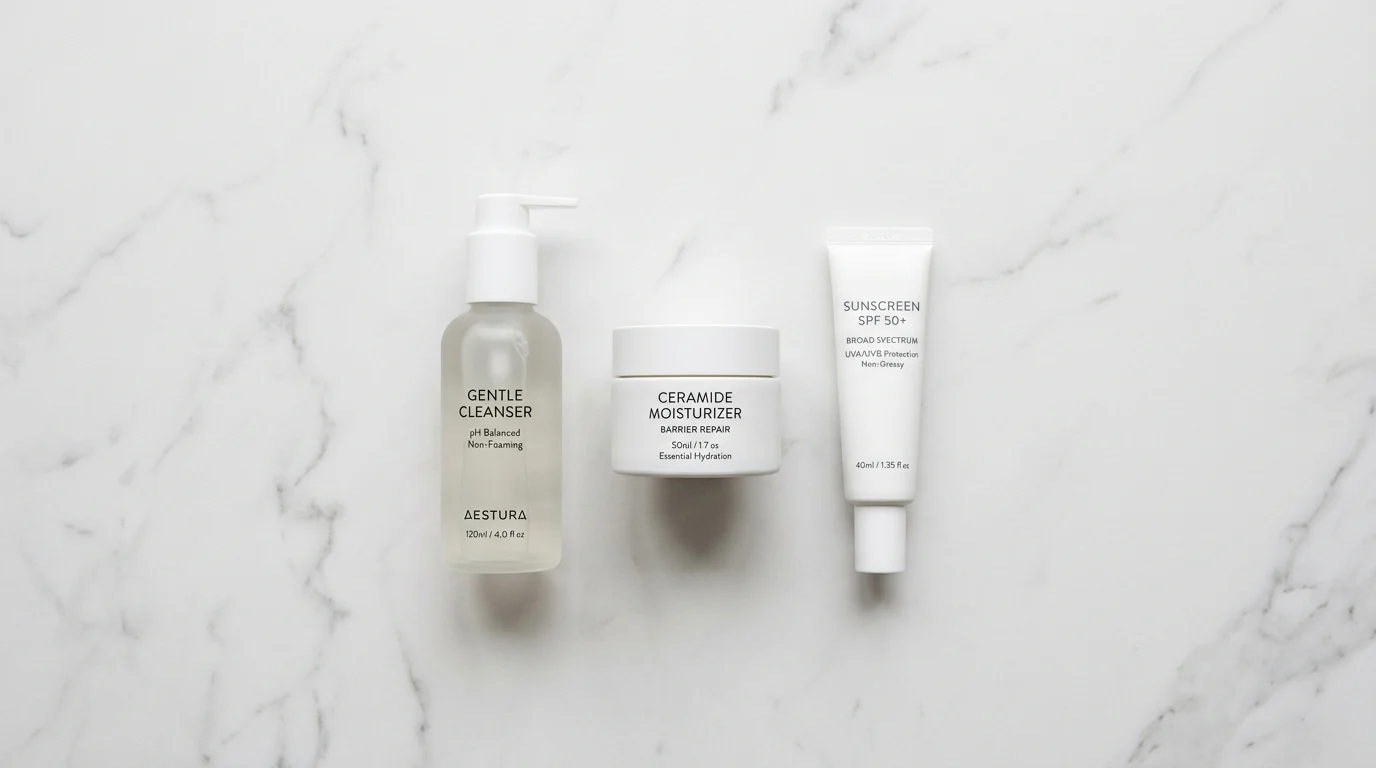
- Simplify immediately. Reduce the routine to a gentle, low-surfactant cleanser, a barrier-supportive moisturiser, and SPF. Nothing else, for a minimum of two to four weeks.
- Prioritise the right lipids. Look for moisturisers that contain ceramides, cholesterol, and fatty acids in a ratio that mimics the skin’s natural lipid matrix. Ceramides and skin barrier repair are inseparable — without ceramide replenishment, the structural foundation cannot be rebuilt.
- Reintroduce actives individually and slowly. Once the barrier has stabilised — signalled by the absence of stinging, tightness, or reactivity — reintroduce one active at a time, beginning at the lowest effective concentration and frequency.
- Avoid thermal stress. Hot water accelerates TEWL and strips lipids. Lukewarm water for all cleansing steps during the recovery window is non-negotiable.
- Resist the urge to exfoliate. Over-exfoliated skin needs time, not more exfoliation. Even gentle chemical exfoliants should be paused until barrier integrity is restored.
For a more structured protocol, a complete guide to skin barrier repair offers a step-by-step framework for this recovery process.
⚠️ If redness, burning, or sensitivity persist despite simplifying your routine, consult a dermatologist — barrier dysfunction can sometimes overlap with underlying skin conditions that require targeted treatment.
Why a Compromised Barrier Also Affects How Makeup Looks
There is one further consequence of barrier dysfunction that is rarely discussed in clinical terms but affects daily life in immediate, visible ways: makeup no longer sits correctly on the skin. Foundation becomes patchy. Powder oxidises unevenly. Concealer settles into texture that wasn’t visibly present before. This is not a makeup formulation issue — it is a skin health issue.
A compromised barrier creates an uneven surface with fluctuating hydration levels, irregular sebum distribution, and micro-inflammation that disrupts the way products adhere and oxidise across the face. Trying to correct this with additional makeup layers compounds the problem. Why a damaged skin barrier also affects how makeup wears is, fundamentally, a story about skin health — and the solution begins with the skin, not the products applied over it.
Myth — Busted “If it stings, it’s working.” This belief is persistent, persuasive, and wrong. Transient mild tingling from certain formulas — a well-buffered AHA at an appropriate pH, for instance — can occur without indicating damage. But persistent stinging, redness, or a sensation of heat is not a sign of efficacy. It is a sign that the barrier is under stress it cannot absorb. The most effective skincare routines are not the ones that challenge the skin most aggressively — they are the ones the skin can actually tolerate consistently, day after day, without cumulative damage. Tolerance is the prerequisite for results.
FAQs
Q: How do I know if my skin barrier is damaged?
The most reliable signals of a damaged skin barrier are persistent stinging or burning when applying products (including ones that previously caused no reaction), skin that feels tight shortly after cleansing, redness or flushing that doesn’t resolve, and a sudden increase in sensitivity across multiple products. These are not signs of “adjustment” — they are signs of barrier stress that warrants a routine reset. The table above offers a quick reference for the most common patterns.
Q: How long does it take to repair a damaged skin barrier?
Mild to moderate barrier dysfunction typically shows meaningful improvement within two to four weeks of a simplified, barrier-supportive routine. More significant damage — particularly from months of aggressive active use — can take six to eight weeks or longer. The stratum corneum renews itself on approximately a 28-day cycle; give it at least one full cycle before expecting visible stabilisation.
Q: Can too much skincare actually cause more skin problems than too little?
Yes — measurably so. A skincare routine damaging your skin barrier is not a hypothetical risk; it is a clinically documented outcome of overuse and poor sequencing of actives. A minimal routine that maintains barrier integrity will consistently outperform an aggressive, multi-active routine applied to compromised skin. More products do not produce more results. They produce more variables, more potential for interaction effects, and more cumulative stress on a system that requires stability to function. Knowing how to repair a skin barrier often begins with recognising that the first step is subtraction, not addition.
Pingback: Transepidermal Water Loss (TEWL): What It Really Says About Your Skin Barrier - Denyva
Pingback: Oxidative Stress and Skin Aging: The Cellular Damage You Can't See - Denyva
Pingback: Skin pH Explained: Why Your Acid Mantle Controls Everything - Denyva
Pingback: Skin Barrier vs Skin Microbiome: Are They the Same Thing? - Denyva
Pingback: Ceramides Skin Barrier Ratio: The Real 3:1:1 Lipid Formula Explained - Denyva